South Africa CEO outlook 2026

What will it take to win in a more complex world?

South African CEOs in 2026 balance confidence with discipline, advancing growth and resilience while scaling AI and navigating geopolitical complexity.


In brief:

  • Confidence remains strong, but is becoming more measured and disciplined 
  • CEOs are advancing defence and growth priorities at the same time 
  • AI is moving from experimentation into practical enterprise value 

From resilience to reinvention: scaling transformation in a complex world

South African CEOs are shifting from resilience to reinvention.

South African CEOs enter 2026 with a markedly different mindset from recent years. Having navigated prolonged volatility, leaders are now shifting focus from stabilisation to scaled transformation, with confidence rising in a more measured way across both company performance and the broader economic outlook.

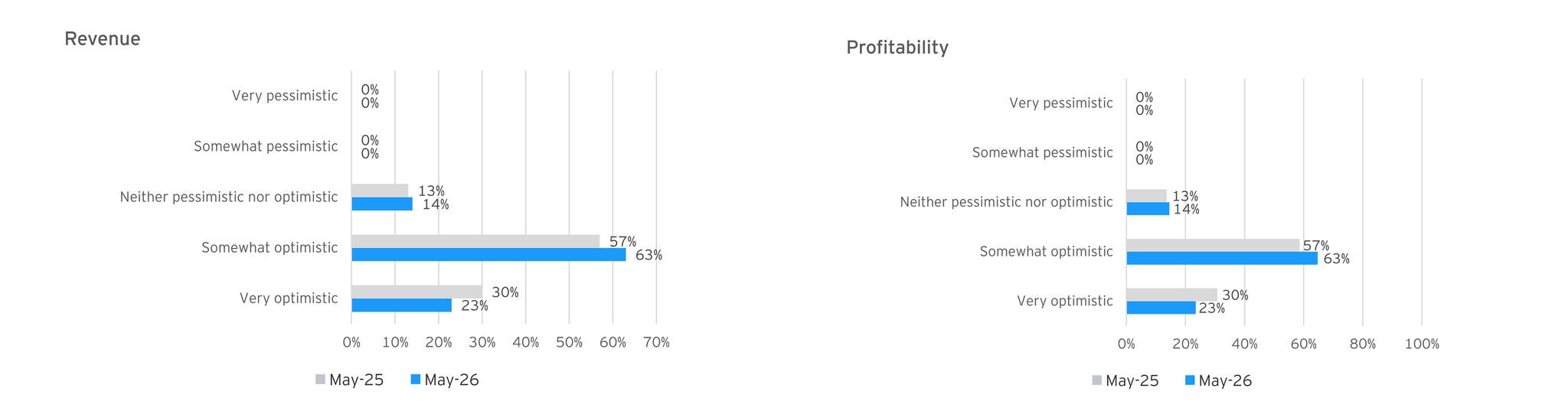
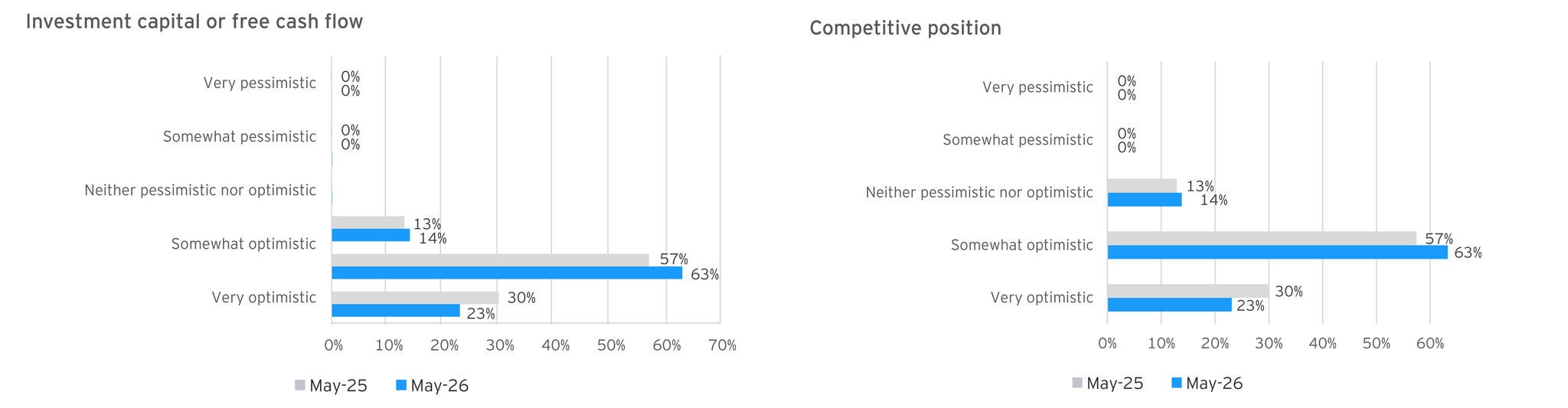
While optimism remains intact, it is now looking more balanced. Levels of “very optimistic” sentiment have moderated across several key indicators, with a corresponding increase in more cautious outlooks, signalling a shift away from exuberance toward a more considered and disciplined view of the year ahead. 

How confident do you feel about the outlook for the following areas over the next 12 months?

ey-ceo-outlook-revenue-profitability-graph
ey-ceo-outlook-investment-capital-competitive-position-graphs

At the same time, expectations for revenue growth, profitability and competitive positioning remain strong overall. This points to a view that organisations are resilient enough to pursue bolder strategies, but with a sharper focus on execution, capital discipline and risk management. 

The global environment, however, continues to present complexity. Geopolitical tensions, rapid technological disruption and evolving regulatory frameworks are reshaping the business landscape. In response, South African CEOs are not stepping back. They are adjusting their expectations, widening their field of view and positioning their organisations to compete in a more dynamic, digitally enabled economy.

1

Chapter 1

A new CEO playbook: defend, digitise, develop and deal

South African organisations are protecting near-term performance while still investing for growth.

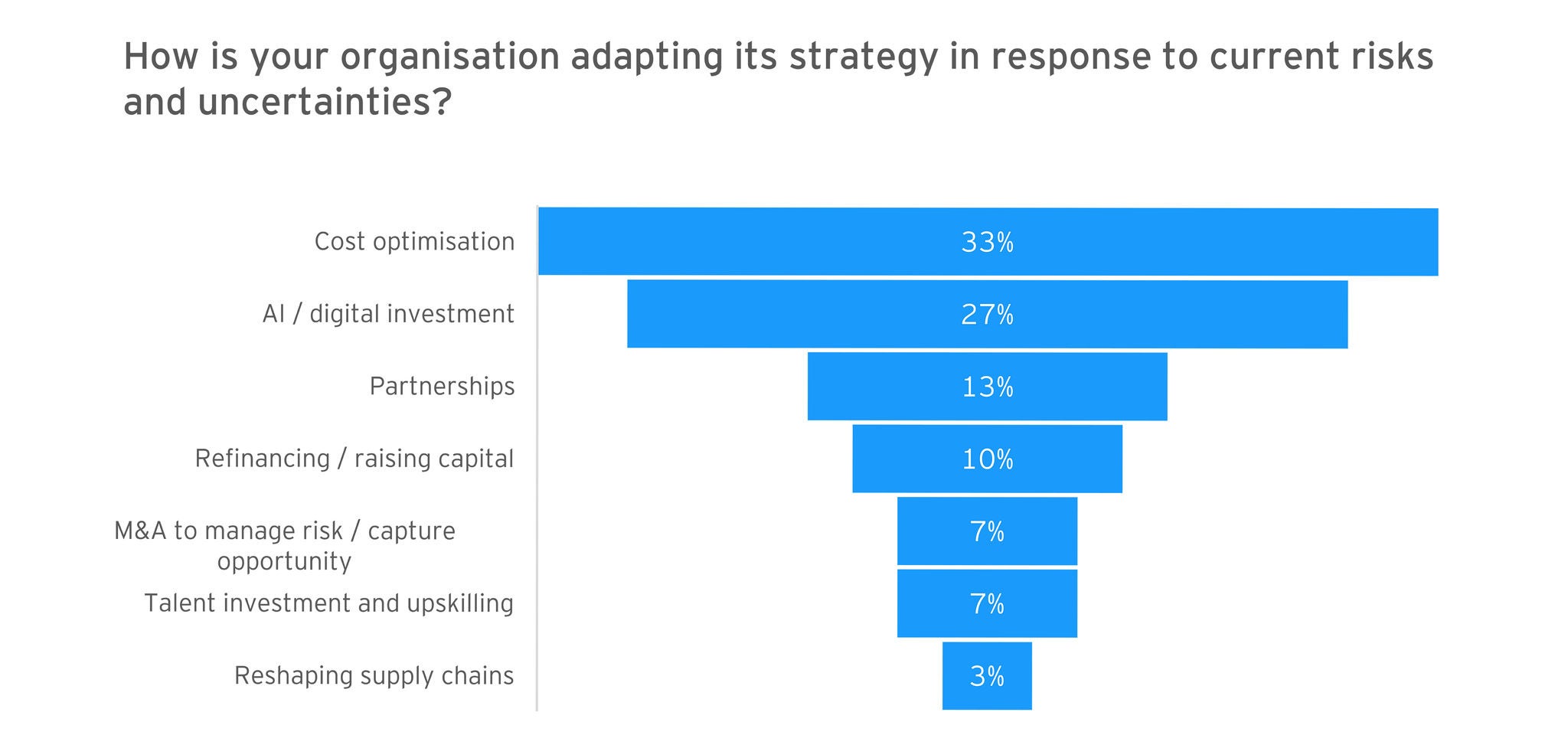
Leaders are strengthening balance sheets and controlling costs, while also accelerating investment in AI, partnerships and growth opportunities. That combination points to a shift away from step-by-step sequencing and toward doing both at once. 

In practice, this takes shape across four distinct strategic moves: 

  • Defend: Enhancing financial resilience and managing downside risk 
  • Digitise: Accelerating AI and technology investment as a core enabler of value 
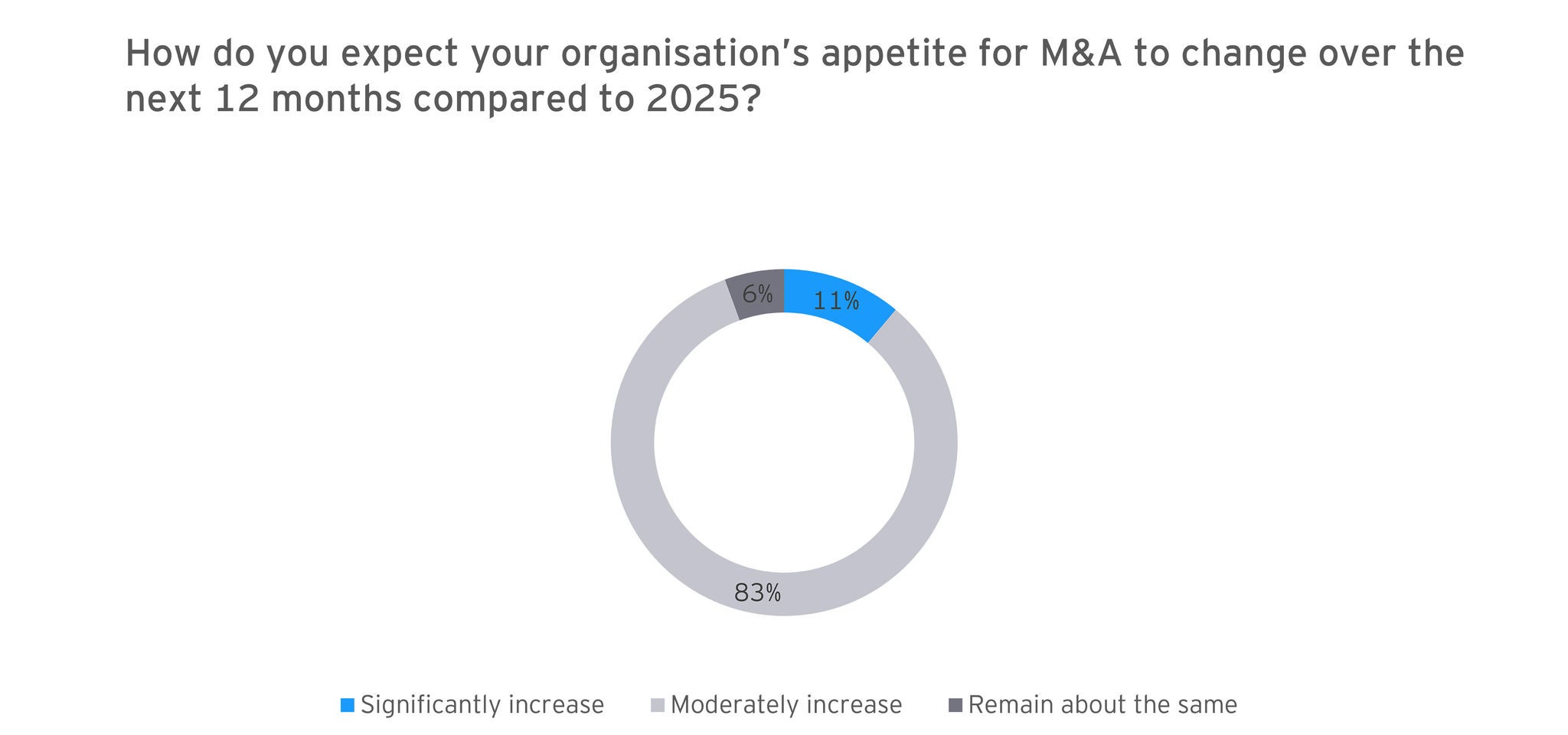
  • Deal: Increasing appetite for partnerships, alliances and selective M&A 
  • Develop: Building the capabilities and workforce required to sustain transformation

Crucially, these are not sequential actions. They are being executed concurrently.  CEOs are no longer choosing between caution and growth; they are pursuing both in parallel, redefining how strategy is executed in uncertain environments. 

2

Chapter 2

Navigating uncertainty with greater decisiveness

South African CEOs are no longer waiting for clarity. They are building strategies that work despite it.

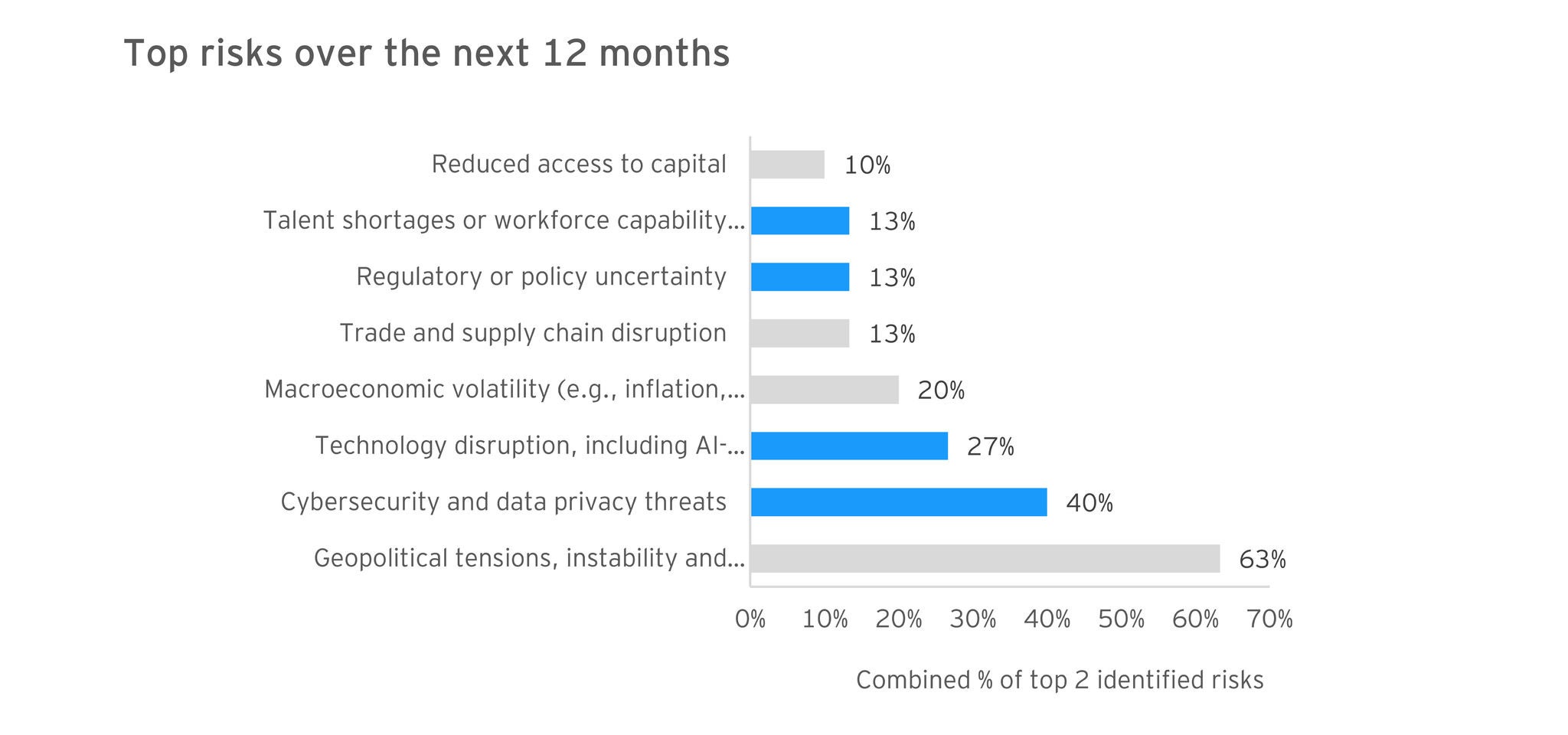
Global and regional geopolitical dynamics remain a defining feature of the 2026 outlook. CEOs identify geopolitical tensions, instability and conflicts as the single most significant risk facing their organisations (63%), underscoring the extent to which global uncertainty continues to shape strategic decision-making. While external pressures remain broad and interconnected, geopolitics now sits at the centre of the risk landscape. 

Yet, the response from South African CEOs has evolved significantly.  Leaders are responding with greater speed and clarity. CEOs are prioritising a range of strategic actions, including increasing partnerships and alliances, pursuing selective M&A, accelerating digital and AI investment, and strengthening financial resilience through cost discipline and capital allocation. 

At the same time, organisations are reshaping supply chains and investing in workforce capabilities to better position themselves for ongoing disruption.

3

Chapter 3

AI moves from experimentation to enterprise value

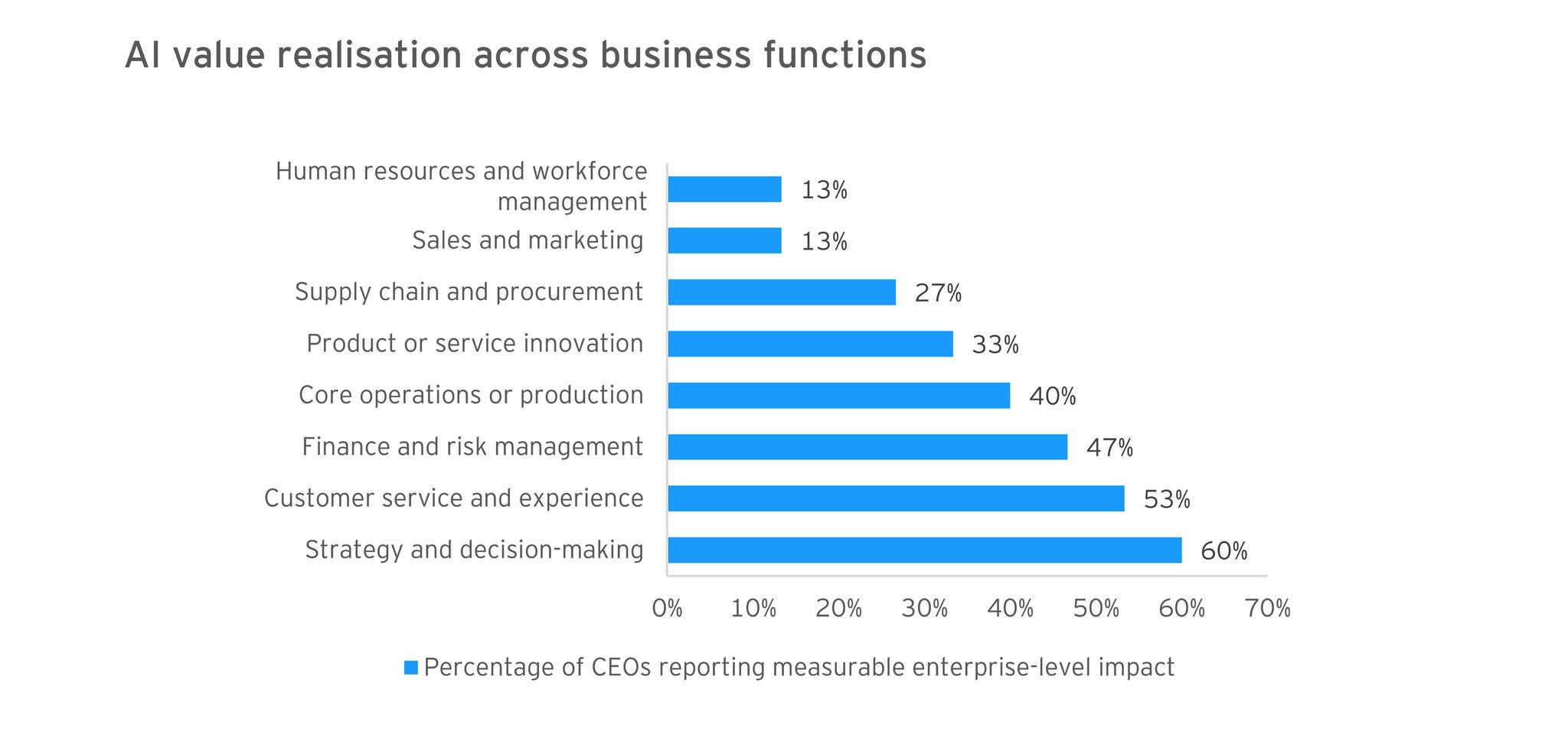
AI is starting to show measurable value across the business.

One of the clearest shifts in this year’s outlook is how AI is now being treated. It has moved from a conceptual priority to an enterprise-wide performance driver. 

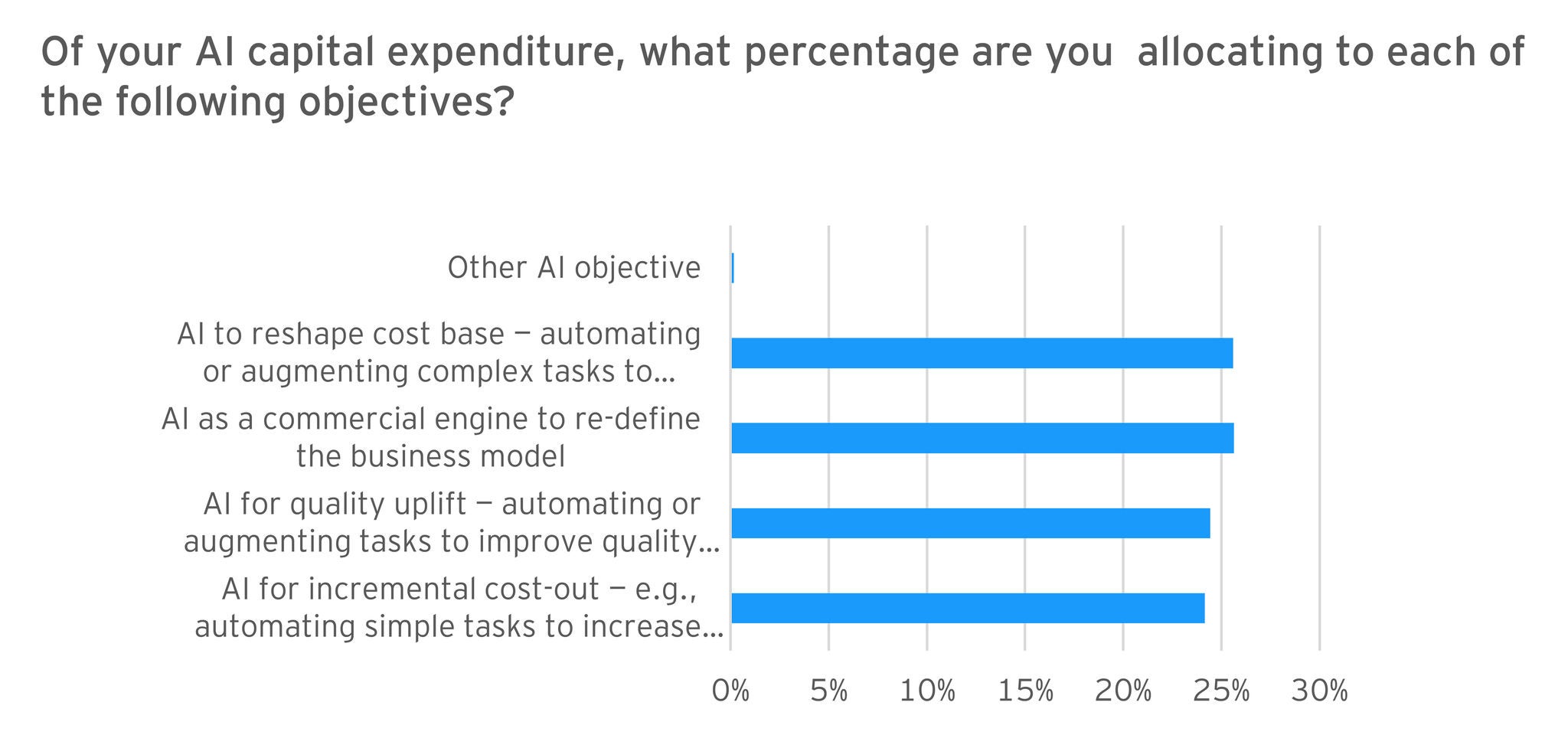
AI is now embedded into core business functions, from strategy and decision-making to customer experience, operations and risk management, with tangible value already emerging.  Importantly, AI investment is no longer concentrated on a single objective. Organisations are deploying AI across multiple fronts:

  • Driving efficiency and cost transformation
  • Enhancing product and service quality
  • Enabling new business models and revenue streams
  • Reconfiguring operating structures for scale

AI is now being used more broadly across the business, not just as a productivity tool, but as a lever for wider business model change. 

However, as digital intensity increases, so too does exposure to risk. CEOs are particularly focused on cybersecurity threats, technology disruption, regulatory uncertainty and talent constraints, all of which directly influence the pace and scale of AI adoption. 

Beyond these core risks, leaders are increasingly turning their attention to governance, ethical use and the consistent measurement of AI-driven value. As a result, boards are demanding clearer KPIs, structured oversight frameworks and tighter integration with financial reporting.

4

Chapter 4

Capital returns to South Africa

South Africa is moving back into the investment conversation.

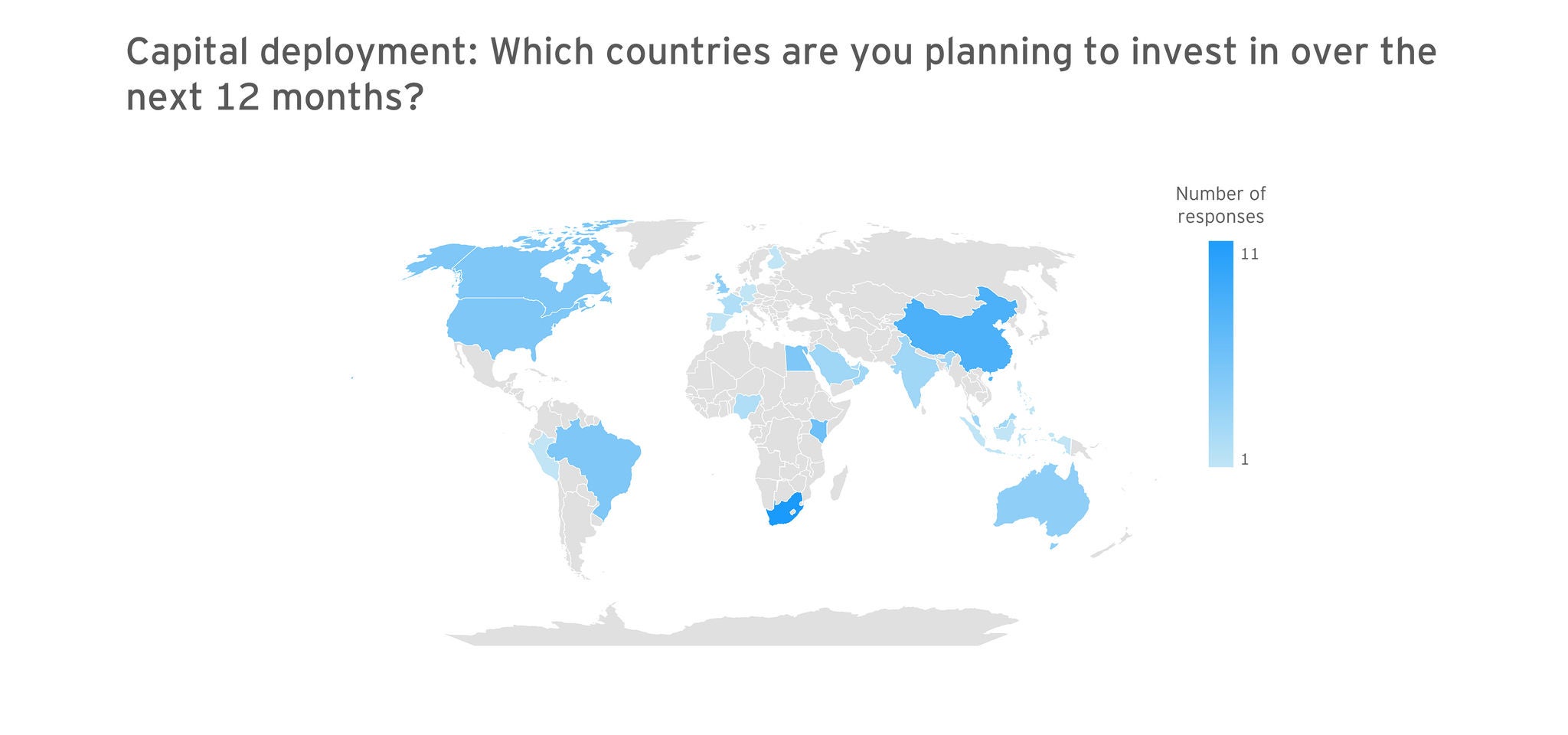
South Africa is starting to regain attention as a destination for investment, supported by improving regulatory clarity and sector reform. At the same time, organisations are pursuing targeted cross-border expansion and increasing deal activity to acquire new capabilities, particularly in technology. 

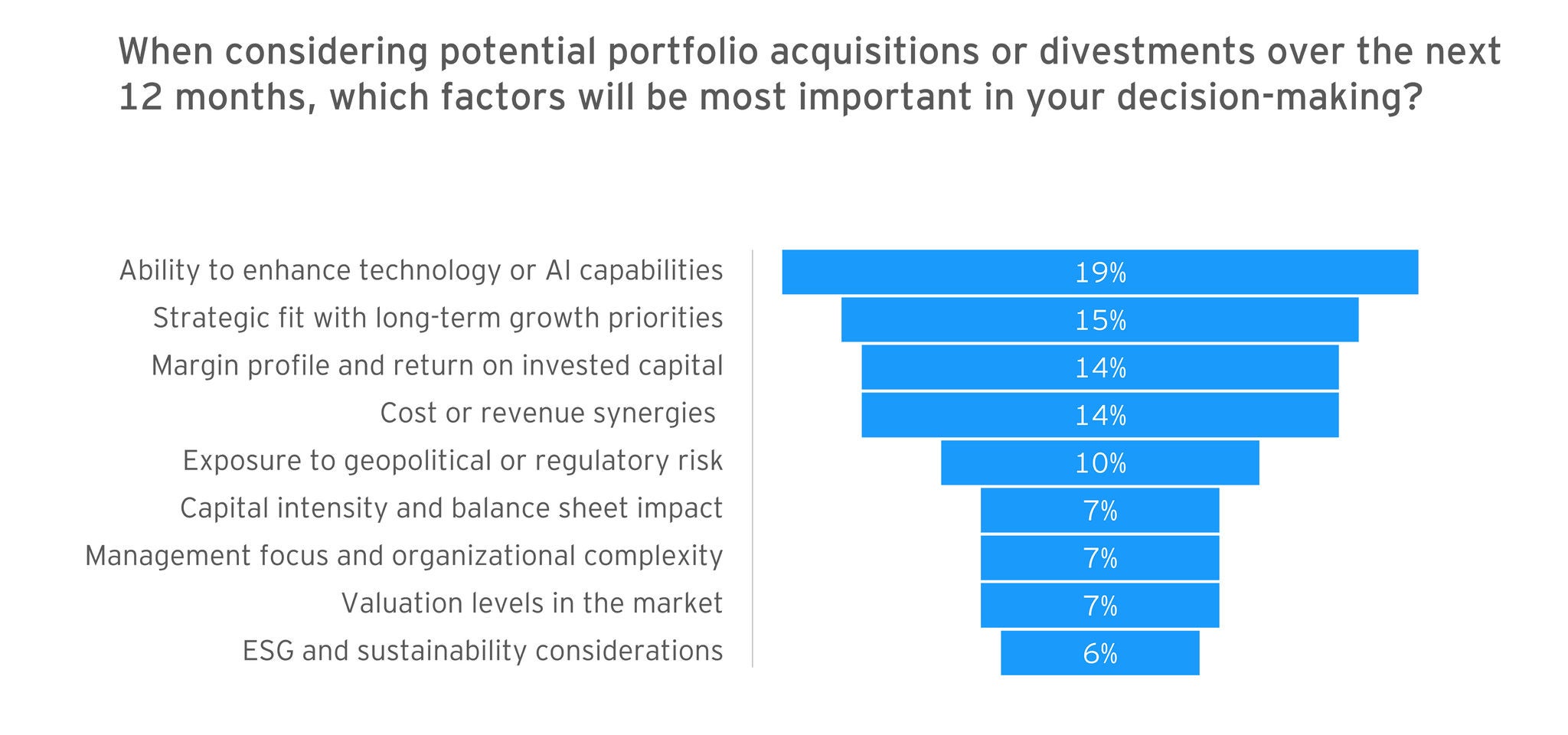
M&A and partnerships are central to this strategy. Leaders are increasingly using transactions not only to scale, but to bring in capabilities, particularly in technology and digital domains, reinforcing dealmaking as a driver of long-term competitiveness. 

5

Chapter 5

Talent as the defining constraint on growth

For many organisations, capability is becoming a bigger constraint than capital.

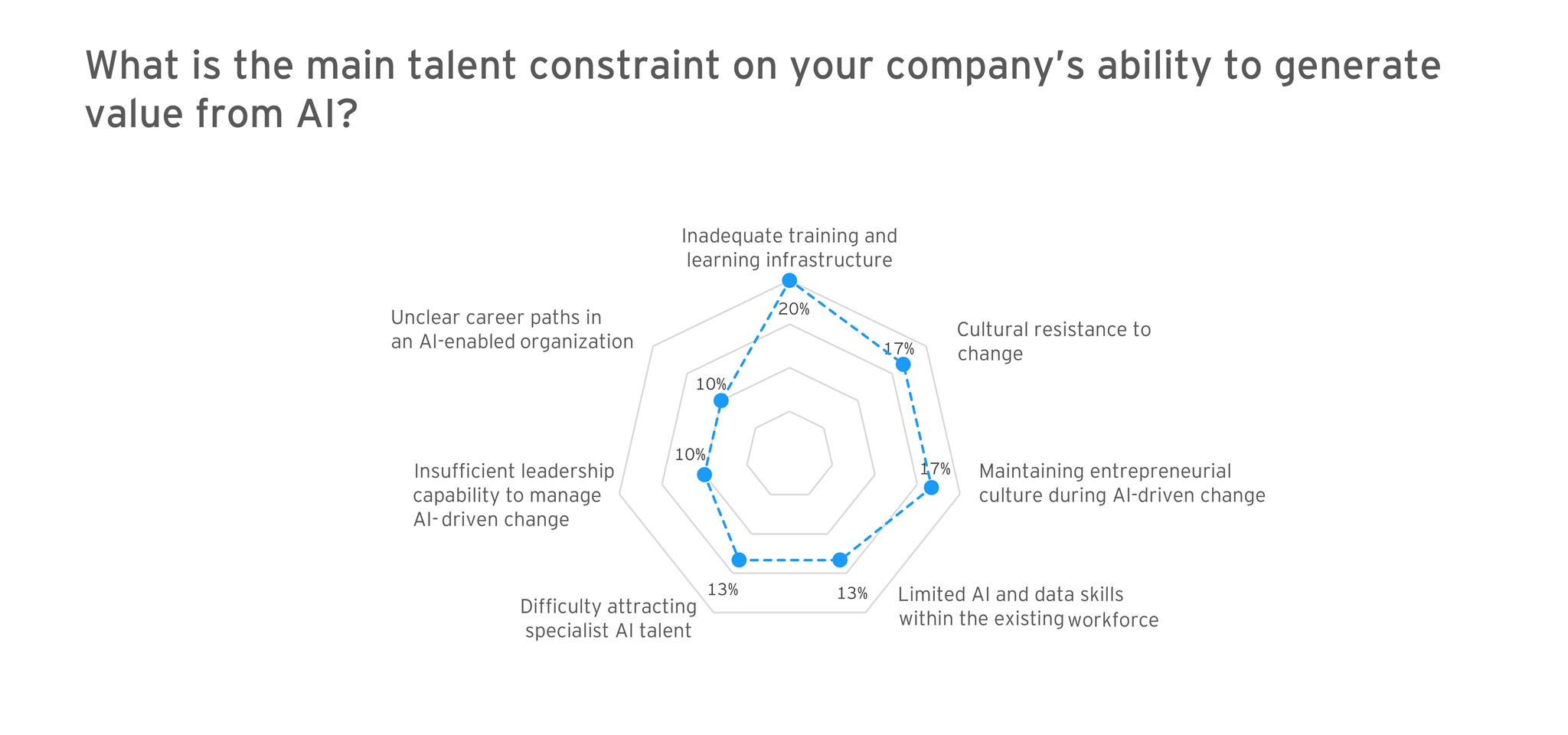
As organisations accelerate their transformation efforts, one constraint is becoming increasingly evident: talent.

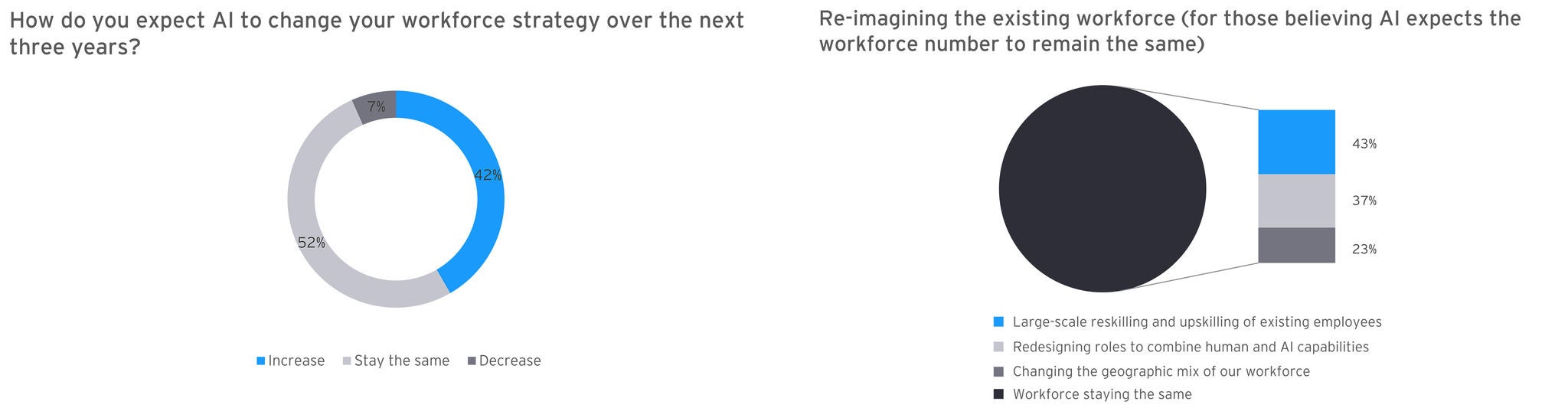
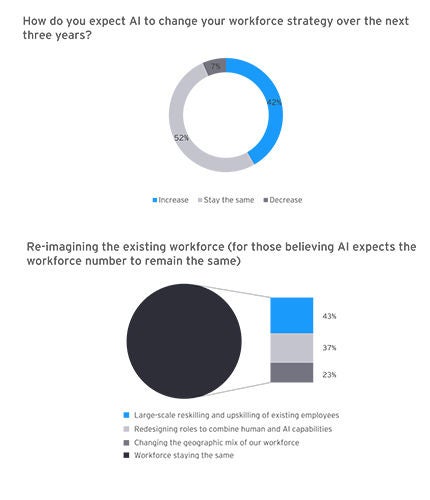
AI is reshaping workforce structures in a fundamental way. While some roles are expected to decline as automation increases, demand for higher-value, digitally enabled capabilities is rising sharply.

ey-ceo-outlook-expect-ai-to-change-talent-constraints-graphs

This creates a dual challenge for CEOs: 

  • Managing potential workforce contraction in certain areas
  • Simultaneously investing in reskilling, upskilling and specialised talent acquisition 

The emphasis is shifting from workforce size to workforce capability. 

Key priorities include: 

  • Building AI and data capabilities within existing teams
  • Attracting scarce specialist talent
  • Developing leadership capacity to manage AI-driven change
  • Overcoming cultural resistance and strengthening learning infrastructure 

The workforce model now taking shape relies on human judgment, creativity and domain expertise, strengthened by AI. The result is likely to be leaner, more agile and more capable organisations. 

South African CEOs are navigating an environment defined by both complexity and opportunity. Their response reflects a more balanced and mature strategy: 

  • Confident, with a clear sense of risk
  • Ambitious, with stronger discipline on execution
  • Forward-looking, while staying grounded in delivery 

Technology, particularly AI, sits at the centre of this response, enabling organisations to operate more efficiently, compete more effectively and adapt more rapidly to changing conditions. 

At the same time, renewed interest in South Africa as a destination for capital points to a broader shift in outlook: leaders are showing greater willingness to pursue local and global opportunities together. 

The defining characteristic of this quarter’s CEO mindset is adaptability. Rather than planning around one expected outcome, CEOs are building the capability and flexibility to perform across a range of possible futures.


In summary:

South African CEOs are moving decisively from resilience to reinvention, supported by a steadier, more disciplined sense of confidence. Uncertainty is no longer treated as a temporary disruption, but is embedded into how strategy is shaped and executed. In response, leaders are advancing growth and risk management in parallel, reflecting a more joined-up and execution-focused approach. AI is now delivering tangible enterprise value and reshaping operating models at scale, while talent and capability are emerging as the most significant constraints to sustained growth. 

In 2026, transformation is becoming central to how organisations protect performance and create long-term growth.

Related articles

How can CEOs deliver stability today while reimagining for a future in flux?

South Africa’s CEOs enter 2026 with renewed confidence, scaling AI, strengthening resilience and accelerating transformation across the business landscape.

How do CEOs reimagine enterprises for a future that keeps rewriting itself?

EY-Parthenon CEO Outlook 2026 explores how leaders use AI, transformation and portfolio strategy to navigate uncertainty and drive sustainable growth.

About this article