

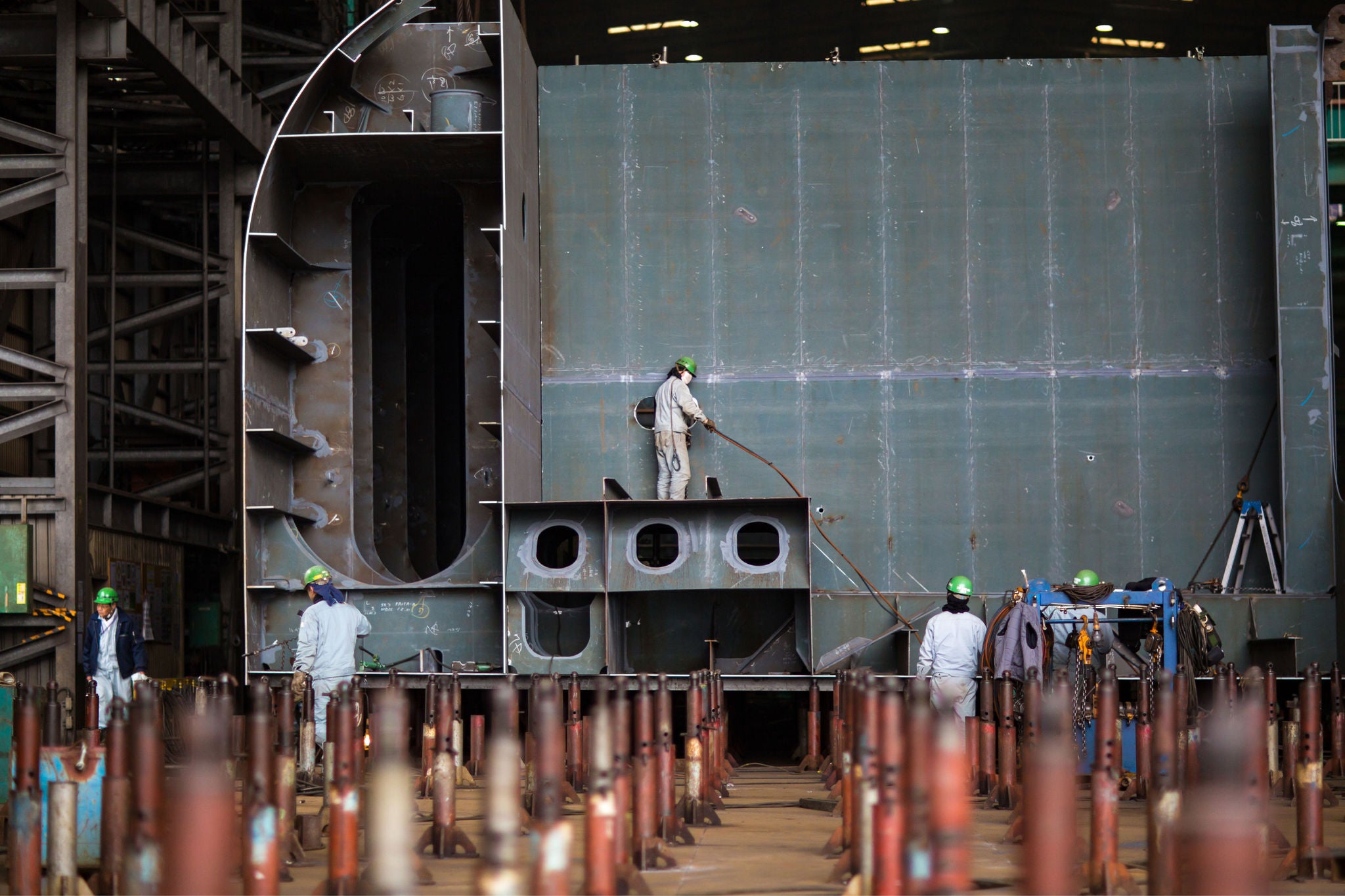









Workers assembling a large steel structure in a shipyard
Transparent image

How can Defence effectively deliver the nation’s most complex programs?

Australia’s Defence strategy depends on whole‑of‑economy collaboration. Building future‑ready resilience will require coordinated action at speed and at scale. The challenge is no longer defining ambition, but turning it into delivery.


In brief:

  • Delivering Australia’s new Defence strategy will require mobilisation across government, industry and the community.
  • Six lessons from major infrastructure programs can help create the conditions for success.
  • This moment presents an opportunity to set a new benchmark for collaborative, value‑driven delivery.

Australia’s federal government is expected to release an updated Defence strategy in the coming months, outlining how the nation will prepare for a more volatile and contested world. While the strategy will set a clear direction for future‑ready resilience, the harder question is how that ambition can be realised in practice.
 

Delivering complex Defence programs at scale demands far more than funding allocations or procurement plans for military capability. It requires the coordinated mobilisation of public and private sectors to address the multi‑sectoral challenges that inevitably arise in large, long‑term programs.
 

At the same time, infrastructure timelines are lengthening in a more constrained operating environment. Success depends on disciplined governance, agile execution, cross‑sector collaboration and a relentless focus on outcomes. Lessons from other major infrastructure programs point to six critical principles that can help mobilise Australia behind this national imperative.

Singapore skyline with Marina Bay Sands at dusk
1

Have a plan – and stick to it

Singapore offers a powerful example of what disciplined planning and execution can achieve. Since gaining independence in 1965, the country has transformed from a collection of small villages into one of the world’s most advanced and sophisticated economies.

Singapore’s long‑term plans extend up to 100 years into the future, with detailed strategies across transport, energy, water, housing and land use. Current commitments include major expansions to Changi Airport and the Port of Singapore.

The real lesson, however, is not simply the existence of long‑term plans, but the certainty of delivery. When the Singaporean government commits, it delivers. This consistency builds confidence, mobilises investment and aligns the broader economy behind large‑scale programs. For complex Defence initiatives, that certainty is a critical enabler.

The challenge is no longer defining ambition, but turning it into delivery.
Naval ship docked at a port under cloudy sky
2

Think ecosystem, not asset

Complex programs often revolve around a defining asset — a port, a bridge or a submarine capability. While delivery of the asset is essential, focusing on it in isolation risks undermining long‑term success.

Successful programs recognise that sustainable infrastructure is an ecosystem play. They require collaboration across public and private partners from the outset, with a shared understanding of outcomes that extend beyond construction.

Western Australia’s Henderson Defence Precinct illustrates this clearly. While the precinct will be central to Australia’s naval shipbuilding ambitions, the facilities themselves are only part of the equation. A high‑performing precinct depends on resilient supply chains, suitable land zoning, advanced technologies and a skilled workforce—supported by housing, education and healthcare. Achieving this requires coordinated action across multiple government portfolios and industry partners, well beyond Defence alone.

Aircraft maintenance crew inspecting landing gear assembly
3

Compete for capability

Australia’s Defence strategy is being delivered in the context of intensifying global competition for infrastructure investment, skills and industrial capability. Attracting long‑term partners in a tight market depends not only on disciplined planning, but on the ability to provide certainty.

Major infrastructure investors commit for decades, not election cycles. Their decisions are influenced by a wide range of factors beyond contractual terms or Defence opportunities alone. Many operate across transport, energy and commercial development, and assess the broader investment environment.

Bipartisan political support is essential, but so too are stable immigration settings, regulatory clarity and quality of life considerations. Continued investment across sectors signals to industry that opportunities extend beyond Defence, reinforcing confidence in long‑term participation.

Construction workers reviewing blueprints on site
4

Close the skills gap – in government too

Workforce shortages are widely acknowledged as a constraint on infrastructure delivery. Less discussed are the capability gaps within government agencies responsible for overseeing these complex programs.

Many major industry participants cite under‑resourced government teams as a significant barrier to progress. Delivering multi‑billion‑dollar programs at scale is not business as usual, yet internal capabilities often reflect business‑as‑usual resourcing models. When the right skills are not available at the right time, costs and timelines quickly escalate.

Owner‑side capability—covering design oversight, contract management, compliance, risk and legal functions—can absorb around 10% of capital expenditure on major projects. On Defence programs of national scale, this equates to hundreds or thousands of highly skilled professionals. Securing this talent in a competitive market requires innovative workforce strategies and competitive remuneration.

Aerial view of Sydney skyline and harbour
5

Use public funding to unlock private capital

In fiscally constrained environments, governments cannot fund every component of complex programs. Strategic public investment, however, can play a catalytic role in unlocking private capital and enhancing long‑term value.

Western Sydney International Airport provides a strong example. Government investment in the airport, surrounding road infrastructure and a new metro line has already stimulated significant private sector investment, transforming the region into a hub for advanced manufacturing, aerospace and logistics.

For projects as complex as Defence precincts, attracting private capital cannot be left to chance. A structured approach to stimulating, coordinating and facilitating investment is critical to success.

Delivering Australia’s new Defence strategy will require mobilisation across government, industry and the community.
Aircraft inside a wind tunnel for aerodynamic testing
6

Maintain momentum to accelerate and innovate

Too often, capability dissipates once major projects conclude, as teams disperse and hard‑won experience is lost. Maintaining momentum between programs preserves capability, accelerates delivery and reduces costs.

Successfully delivering future shaping projects on a mega scale requires more than good intentions; it needs collective commitment, persistence and the confidence to stay the course.

Innovative contracting and delivery models can help bridge gaps between projects, although these approaches may be constrained by traditional procurement rules. At a minimum, opportunities to retain momentum should be deliberately designed into procurement and delivery strategies.

Global and local examples demonstrate how momentum compounds over time. China’s high‑speed rail network exceeded 50,000 kilometres of track in 2025, with a significant portion delivered in recent years. Closer to home, Melbourne’s level crossing removal program has accelerated as contract structures allow delivery teams to continuously improve.

Setting a new benchmark for collaborative delivery

Major public sector projects are often met with scepticism, community concern and political pressure. These challenges can delay approvals and place significant strain on delivery teams. Sustained collaboration across stakeholders helps navigate difficult periods, protecting timelines and budgets.

Nowhere is this more important than Defence. Australia’s ability to deliver its strategy on time and on budget will shape national security and economic prosperity for decades. By applying lessons from other complex programs, Defence has an opportunity to set a new benchmark for collaborative, consistent and value‑focused delivery.

Successfully delivering future shaping projects on a mega scale requires more than good intentions; it needs collective commitment, persistence and the confidence to stay the course.

Summary

Australia’s Defence strategy raises both the stakes and the complexity of delivering programs of national importance. Meeting this challenge will require governments, industry and communities to work together at unprecedented scale and speed. Lessons from major infrastructure programs provide a practical framework for success, underscoring that sustained collaboration is the foundation for delivering long term national value.

About this article

Authors