




EY refers to the global organization, and may refer to one or more, of the member firms of Ernst & Young Global Limited, each of which is a separate legal entity. Ernst & Young Global Limited, a UK company limited by guarantee, does not provide services to clients.
Recent Searches
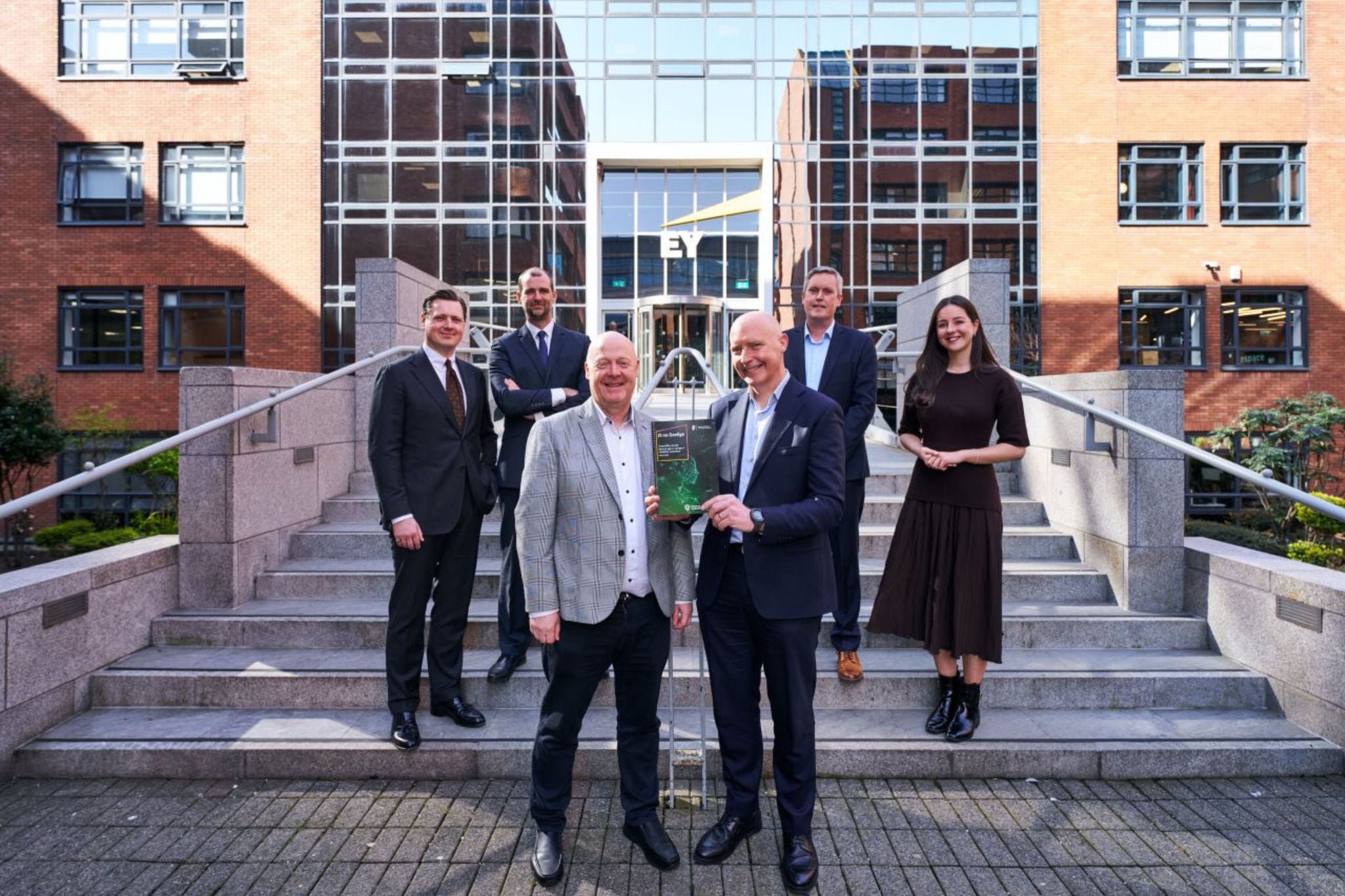
Voice‑enabled Irish AI could drive meaningful savings in call centres and help public services reimagine service delivery as AI accelerates. The future won’t wait.
In brief
- EY and Údarás na Gaeltachta set out a roadmap and business case to advance Irish‑language AI across the public sector.
- Irish‑language AI can improve citizen services and support Irish Language Act compliance at scale.
- Building Irish‑language AI supports daily use, public sector innovation and could help support Ireland’s goal of growing to 250,000 daily Irish users by 2030.
Opportunities
Údarás na Gaeltachta (ÚnaG) aimed to enhance the development of Irish language capabilities within the AI technology. As the regional authority, ÚnaG was dedicated to preserving Irish as the primary communal language of the Gaeltacht and ensuring its continuity for future generations.
ÚnaG recognised the importance of leveraging AI Irish language capabilities as the technology continues to evolve at a rapid pace. While the training of AI models often relies on extensive language data, which is predominantly available in English, ÚnaG saw an opportunity to advocate for the inclusion of Irish language data in the digital tools. Recognising that Irish language capabilities are scarce, ÚnaG identified various processes to augment the development of these resources. Moreover, there are concerns about the potential marginalisation of smaller languages like Irish and a fear that an overreliance on dominant global languages in future AI interactions could lead to the erosion of linguistic diversity. By promoting the integration of Irish into AI applications, ÚnaG aimed to enhance the visibility and usage of the language in everyday contexts and ensure that it remained relevant in the digital age.
The key objective was:
- To advance the development of Irish language capabilities in AI within ÚnaG and the wider public sector by using the power of AI and Generative AI.
- Develop a business case for establishing a dedicated entity to advance AI solutions in the Irish language across Ireland’s public sector. The aim was to include a detailed analysis of existing gaps in AI maturity and adoption, identify areas of low readiness and high opportunity.
- Showcase the capabilities of AI in the Irish language through targeted technology demonstrations and prototypes.
Solution
EY collaborated with Údarás na Gaeltachta to develop a comprehensive strategy focused on advancing AI capabilities in the Irish language, especially across the public sector. The approach included:
EY delivered a set of reports, including:
- A gap analysis identifying current solutions, future opportunities, and gaps in the use of AI for the Irish language across the public sector
- A business case highlighting the opportunity for the Irish public sector to leverage Irish language AI through targeted investment
To showcase the value and capability of AI in Irish, a proof of concept was also developed to demonstrate that the technology could effectively support Irish language initiatives in a citizen communications solution.
Go-to-Market Strategy Roadmap: The identified opportunities were consolidated to create a roadmap for providing speech-to-speech solutions, enabling users to speak to AI solutions in Irish. This roadmap includes a summary of the component technologies and AI models which are required to reach speech-to-speech in Irish alongside the delivery timelines which are required to deliver each of those individual technologies.
Proof of concept: The proof of concept showcased how AI technologies could be used in real-life situations and was, therefore, a valuable resource for Irish language AI initiatives in the public sector. A practical demonstration using a Large Language Model (LLM) highlighted AI’s ability to interactively engage with business support information from the National Enterprise Hub in Irish. On the front-end of the chatbot, an option has been added to switch between Irish and English. While the chatbot is trained on English content to communicate in English, the Irish feature enables a reuseable Irish language capability on top.
Many organisations in Ireland, both public and private, are using AI to interact with citizens and clients through chatbots. However, the advancement of the Irish language among the leading technology providers is quite limited. As a result, there are very few chatbots available in Irish. This not only affects the use of the Irish language in Ireland but also results in lower level of customer support for Irish speakers.
The chatbot designed by EY would help other organisations create chatbots that convert their English materials into Irish.
Benefit
As ÚnaG explored the potential benefits of integrating AI into the promotion of the Irish language, several key advantages emerged that could enhance both compliance and everyday usage of the Irish language.
Future forward
This has opened future opportunities for promoting Irish. Through all of this work, we could see resources like the following in everyday life:
One such innovative concept for encouraging the use of Irish is to create tools that could support the delivery of already-established services through Irish. For example: creating a translation layer that could plug into apps similar to Google Maps to provide directions in the Irish language. Among the possibilities of this project, people would have a chance to incorporate simple Irish into their daily lives while travelling and it would also provide a platform for the Irish-speaking community to share information about placenames, historical landmarks and other points of interest.
Key drivers for this idea are:
- Daily use of Irish: Offers an easy way for families to use the Irish language in their everyday activities.
- Leveraging data: Utilises a wealth of data in Irish, such as information about placenames, landmarks, and more which can be contributed by schools and other willing participants.
- Accessible technology: Requires only an AI-based Irish text-to-speech solution to bring this idea to life.
Summary
As Ireland aspires to reach 250,000 daily users by 2030, the creation of a dedicated Irish-language AI delivery entity stands as a timely and strategic response that aligns with Ireland’s priorities in public service innovation, cultural preservation, and technological advancement.
Related content
Find out how AI models helped enhance B2B sales for a telecom company.
How St James’s Hospital's transformed cancer care
Learn how our client modernised its infrastructure enhancing its data management and speeding up cancer diagnostics.