


EY refers to the global organization, and may refer to one or more, of the member firms of Ernst & Young Global Limited, each of which is a separate legal entity. Ernst & Young Global Limited, a UK company limited by guarantee, does not provide services to clients.
Recent Searches

Dr. Buzz Palmer, MedTech Actuator CEO, discusses how to bridge the gap between government, industry and innovators Japan.
In brief:
- Japan has a substantial capability gap in bringing healthcare innovation to market.
- Innovators in Japan need early-stage support to shape their value story and identify what they need to succeed.
- Startups need to embrace “failing fast” to be agile and attract investors.
- Interest in startup success stories is not matched by the effort needed to nurture an environment that fosters innovation.
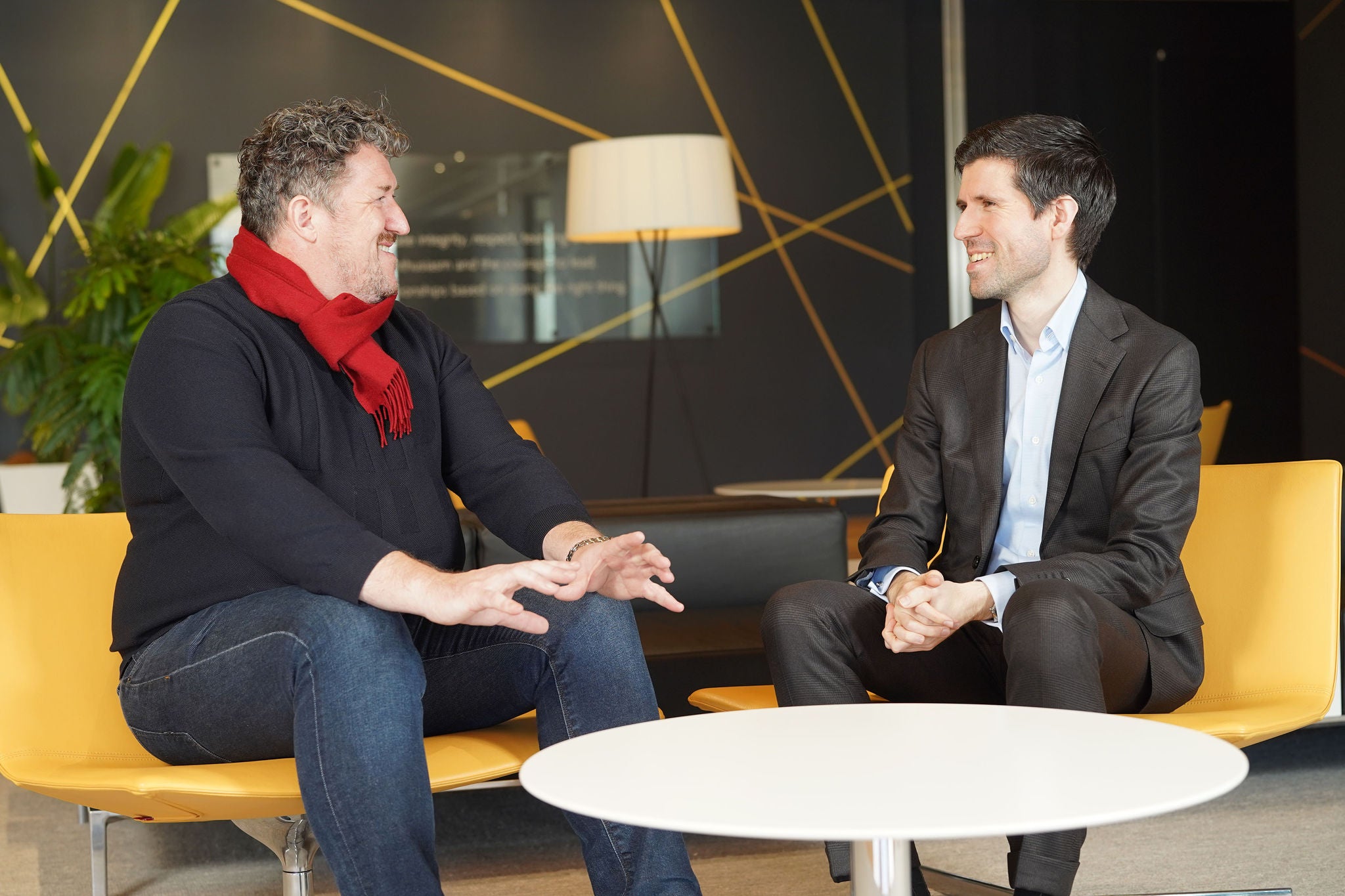
Dr. Robert Brand, Director, Health and Life Sciences, EY Strategy and Consulting Co, Ltd, (R), speaks with Dr. Buzz Palmer, CEO of MedTech Actuator and Investment Partner of Synthesis Capital (L), about accelerating healthcare innovation and challenges faced both globally and in Japan. A doctor by training and a serial entrepreneur, Buzz supports government, industry and startups around the globe with strategies for accelerating innovation in healthcare. One example of his ongoing efforts has been the creation of MedTech Actuator, a global non-profit organization that supports startups and governments in the earliest stages of innovation. After a successful launch in Australia, MedTech Actuator has grown rapidly, expanded its programs around the globe and opened offices in Singapore and Japan.
Robert Brand (RB): Buzz, to begin, what was the driving force for setting up an NPO which helps startups in the healthcare space?
Buzz Palmer (BP): Through previous experience in the healthcare sector, we recognized the importance of innovation as a force that can radically improve healthcare. However, we also know that bringing innovation to patients is often a challenging path. As an example, it takes about 30 different skills to bring solutions to market, but clinical and academic settings, which are often the starting point for innovation, only focus on a fraction of those skills. As a result, we know that thousands of pieces of intellectual property will never make it to market. We believe that among so much intellectual property there must be technology with the potential to radically change people’s lives. We felt it was wrong not to do something with that technology. As a result, we asked ourselves the question: “Is there a model that allows these innovators to understand what capabilities they need to bring their brilliant ideas to market, either through developing their own skills or by finding the people that have those skills?” We decided to create an organization that could help answer that question.
RB: When you started to build this ecosystem in Australia, did you think that you were entering a competitive space?
BP: No, we believed that nobody was trying to fill the gap that we’d identified. We saw academic institutes trying to push into industry and, conversely, industry trying to attract startups. Existing groups approached the issue from their perspective. However, we understood that no single party could bridge the gap in a way that would benefit all parties in a sustainable way. We felt that setting up an NPO to straddle that gap from a neutral position would provide a novel approach to solve this challenge. The other benefit of our approach was that we could link founders with other members who had gone through the journey before, hence accelerate their understanding. From the outset, we wanted MedTech Actuator to become a self-sufficient ecosystem which simplifies how startups gain access to large venture capital, consulting and government groups.
RB: After success in Australia, why did you choose Japan as a location to expand the organization?
BP: Early in our journey, we realized that we were solving a problem which wasn’t unique to Australia. As we believed that connecting more countries would amplify those synergies, we were always open to expanding our program. Having visited Japan several times, I remembered seeing technology in hospitals that I had never seen elsewhere. In conversations with industry peers, I often found that there were many smaller Japanese companies who only served the domestic market. Sometimes this was solely due to very simple barriers to entry, such as unfamiliarity with international markets. We saw a real potential not only to help with Japan’s ecosystem in a similar manner to what we’d achieved in Australia but also to connect the world to Japan’s great technology.
RB: Your programs have now been running for several years in Japan. Looking back, did the challenges of entering the Japanese market match or differ from your expectations?
As we experienced some barriers with global commercialization in Japan, we initially recognized there would likely be some challenges with entrepreneurial leadership. However, given the image of Japan in the 90s as a world leader in advanced manufacturing and consumer goods, with a fairly robust capital market, we expected to find much more solid fundamentals for innovation and commercialization. In contrast, once we launched our program, we realized that those fundamentals were lacking. I think that, previously, corporates were responsible for feeding the innovation circle but, as the economic boom peaked, Japan started to look to more mature options outside the country.
RB: How did you adapt your program to the Japan market, based on the challenges that you saw locally?
BP: While we initially expected to help Japanese startups develop their strategies and build networks, we soon realized that we needed to offer support at a much earlier stage. We saw innovators make mistakes early in the process, something that would be hard to recover from later or even create insurmountable barriers. I think a reason for these early mistakes is due, in part, to many innovators thinking about their startup story from a technology perspective, and not being aware of the other factors that drive successful commercialization. As a result, our teams shifted their attention to helping startups to create a robust story early in their journey, providing a checklist of the other capabilities that they had to consider. This helps startups to de-risk and allows innovators to become more attractive as business leaders to potential investors. I feel that this is particularly important in Japan where there appears to be a relatively low appetite for risk. Speaking of risks, we also had to help startups overcome a fear of failing. Our philosophy is “If you’re going to fail, it’s better to fail fast.” This is how you learn and pivot direction before it is too late. Many founders forget that what makes them interesting to investors is not only their technology but also the ability to move and grow quickly, which justifies any potential investment risk.
RB: We’ve talked about the role of MedTech actuator and startups but what do you see as the role of large pharma and government in the ecosystem that you’re helping to build?
BP: We all like to be part of startup success stories, but we must also recognize that we have a part to play in the early-stage nurturing of startups. This also means earlier support from government and pharma to help protect these individuals – founders or inventors – and offer an attractive environment for them to begin their journey. Founders and inventors often need somebody to offer reassurance and say, “we’re here, we're going to do this together.” There are so many incredible solutions in Japan. We owe it to both inventors and taxpayers to maximize the value of these ideas: there need to be paths for these ideas to come to market. However, this will only work if everyone joins forces and is willing to invest in the future. Ultimately, we see innovation not as a short-term fix but a long-term solution for future generations.
RB: What advice do you have for other global organizations that want to enter and support Japan’s domestic market?
When you enter the market, you need to achieve a balance between bringing something new and not reinventing the wheel. In our experience, it’s not about organizations. It’s about finding the right individuals within organizations. When you are building something new, you may find that existing corporate frameworks for partnerships don’t always meet your needs. This is why you need to rely on people with the personal drive to explore new territory with you. In that sense, as a global company, we believe that we fulfil a real need in Japan, by helping connections between passionate individuals across organizations. We are helping them to be bold in their thinking, cross artificial barriers, and to work towards the future that we all want to see for our children and grandchildren.
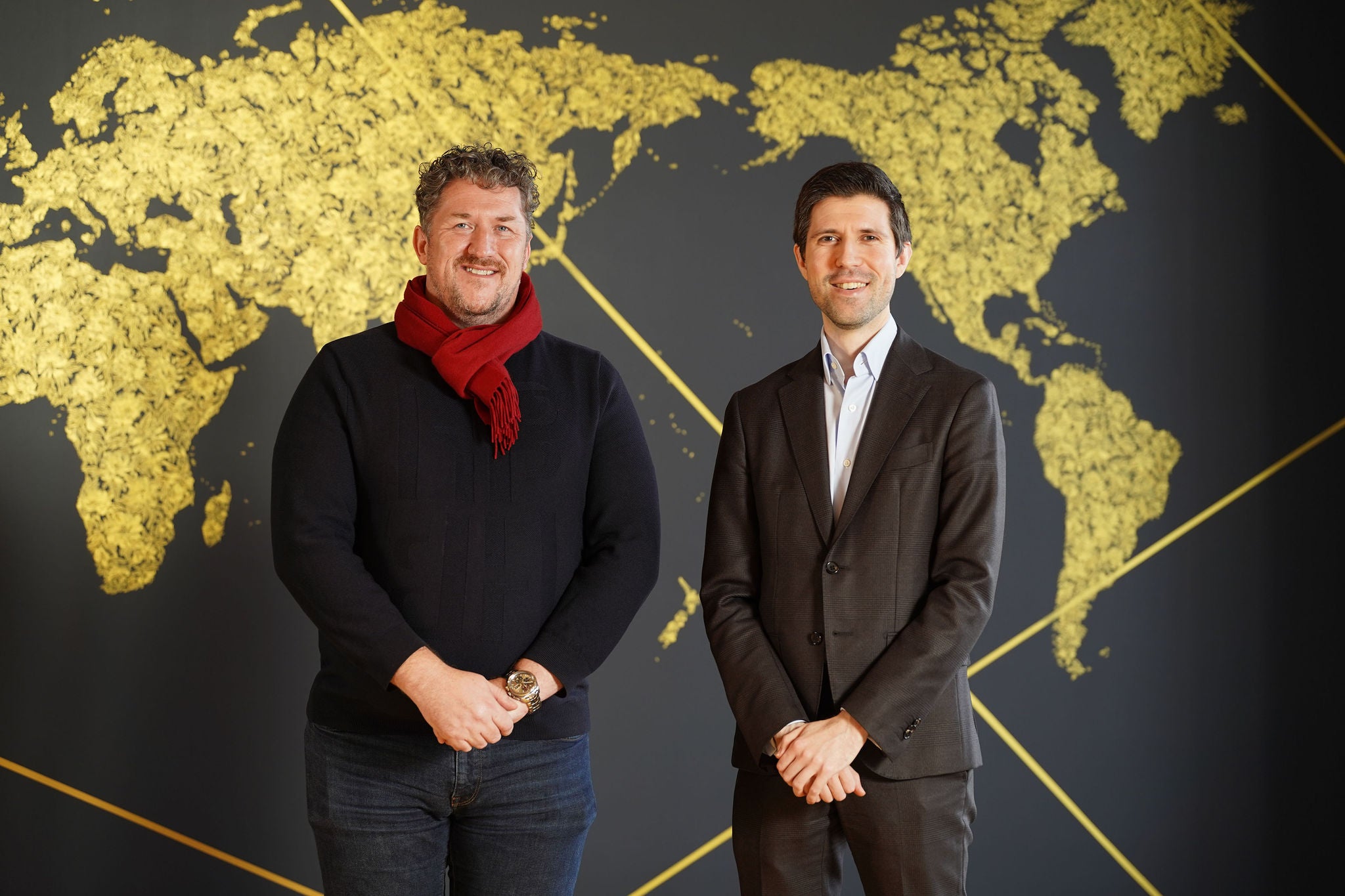
Dr. Buzz Palmer, Co-founder and CEO of MedTech Actuator (L), Dr. Robert Brand, Director, Health and Life Sciences, EY Strategy and Consulting Co, Ltd (R)
Summary
Dr. Buzz Palmer, CEO of MedTech Actuator and Investment Partner of Synthesis Capital, discusses the challenges and opportunities for accelerating healthcare innovation in Japan. Despite Japan's strengths in commercialization, a capability gap affects the ability to bring healthcare innovations to market. To overcome that gap, innovators will need early-stage support to shape their value story and realize capability gaps. Startups that can embrace this "fail fast" approach are more agile and more attractive to investors. An environment which enables these qualities will require active commitment of Government and life sciences companies.