

EY refers to the global organisation, and may refer to one or more, of the member firms of Ernst & Young Global Limited, each of which is a separate legal entity. Ernst & Young Global Limited, a UK company limited by guarantee, does not provide services to clients.
Recent Searches
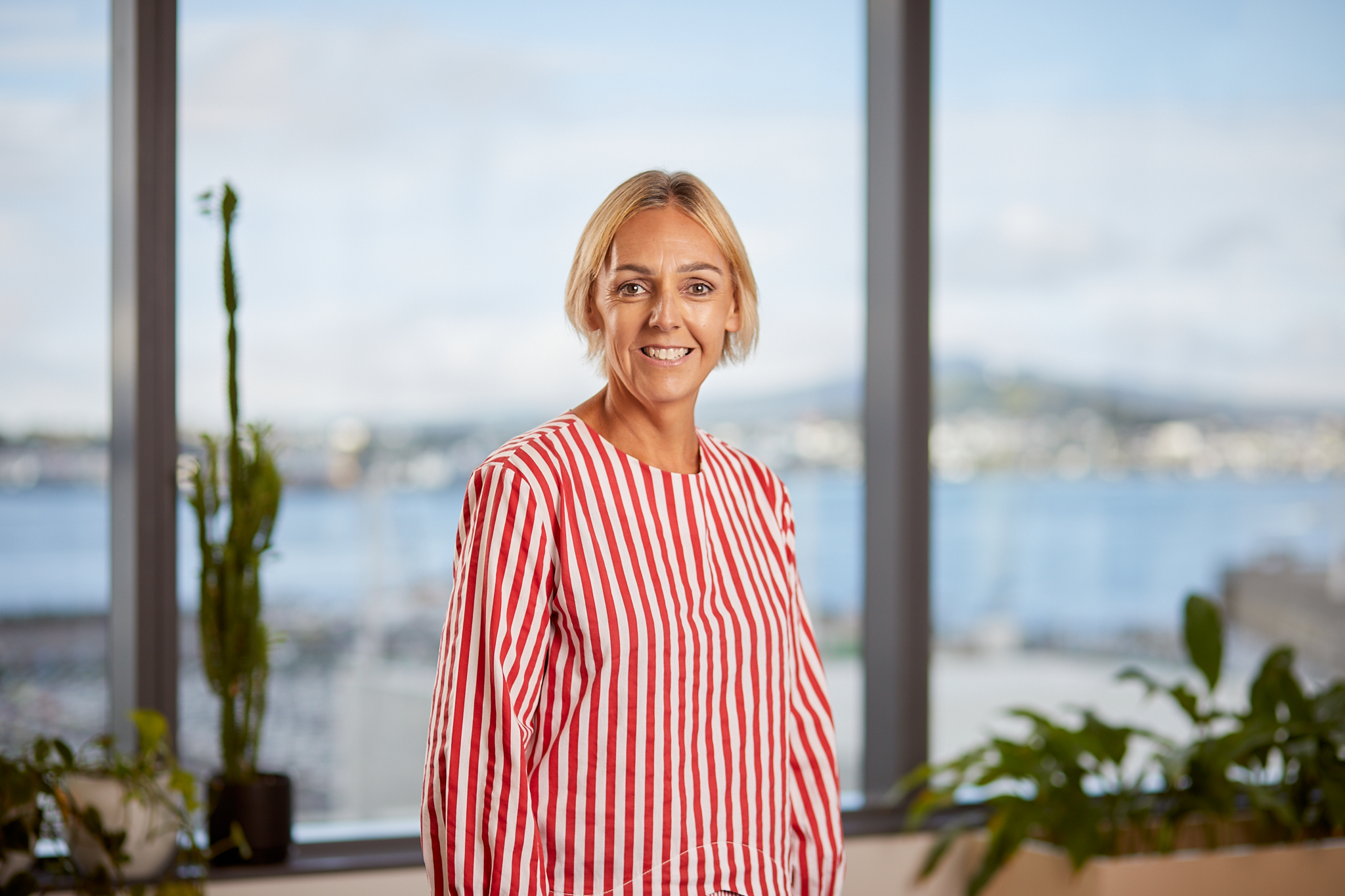
Our first “guest” on EY New Zealand’s Voices of Transformation webinar series wasn’t even human. It was an AI clone of futurist Dr. Catherine Ball.
Catherine, a scientific futurist, tech influencer and robotics expert, opened by handing over to her clone. It spoke in her voice and could, if asked, convey her message in 175 different languages.
Impressive, certainly. Convincing? Not quite. The delivery, Catherine admits, is still a little too humourless and not quite human.
But the AI clone already hosts Catherine’s weekly podcast, something she transparently declares. “In the next 12 months, I actually don’t know that you will be able to tell the difference between me and my AI clone,” she said.
Artificial intelligence is becoming ambient and embedded. It “literally surrounds, sleeps, breathes, eats, walks, dances, does everything with us.” When technology fades into the background like this, we stop noticing it.
But as technology becomes invisible, people are demanding more proof, more human presence, and more clarity about what is real, and what they can trust.
Back to the human
The clone did not stay long.
Catherine quickly stepped into the webinar – and she’s certainly the ‘real deal’.
An Adjunct Professor at the University of Maryland’s xFoundry and an Honorary Associate Professor at the School of Cybernetics at the Australian National University, Catherine is a globally recognised drone expert, a bestselling author, and a champion of ethical technology.
Her central message was measured. AI is powerful, but it is “not a panacea”. For all the momentum, most organisations are still grappling with how to use it in ways that are practical, responsible and aligned with their business.
Tools are proliferating but capability and governance are still catching up. “It’s scrambled eggs right now,” she said.
The face of automation
If AI is becoming harder to discern, robotics brings it clearly into view.
Catherine pointed to the rapid evolution of humanoid and semi-humanoid systems, from delivery robots that can glide swiftly and silently down hotel corridors to automated kitchen arms capable of chopping vegetables or mixing cocktails.
Bank of America has forecast that the number of humanoid units in operation could reach three billion by 2060, potentially surpassing cars on a per capita basis.
But the more these systems begin to resemble us, the more they sharpen the question of trust. Catherine described emerging use cases in aged care, where robotic pets are being designed as companions that also monitor heart rate, respiration and other vital signs.
People may willingly accept automation when it’s in the background. But what happens when they begin to engage with machines as companions, assistants or even proxies for human care?
The visibility paradox
Consumers are increasingly alert to where AI is being used and overused. “In the brand persona of your company, how you adopt and adapt AI… needs to align perfectly. It’s not a Venn diagram.” Get it wrong and “you will lose trust, lose market share and lose clients pretty quickly.”
There are early signs of consumer pushback, particularly where automation replaces human interaction. This is why AI is better deployed “at the backend”, while businesses preserve human presence at the front.
Nevertheless, advancing technology presents immense opportunities for humanity, our audience heard. AI-driven drug design is delivering new treatments. Quantum computing promises to solve our most complex problems. And New Zealand startups are leading the global race to turn fusion theory into an effective power source.
“The New Zealanders, again, coming at the problem from a different perspective, have totally leap-frogged over decades of research” in other markets, Catherine told our audience.
What holds beyond the hype
Like electricity or the internet, AI will become invisible infrastructure. We stopped noticing the internet when we no longer used dial up. AI is currently “messy,” but it won’t be for long.
Trust, however, will not recede from view. It will become more visible, more contested and more central to success.
As for success itself, that won’t be found in the “move fast and break things” mentality, Catherine said, but by valuing human, experience and connection. “The ultimate value of being human is being human.”
Presenters
Dr. Catherine Ball
Scientific Futurist, Environmental Scientist and Author
Podcast
Episode 01
Duration
56m 6s