Woman looking at projected code on office wall

Why technology due diligence is the strategic edge for future-proofing software investments

As market conditions tighten and investor capital becomes more selective, software deals are no longer the sure bet they once were for venture capital and private equity investors.


In brief:

  • Software investors are navigating tougher headwinds across tighter, increasingly competitive and complex technology landscapes.
  • Scalability constraints, value realisation roadblocks, and diminishing competitive moats increasingly erode deal value.
  • The impact of artificial intelligence (AI) on software has not yet fully materialised in three areas: (i) business model disruption (e.g., user-based license vs. usage-based pricing), (ii) category encroachment (e.g., Agentic AI solution vs. software extension), and (iii) delayed monetisation of AI investments.
  • Leveraging Technology Due Diligence early helps investors proactively uncover technology risks, capture synergies, and safeguard returns.
  • Roll-up strategies within software, without a keen eye on data interoperability and an integrated value-chain, have not allowed the full M&A potential to play out. 

Introduction

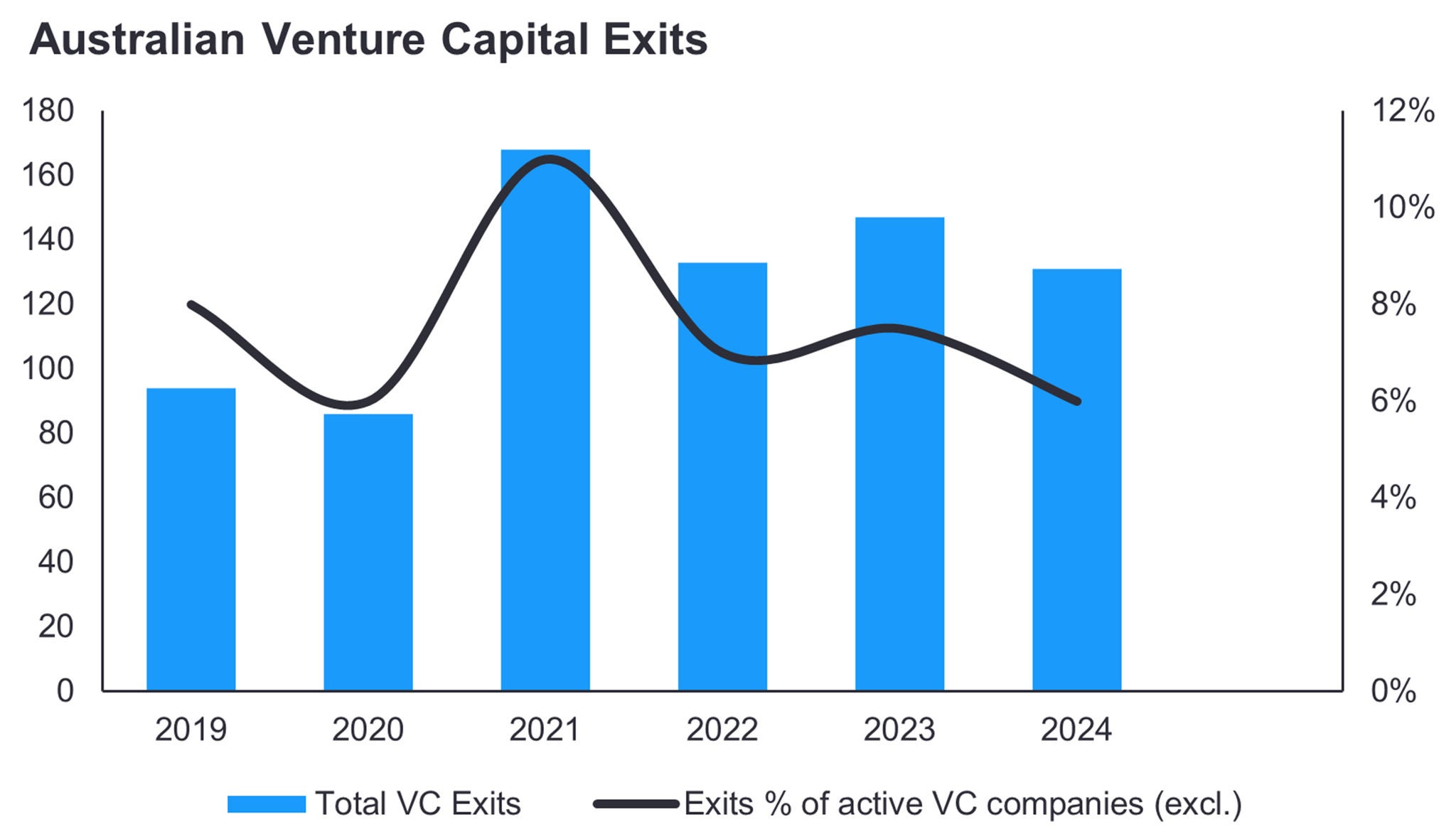
The post-COVID-19 boom saw an unprecedented surge in software-focused investments by both venture capital and private equity investors, followed by a sharp correction. Globally, software investors are faced with the familiar challenges of a boom-and-bust market: a declining number of exits and an increasing number of down rounds, a trend that is mirrored in Australia. While the arrival of the generative AI (GenAI) boom has brought a renewed mania in the sector, it also presents growing pressure for non-GenAI software companies to compete.

Chart

In this new environment defined by accelerated innovation, capital selectivity, and compressed exit horizons, software investments require sharper diligence to ensure sound capital deployment. Private equity and venture capital investors can no longer rely on traditional differentiators like proprietary code or first-mover advantage to drive sustained value creation. GenAI, low-code platforms, and open-source tools have fundamentally altered the rules of engagement. Low-code platforms specifically accelerate delivery but often introduce hidden complexity and code debt when used by citizen developers without architectural oversight.

To navigate these dynamics, leading investors are evolving their approach. Technology Due Diligence (Tech DD) has increasingly shifted towards earlier fundraising cycles, becoming integral to pre-deal evaluations and post-deal value creation strategies. Integrated alongside Commercial and Operational Due Diligence, Tech DD is becoming a critical lever for mitigating risk, validating growth potential, unlocking value pools, and crucially, future-proofing software investment portfolios.


Reframing the investment landscape

Instead of the tailwinds that once made software deals highly lucrative for venture capital and private equity firms aiming to rapidly scale and exit companies for profit, investors now face significant headwinds throughout the software deal lifecycle:

  • Pre-deal, investors risk overlooking latent technical debt, AI-readiness, and unscalable architecture that can derail growth plans.
  • Post-deal, value creation is often delayed or lost entirely when integration barriers, resourcing gaps, or technical challenges with critical enablers disrupt synergy realisation.
  • Over the long term, the wide adoption of AI is reshaping what constitutes a sustainable competitive moat, with defensibility now rooted in proprietary data, customer ecosystems, and operational embedding rather than tech stack alone.

Across a range of respected voices, ranging from MIT and HBR to industry think tanks, there’s a clear consensus that a software company’s product features or proprietary technology are no longer reliable predictors of sustainable competitive advantage. Product innovation is increasingly commoditised as competitors replicate features, leverage open-source infrastructure and adopt emerging technologies like GenAI at unprecedented speed.

Moreover, as customer needs evolve and usage scales, early product decisions often become technical liabilities, making it difficult for software businesses to adapt without significant investment for architectural change. Research from Bessemer Venture Partners shows that only a fraction of SaaS companies reaches US$100 million in Annual Recurring Revenue (ARR) without costly technical platform overhauls1.

The new imperative is clear: investors must not only understand where a company is going, but whether its technology can get it there.


An integrated diligence framework for private capital

Best-in-class investors apply a structured, integrated approach:

Commercial Due Diligence (CDD)

Technology Due Diligence (Tech DD)

Operational Due Diligence (Ops DD)

  • Market sizing
  • Unit economics
  • Revenue quality
  • Customer acquisition cost
  • Competitive positioning
  • Pricing strategy
  • Platform scalability
  • Delivery velocity
  • Technical moat
  • System reliability and uptime
  • Architecture security and compliance
  • Operational resilience and disaster recovery
  • Operational efficiency
  • Internal process scalability
  • Execution capabilities
  • Supply chain robustness
  • Workforce productivity
  • Risk management

Traditionally, investors rely on commercial due diligence (CDD) to validate whether a target company’s market position, business model, and growth prospects are realistic and sustainable. They also leverage operational due diligence (Ops DD) on how well the target can execute at scale. While CDD answers the question “Should we buy it?”, Ops DD answers “Can this company actually deliver?”.

Increasingly, and especially for software companies where technology is a core value driver or risk, Tech DD bridges the gap between commercial ambition and operational capability. It enables investors to assess whether the platform can scale, integrate, and sustain a competitive edge. Ultimately, it helps answer critical questions like: “Is the underlying engine built to last, or will it break at scale?”


Pre-deal: surfacing hidden risk and informing valuation

At the beginning of the deal, in the initial pitch or early management presentations, investors are shown an optimistic growth story built on headline metrics like annual recurring revenue (ARR) or customer growth. Many software companies present compelling growth figures despite running on brittle technical architecture that could buckle under load.


Venture capital investors often focus on early-stage software companies while having limited visibility into the underlying product’s technical platform scalability or nuances of software delivery. Meanwhile, private equity investors risk having incomplete information about code-level risks or legacy architecture that could affect their strategic objectives. According to a 2024 Armanino survey, 69% of SaaS companies capitalised development costs2. While this could highlight ongoing technical investments and ongoing platform evolution, it may also point to underlying technical complexity or a need to resolve structural technical challenges.


Conducting a Tech DD early in the deal cycle delivers critical insights in risk identification, and surfaces investor pain points. Whether evaluating an early-stage software venture or a mature platform, Tech DD enables sharper investment theses, mitigates downside exposure, and unlocks value creation opportunities tailored to the software company’s maturity stage. Leveraging these insights can help inform valuation accuracy, strengthen investment theses, and optimise post-close capital allocation to mitigate identified risks, positioning investors to better realise anticipated growth and value.

Early-stage software companies – indicative only

Focus area

Risk identification

Potential impact

Codebase quality

Immature, undocumented, shortcut-driven development

Costly to scale or refactor post-deal

Technical talent

Overreliance on founders or a few engineers

Key-person risk threatens continuity

Security & compliance

No formal controls on regulatory readiness

Legal and reputation risk

IP ownership

IP not properly assigned or tracked

Exposure to ownership disputes

Infrastructure

Basic cloud setup, little resilience or observability

Platform reliability and uptime concerns

Established software platforms – indicative only

Focus area

Risk identification

Potential impact

Codebase quality

Legacy codebase with technical debt

Slow innovation, high maintenance cost

Product architecture

Rigid, outdated architecture

Expense to modernise or integrate

Security & compliance

Legacy vulnerabilities, inconsistent controls

Regulatory fines or breach risks

Tech stack

Use of outdated or niche technologies

High talent acquisition cost, limits futureproofing

Integration capability

Incompatible with modern platforms/APIs

Limits post-deal synergy realisation


Post-deal: de-risking execution and realising value

After all the diligence and rigorous pre-deal preparation is completed, transaction execution and value realisation in the post-deal phase often prove more challenging and complex than initially anticipated. McKinsey highlights that 30% of the largest global acquisitions experienced execution delays of up to six months, primarily due to overlooked technology challenges3. Meanwhile, a Bain & Company survey of 352 global executives cited overestimating synergies as the second most common reason for disappointing deal outcomes4.

In software investments involving platform roll-ups or strategic add-ons in their theses, the deal value often hinges on seamless technical integration. However, these initiatives frequently encounter unexpected integration barriers such as conflicting infrastructure, incompatible product roadmaps, and resource constraints. Additionally, the loss of any key persons can severely disrupt momentum and dilute expected synergies. Addressing these challenges early through robust Tech DD enables investors to operationalise and realise targeted synergies and other value creation initiatives swiftly and reliably.

Tech DD helps investors deliver on the success of their software investment theses by proactively managing potential blockers to value realisation ahead of the transaction execution. It enables investors to validate integration readiness, assess technical and operational risks, and identify gaps in scalability, team capability, or system compatibility within the due diligence phase. By uncovering hidden issues and informing targeted remediation efforts for the post-deal execution phase early on, Tech DD supports smoother integration, reduces risk exposure, and accelerates value realisation, ultimately protecting and enhancing deal value.


Long-term: underwriting defensibility in a commoditised tech environment

Over the long term, the dynamics underpinning software investment are anticipated to undergo a fundamental shift. The pace of technological advancement is compelling both private equity and venture capital investors to reconsider the nature of risks that may emerge within their exit horizons. Factors once regarded as long-term considerations beyond the typical investment cycle are now materialising within one to two years, requiring earlier and more proactive strategic responses.

As GenAI accelerates feature replication and commoditises technology stacks, traditional tech-based competitive advantages are rapidly diminishing. In a late 2024 survey of 555 software executives conducted by CIO Dive studioID, 75% have seen up to 50% reduction in development time by implementing various GenAI and automation technologies5. Consequently, investors must shift focus from proprietary code alone to more enduring differentiators such as proprietary datasets, integrated workflows, and platform extensibility.

Durable competitive moat increasingly rests upon: (1) proprietary datasets and workflows that are deeply embedded within client operations, (2) strategic integrations within broader ecosystems that elevate customer switching costs, and (3) architectural flexibility that enables continuous innovation and rapid adaptation to dynamic market conditions. This shift in defensibility is echoed across academic sources to consulting whitepapers and industry research, converging on the idea that traditional product feature differentiation is rapidly becoming obsolete and that durable competitive moat comes from being deeply and uniquely ingrained in the customer’s world.

In this evolving context, Tech DD helps investors early on rigorously evaluate whether a company’s differentiation strategy can sustain competitive pressures and market shifts over the long term. It helps investors move beyond surface-level assessments of functionality to a deeper analysis of structural defensibility. By interrogating the foundational enablers of differentiation, Tech DD provides critical insight into whether a company is positioned to maintain relevance and resilience amid accelerating disruption.



APAC outlook

The dynamics outlined in this paper are acutely visible in the Asia-Pacific (APAC) region, where sector-specific innovation, rapid AI adoption, and legacy modernisation pressures are reshaping the software investment landscape. Understanding these trends provides investors with critical context to apply Tech DD effectively in APAC markets.

Software trends in the market

Theme

Context

Outlook

Vertical SaaS

Healthcare was among the first sectors to deploy ERP platforms tailored to proprietary clinical workflows (e.g., Health Information Systems). More recently, sector-specific ERPs have emerged in industries such as logistics (e.g., Cargowise) and mining.

Vertically integrated solutions will continue to proliferate as sectors demand industry-specific functionality embedded within core platforms.

Infrastructure software adjacencies

Software, increasingly powered by AI, is enabling solutions across adjacent domains, including carbon fuel consumption tracking, electronic parking, and energy optimisation for industrial installations.

Adoption is expected to accelerate in asset-intensive industries, with real-time simulation and optimisation driving improved business outcomes.

Sector-focused agentic AI scale-ups

Agentic AI is automating routine workflows, from reconciling invoices to scheduling appointments, enhancing human oversight in the process. Value is shifting to solutions that are sector-aware, outcome-driven and self-service-enabled.

Over the next five to seven years, Agentic AI will reimagine enterprises, with pricing models based on demonstrable outcomes and observability as a core design principle.

Incumbent modernisation

In markets such as North Asia and industries like mining, incumbents face significant technology debt arising from delayed M&A integration and legacy technology stacks.

Platform modernisation is imperative for competitiveness. This requires significant investment and rigorous post-transaction monitoring of capital deployment and ROI.

Adapting product-market fit for AI-led disruption

Elements of software companies’ value propositions are being subsumed by generative AI (GenAI) and agentic AI platforms. The focus has shifted from AI readiness to rapid commercial and product roadmap pivots.

Winners will be those that adapt quickly, recalibrate pricing models (including premium pricing where business impact is clear) and demonstrate measurable outcomes to customers.

Key takeaways

  • Investors must assess whether solutions are genuinely embedded within sector workflows, driving resilient recurring revenue, or whether they are simply feature extensions of horizontal SaaS platforms. Tech DD is critical to validate defensibility and scalability.
  • It is essential to validate data capture mechanisms, AI models and integration capabilities with real world assets. Weak infrastructure or shallow technology foundations can undermine the credibility of promised ROI.
  • A deep review of AI architecture, training data quality, and governance frameworks is required. Without robust guardrails, investors face material adoption risks and heightened regulatory exposure.
  • Tech DD must uncover the true depth of legacy systems, provide realistic estimates of modernisation costs and determine whether post-deal transformation can be executed within the investment horizon.
  • Investors should assess whether companies are proactively pivoting to address AI-led disruption or are at risk of obsolescence. Downside protection depends on confirming product roadmap agility and defensibility of intellectual property.

Raising the bar for Tech DD excellence

To adapt to evolving market dynamics and rising complexity, investors must raise the standard for Tech DD and what they can get out of it. No longer a box-ticking exercise, Tech DD is becoming a strategic discipline that informs value creation, sharpens strategy and transaction execution, and underwrites long-term defensibility.

Best-in-class investors take a structured, insight-driven approach that moves beyond technical health checks to align technology capabilities with the commercial and operational ambition of the investment thesis. The result is a more holistic view of risk, and upside that is anchored in evidence and informed by forward-looking analysis. 

What best-in-class Tech DD looks like

Attribute

Best practice approach

Product and roadmap

Focuses on team structure and development process maturity, ensuring alignment with business outcomes and delivery effectiveness. Clear ownership and well-defined processes help accelerate roadmap execution and improve product quality.

Technology and architecture

Emphasises architecture design and codebase scalability, assessing how the stack supports roadmap delivery and future growth. Robust, flexible architecture enables easier integration, reduces technical debt, and supports long-term innovation.

R&D organisation and processes

Reviews R&D spend composition, benchmarking against industry standards to evaluate efficiency and investment focus. Properly structured teams and balanced resource allocation drive innovation and ensure alignment with strategic priorities.

Hosting and Cloud

Concentrates on infrastructure scalability and cloud deployment practices, including CI/CD, to support performance and growth. Efficient hosting and deployment models reduce operational risk and enable rapid, reliable delivery of services.

Cybersecurity

Assesses key security controls, ensuring protection against risks and compliance with standards. Strong cybersecurity practices safeguard sensitive data, protect IP, and maintain trust with customers and stakeholders.

Conclusion: rethinking diligence for a new era of software investment

While software continues to dominate investment portfolios globally and across APAC, the path to value creation is becoming increasingly complex. Market dynamics have evolved. So too must the tools investors use to evaluate opportunity and manage risk.

For investors operating in an increasingly cautious market, the stakes are clear. The next wave of successful investors will be those who move beyond instinct and narrative, and towards deeper, data-informed evaluation.

In this environment, Tech DD is no longer a discretionary exercise. It is a strategic enabler that sharpens valuation, strengthens investment conviction and enhances post-deal execution. When executed to this downside, Tech DD doesn’t just protect downside; it unlocks upside by surfacing the levers that drive real technical and commercial value. The investors that leverage Tech DD to a new standard are the ones that will be best positioned to capture outsized returns in an increasingly complex software landscape.

Summary

This whitepaper explores the evolving landscape of software sector M&A, highlighting the critical role of technology due diligence in mitigating risk and maximising value. As market dynamics shift and AI accelerates disruption, investors must adapt their approach to diligence, focusing on scalability, integration, and defensibility. By adopting a structured, insight-driven framework, private capital can better navigate headwinds, safeguard returns, and position portfolios for sustainable growth in a rapidly changing environment.

About this article

Authors

Contributors

Related articles

How can responsible AI bridge the gap between investment and impact?

Explore the ways in which responsible AI converts investment into meaningful impact.

Does today’s disruption provide the blueprint for tomorrow’s growth?

EY-Parthenon CEO Survey September 2025 reveals how leaders build confidence, resilience, and growth strategies amid disruption and transformation.

How can cybersecurity go beyond value protection to value creation?

The 2025 EY Global Cybersecurity Leadership Insights Study found that CISOs account for US$36m of each strategic initiative they are involved in. Read more.