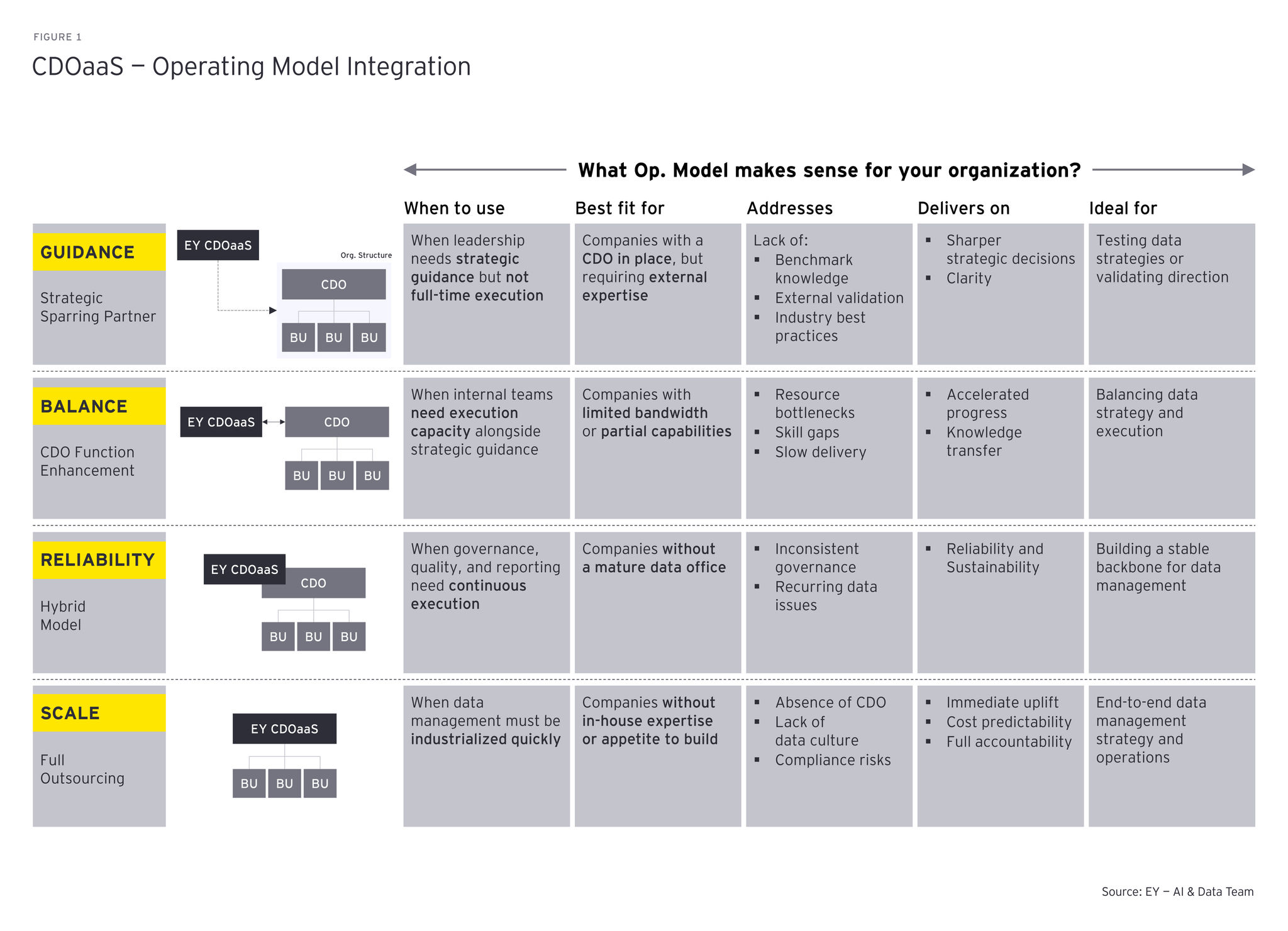
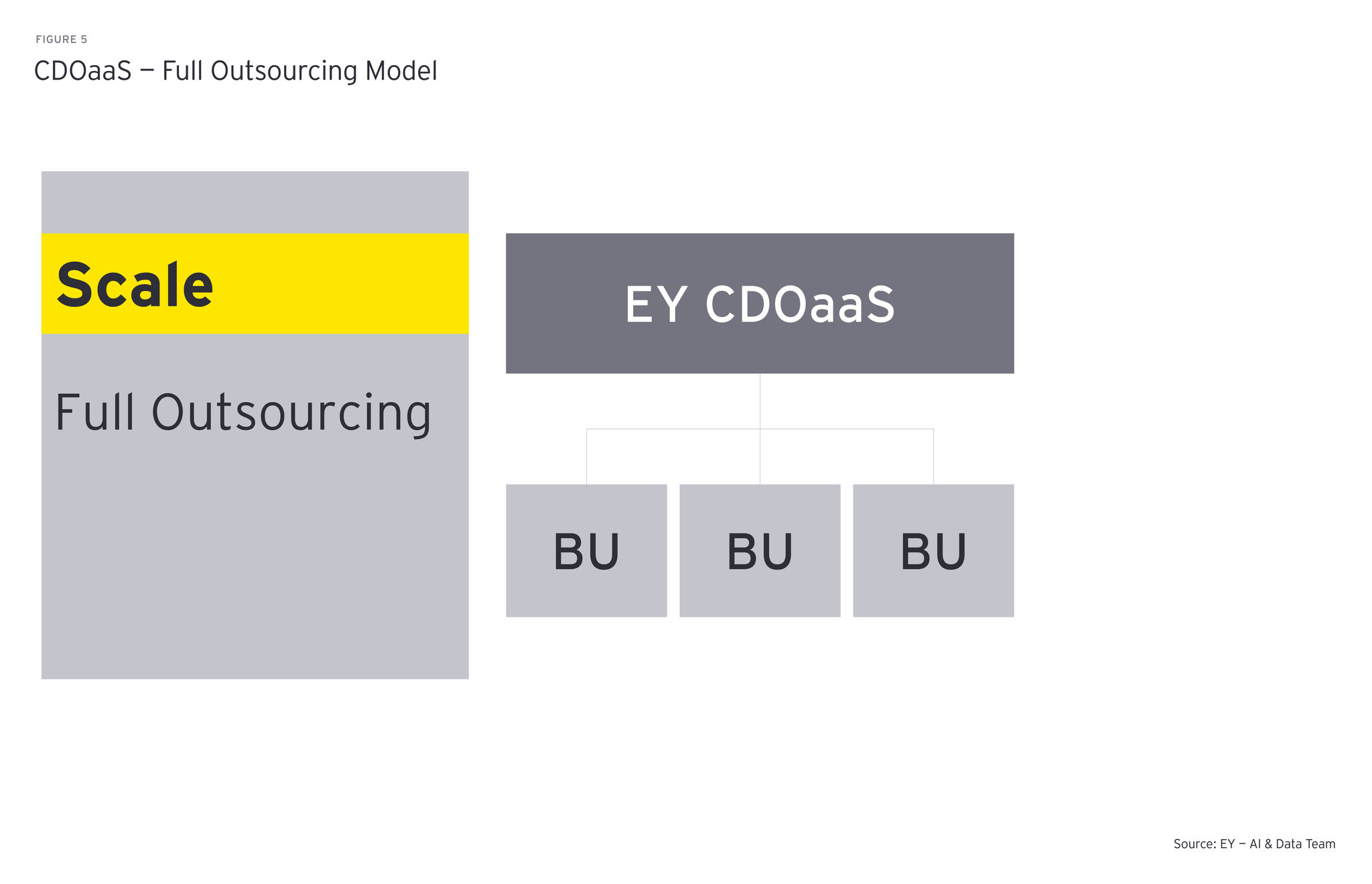
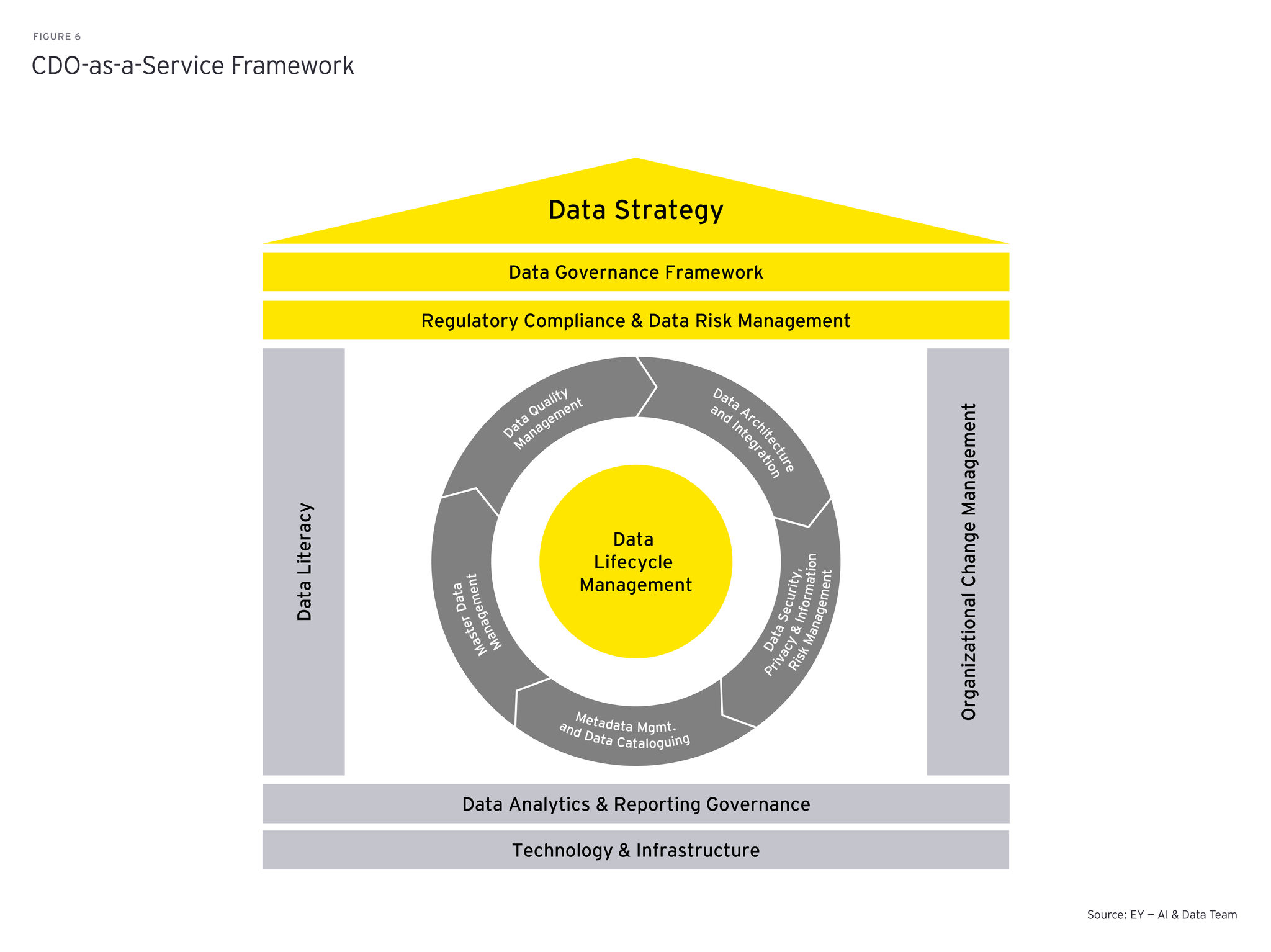
To bridge the capability gap, many organizations are adopting CDO-as-a-Service solutions – an externalized, modular and scalable approach that delivers the leadership, governance and operational capacity of a full data office without the long and capex-intensive build-up period.
Organizations with strong data leadership see demonstrable business benefits: 43% higher innovation performance, 7% greater revenue growth and 9% more value generated from data according to a recent IBM CDO Study1. In addition, an Amazon Web Services study2 found that 63% of CDOs dedicate at least 20% of their time on data governance, underscoring the importance of a sustained governance function to drive impact. These advantages translate into reduced costs, faster decision-making and increased trust in data, enabling innovation across analytics, AI and digital transformation, all while establishing a solid foundation for future growth.
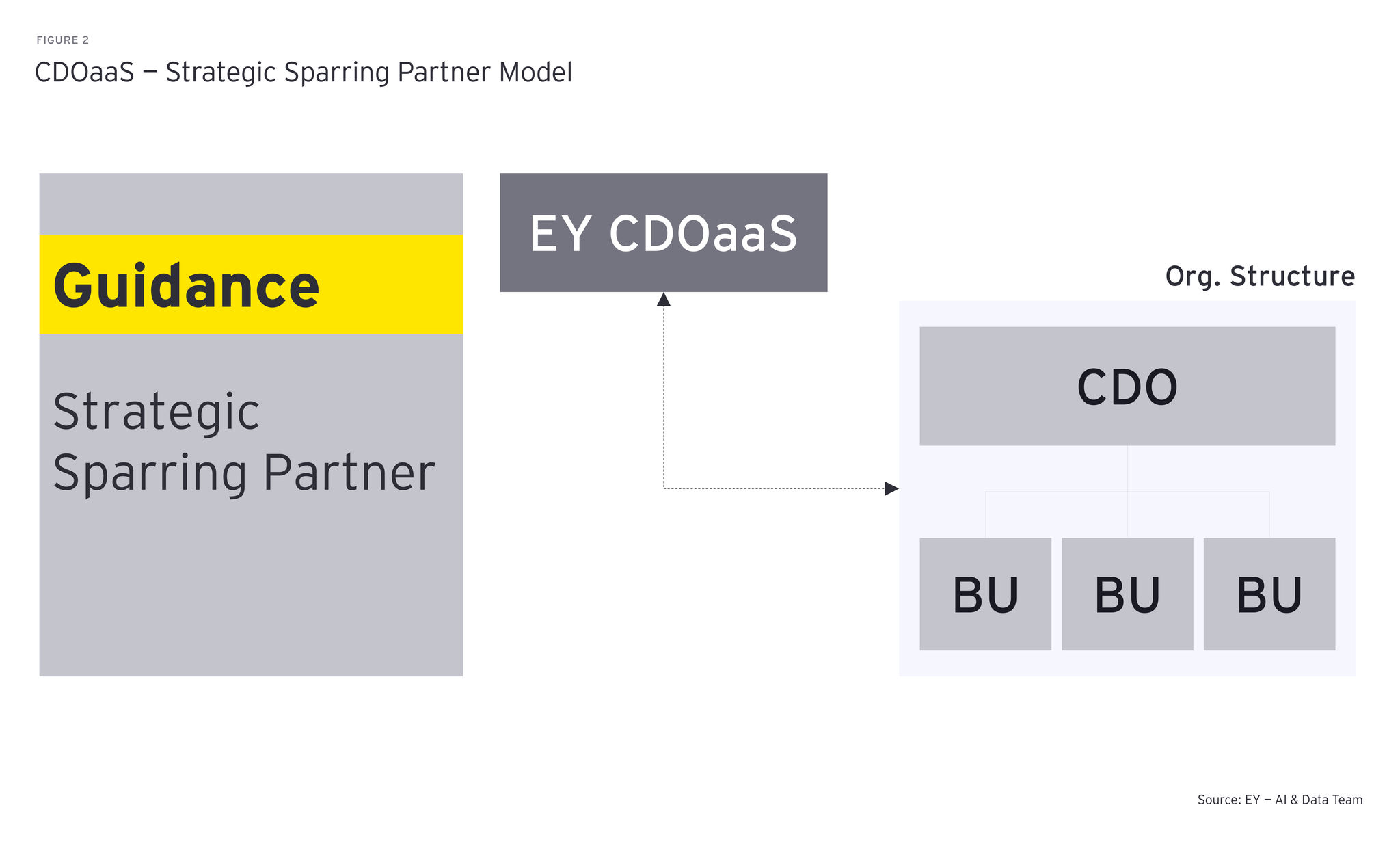
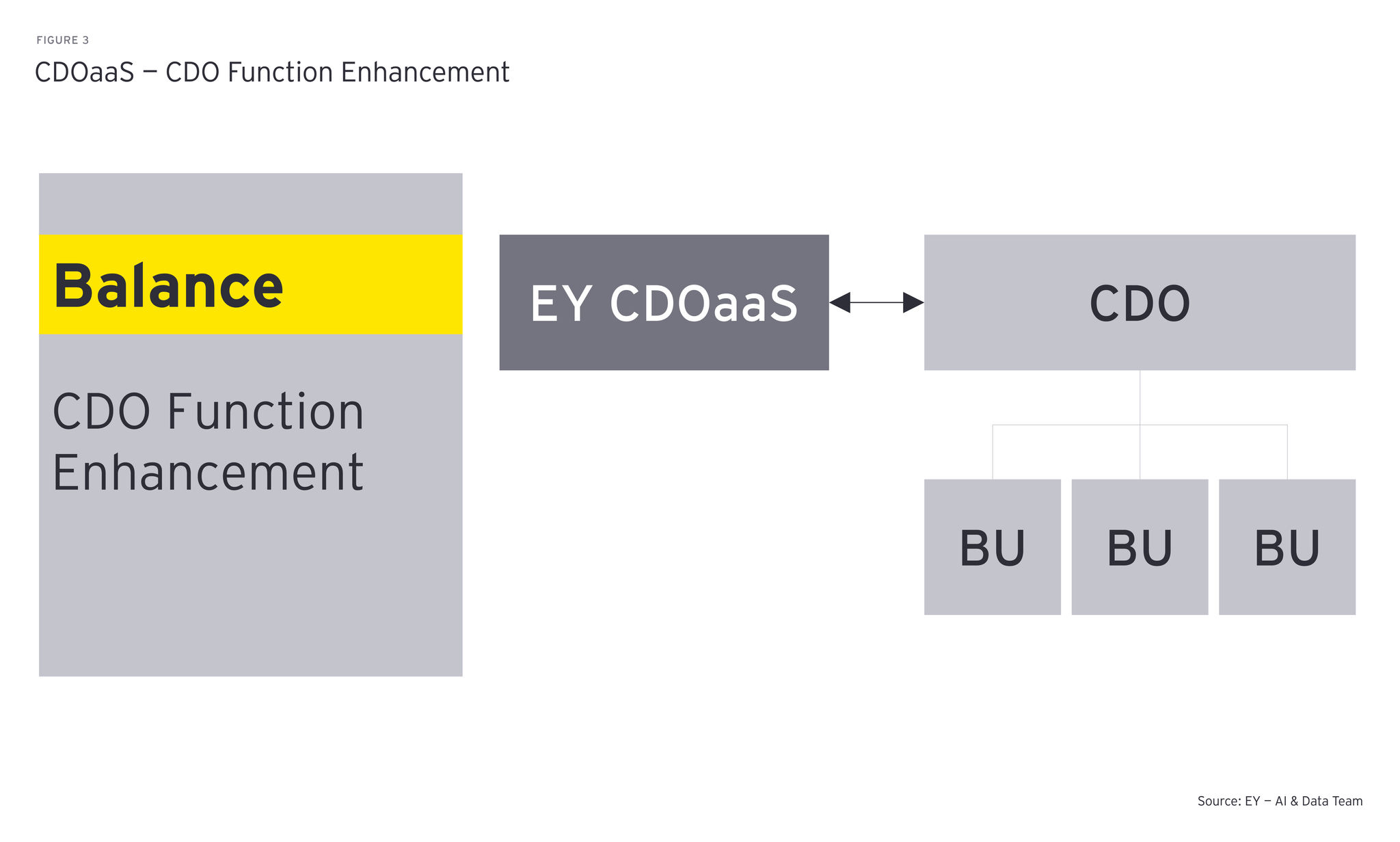
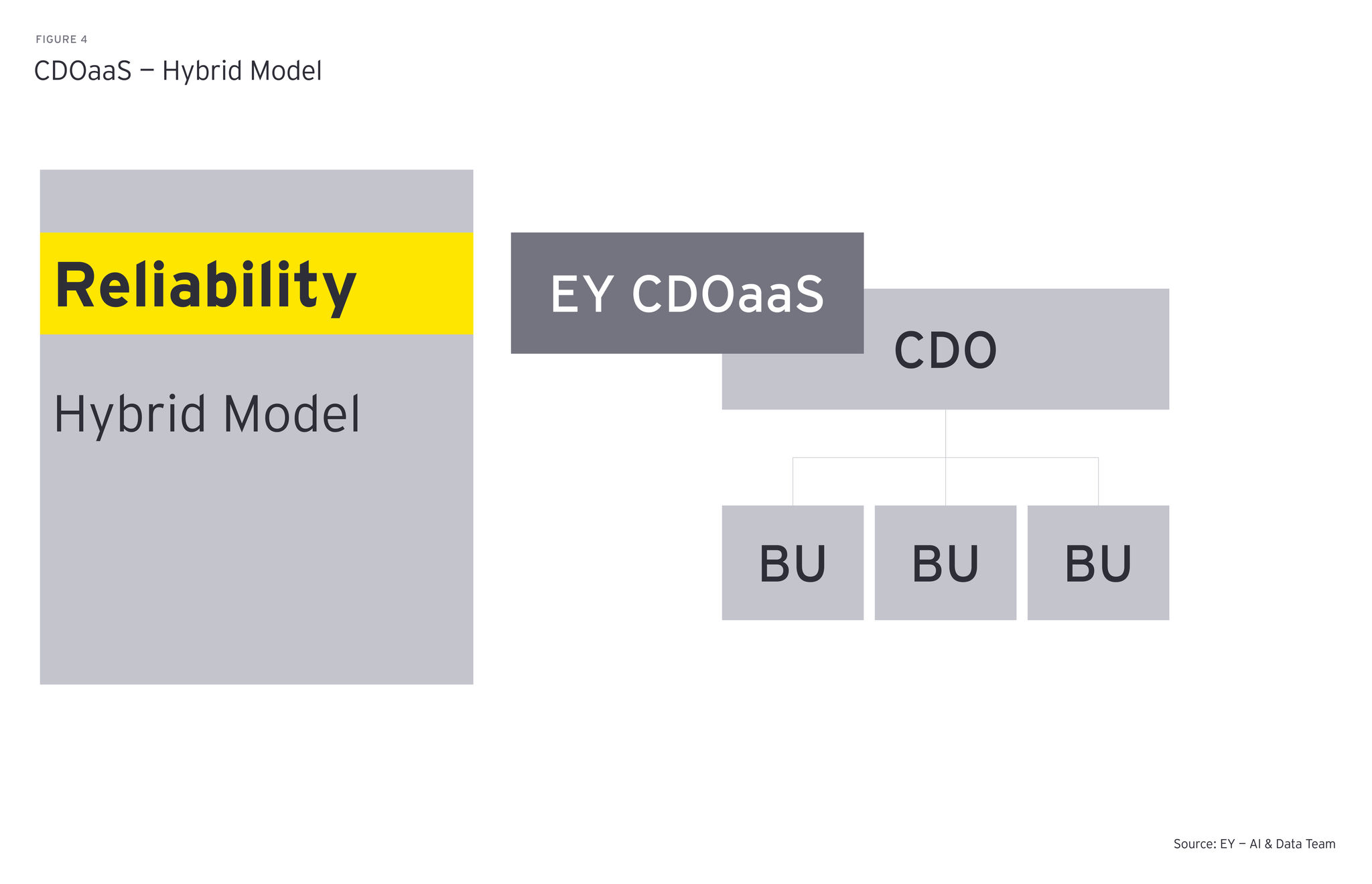
An external data leadership service doesn’t replace strategic intent; it accelerates it. The service provides structure, consistency and access to best practices grounded in established frameworks, such as DAMA and DCAM. Whether the need is strategic guidance, targeted capability enhancement or complete operational takeover, CDOaaS adapts to fit the organization’s size, regulatory exposure and data maturity level.
From role to capability: rethinking the CDO function
CDO-as-a-Service is not simply an outsourced executive role. It represents a shift from viewing the CDO as an individual to treating data leadership as an enterprise capability that can be modularized, industrialized and scaled.
Instead of building every component internally, organizations gain access to:
- experienced data leadership (fractional or interim CDO roles)
- proven governance and operating models
- standardized tooling and control frameworks
- regulatory expertise across multiple institutions
- execution capacity across architecture, quality, metadata and reporting
This turns data management from a bespoke transformation effort into a managed capability with predictable outcomes.
Speed to control and credibility
Establishing baseline governance structures, ownership models, quality controls and reporting processes internally often takes 18–36 months. With CDOaaS, many of these foundations can be operational within a single planning cycle.
For regulated organizations, this speed directly affects audit readiness, remediation timelines, supervisory confidence and management’s ability to rely on data for strategic decisions.
An external data leadership service does not replace strategic intent; it accelerates it.
Strategic control remains internal
A frequent concern is the potential loss of ownership. In practice, a well-designed CDOaaS model preserves strategic control within the organization:
- business priorities remain with executive management
- data ownership stays with business domains
- governance bodies include internal decision-makers
- service scope remains modular and contractually adjustable
CDOaaS replaces execution bottlenecks; not accountability.
A bridge to long-term maturity
For some organizations, CDOaaS becomes a permanent operating model. For others, it functions as a transition mechanism: accelerating early maturity, stabilizing governance and enabling structured knowledge transfer until internal teams are ready to assume responsibility.
This flexibility differentiates CDOaaS from traditional consulting engagements or pure outsourcing arrangements and sets the stage for the integration models described in the next chapter.