safe harbor in clean environment

2026 Safe-harbor interest rates for advances and intercompany loans: practical guidance and key considerations


The new safe-harbor interest rates for loans in Swiss and foreign currencies for 2026 are available.


In brief

  • The Swiss Federal Tax Administration (SFTA) has released the safe-harbor interest rates for intercompany advances and loans for 2026.
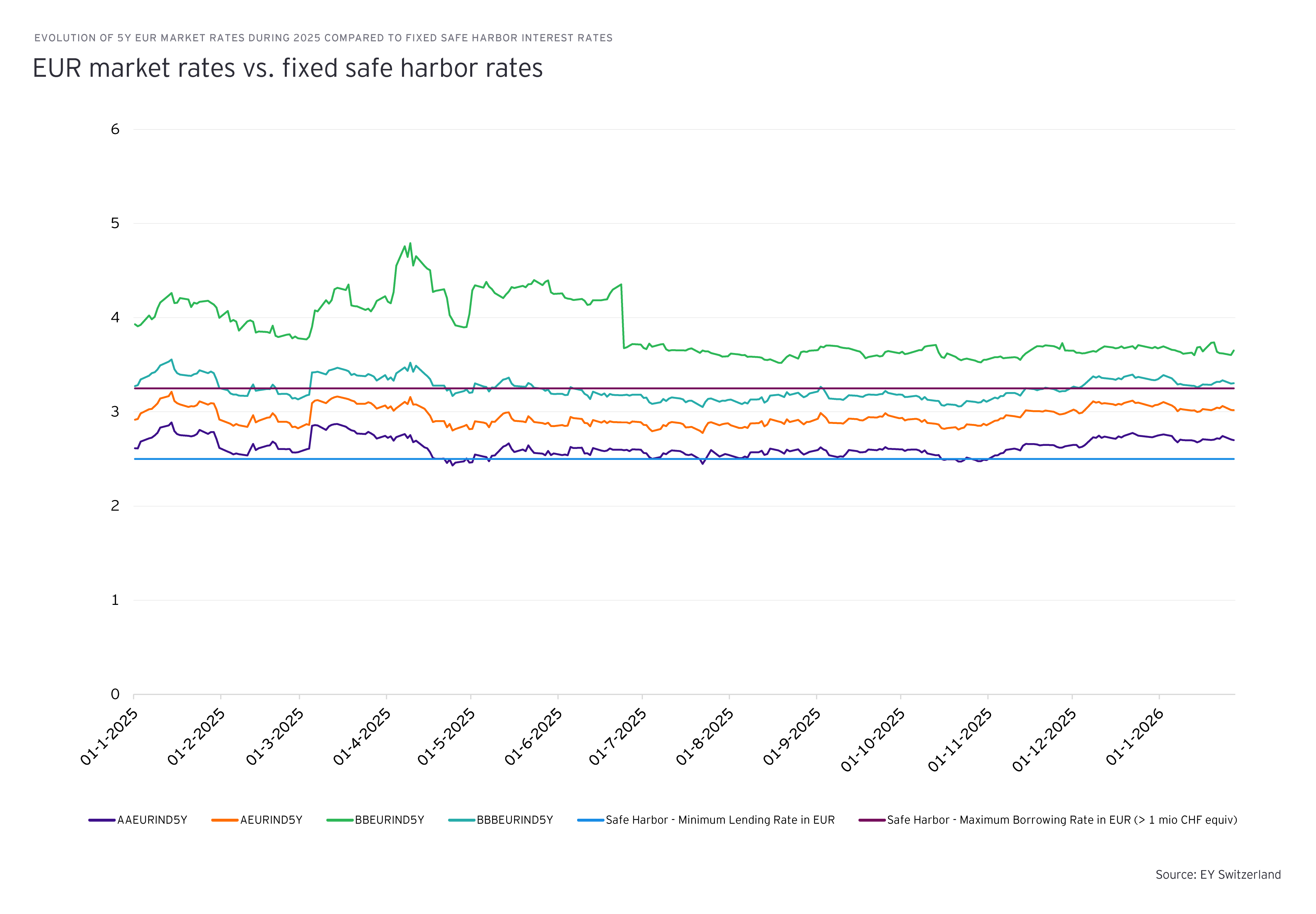
  • In hindsight for 2025, the SFTA's max. borrowing safe-harbor rates e.g. for EUR denominated loans correlate with market rates for loans rated around BBB, but a single rate cannot capture the diversity of market solutions across different ratings and maturities.
  • In some cases, the safe-harbor rates may simplify compliance and offer tax certainty; however, correct application is mandatory and it is crucial, particularly for cross-border transactions, to conduct comprehensive transfer pricing analyses based on market rates.

On 29 and 30 January 2026, the Swiss Federal Tax Administration (“SFTA”) issued Circular Letters No. 218 and 219 (the “Circulars”), which set out the applicable safe‑harbor interest rates for intercompany (“IC”) advances and loans denominated in Swiss francs (“CHF”) and in foreign currencies, respectively.

Summary of 2026 safe-harbor interest rates

Equity-financing

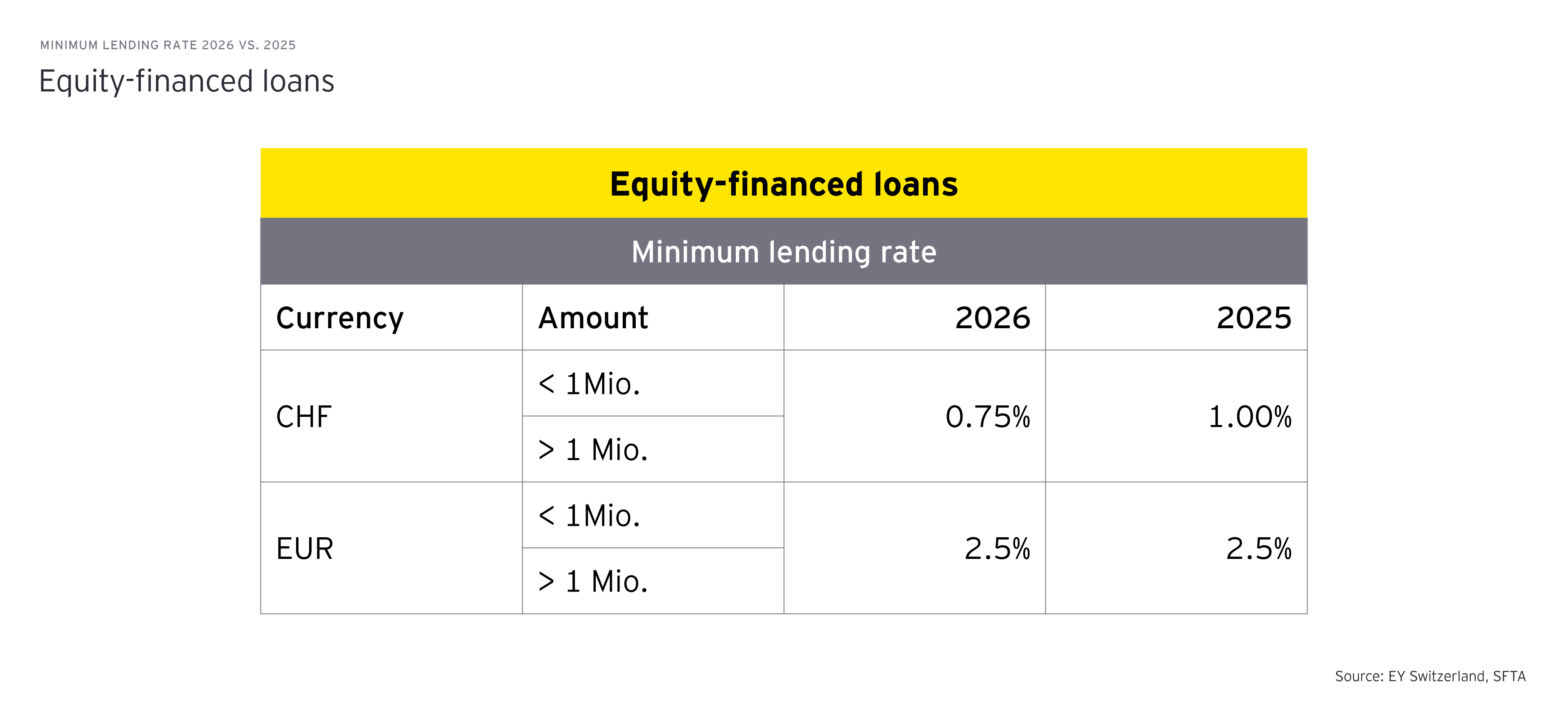
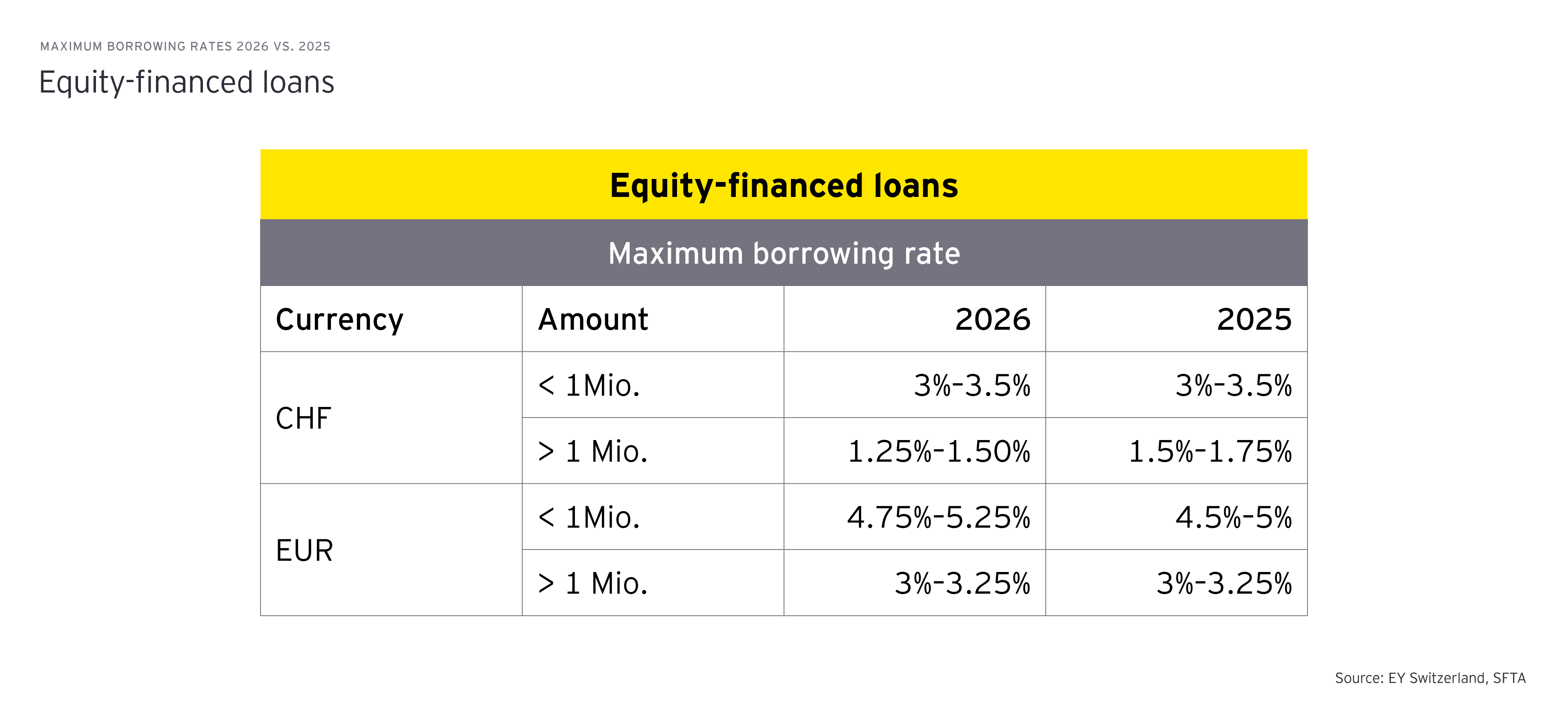
Minimum lending rates and maximum borrowing rates for equity-financed loans in CHF and EUR are displayed in the tables below, together with a comparison of the same rates in 2025.

Equity financed loans
MAXIMUM BORROWING RATES 2026 VS. 2025

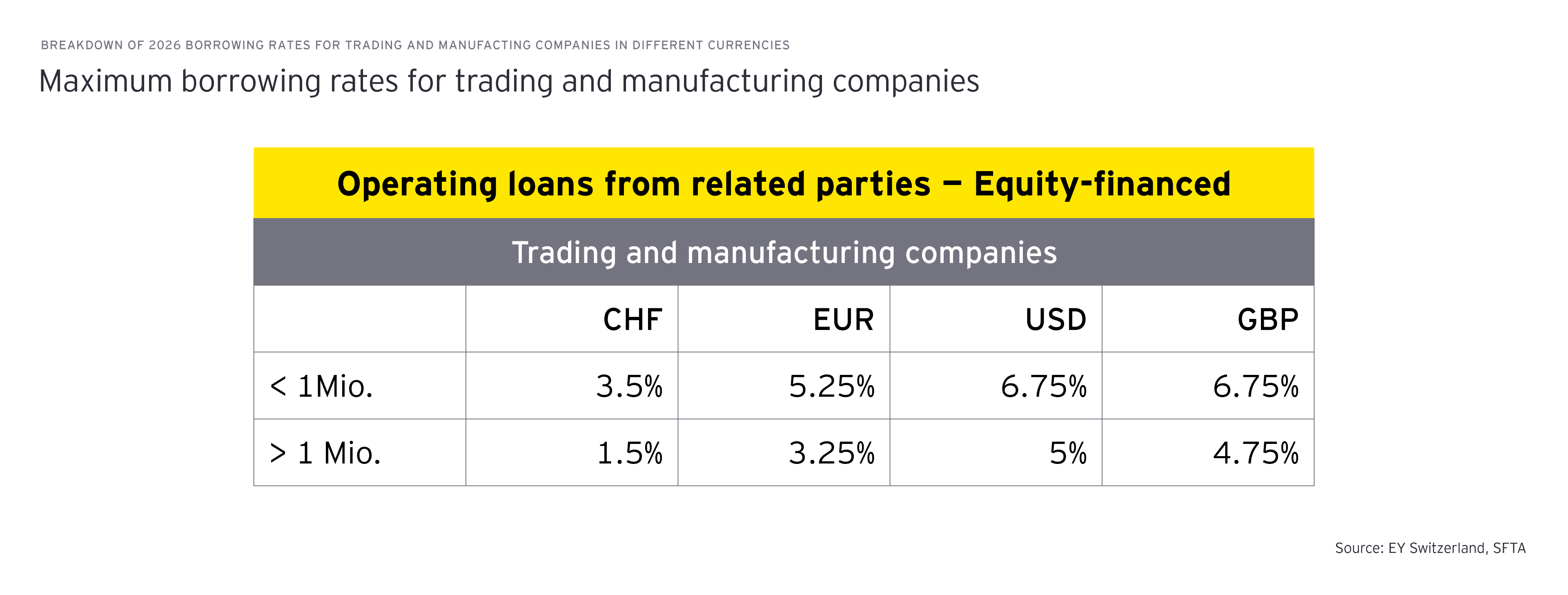
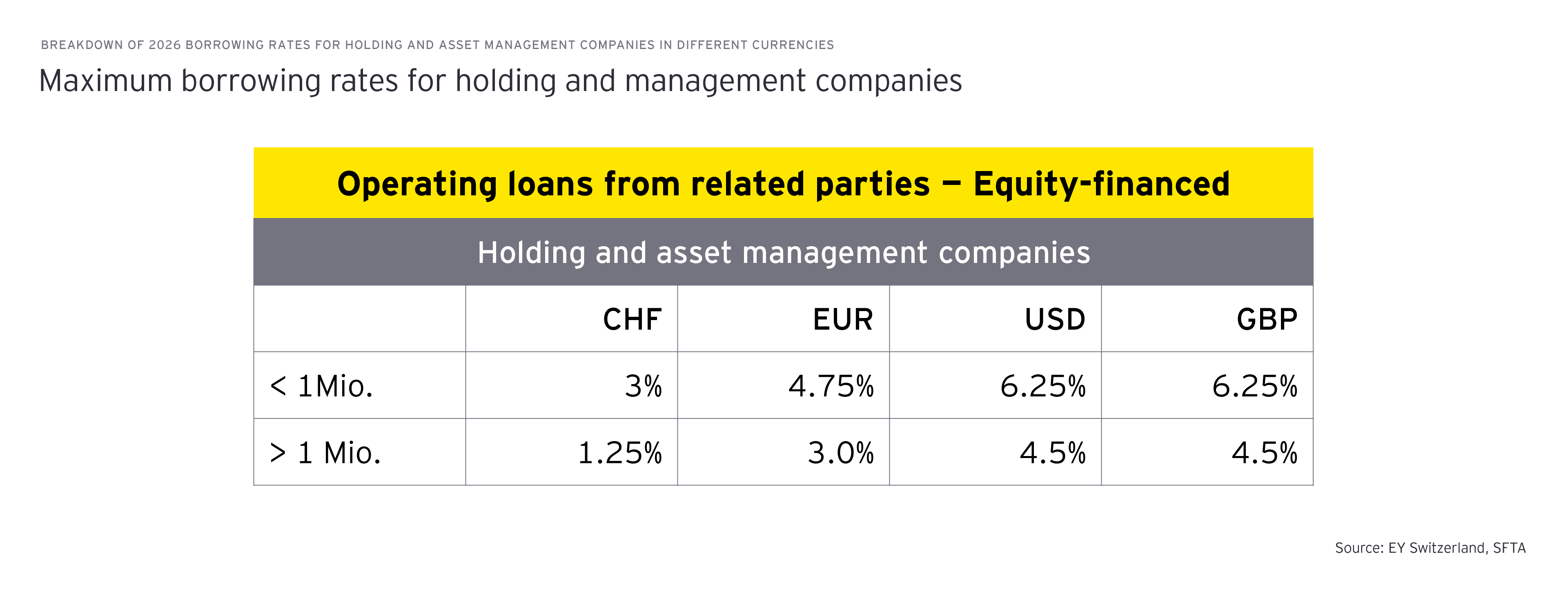
To determine the maximum borrowing rate that Swiss entities are authorized to pay under the safe-harbor rules, a spread is added as stipulated in the relevant Circulars. For example:

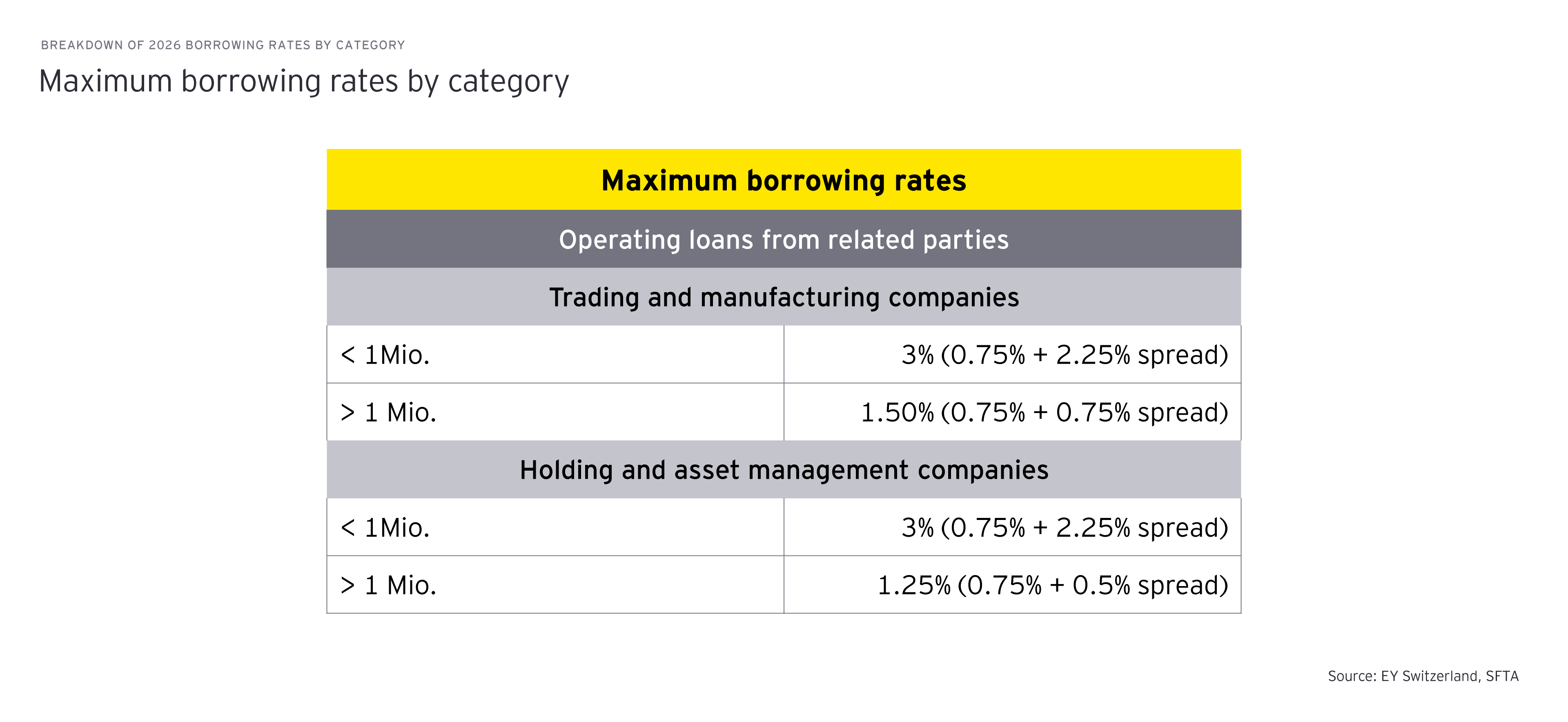
  • For operating loans received by trading and manufacturing companies, a spread of 2.75% applies to the portion of the loan up to CHF 1 million. For any amount above this threshold, the spread is reduced to 0.75%.
  • For holding and asset management companies, the applicable spreads are 2.25% for the first CHF 1 million and 0.50% for amounts above that threshold.

For illustrative purposes, the following table shows how the borrowing rates are calculated for CHF loans.

 BREAKDOWN OF 2026 BORROWING RATES BY CATEGORY

In 2026, the maximum borrowing rates decreased by 0.25% for CHF-denominated borrowings compared to 2025. The following table summarizes the maximum borrowing rates for loans from related parties denominated in CHF, EUR, and USD.

BREAKDOWN OF 2026 BORROWING RATES FOR TRADING AND MANUFACTING COMPANIES IN DIFFERENT CURRENCIES
BREAKDOWN OF 2026 BORROWING RATES FOR HOLDING AND ASSET MANAGEMENT COMPANIES IN DIFFERENT CURRENCIES

Debt-financing

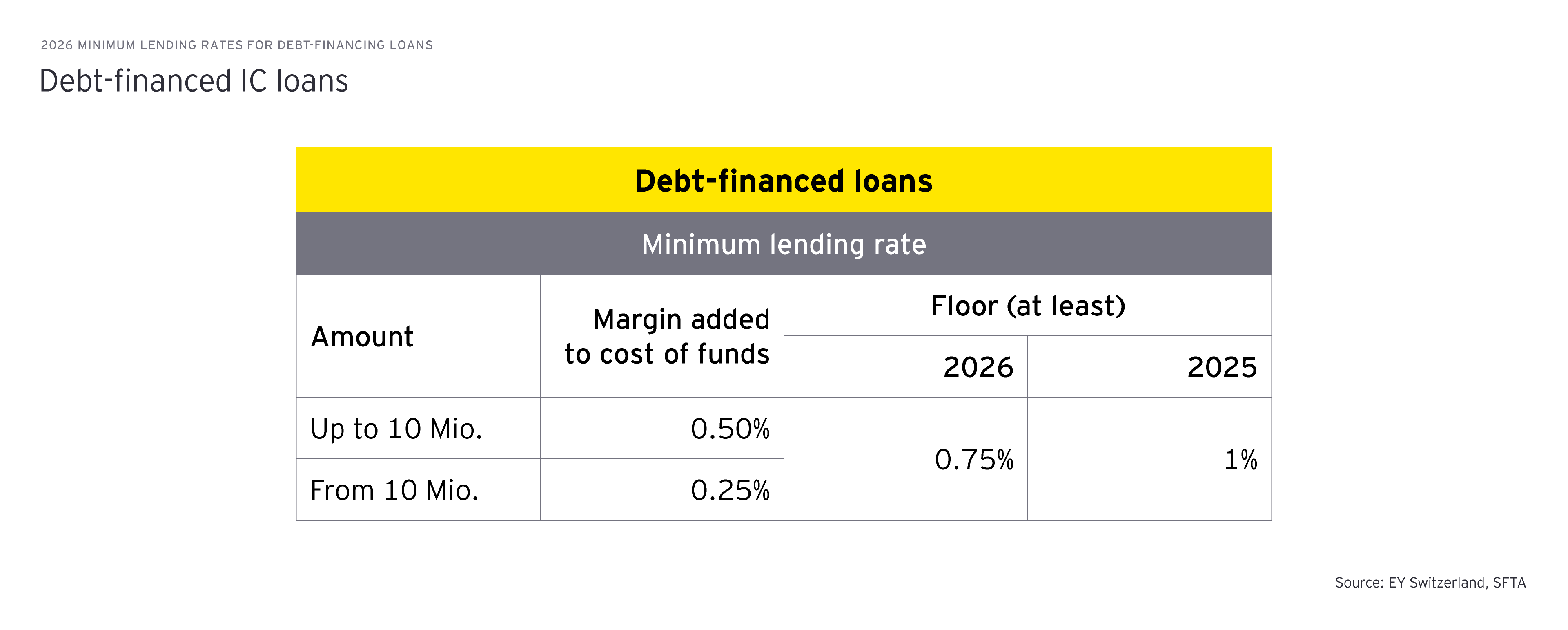
The minimum lending rate for debt-financed intercompany loans granted by Swiss entities in CHF is set at the respective debt interest rate (third party cost of funds) plus a margin of 0.5% (0.25% for the portion above CHF 10 Mio.). The margins remain constant from 2025, but the floor decreased in 2026.

2026 MINIMUM LENDING RATES FOR DEBT-FINANCING LOANS

When dealing with loans, it is important to note that the margins do not apply uniformly across the entire loan portfolio. Instead, these margins are to be applied progressively to the loans, i.e. they could be considered as hypothetical tranches. To accurately implement the safe-harbor interest rates, a weighted average based on the amounts involved need to be calculated.

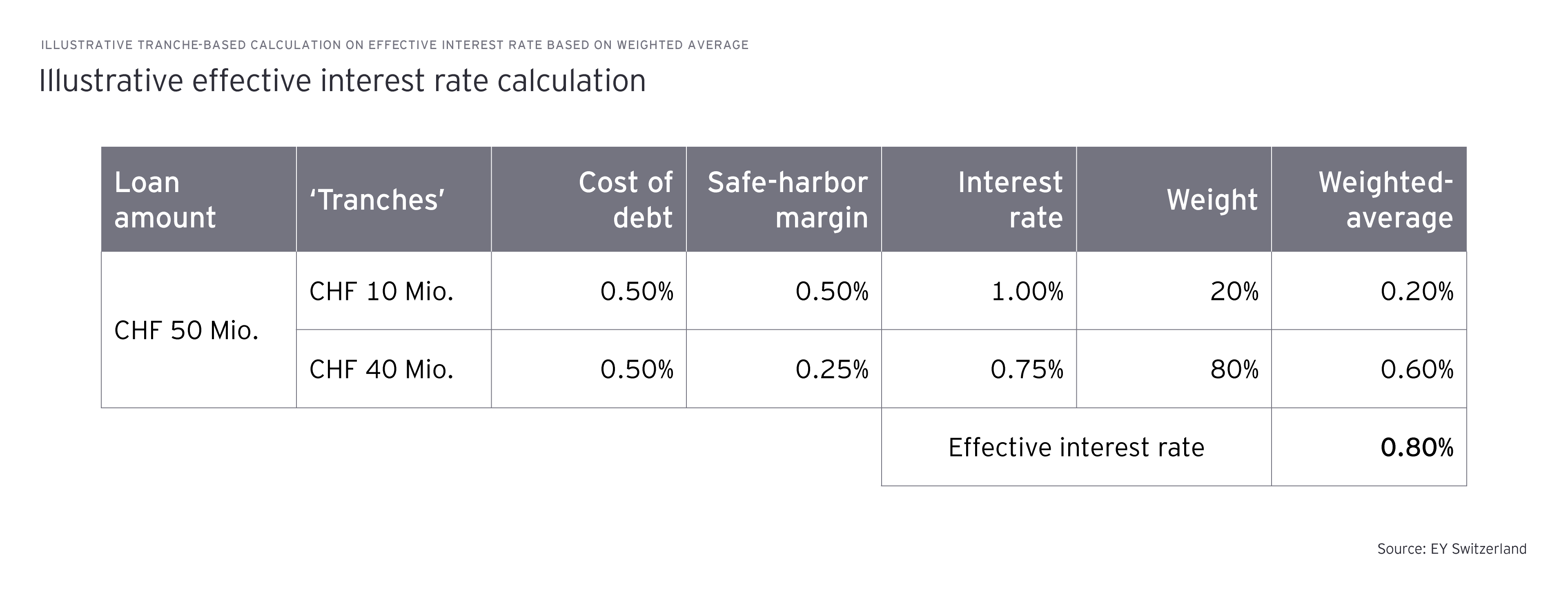
As an illustrative example, consider a loan payable portfolio of CHF 50 million with a cost of debt set at 0.5%. This loan can be separated into two tranches:

  • The first tranche is CHF 10 million, priced at 1% (0.5% cost of funds plus a margin of 0.5%).
  • The second tranche is CHF 40 million, priced at 0.75% (0.5% cost of funds plus a margin of 0.25%).

Given that the first tranche represents 20% of the total loan and the second tranche represents 80%, we can calculate the weighted average interest rate:

  • Weighted Average Interest Rate = (20% * 1%) + (80% * 0.75%) = 0.8%.

The following table illustrates the calculation.

Illustrative effective interest rate calculation

It is crucial to note that this effective interest rate of 0.8% is only valid if it exceeds the floor set by the CHF safe-harbor. In this case, since the effective rate is 0.8% and the floor is set at 0.75%, no adjustments should be made to the effective interest rate.

Foreign-Currency

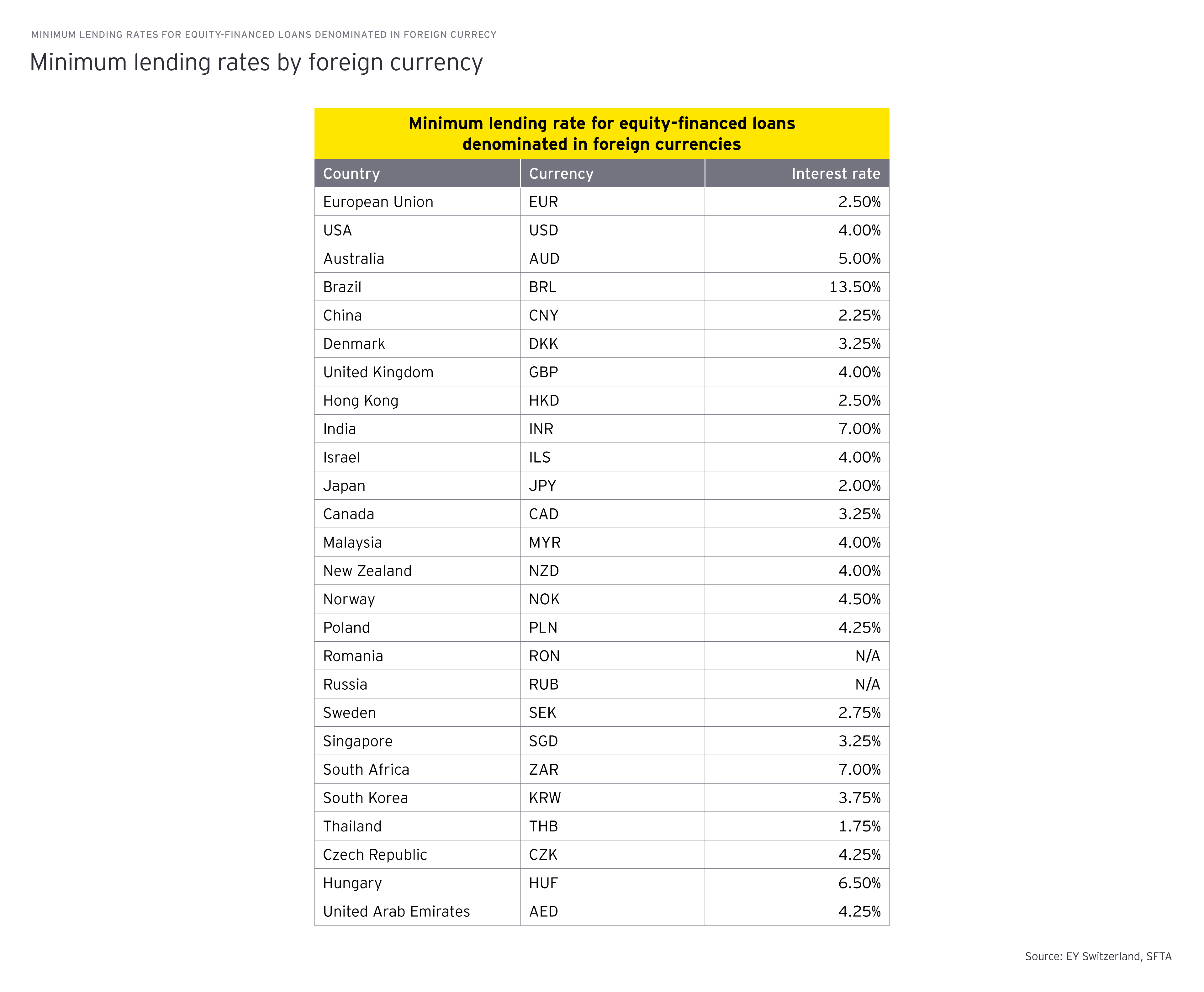
Safe-harbor interest rates are also established for loans denominated in 24 different foreign currencies

Minimum lending rates by foreign currency

These rates serve as minimum lending rates for loan receivables of Swiss entities, unless the CHF safe-harbor rate is higher, in which case the CHF rate applies as a floor. Since the foreign-denominated rates for 2026 exceed the 0.75% CHF safe-harbor, this floor is not triggered.

Furthermore, the foreign-denominated rates also serve as maximum borrowing rates when the relevant spread is added. For instance, the spreads for operating loans will vary based on the amount and type of entity, as illustrated in Table 3.

Safe-harbor rates vs. market rates: Historical and 2026 comparison

As in prior years, the applicable safe-harbor rates are determined by the SFTA based on several market references, including swap rates and long-term bonds. Therefore, it can be noticed that Swiss safe-harbor published rates generally show a correlation with market rates, for instance in the case of loans having a credit rating of around BBB and a tenor of five years.

In hindsight, the market interest rates for e.g. EUR-denominated bonds with a BBB rating in 2025 fit the maximum safe harbor rates for borrowings quite well. Historically, this is in line with the long-term observation that generally BBB-rated bonds were in most cases closest to the safe harbor rates.

Safe-harbor rates vs. market rates: Historical and 2026 comparison

Obviously, a single safe harbor rate cannot resemble a market-based solution for different ratings or maturities, but only for a very limited set of ratings, which varies over time, potentially even within the year.

Practical guidance: key advantages and limitations of the safe-harbor interest rates

The primary advantage of safe-harbor interest rates is that they allow taxpayers to price their intercompany financing arrangements without the need for complex debt pricing analyses while still being generally acceptable for Swiss tax authorities. If implemented correctly, this simplifies the burden of proof for taxpayers, providing them with general tax certainty regarding their transfer prices and minimizing the likelihood of challenges from the Swiss tax authorities provided they can prove the intention to apply the safe-harbor rates.

However, Swiss taxpayers should be aware of several limitations before relying on safe-harbor interest rates:

“Applicability to long-term loans only”

Safe-harbor interest rates are generally intended for long-term loans and the Swiss tax administrations, both at the cantonal and federal level, usually do not accept a reference to safe-harbor rates for terms of less than 12 months. Recent court decisions are further shaping the interpretation of these rates. For example, the Administrative Court of the Canton of Zurich (SB.2023.00014) link1 ruled in a cash pooling case that safe-harbor interest rates are not applicable to claims with a maturity of less than 12 months. Therefore, for cash management activities such as cash pooling setups or stand-alone short-term intercompany financing, Swiss taxpayers should refer to market rates appropriate for the respective maturity rather than safe-harbor rates.

“Yearly applicability of safe-harbor rates”

It is important to note that safe-harbor interest rates can only be used for the year in which they are published. For fixed-rate loans, these rates apply retroactively from the beginning of the year in which the Circulars are issued and remain in effect until the end of the calendar year.

“Binding nature from a Swiss perspective only”

While safe-harbor interest rates are a suitable approach for Swiss domestic intercompany loans, they are only binding from a Swiss perspective for cross-border intercompany loans, provided the intention to apply safe-harbor rates can be shown. Therefore, a transfer pricing analysis based on market rates is advisable to ensure that the transaction is defensible from the non-Swiss side.

“Irrelevance of safe-harbor rates when market rates are applied”

A recent ruling by the Swiss Supreme Court (“SC”) in case 9C_690/2022, dated July 2024, disregarded a transfer pricing adjustment made by the Zurich Administrative Court based on safe-harbor rates. The Supreme Court stated that if a taxpayer applies the arm's length principle using market rates instead of safe-harbor rates, the latter cannot be binding for the tax administration. This ruling clarified that safe-harbor interest rates apply not only for direct and withholding tax purposes but also for cantonal and municipal taxes. However, it also highlighted that safe-harbor rates have to be intentionally applied, and merely referring to them as a reference for defending interest rates during specific years in the event of a tax audit is unlikely to be accepted by the Swiss tax authorities in the future. For further information on the SC see here Clarifying the use of Circular safe harbors.

“Creditworthiness not considered”

Safe-harbor interest rates are determined based on factors such as loan type (e.g., operating and real estate), amount (e.g., up to and beyond CHF 1 million and higher than CHF 10 million), currency (with 24 foreign-denominated interest rates available), and type of entity (e.g., holding, manufacturing). However, these rates do not account for key terms and conditions that significantly influence credit risk, such as the creditworthiness of the borrower and the maturity of the instrument.

A comparison of historical market rates and safe-harbor interest rates reveals that there is not always a correlation between them, particularly for certain credit ratings and maturities. While safe-harbor interest rates may align well with specific credit ratings, discrepancies can arise for others.

The Circular Letters indicate that interest rates deviating from the safe-harbor guidelines may be acceptable if there is evidence demonstrating compliance with the arm's length principle. In practice, the Swiss tax authorities typically accept these deviations when taxpayers provide supporting documentation. To substantiate this, it is essential to have appropriate transfer pricing analyses and relevant documentation readily available. The Swiss TP Guidance published in January 2024, along with the Q&A available on the SFTA website, offers comprehensive guidance for establishing the arm's length nature of intercompany loans. For further information, please read our article link2


Conclusions

Safe-harbor interest rates simplify the burden of proof for taxpayers and provide tax certainty with respect to the prices set for their intercompany loans. However, beyond a domestic context, Swiss entities should prioritize a transfer pricing analysis based on market rates properly documented to substantiate the arm’s length nature of the intercompany loans.

In addition, depending on the materiality of the transaction it is recommended to enter into a ruling with the Swiss tax authorities (SFTA and/or at cantonal level) in order to confirm upfront the arm’s length nature of interest rates in cases of deviations from those published in the Circulars.


Clarifying the use of circular safe harbors

Take a more detailed look how to address challenges in public sector projects and how to succeed in them.

ey centre city hero

Summary

The Swiss Federal Tax Administration has released new safe-harbor interest rates for intercompany loans for 2026, applicable in CHF and foreign currencies.. Safe-harbor rates facilitate compliance by reducing complexity for taxpayers but are limited to long-term loans and applicable solely for the specified year. Importantly, they are only binding in Switzerland for cross-border loans if intended. It's advisable for Swiss entities to document transfer pricing analyses based on market rates for arm’s length compliance.

FAQs

Related articles

2025: Safe harbor interest rates: guidance and key considerations

The Swiss Federal Tax Administration has published the 2025 safe‑harbor interest rates. Learn what they mean for intercompany loans and tax compliance.

Spotlight on SFTA guidance regarding intercompany financial transactions

The transfer pricing Q&A provides welcome clarification of intercompany loans in the TP context.

    Explore our Tax services

    Our tax professionals offer services across all tax disciplines to help you thrive in this era of rapid change.

    safe harbor in clean environment

    About this article

    Authors

    Request for proposal (RFP) - exclusively for Switzerland

    |

    Submit your request now!