






Springtime forest with setting sun shining through leaves and branches. Nature, forestry, habitat, environment and sustainability concepts

How will circularity rules reshape sustainable product strategy?


Explore how circularity is pushed by policymakers and what companies must do to stay ahead of regulatory topics such as ESPR and PPWR.


In brief

  • Global policy shifts and EU regulations like ESPR and PPWR are reshaping circularity, forcing companies to make ecodesign of products, packaging and supply chain resilience a priority.
  • ESPR and PPWR introduce strict requirements on durability, reparability, recyclability, DPP data and EPR, demanding proactive compliance and cross‑value‑chain collaboration.
  • Early movers gain competitive advantage through resilience, cost savings, innovation and stronger market access, while laggards face disruption and regulatory risk.

Sustainable products in the circular economy

How ecodesign, Digital Product Passports and packaging rules are transforming product strategy and market access

The EU push on circular economy is forcing companies to redesign products, upgrade data and supply‑chain systems and address substance restrictions. Companies embracing regulations on sustainable product design, such as the Ecodesign for Sustainable Products Regulation (ESPR) and the Packaging and Packaging Waste Regulation (PPWR), as a strategic transformation will gain resilience, cost advantages and secure market access.

View of a massive cargo ship dwarfed by towering cranes under a golden sky, docked at the bustling port in Kochi, Kerala, India.
1

Chapter 1

Geopolitics and circularity as competitive edge

Global shifts in policy and power are reshaping how companies approach circular economic strategies. In the USA, an initially strong push for green transformation has met political headwinds. Companies must navigate a patchwork of state policies pulling in different directions. In contrast, China has positioned itself as a global leader in green technology manufacturing and controls critical raw materials supply chains. Hence, multinationals are increasingly factoring supply chain resilience into their circularity strategies.


Given these circumstances, Europe has set an ambitious regulatory agenda that treats sustainability and circularity as pillars of industrial competitiveness. The EU’s approach combines environmental goals with economic strategy, as embodied in its newly unveiled “Competitiveness Compass” (2025) which highlights the circular economy as a key driver for future growth.

Cross-sector impact and corporate response:

We observe that companies are reassessing product design, supply chains and business models to stay ahead in their respective industries:

  • Consumer goods & packaging: Food, beverage and consumer goods companies face the EU’s new packaging mandates. Single-use packaging for everything from takeaway food to e-commerce is under scrutiny. Businesses have to respond by innovating with reusable packaging systems, compostable materials and minimalist packaging designs to meet upcoming waste reduction targets.
  • Electronics & appliances: Tech companies are now planning for longer product lifecycles and easier repairability. Under EU ecodesign rules, a smartphone or washing machine may soon have to meet strict durability and repair standards and provide data via a Digital Product Passport (DPP) on its materials and carbon footprint.
  • Fashion & textiles: This summer, apparel brands are confronting bans on destroying unsold inventory. This pushes retailers to find circular solutions for excess stock (like donation, recycling or resale) and to improve demand forecasting and inventory management.

Across all sectors, corporate circularity strategies are now influenced by a mix of risks and incentives resulting from these trends. On the one hand, regulatory compliance and market access are at stake: failing to align with EU rules or supply chain shifts can keep companies out of markets. On the other hand, integrating circular economy principles is creating opportunities for cost savings, innovation as well as customer engagement and can be a driver of resilience.

In the following chapters, we dig deeper into the two cornerstone regulatory developments of ESPR and PPWR, and conclude with a look at the strategic risks and opportunities that businesses must manage in this transformation.

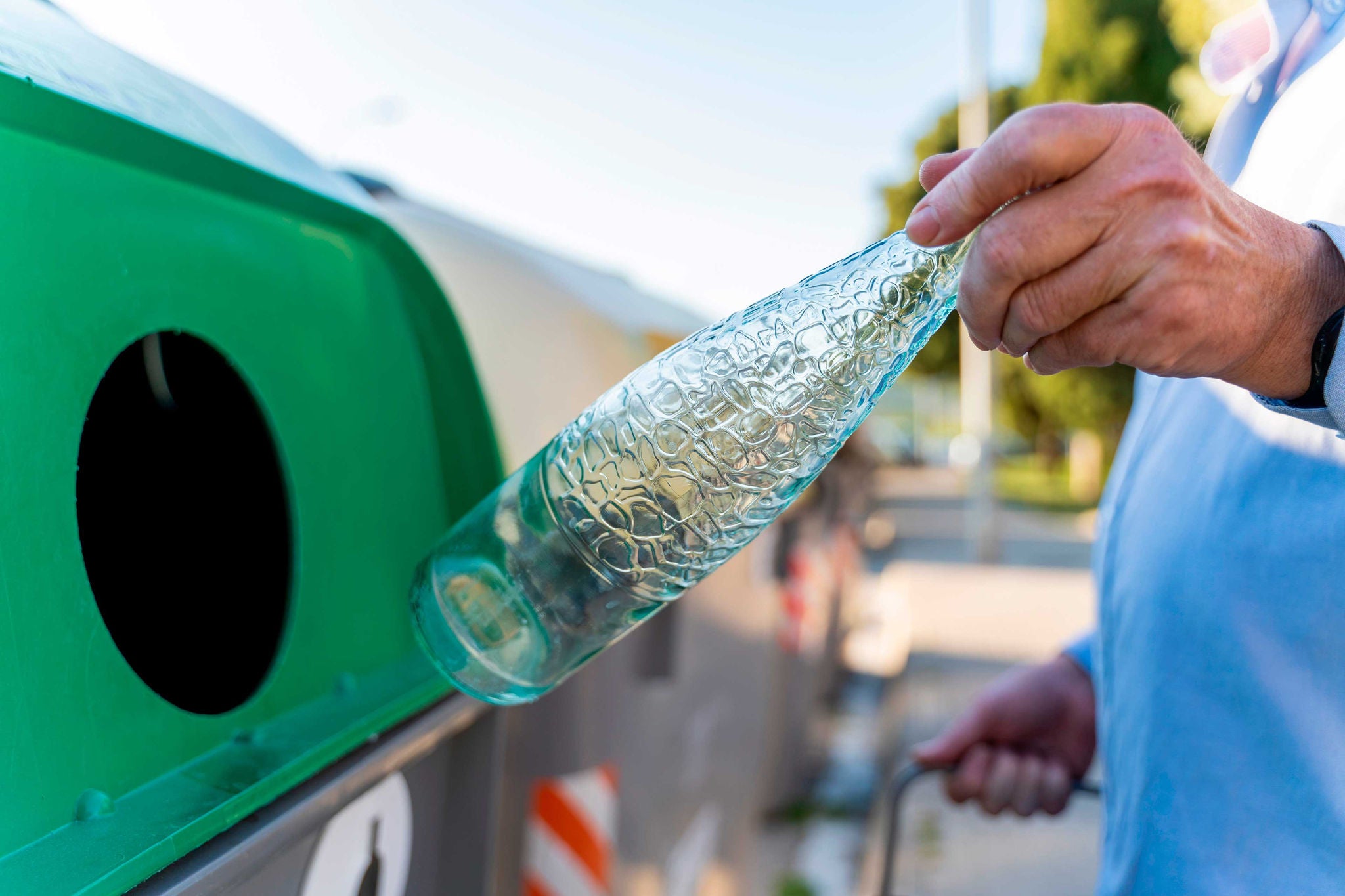
Close-up of man putting bottle into bottle bank
2

Chapter 2

Ecodesign for Sustainable Products Regulation (ESPR)

The ESPR promotes a comprehensive ecodesign framework for virtually all products, aiming to make them more circular and sustainable by design. ESPR entered into force on 18 July 2024. Unlike its predecessor (the old Ecodesign Directive, which only covered energy-related products), it expands to nearly all physical goods placed on the EU market, from textiles and electronics to furniture and building materials. Only a few categories (such as food, feed and medicine) are exempt as they are regulated already.

ESPR empowers the European Commission to set product-specific sustainability requirements via delegated acts over time.

Key elements of the ESPR include:

Applicability and obligations for economic operators

The ESPR imposes duties across the supply chain. Impact depends on the concrete role of each company. Manufacturers (or importers) bear primary responsibility for ensuring products meet the new ecodesign requirements once they apply. They must carry out conformity assessments, compile technical documentation and self-certify that products comply. They also must provide usage instructions and handle any non-compliance by correcting or recalling products if appropriate. Distributors and retailers must ensure that products they sell are compliant and properly labeled, and they could be treated as “manufacturers” under the law if they market products under their own brand or modify products in ways that affect compliance. In short, the ESPR spreads accountability across all players placing products on the EU market – no matter where the product was made – reinforcing that sustainability is a shared responsibility. This broad scope means even non-EU producers must adapt if they wish to export to Europe.

A worker labels boxes in a warehouse.
3

Chapter 3

Packaging and Packaging Waste Regulation (PPWR)

The PPWR is a landmark reform intended to revolutionize how packaging is designed, used and disposed of across Europe. Adopted on 11 February 2025, the PPWR will apply directly in all EU member states as of 12 August 2026 (replacing the older 1994 Packaging Waste Directive). This means companies have a short window to prepare for day 1 compliance. The regulation’s overarching goals are to reduce packaging waste, drive up recycling and reuse, and harmonize packaging rules across the EU. In practical terms, it creates a bundle of binding targets and design criteria that all businesses putting packaging on the EU market must meet.

Logistics Yard Colorful Stacked Plastic Crates Top-Down View:
4

Chapter 4

Risks, opportunities and strategic actions for companies

The combination of geopolitical dynamics, regulatory pressure and shifting market expectations around sustainability presents both significant risks and opportunities for companies. Businesses that proactively adapt their strategies to embrace circularity can gain cost savings, resilience and reputational benefits. Those that lag behind, however, risk loss of market access, brand erosion and regulatory non-compliance.

Proposed strategic actions for companies

To successfully manage these risks and capitalize on the opportunities, companies should adopt a proactive approach to their circularity strategy. Here are key actions to consider:

In conclusion, the trajectory of policy and market trends is clear: circularity and sustainable products will define competitive advantage in the coming decade. Companies that align their strategies with this reality – innovating in ecodesign, collaborating across value chains and protecting their operations against environmental and geopolitical risks – will be best positioned to succeed. By taking these steps, companies can transform regulatory compliance from a burden into a catalyst for change.


Summary

Global policy shifts and EU regulations are accelerating the transition to circular, sustainable products. The ESPR introduces sweeping ecodesign rules, durability and repairability standards, and Digital Product Passports, while the PPWR reshapes packaging through recyclability, waste‑reduction targets and strict documentation requirements. These measures push companies across sectors to redesign products, packaging and supply chains. Early movers gain resilience, efficiency and competitive advantage, while laggards risk non‑compliance and market barriers. Firms should strengthen governance, assess regulatory impacts, engage suppliers and invest in digital traceability to stay ahead.


Related articles

    Explore Climate change & sustainability services

    Our multidisciplinary teams can help companies understand the risks and opportunities arising from climate change and sustainability issues.

    Brazil town from sky


    About this article

    Authors

    Request for proposal (RFP) - exclusively for Switzerland

    |

    Submit your request now!