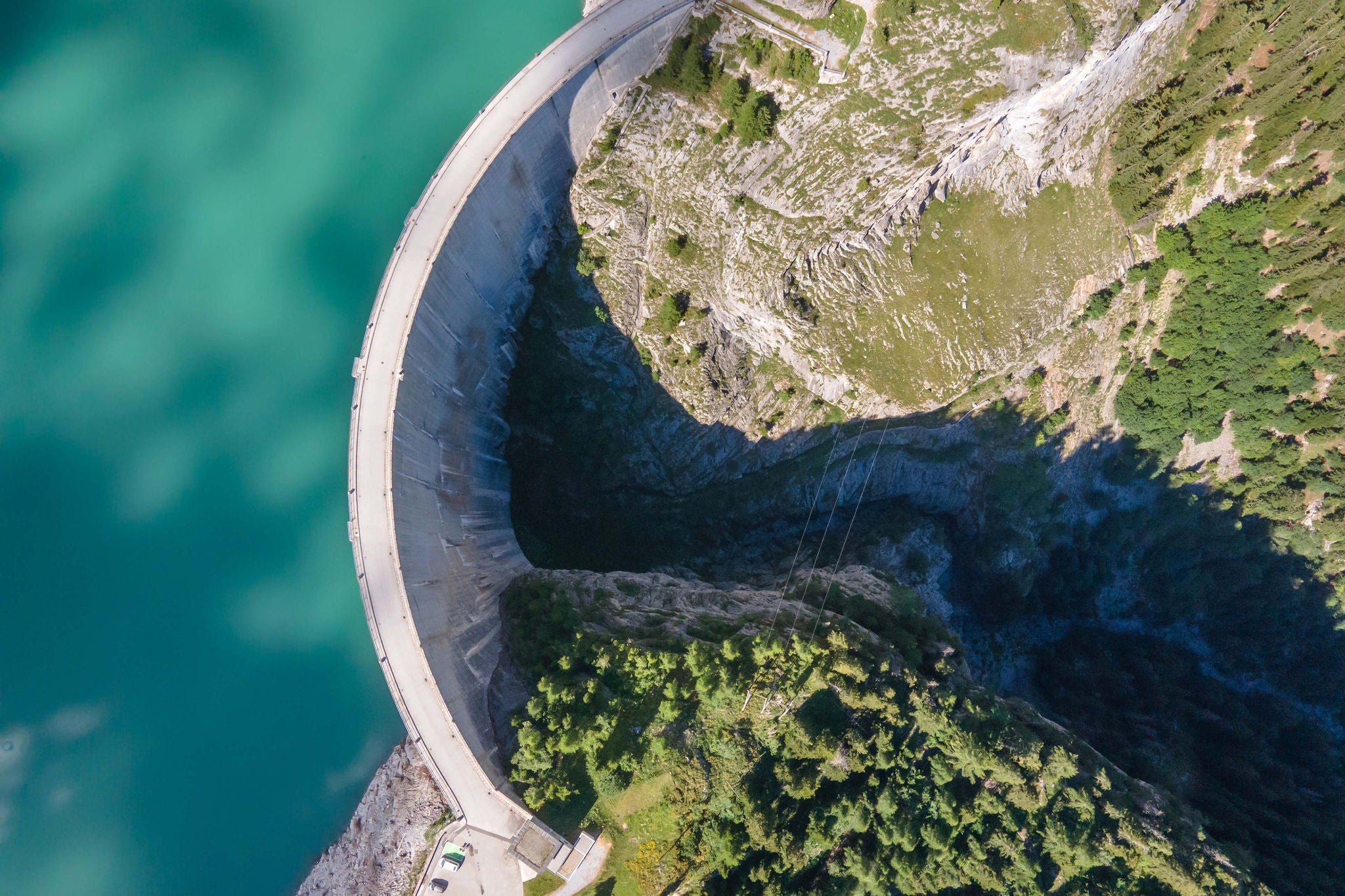
water dam in Alps, renewable energy, hydroelectricity

How will the EU deal transform Swiss power?


Read in German

Learn why the Electricity Agreement with the EU is key for Switzerland’s competitiveness and how businesses should prepare.


In brief

  • Switzerland’s new EU Electricity Agreement secures cross-border power flows, protecting supply and preventing severe import cuts that threaten grid stability.
  • Full market opening gives all consumers choice, boosts competition and drives innovation in renewable energy, flexibility services and digital energy solutions.
  • Integration with the EU market strengthens industry, lowers costs, supports hydropower exports and positions Switzerland as a reliable, future-ready energy partner.

Switzerland’s energy policy has reached a new milestone. Although the country is already physically and geographically interconnected with the European electricity grid, this integration has so far lacked a legal foundation. The absence of such a power agreement with the European Union has created uncertainty and tangible risks for the Swiss electricity system. Without legal guarantees, import capacities could fall dramatically – by more than 50%, and in extreme scenarios by over 70% compared with current levels, according to system adequacy studies conducted by the independent Federal Electricity Commission (ElCom). Such a drop would heighten the risk of supply shortages or even widespread blackouts, with potentially severe consequences for production, critical infrastructure such as hospitals and data centers and Switzerland’s reputation as a reliable business location.

Power imports
70%
Potential drop in import capacities in extreme scenarios

Recognizing these risks, Switzerland and the EU concluded a comprehensive Electricity Agreement in December 2024, as part of a broader bilateral package. The agreement is designed to secure Switzerland’s integration with the EU market, strengthen security of supply and ensure stable, cost-efficient cross-border electricity flows. It is a forward-looking framework that enhances both the resilience of the Swiss energy system and the competitiveness of its economy.

Strengthening Switzerland’s security of supply and grid stability

At its core, the Electricity Agreement affords the legal certainty Switzerland has long needed. It provides for cross-border capacity rules under international law, meaning that even in times of crisis, neighboring countries cannot impose export restrictions on electricity destined for Switzerland. This protection directly strengthens Switzerland’s security of supply and reduces the necessity of maintaining large and costly domestic electricity reserves.

The agreement can significantly contribute to strengthening our long-term security of supply. Efficient utilization of cross-border transport capacities and access to international platforms for balancing energy are crucial.

Moreover, by giving Switzerland full access to the EU’s internal electricity market, the agreement enables participation in balancing energy platforms and ancillary service markets. Such integration allows Switzerland to purchase balancing energy more cost-effectively and to contribute its flexible hydropower to stabilize the broader European grid. The result is a more reliable, efficient and interconnected cross-border electricity network that benefits both Switzerland and its neighbors.

Opening the electricity market: empowering consumers and driving innovation

One of the most visible consequences of the electricity arrangement will be the complete opening of the Swiss electricity market. For the first time, all consumers – including households and small enterprises– will be able to choose their electricity supplier freely. According to the consultation proposal, clients with an annual consumption below 50 MWh may remain in the regulated basic supply with verifiable prices, switch to a market provider or return to basic supply within established deadlines.

This liberalization promotes competition and innovation in the energy sector. Consumers will benefit from greater choice, transparent pricing and the ability to select electricity based on origin, sustainability or tariff flexibility. ElCom has already noted that the existing basic supply offers little protection against price fluctuations, as customers are bound to their local network operator and its procurement strategy; opening the market will give consumers the opportunity to set their own priorities and choose the provider and tariff that suits them best.

For energy companies, market liberalization will trigger structural adjustments, including potentially consolidation among small basic suppliers, but it will also open space for creative business models. New services – such as dynamic pricing, neighborhood electricity exchanges and local energy communities – will emerge. Such initiatives allow residents or tenants to invest in local production facilities and to directly consume locally generated renewable power, combine self-production with storage technologies and participate actively in the transition to renewable energy. As competition increases, innovation will become the main differentiator, ensuring that the Swiss electricity market evolves toward a more sustainable, customer-centric model.

Integration with the EU internal electricity market

Beyond consumer choice, the Electricity Agreement positions Switzerland as a fully integrated participant in the EU internal electricity market. Swissgrid, the national transmission system operator, will join European coordination processes for grid operation, security monitoring and crisis management[SL1] . Swiss electricity suppliers and network operators will also gain access to EU trading platforms and agencies that are central to maintaining market stability and transparency.

Crucially, Switzerland retains sovereignty over its public service obligations and the ownership of key infrastructure. Distribution network operators and utilities can remain publicly owned, ensuring that the public interest continues to guide energy policy. The agreement also restores the mutual recognition of guarantees of origin, enabling Switzerland once again to trade renewable electricity certificates with the EU and to promote renewable energy cooperation. A dedicated clause sets the stage for future collaboration in emerging sectors such as hydrogen and renewable gases, creating prospects for deeper technological and industrial partnerships.[SL2]

Legal foundations and regulatory alignment

The Electricity Agreement is anchored in the principles of the Directive (EU) 2019/944 on common rules for the internal market for electricity, the core legislation shaping the EU’s energy landscape. This directive sets out the framework for competitive, consumer-oriented and sustainable electricity markets within the Union.

Switzerland, though not an EU member state, will align dynamically with key provisions of this directive to ensure compatibility with EU market rules. This includes adhering to common principles for network access, consumer rights and market transparency. At the same time, Switzerland preserves flexibility in vital areas such as security of supply and the required level of energy reserves needed, renewable energy support schemes and public service regulation.

Regulatory bodies like ElCom will take on functions comparable to EU national regulators, overseeing market operations, transparency and consumer protection. Approximately 15 to 20 Swiss utilities with more than 100,000 connected customers will have to legally and organizationally unbundle their network operations from other business activities such as generation and trading, in line with EU standards. This structural separation strengthens fair competition and ensures transparent access to network infrastructure.

Economic and industrial significance

The Electricity Agreement represents more than a technical alignment; it is an economic strategy for Switzerland’s future cross-border network capacities. Cross-border electricity trading is of paramount importance as it secures and enhances import opportunities for Swiss industries, especially in the winter season. For a small country like Switzerland, the ability to import electricity serves as a vital safeguard for maintaining supply security. Reliable electricity is a decisive factor for companies choosing where to invest. The agreement ensures that Switzerland’s industrial base – particularly energy-intensive sectors such as manufacturing, chemicals and data processing – can count on stable supply conditions and competitive electricity prices. The agreement also makes progress at the grid level. The full integration of Swissgrid into the European grid reduces unintended loop flows and enhances cross-border collaboration in crisis intervention. This ultimately leads to lower grid costs in the long term. Furthermore, improved coordination allows for a reduction in the need for costly reserve infrastructures. Thus, for Swissmem, the leading association for both SMEs and major corporations in the Swiss technology industry, is the electricity agreement a strategically important step towards a sustainable, cost-efficient, and competitive industrial base in Switzerland.


Our electricity-intensive industrial companies suffer from significantly higher electricity grid usage fees compared to their European competitors. A proper integration into the EU internal electricity market would have a cost-reducing effect. Therefore, the electricity agreement is urgently necessary for us.

By placing Switzerland’s connection to the EU’s internal market on a formal footing, Switzerland will benefit from more efficient cross-border electricity trading and from the ability to export its flexible hydropower to European partners. With system and reserve costs expected to decline, prices for ancillary services are likely to stabilize at lower levels. This strengthens the economy, supports employment and enhances Switzerland’s attractiveness as a competitive industrial location.

Preparing for the Electricity Agreement: strategies for Swiss energy suppliers

As the agreement enters implementation, Swiss energy suppliers must adapt their strategies to operate successfully in a liberalized and increasingly digital market environment. The key to success lies in developing a forward-looking ownership and business strategy that balances economic efficiency, sustainability and customer orientation.

Energy providers should focus on customer needs and the creation of innovative business models. Consumers increasingly demand sustainable, transparent and flexible energy solutions. Energy companies can meet these expectations by introducing dynamic pricing structures that accommodate self-supply or e-mobility integration options, offering new renewable energy products with a guarantee of origin and expanding consulting services in relation to energy efficiency, e-mobility, heat pumps and photovoltaic installations. Providing personalized energy management tools, powered by automation and digitalization, will enhance efficiency and strengthen customer loyalty.

A strong commitment to innovation and to integrating Swiss renewable solutions will also be crucial. The expansion of battery storage, power-to-gas systems and other advanced storage technologies can help balance supply and demand while supporting decarbonization. Energy companies that invest early in these technologies will be best positioned to compete in an open market and to participate in urban Swiss sustainability initiatives in order to achieve the net zero emissions target.

Partnerships and collaboration as success factors

The energy transition cannot be achieved in isolation. Collaboration across sectors and regions is essential. Energy suppliers should deepen partnerships with technology firms, particularly in areas such as smart grid technologies, digital monitoring and cyber-resilience. Cooperation with municipalities and cities will foster the development of local projects such as smart urban districts, integrated mobility concepts and renewable micro-grids.

Equally important is collaboration with universities and research institutions. Municipal utilities and cantonal authorities can drive innovation by supporting pilot projects in energy storage, hydrogen utilization and integration of renewable energy sources. Such partnerships combine academic research with practical implementation, turning Switzerland into a living laboratory for sustainable energy solutions.

Financing and risk management

The transition toward a renewable, interconnected energy system requires major investment. Energy suppliers and public owners must adopt robust financing and risk-management strategies to ensure long-term viability. Utilizing green financing instruments, such as green bonds and sustainability-linked loans, can attract capital while signaling environmental commitment.

Participation in EU and national funding programs for sustainable infrastructure, innovation and research will also be essential. Sound financial planning will enable utilities to modernize grids, deploy digital technologies and expand renewable capacities without compromising economic stability.

A shared responsibility for the energy future

The Electricity Agreement underscores a fundamental truth: Switzerland’s energy future cannot be secured in isolation from its European neighbors. By embedding itself legally and operationally into the EU electricity market, Switzerland gains stability, efficiency and opportunity. Yet success will depend on proactive adaptation by domestic actors – from policymakers and regulators to cantons, municipalities and energy suppliers.

Public authorities play a decisive role as owners of many utilities. Their strategies should emphasize long-term decarbonization, infrastructure modernization, social responsibility and the promotion of innovation and partnerships. In doing so, they ensure that energy providers remain resilient and responsive to changing market conditions while advancing national climate objectives and maintaining customer orientation.

A milestone in energy policy

The new Electricity Agreement between Switzerland and the EU marks a milestone in Swiss energy policy. It transforms existing physical integration into a legally secure partnership that enhances supply security, market efficiency and environmental sustainability. It enables Swiss consumers to exercise real choice, empowers businesses to innovate and allows the country’s renowned hydropower resources to play a central role in Europe’s renewable energy transition.


For Switzerland’s economy, the benefits are strategic and long-term: secured access to competitive electricity, strengthened industrial competitiveness and reduced exposure to supply risks. For consumers, it promises transparency, flexibility and new opportunities to participate in the energy transition. For energy companies, it provides both challenge and incentive – to adapt, innovate and lead.


In a rapidly evolving European energy landscape, this agreement positions Switzerland as a trusted and forward-looking partner. By combining grid integration, renewable energy collaboration and smart energy innovation, it lays the foundation for a resilient, sustainable and prosperous electricity future – one that secures the country’s role as a future-oriented, cost-efficient and competitive industrial location at the heart of Europe.

Summary

Switzerland’s new Electricity Agreement with the EU provides the legal framework needed for integration into the European power grid. The deal safeguards cross-border electricity flows, prevents export restrictions in crises and stabilizes supply, avoiding potentially dramatic import cuts. It fully opens Switzerland’s electricity market, empowering consumers to choose providers and spurring innovation and competition. Aligned with EU energy rules but preserving national sovereignty, the agreement strengthens grid reliability, reduces costs, supports industry and secures Switzerland’s position as a sustainable and competitive energy hub in Europe.


FAQs

Related articles

Is your business ready to lead the sustainable energy transition?

Discover how the sustainable energy transition, shaped by decarbonization and geopolitical tensions, is redefining energy security and business resilience.

What to watch as global ESG reporting standards take shape

The launch of the International Sustainability Standards Board is a significant development in the transition toward a green economy.


    About this article

    Request for proposal (RFP) - exclusively for Switzerland

    |

    Submit your request now!