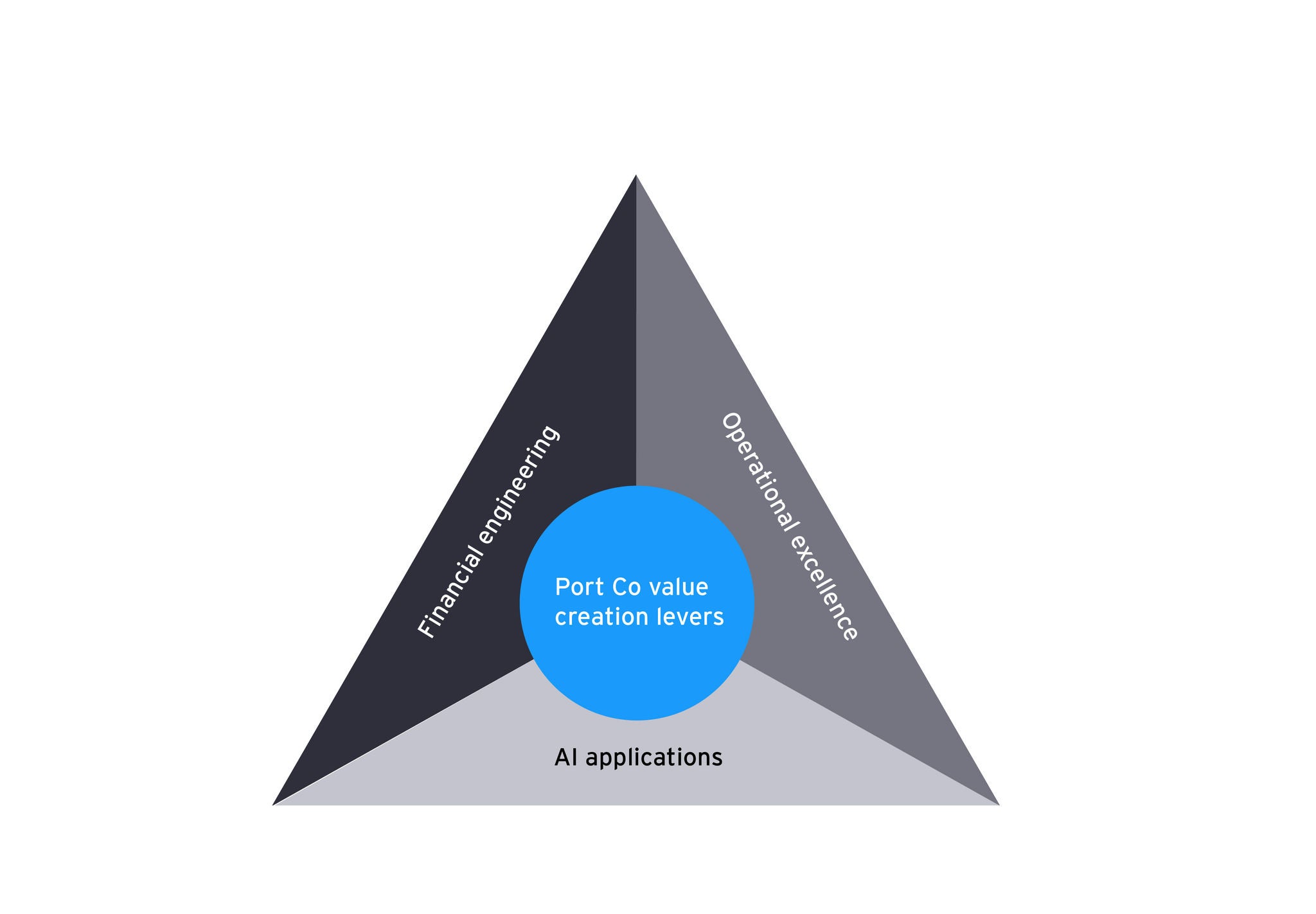
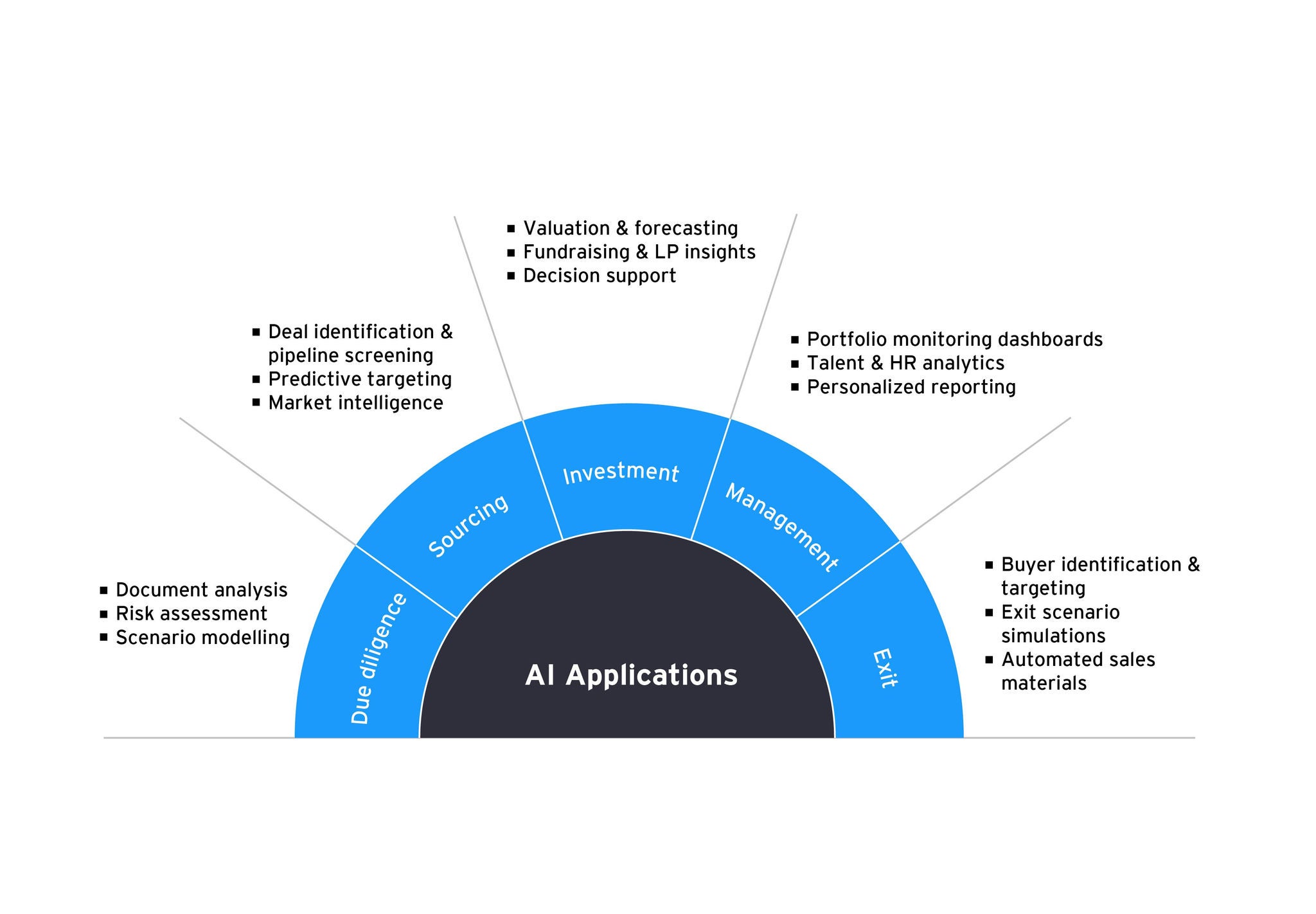
Thus, the use of AI in the PE sector goes far beyond process automation. What remains crucial is how purposefully AI solutions are integrated and further developed. Only in this way can sustainable efficiency, better investment decisions and a strong positioning against LPs be achieved. However, without clear strategic anchoring, much potential remains untapped – the competitive advantage arises only from the interplay of technology, organization and competence.
AI in portfolio companies: transformation of central functions and business models
AI is increasingly having a strategic impact in portfolio companies. GPs should systematically identify potentials and deploy them in central functions:
- Finance: Automated analyses improve planning and reporting.
- HR: AI-driven tools accelerate recruiting and matching.
- Procurement & supply chain: Data-driven models increase efficiency and transparency.
- Legal & compliance: Contract analytics automate routine tasks.
- Customer support: AI reduces costs through intelligent automation.
- IT: Harmonization and cybersecurity through AI solutions.
Pioneers like Vista Equity rely on cross-functional AI systems – a model that is increasingly becoming the standard.
Business model disruption: AI changes value creation
AI not only questions processes but entire business models. Disruptions occur along three dimensions:
- Product logic: AI replaces creative and manual services – e.g., contract review through LegalTech.
- Revenue models: Platform and subscription models displace traditional content offerings.
- Value chain: AI automates cognitive work – e.g., fully digital insurance processes.
New AI-native competitors operate with platform logic, low marginal costs and high scalability. Traditional market analyses are no longer sufficient – GPs need adjacency scans, open-source monitoring and tech radars.
Strategic guiding questions for portfolio companies:
a) Which value-adding processes can be supported/substituted by AI?
b) Where does new willingness to pay arise?
c) What role does my company play in the AI value chain?
d) Which offerings can be scaled through AI?
e) What does my defensive scenario look like?
Risks, dangers and challenges posed by AI – and how GPs can address them
The integration of AI in PE brings not only efficiency gains but also complex risks – from algorithmic biases and lack of transparency to knowledge loss and data protection/system risks. GPs address these challenges through diverse data sources, explainable AI, targeted training, robust security measures and clear governance structures.
Conclusion: AI in private equity – those who want to create value must master the technology
AI has long become a strategic pillar in private equity. Those who understand it not just as a tool but as an integral part of the business model can recognize opportunities early, actively manage risks and secure sustainable competitive advantages.