


EY refers to the global organization, and may refer to one or more, of the member firms of Ernst & Young Limited, each of which is a separate legal entity. Ernst & Young Limited is a Swiss company with registered seats in Switzerland providing services to clients in Switzerland.
Recent Searches
Press release
24 Feb 2026
|
Zurich, Switzerland
EY Start-Up Barometer Switzerland 2026 Significant increase in investment volume – AI start-ups becoming much more important
- In 2025, 515 funding rounds for start-ups were recorded in Switzerland. This corresponds to an increase of 0.4% (2024: 513 rounds).
- Swiss start-ups generated a financing volume of CHF 3.3 billion in 2025 – an increase of 44% compared with 2024.
- AI-based start-ups gained further momentum in 2025: in more than three out of ten funding rounds (32%), a start-up that integrates AI into its core business was involved.
- 23% of the start-ups that received funding last year were co-founded by women, while 6% were founded entirely by women.
- At +44%, Switzerland recorded the strongest increase in volume compared with other countries; the volume rose by 19% in Germany and fell by 56% in Austria.
Zurich, 24 February 2026 – The EY Start-up Barometer Switzerland 2026 clearly shows that following a downward trend observed since the second half of 2022, Swiss start-ups saw a significant increase in funding rounds and investment volumes in 2025. In 2025, 515 funding rounds were registered for start-ups – two more than in 2024 (513). The volume invested in start-ups has also increased: Swiss start-ups generated a financing volume of CHF 3.3 billion last year, which was 44% higher than in 2024 (CHF 2.3 billion).
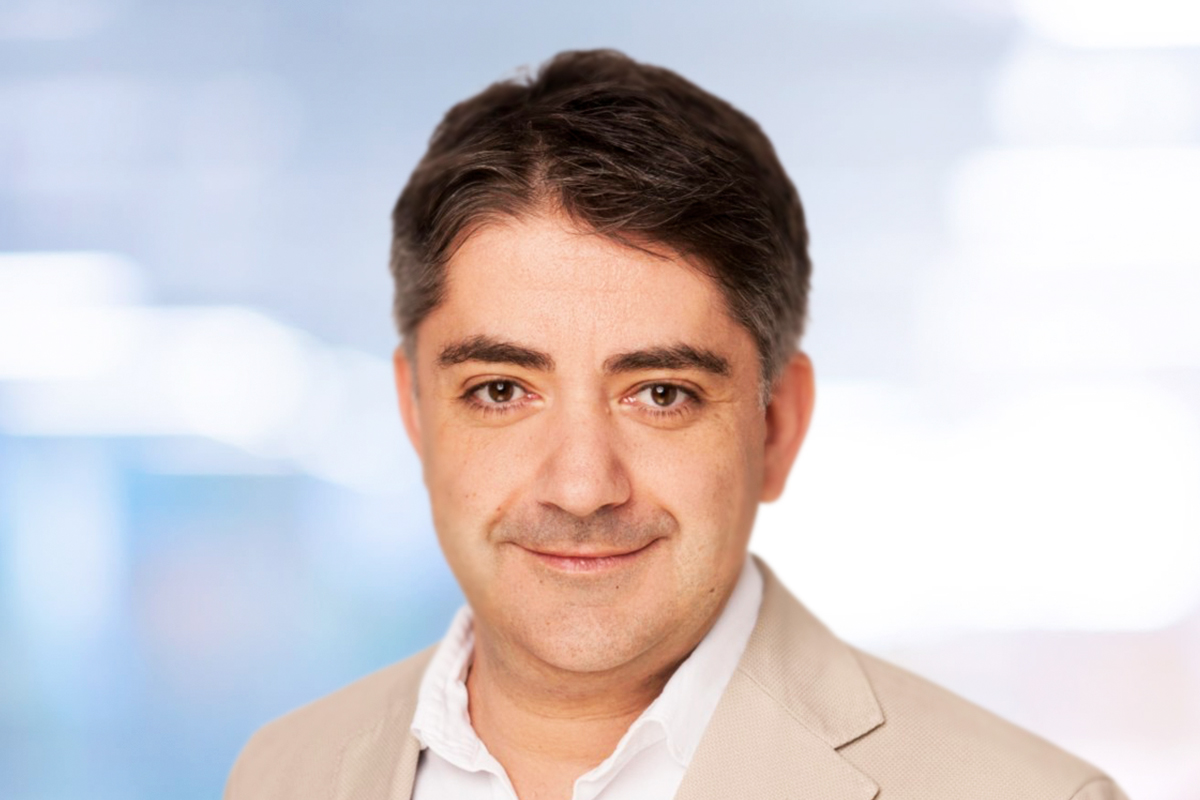
“After some challenging years, we saw a clear stabilization in the Swiss start-up ecosystem in 2025. Both the number of funding rounds and the capital invested have increased again. Particularly pleasing is the strong momentum in forward-looking areas such as AI and health, which are significantly driving growth,” said Milja Vulin Petrovic, Head of Start-ups and Scale-ups at EY Switzerland.
AI funding more than triples; healthcare remains the largest sector by volume
The advances in AI are also clear to see with start-ups: in 2025, the number of funding rounds for AI-based start-ups increased to 163 (2024: 112), which represents an increase of around 46%. The number has almost tripled compared with 2023 – despite a decrease in the total number of funding rounds from 550 to 515. As a result, AI start-ups accounted for 32% of all funding rounds last year in total (2023: 10%; 2024: 22%). The increasing importance of AI in the Swiss start-up ecosystem is particularly evident when looking at funding volumes: investment in AI start-ups increased by 206% to around CHF 1.1 billion in 2025 – up from CHF 345 million in 2024. As a result, the share of AI start-ups in the total funding volume rose from 5% to 32% in the space of two years.
“While AI companies continue to become much more important, software & analytics lost momentum compared with the previous year. At the same time, the healthcare sector is now top both in terms of the number of deals and the investment volume,” said Petrovic. With 147 funding rounds (2024: 134) and an investment volume of around CHF 1.5 billion (2024: around CHF 1.0 billion), healthcare remains the strongest sector, accounting for 44% of the total volume of venture capital in Swiss start-ups. This is followed by software & analytics with CHF 924 million and a market share of 28% (+133% year on year). Fintech/insurtech (9%) and hardware (7%) occupy the other positions, while the energy sector recorded a significant decline in investment volume of 55%.
A closer look at the healthcare sector reveals that biotech start-ups make up the largest share with a volume of CHF 818 million (2024: CHF 703 million), followed by medtech with CHF 369 million (2024: CHF 275 million) and care with CHF 272 million (2024: CHF 26 million). Start-ups in the field of software & analytics secured CHF 924 million, thereby achieving the second-highest amount of funding (2024: CHF 397 million), followed by fintech/insurtech with CHF 295 million (2024: CHF 193 million). With CHF 101 million (2024: CHF 108 million), agtech now ranks ahead of the energy sector with CHF 68 million (2024: CHF 152 million), which was significantly down on the previous year.
“The current figures illustrate that AI is becoming one of the key drivers of growth in the Swiss start-up ecosystem. Both the number of funding rounds and the capital invested have increased noticeably. This underscores the growing confidence of investors in Switzerland as a leading location for AI innovation. We expect this momentum to continue in the coming months,” said Petrovic.
A total of 515 funding rounds were recorded in 2025 (2024: 513), with information on the funding volume available for 436 transactions (2024: 462). With the exception of smaller loans of up to CHF 1 million, all size categories recorded more deals than in 2024. The number of mega deals worth more than CHF 100 million increased fivefold (2024: 1; 2025: 5), with their total volume increasing from CHF 158 million to CHF 747 million. The increase in the total funding volume from CHF 2.3 billion to CHF 3.3 billion is therefore primarily attributable to the higher number, and significant increase in the volume, of these megadeals.
The top ten in Swiss start-up financing in 2025
Looking at the ten Swiss start-ups with the most funding in 2025, it is particularly striking that, as in the previous year, the healthcare sector is attracting the greatest investment: once again, six of the ten largest deals went to companies that are active in this sector. The top four places in the rankings are all occupied by start-ups from the healthcare sector: Sanoptis (CHF 235 million) is top, followed by Windward Bio (CHF 173 million), Distalmotion (CHF 120 million) and GlycoEra (CHF 112 million). Next is General Intuition from the software & analytics sector (CHF 107 million). The agtech/foodtech start-up Ecorobotix (CHF 84 million), the software & analytics company Auterion (CHF 84 million) and Neural Concept (CHF 80 million) and the two health start-ups Nuclidium (CHF 79 million) and Rhygaze (CHF 74 million) make up the rest of the top ten.
When it comes to financing for AI-related start-ups, EY has also identified the top five deals. General Intuition tops the rankings with CHF 107 million, followed by Neural Concept (CHF 80 million), Toloka (CHF 62 million), Flexion Robotics (CHF 40 million) and DeepJudge (CHF 34 million).
Slight decline in proportion of female founders – Switzerland remains top in the DACH comparison
The EY Start-Up Barometer Switzerland surveyed a total of 447 Swiss start-ups that completed at least one funding round in 2025 and for which the composition of the respective founding team was made public. 26 of these start-ups were founded by all-female teams (6%), while a further 75 teams (17%) involved at least one woman. The majority (346 start-ups; 77%) were all-male. Compared with the previous year, the proportion of all-female teams fell slightly from 7% to 6%. Mixed teams also decreased slightly from 18% to 17%, while all-male teams increased moderately from 75% to 77%.
The e-commerce sector had the highest proportion of female founders at 28%; 32% of funded start-ups had at least one woman on the founding team. This was followed by the healthcare sector, where women founders accounted for 19%. In the other sectors, female participation is moderate to low. Female founders make up 10% in software & analytics and in professional services, while hardware (6%), adtech (0%) and proptech/mobility (5%) have the lowest proportions of female founders.
At 11.9%, Switzerland had the highest proportion of female founders among start-ups compared with Germany and Austria, with at least one funding round last year (122 out of 1,025). Germany was next with 8.8% (137 out of 1,565); 18% of the teams were represented by at least one woman. Austria had the lowest proportion at 7.1% (20 out of 283); only 15% of the start-up teams included a woman.
Geographical distribution and Switzerland in comparison with other countries
A look at the geographical distribution of start-up investment reveals a familiar picture: most funding rounds were registered in the Canton of Zurich (213), followed by French-speaking Switzerland (165), Central Switzerland (56) and Northwestern Switzerland (27). Then came the Swiss Plateau with 25, the Canton of Ticino with 20 and Eastern Switzerland with nine rounds. The rankings change slightly in terms of investment volumes: the Canton of Zurich is top with around CHF 1.3 billion (2024: CHF 776 million), followed by French-speaking Switzerland with CHF 909 million (2024: CHF 751 million). Central Switzerland moves up to third place with CHF 517 million (2024: CHF 302 million), followed by Northwestern Switzerland with CHF 503 million (2024: CHF 315 million). The lower spots are taken by the Swiss Plateau with CHF 59 million (2024: CHF 148 million), the Canton of Ticino with CHF 53 million (2024: CHF 61 million) and Eastern Switzerland with CHF 24 million (2024: CHF 8 million).
Compared with Germany and Austria, the number of funding rounds in Switzerland remained stable or increased slightly (+0.4%; from 513 to 515), making it the only one of the three countries to increase. Prior to that, the number of deals had fallen for two years in a row – from a record 806 rounds in 2022 to 513 in 2024. Germany, on the other hand, recorded a decline for the fourth time in a row (−5.2%; from 755 to 716), but still reached the sixth-highest value in the period under review. Austria also reported a slight decline (−2.0%; from 151 to 148), which is nevertheless the fifth-highest figure in the period under review. “The development of funding rounds in Switzerland signals a clear stabilization at the previous year’s level. In contrast to Germany and Austria, the local market is thus more robust and is cautiously returning to a growth path,” said Petrovic.
There has been a significant increase in the volumes invested in start-ups in Switzerland: the funding volume increased by 47% to around EUR 3.5 billion (2024: EUR 2.41 billion; all figures in EUR for better comparability in the DACH region). Germany also recorded an increase of 19% to EUR 8.4 billion (2024: EUR 7 billion), thus reaching the third-highest level in the period under review. At the same time, this marks the second year of growth in succession, after the investment volume declined by more than EUR 11 billion between 2021 and 2023. In Austria, on the other hand, the volume fell significantly by 56% to EUR 253 million (2024: EUR 579 million). There are clear focal points for the sectors: in Switzerland, the largest share of invested capital is in the healthcare sector (44%), followed by software & analytics (28%). In Germany, software & analytics is in first place (32%), while the energy sector (14%) takes second. Software & analytics is also at the top in Austria (38%), followed by e-commerce (23%).
EY Startup Barometer Switzerland 2026
About the global EY organization
The global EY organization is a leader in assurance, tax, transaction and advisory services. We leverage our experience, knowledge and services to help build trust and confidence in the capital markets and in economies all over the world. We are ideally equipped for this task — with well trained employees, strong teams, excellent services and outstanding client relations. Our global purpose is to drive progress and make a difference by building a better working world — for our people, for our clients and for our communities.
The global EY organization refers to all member firms of Ernst & Young Global Limited (EYG). Each EYG member firm is a separate legal entity and has no liability for another such entity’s acts or omissions. Ernst & Young Global Limited, a UK company limited by guarantee, does not provide services to clients. Information about how EY collects and uses personal data and a description of the rights individuals have under data protection legislation are available via ey.com/privacy. For more information about our organization, please visit ey.com.
EY’s organization is represented in Switzerland by Ernst & Young Ltd, Basel, with 10 offices across Switzerland, and in Liechtenstein by Ernst & Young AG, Vaduz. In this publication, “EY” and “we” refer to Ernst & Young Ltd, Basel, a member firm of Ernst & Young Global Limited.