

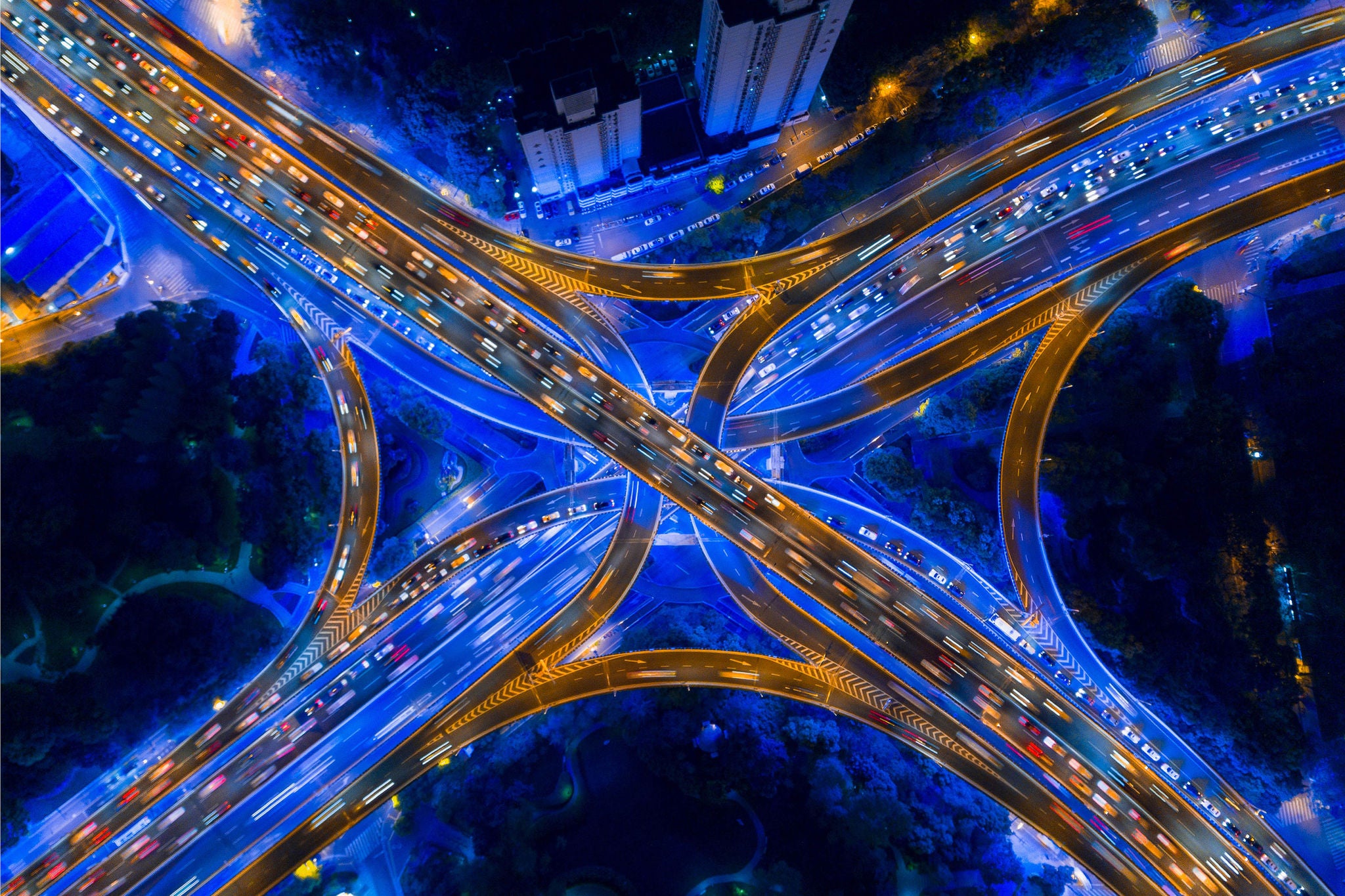



Aerial view of highway junctions shape letter x cross at night

Why cyber resilience and trust must anchor Ireland’s €275-billion NDP

The NDP is an opportunity to embed AI as a foundational element and hardwire citizen trust into critical infrastructure amidst rising cyber threats.


In brief

  • Strong cybersecurity protocols are vital for deploying smart systems in housing, transport, energy, and water, ensuring safety and reliability.
  • Ireland can lead Europe in trust-led infrastructure by embedding regulatory rigour and ethical standards in its digital transformation efforts.
  • Establishment of cyber-AI fusion centres across energy, water, and mobility sectors could be a gamechanger.

Envision a future where an AI-powered water system misreads pressure signals during a national heatwave, leading to supply shutdown. Or consider a smart grid, optimised by machine learning, that causes widespread blackouts on account of data poisoning. These scenarios are no longer mere hypotheticals. They represent the emerging realities of AI-enhanced infrastructure.

Ireland’s €275-billion National Development Plan (NDP) is a historic opportunity to transform housing, transport, water, energy, and digital infrastructure by 2035. The critical question though is: can we realise this vision at speed while maintaining public trust?

Ireland’s infrastructure transformation must go beyond physical buildout to embed cyber resilience and digital technologies, including AI, as foundational elements. This means designing the mechanisms, governance structures, and data ecosystems that ensure systems are both secure and capable of safely deploying AI across existing and new infrastructure. The NDP is a unique opportunity to embed cyber resilience as a foundation and hardwire citizen trust into critical infrastructure, amidst escalating cyber threats and the emerging risks of AI-driven systems.

Ireland now stands on the threshold of what Japan calls “Society 5.0”— a human-centred, cyber-physical society where digital and physical systems are seamlessly integrated. However, unlike Japan, Ireland has the potential to become Europe’s model for trust-led infrastructure, governed by transparency, resilience, and inclusion from the start.

This is Ireland’s moment for Society 5.0.

Digital connectivity and smart infrastructure: Our new national backbone

Today, every major project in the NDP is a cyber-physical system. From AI-driven smart grids, predictive maintenance in water systems to connected homes and autonomous transport, infrastructure now hinges on data, automation, and AI-enabled decisions that affect millions.

To harness the full potential of AI, there must be robust cyber protections alongside well-structured data pipelines, assurance protocols, and interoperability standards. Investing in these foundations shall ensure Ireland’s infrastructure is modern, resilient, intelligent, and trusted.

Japan’s Society 5.0 framework exemplifies this shift by integrating technologies such as AI, robotics, and Internet of Things (IoT) into the national infrastructure with a focus on human-centred design, ethical standards, and safety institutions like J-AISI (Japan’s AI Safety Institute).


Ireland is moving in the same direction. However, if we do not embed cybersecurity, AI assurance and public trust into our infrastructure systems now, we risk building complexity without control and automation without accountability.


Housing and urban development: When homes become digital systems

The NDP commits €36 billion to housing and urban growth, with homes increasingly equipped with smart meters, connected heating systems, voice-controlled devices, and cloud-linked security systems. However, without security standards these systems can introduce vulnerabilities.  Ireland must follow the lead of Japan’s Society 5.0 vision by embedding privacy-by-design and secure-by-default principles in housing procurement. Local councils should be trained in technology assurance, and AI tools used in planning and housing allocation should be auditable, explainable, and bias tested.

Transport: Cyber resilience for a connected nation

With €22 billion allocated to transport, Ireland’s public mobility system will undergo significant changes. AI will be crucial for projects like MetroLink, smart traffic control, and electric vehicle infrastructure.

In Society 5.0, autonomous transport systems are built on trust in the integrity of AI and the security of its operations. Ireland needs to do the same. A national transport cyber-AI fusion centre should be established, linking Irish Rail, the National Transport Authority (NTA), the bus services, Transport Infrastructure Ireland (TII), and the National Cyber Security Centre to ensure coordinated cyber intelligence, red teaming1, and AI model validation. All public transport procurement needs to include AI assurance protocols for robust and transparent systems.

Energy and climate action: Securing the smart grid

Under the NDP, €3.5 billion has been earmarked for the energy transition. With AI balancing loads, forecasting usage, and managing renewable inputs, the grid is evolving into a dynamic and software-dependent system. Following Japan’s E-TAI (Energy–Trusted AI) framework2 that sets safety and transparency principles for how AI is applied in national energy systems, Ireland should implement zero-trust architecture and enforce strict supply chain validation for IoT components. This would ensure a sustainable and sovereign smart grid that is trusted by design and protected from systemic risk.

Water and wastewater: AI at the heart of national utilities

The NDP allocates €7.7 billion to water infrastructure, with AI driving smart pressure monitoring, leak detection, and predictive maintenance. In a Society 5.0 world, essential services are governed by system-level safety protocols. AI used in water systems need to undergo sandbox testing3 and adversarial model assessment before deployment.  The safe environment test would allow operators to observe how the AI would behave under stress before rolling it out nationally. Additionally, simulated cyberattacks or data errors can be built into the AI models – a process known as adversarial testing - to ensure that even in unusual conditions they keep the water supply secure.

Joint incident response plans should be established with Uisce Éireann, the NCSC, and emergency services, treating water as a digital utility as much as a physical one.

The NDP rollout faces challenges due to capacity constraints within the economy. AI and other digital technologies can play a key role in overcoming those challenges. However, their application must be undertaken in a considered and human-centric manner with the emphasis on safety, transparency and explainability to build the public trust which will be essential to realising the ambitious goals set out in the NDP

National roadmap for AI and cyber resilience in infrastructure

To achieve a secure Society 5.0 model adapted to Ireland’s needs, a structured roadmap must underpin our investments.

Strategic value of trusted infrastructure

This is not just about public sector resilience. It is a call to action for investors, technology providers, and civic leaders. The next frontier of competitive advantage will lie in infrastructure that is not only smart but trusted.

Embedding trusted cyber capabilities into digital infrastructure from the outset is an imperative. As Ireland embarks on its NDP journey, future delivery must be designed with digital integration at its core. This means incorporating cybersecurity protocols, AI assurance, and data governance at every phase – from planning, to procurement, and operations. By institutionalising these capabilities across the infrastructure lifecycle - from feasibility studies to maintenance - we can ensure systems are not only smart but also resilient, scalable, and future ready.

From Japan to Germany, and from Gaia-X to the EU AI Act, a consensus is forming. Infrastructure must be resilient by design and AI must be governed with the same seriousness as physical safety. The proposed National Artificial Intelligence Office (NAIO) could be a step in that direction4.

Ireland’s investments can unlock a generation of digital prosperity, but only if we ensure that every system, every dataset, and every algorithm deployed meets the highest standard of integrity.


Summary

Trust is the enduring infrastructure. Japan’s Society 5.0 gave the world a powerful vision: that digital transformation must serve society, not just efficiency. Ireland now has the opportunity to interpret that vision through its own lens, rooted in European values, regulatory rigour, and public trust. The €275 billion plan is not just a budget line. It is a statement of national intent. Let us choose to lead not just with technology, but with purpose. Let us build not just for today’s needs, but for tomorrow’s trust. This is Ireland’s Society 5.0 moment.

Related content

Building Ireland’s Resilience: Securing our Future in a Volatile World

Explore Ireland's strategic imperative for resilience in energy, data, and services amid geopolitical shocks and evolving security threats.

Why cybersecurity must remain a priority amid tariff chaos

In an increasingly volatile economic environment, businesses must not allow their cyber focus to waver. Find out how.

    About this article

    Contributors