









EY refers to the global organization, and may refer to one or more, of the member firms of Ernst & Young Global Limited, each of which is a separate legal entity. Ernst & Young Global Limited, a UK company limited by guarantee, does not provide services to clients.
Recent Searches

Irish businesses advance sustainability with stronger reporting, sector-specific priorities, and long-term strategies for resilience and impact.
In brief
Sustainability needs to run through every business activity, shaping transformation, infrastructure, and finance.
Technology adoption and skills development are accelerating, but planning and data gaps will need continued support.
Long-term plans now factor in biodiversity, water stewardship, and community impact.
Sustainability continues to remain high on the Irish corporate agenda. Despite cross border and geopolitical challenges, Ireland is staying the sustainability course. In our latest EY State of Sustainability survey, 73% of respondents say sustainability is now embedded in how business priorities are set, via alignment between business and sustainability strategy. And 69% confirm that environmental and social factors are actively used to assess organisational performance.
The talent agenda continues to support developments in this space with roles being defined and adapted to carry this work forward. 62% of organisations now assign sustainability responsibility at the C-suite level, with 67% reporting a dedicated individual accountable for the agenda. In other cases, responsibility is shared or still emerging.
Targets are present, but delivery confidence varies. 37% of respondents report having a science-based net zero goal, but only 26% express strong confidence in achieving it.
Technology is part of the landscape. While some organisations are experimenting with AI to support emissions tracking and reporting, most are still figuring out where it fits. The data shows uneven progress, suggesting that many organisations are still working out how to best apply digital tools to support sustainability goals.
This year’s survey reflects a landscape in motion. Strategy, roles, and systems are being assembled through ongoing work. Some efforts are well defined, others are still taking shape. Priorities are influenced by timing, capacity, and the pressures that come with delivery. Continuing on from previous years, there’s clear evidence of ongoing movement. Organisations in Ireland are building, adjusting, and staying engaged with the work sustainability requires.
Demand & Motivators
Regulatory Concerns
Sustainability Reporting
Supply Chain
Skills Gaps
Leadership Accountability
Sector Analysis
Future Outlook
Executive summary
Organisations describe a mix of influences shaping their sustainability focus. Regulation features strongly. 87% cite CSRD reporting as a key driver, with compliance, risk management, and internal alignment all linked to reporting activity.
Community outcomes are a big part of the picture. 81% of respondents cite a desire to contribute positively to society, with water stewardship, biodiversity, and circular economy initiatives emerging as strategic priorities.
Finance enters the conversation in some contexts. ESG-linked finance, such as green bonds or sustainability-linked loans, is gaining ground in other markets and is beginning to register in Ireland. 17% of our survey respondents say sustainability is very important in lender discussions, yet 16% say it doesn’t come up at all. These numbers show that financial engagement with sustainability is inconsistent at this moment in time.
Customer expectations are influencing decisions in several sectors. Interest in sustainability is evident across products and operations, though the perceived importance has softened slightly compared to 2024.
The data points to a field of influence that is layered, evolving, and being formed by multiple forces. Not surprising, the driving forces behind the sustainability agenda vary from organisation to organisation.
Community Impact leads as emerging area of focus
Regulation features prominently in how sustainability is being recorded, interpreted, and communicated. CSRD and ISSB frameworks are now part of the operational language across many Irish organisations. Familiarity with the terminology is growing, even if the systems behind it are still being assembled.
When asked about readiness across data, reporting, talent, and technology, 30% now feel “very prepared”, up from 24% in 2024. Meanwhile, 39% say they don’t yet know when they expect to have a system in place for CSRD reporting, and 11% already have one in place.
Frameworks are being applied in varied ways. Some organisations are aligning with CSRD, ISSB, GRI, or SASB. Others are still determining what fits. Assurance practices also differ: 52% have third-party reviews in place, while others rely on internal validation or are still developing their approach.
There’s a growing fluency around the language of regulation, but the infrastructure behind it is still catching up. Organisations are interpreting CSRD and ISSB in ways that reflect their own maturity and priorities. Some are embedding these frameworks into existing systems. Others are starting from scratch. What’s clear is that progress is being made and there are new proposed systems emerging.
Timelines for implementing CSRD reporting systems differ widely. Around 7% of organisations expect to have systems in place within six months, 14% within a year, and 20% within two years. These variations highlight the complexity of the task and the resource demands involved. In 2025, 30% of surveyed companies report being very prepared for CSRD or ISSB requirements, up from 24% in 2024. This still leaves roughly 70% short of that readiness level. Some may fall outside the regulatory scope, while others remain uncertain about applicability as requirements evolve, adding layers of complexity to planning and investment decisions.
In 2025, 30% of the companies surveyed claim to be very prepared to meet their CSRD or ISSB reporting requirements, a strong jump on 2024’s 24%.
Sustainability reporting is becoming more visible across Ireland, with systems emerging to capture emissions data, track ESG performance, and support disclosures. These tools are not yet universal, and their level of integration varies.
57% of organisations now have data management tools, 48% support greenhouse gas calculations, and 41% report ESG reporting capability, up from 27% in 2024. Yet technology alone doesn’t guarantee confidence; data quality, consistency, and usability remain active concerns.
Reporting infrastructure is being built in layers. Some systems are mature, others are still evolving, and many are being adapted to fit the organisation’s rhythm. What matters now is how these tools support internal capability, how they help teams interpret data, define metrics, and respond to changing expectations with clarity and confidence.
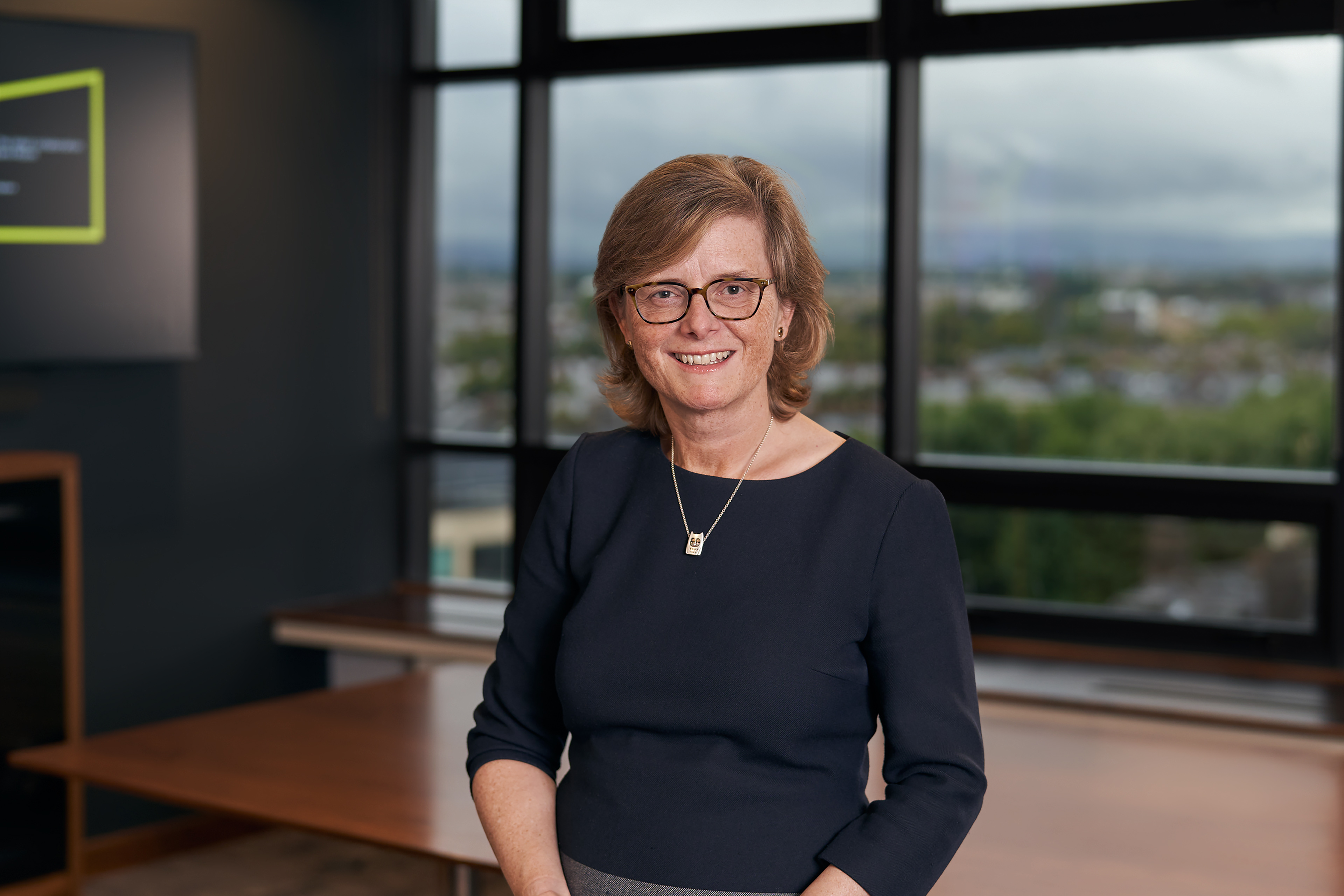
Ferga Kane
EY Ireland Infrastructure and Real Estate Sector Leader
External advisors are playing a growing role. 52% of organisations plan to consult ESG advisors in the next 6–12 months, with engagements focused on system design, data architecture, and assurance.
Growth in technology being used across a range of areas
Supply chains are being looked at more closely with ESG reporting now extending into networks of suppliers, contractors, and service providers. Organisations are recognising that environmental and social risks often sit across supply chain or beyond their operational boundaries
Due diligence is evolving. Some organisations have formal processes. Others are testing what engagement looks like in practice. The emphasis is on how supplier relationships function day to day.
ESG reporting is prompting a wider look at supplier relationships. The questions being asked now span emissions, labour conditions, water use, and governance. These conversations are helping organisations build a more detailed view of how their supply networks operate, where dependencies sit, and what kinds of risks or opportunities are present.
Ronan Guest
EY Ireland Business Consulting Partner
Assessments are being used to understand exposure to resource constraints, reputational pressures, and regulatory developments. These reviews are becoming more common, often linked to continuity planning and compliance.
8 in 10 of the organisations we spoke to say recent political, geopolitical, or regulatory developments, including U.S. policy, EU Omnibus, and sanctions, have influenced their sustainability strategy. Among those affected, 42% describe the impact as positive, while others are still working through the implications.
It’s great to see such positive and encouraging survey findings. In a global environment marked by geopolitical uncertainty, organisations are now treating sustainability as a smart, long-term priority. There is a recognition that the right sustainability strategy will have implications for brand resilience, customer engagement, and value creation.
Aidan Meagher
Co-Head of Geopolitical Strategy. EY Ireland Tax Partner and Life Sciences Tax and Law Lead
Supply Chain due Diligence and Geopolitical disruptions are most likely to be cited as biggest sustainability-related concerns
Last year, nearly half of Irish organisations, 46%, reported major gaps in regulatory knowledge. That figure has now dropped to 23%, reflecting real progress. But capability remains a constraint. Strategies are being written. Systems are being installed. The skills to connect them, to interpret, apply, and adapt, are not always present.
Organisations are looking for people who can move between functions, read the connections, and bring sustainability into the flow of operations. The reporting load is growing. As frameworks settle, the need for analytical fluency is becoming more visible.
Capability is being built through the work, through the effort to interpret standards, design processes, and support others in applying them. Organisations are looking for people who can move across teams, understand how systems relate, and carry sustainability through day-to-day decisions. The work draws on technical knowledge, operational awareness, and the ability to connect across disciplines. These skills are emerging through practice, often shaped by the demands of delivery.
Laura Flynn
EY Ireland Partner Head of People Consulting
Skills gaps are easing in areas like innovation, sustainability knowledge, and project management. The positive change is most visible in project management, where the proportion of organisations reporting a large gap has dropped from 35% to 16%. Other gaps remain. Strategic planning and data analysis continue to stretch teams, especially where the work involves connecting across functions and thinking beyond immediate timelines.
Sustainability requirements are fluid and demanding when it comes to change management and innovation skills. Organisations will seek out individuals who can bring new mindsets, processes and cultures into the workplace.
Significant declines evident in relation to skills gaps
Across Irish businesses, sustainability is being embedded through strategy, role definition, and clearer lines of accountability. These developments vary in form but reflect a shared effort to move from principle to practice.
Leadership involvement is becoming more visible. In many organisations, responsibility sits within the senior team, sometimes with a named executive, sometimes distributed across functions. This presence influences how sustainability is prioritised, resourced, and communicated.
Incentives are being introduced with some organisations linking sustainability goals to performance metrics. Others are using materiality assessments to focus effort and guide engagement.
Stakeholder consultation is expanding. Employees, investors, community groups, and regulators are being brought into the conversation. These interactions are influencing how priorities are set and how progress is tracked, showing a collective response to sustainability challenges.
Just over 1 in 5 claim the whole senior management team have responsibility at a c-suite level
Sustainability is being interpreted differently across sectors. Some industries are working with established frameworks. Others are still defining what sustainability looks like in their sector. The work varies in pace and emphasis, depending on exposure, scale, and the kinds of decisions organisations are making day to day.
Focus areas reflect these differences:
Energy and utilities focus on emissions tracking, climate risk, and infrastructure planning. These organisations more often report using GHG calculation tools and data platforms aligned with regulatory frameworks.
Retail is prioritising supply chain due diligence and packaging regulation. Retailers are actively assessing supplier ESG performance and frequently cite reputational risk as an area of focus.
Professional services are supporting their clients as they focus on internal governance, embedding CSRD and ISSB into reporting processes, and increasing use of third-party assurance. Many are building data and strategy capabilities to support compliance and maintain credibility.
Manufacturing is driven by resource efficiency and compliance. Manufacturers report greater use of internal emissions tracking systems, often working with partial or adapted solutions.
Technology use follows similar contours. 57% of organisations now use data management systems to record sustainability data, and 54% have tools in place to gather supply chain information for compliance. These systems are being used to support reporting, assess ESG performance, and respond to regulatory changes.
In energy and utilities, sustainability is still at the top of the agenda being driven through the lens of climate risk and emissions reduction. Large scale investment in infrastructure which has regulatory and Government approval, will create the pathway to new Energy sources whilst improving security of supply concerns.
Sean Casey
EY UK&I Industrials & Energy Industry Leader
Irish organisations are planning with more intent. Sustainability is being built into long-term thinking as part of how decisions are made across operations, finance, and risk.
Recent policy shifts, in the EU, the U.S., and elsewhere, are influencing how supply chains are structured, how reporting is prioritised, and how external communications are framed. These developments are being read closely for what they signal about the direction of business.
Confidence is growing. Organisations are using planning tools to test assumptions, explore scenarios, and build strategies that hold up under pressure. These efforts are helping teams move from short-term fixes to longer-term planning.
Our recommendations
1. Let technology support judgement
Digital tools are in place. What’s missing is trust. Many teams use them for compliance but hesitate to use them to guide decisions.
What to do:
Connect systems so teams can move away from manual or excel based reporting.
Use AI and analytics to test ideas, explore risk, and model different futures.
Build internal confidence so people can read the signals and act.
2. Build skills that connect across teams and support change
Progress slows when people are asked to lead without the tools. The ability to move across systems, interpret complexity, and bring others along is often missing.
What to do:
Collaboratively, through teamwork, prepare for planning, regulation, and data.
Support ways of working that help teams rethink how things are done.
Bring in outside help to accelerate progress and build capability.
3. Work with suppliers in a steady and practical way
More organisations are checking how their suppliers handle sustainability. Some are already doing detailed work. Others are just starting.
What to do:
Move from early conversations to joint projects and trials.
Use digital tools such as portals, sensors and integrated sysems to gather data across the supply chain and understand supplier performance.
Treat supplier relationships as part of strategy, not just compliance.
4. Read regulation as a signal of what’s coming
Rules are changing. They often point to deeper changes in expectations.
What to do:
Use frameworks like CSRD and ISSB to build resilience.
Track new rules like CSDDD and EPR to see what’s ahead.
Make sure reporting reflects what matters and builds trust.
5. Make leadership and accountability visible and consistent
Sustainability is now commonly discussed by C Suite but often it’s not clear how it’s resourced and tracked.
What to do:
Give leaders clear roles, goals, and ways to measure progress.
Link sustainability goals to performance and reward.
Keep stakeholder conversations active and use them to guide decisions.
6. Treat community impact as a strategic priority
Community outcomes are gaining ground, with many organisations including community impact in their sustainability strategy, alongside climate risk, biodiversity, and circular economy initiatives.
What to do:
Build programmes that connect sustainability goals with local outcomes.
Include water stewardship, biodiversity, and circularity in planning conversations.
Use community engagement to surface risks and opportunities that don’t show up in standard metrics.
7. Seek external advice to build internal capability
Organisations are bringing in support to design systems, interpret regulation, and prepare for reporting and to identify where additional resources or specialist advice is needed.
What to do:
Use advisory support to build internal fluency, not just tick compliance boxes.
Focus engagements on system design, data architecture, and assurance.
Treat external input as a way to develop your team and strengthen internal decision-making.
About the survey
Research for the EY Ireland State of Sustainability report was commissioned by EY and conducted by an independent Irish agency between October and November 2025. It draws on insights from 200 senior sustainability leaders, including Chief Sustainability Officers, ESG Directors, and executives with responsibilities across strategy, finance, and governance. Respondents represented a broad spectrum of organisations operating in Ireland.
Summary
Irish businesses are bringing sustainability into the flow of everyday work. Reporting systems are taking shape, and supply chains are part of the picture. Skills are improving through practice, though planning and data remain demanding. Across sectors, priorities differ, energy looks at emissions and infrastructure, retail at packaging and suppliers, services at governance, and manufacturing at resource use. What’s clear is a steady move toward resilience, with biodiversity, water, and community impact now part of long-term thinking.
How EY can help
Sustainability and ESG services that help protect and create value for business, people, society and the world. Explore the depth and breadth of EY services and solutions.
Read more