


EY refers to the global organization, and may refer to one or more, of the member firms of Ernst & Young Limited, each of which is a separate legal entity. Ernst & Young Limited is a Swiss company with registered seats in Switzerland providing services to clients in Switzerland.
Recent Searches
Trending
-
How Swiss firms should prepare for post-quantum cryptography
05 Aug 2026 Cybersecurity -
New Swiss AML and Transparency framework: how it impacts businesses, company owners and advisers
27 Jul 2026 Financial services -
Global IPO highlights in Q2 2026 and insights for future IPO candidates
08 Jul 2026 IPO
Swiss real estate market 2026: selectivity, structuring and the end of “soft ESG”
The Swiss real estate market is entering a phase defined by capital abundance but structural constraints. High liquidity meets limited supply, increasing regulatory complexity and rising expectations on transaction quality. Investors are forced to become more selective, while deal execution requires greater precision across structuring, taxation and risk allocation.
At the same time, ESG is undergoing a fundamental shift: away from narrative positioning towards quantifiable metrics, auditable data and stricter regulatory scrutiny. Sustainability is no longer a differentiator based on intent, but on measurable performance and documentation.
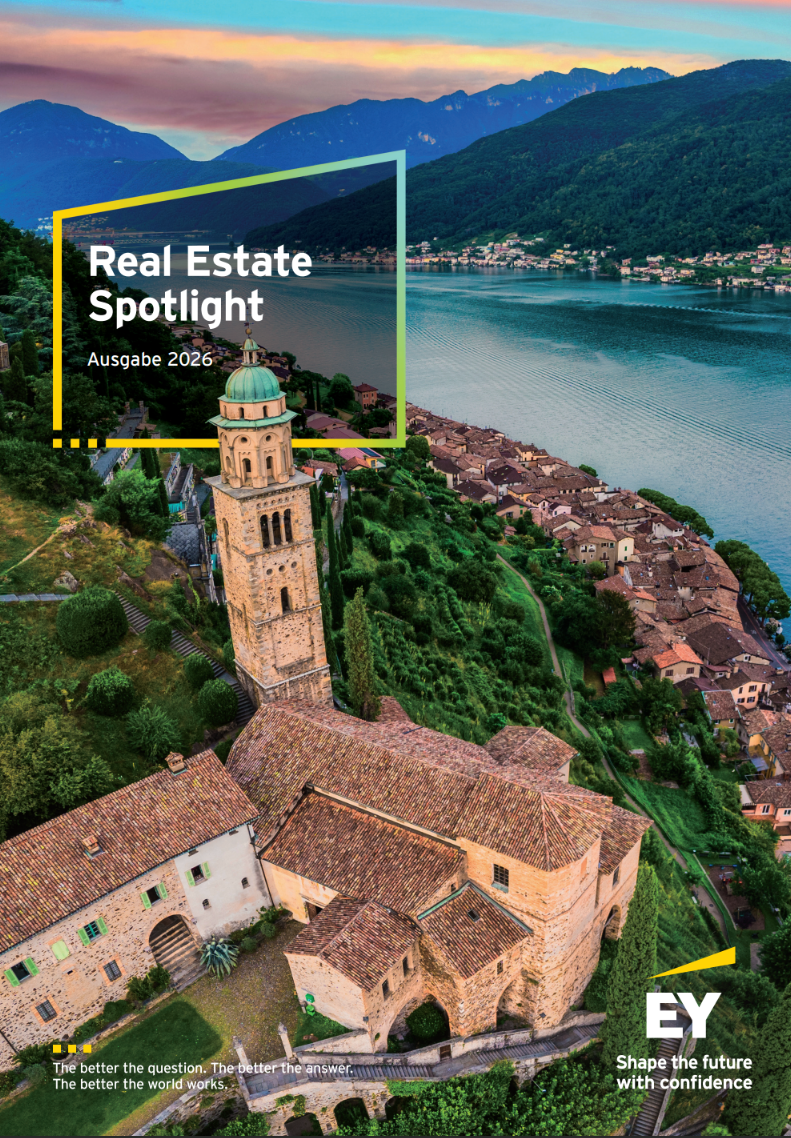
Findings:
- Swiss real estate market: What are the key trends shaping capital flows, investment strategies and asset selection in today’s market environment?
- Transaction structures and risk allocation: How can investors structure transactions to balance liquidity, risk and long-term value and what role do instruments such as Sale & Leaseback and W&I insurance play?
- Regulatory and tax developments: What are the most relevant tax risks and structuring considerations when acquiring, holding or restructuring real estate assets?
- ESG and sustainability requirements: How are new regulatory frameworks and valuation standards transforming ESG from a strategic concept into a measurable and decision-relevant factor?
- Design, well-being and value creation (Healing Architecture): How can real estate go beyond functionality to actively support well-being, efficiency and user experience? Healing Architecture demonstrates how spatial design can enhance both human experience and the long-term performance of buildings.
Authors:
Daniel Zaugg, Erik Ganz
Publication:
1 July 2026
Language:
German, French
Number of pages:
72
Document type:
Brochure
Fill in the form below to download the PDF in German and French: