



woman stands on foredeck of sailboat watching sunset in summer evening

Are we approaching the peak of luxury?


Discover how luxury brands are reevaluating their growth strategies in the face of stagnating demand.


In brief

  • As the luxury market enters a slow-growth phase, a new EY research reveals what consumers value and how brands can stay desirable while expanding reach.
  • 75% of aspirational customers prioritize quality, but experience, values and personal connection now matter as well. Yet, many don’t feel meaningful engagement.
  • Luxury brands can tap new growth pools with new business models including branded travel experiences, product rentals and certified pre-owned sales.

After decades of double-digit growth, the global luxury sector – now worth EUR 363 billion – is experiencing a sharp slowdown. While sales in newer markets like the Gulf States grew by 6% in 2024, declining economic conditions and reduced spending from key regions such as China have led to a USD 240 billion drop in the valuation of European luxury stocks and profit warnings across the industry.

Stock devaluation
Drop in valuation of European luxury stocks (in EUR)

Despite the economic downturn, high-net-worth customers continue to spend. The slowdown stems instead from a drop in new customer acquisition and reduced spending from aspirational consumers, i.e., those not yet in the top tier of wealth. With global economic growth downgraded (OECD 2025), many of them are now rethinking the value of premium purchases. More than ever, luxury brands face a critical challenge: how to maintain desirability while stretching their reach.

Five segments, one insight: personal connection is key

The first edition of EY’s Luxury Client Index focuses on the motivation of aspirational luxury customers. The study examines what these customers truly value, what drives or dampens their spending and what strategies might win them back.


EY 2025 Luxury Client Index

Winning Back Aspirational Luxury Clients

EY’s research identified five key aspirational luxury customer segments, each with distinct preferences and spending habits. From high-spending “prestige” and “discerning” customers to “drifting” ones growing more price-sensitive, the segmentation reveals clear pathways for personalized engagement and targeted strategies. Importantly, even the most infrequent buyers show future growth potential if brands can deliver the right mix of quality, experience and innovation.

Quality still matters, but so does experience

The research found that 75% of aspirational customers prioritize quality above all else – even above exclusivity, price or celebrity endorsement. While luxury has long served as a symbol of status, customers are placing growing emphasis on craftsmanship, brand heritage and long-term inherent and perceived value, particularly in the context of economic uncertainty. At the same time, many feel disillusioned by more recent steep price hikes that seem disconnected from product value.

That said, luxury is no longer just about the item itself – it’s about the full brand experience. Customers particularly appreciate the human interaction and VIP treatment that in-store shopping offers, with 96% indicating that this channel offers the highest level of satisfaction compared with any other. For many consumers, brands and products must also be aligned with their values — especially around sustainability, which has become an important consideration in purchasing decisions.

The research found that 75% of aspirational customers prioritize quality above all else – even above exclusivity, price or celebrity endorsement

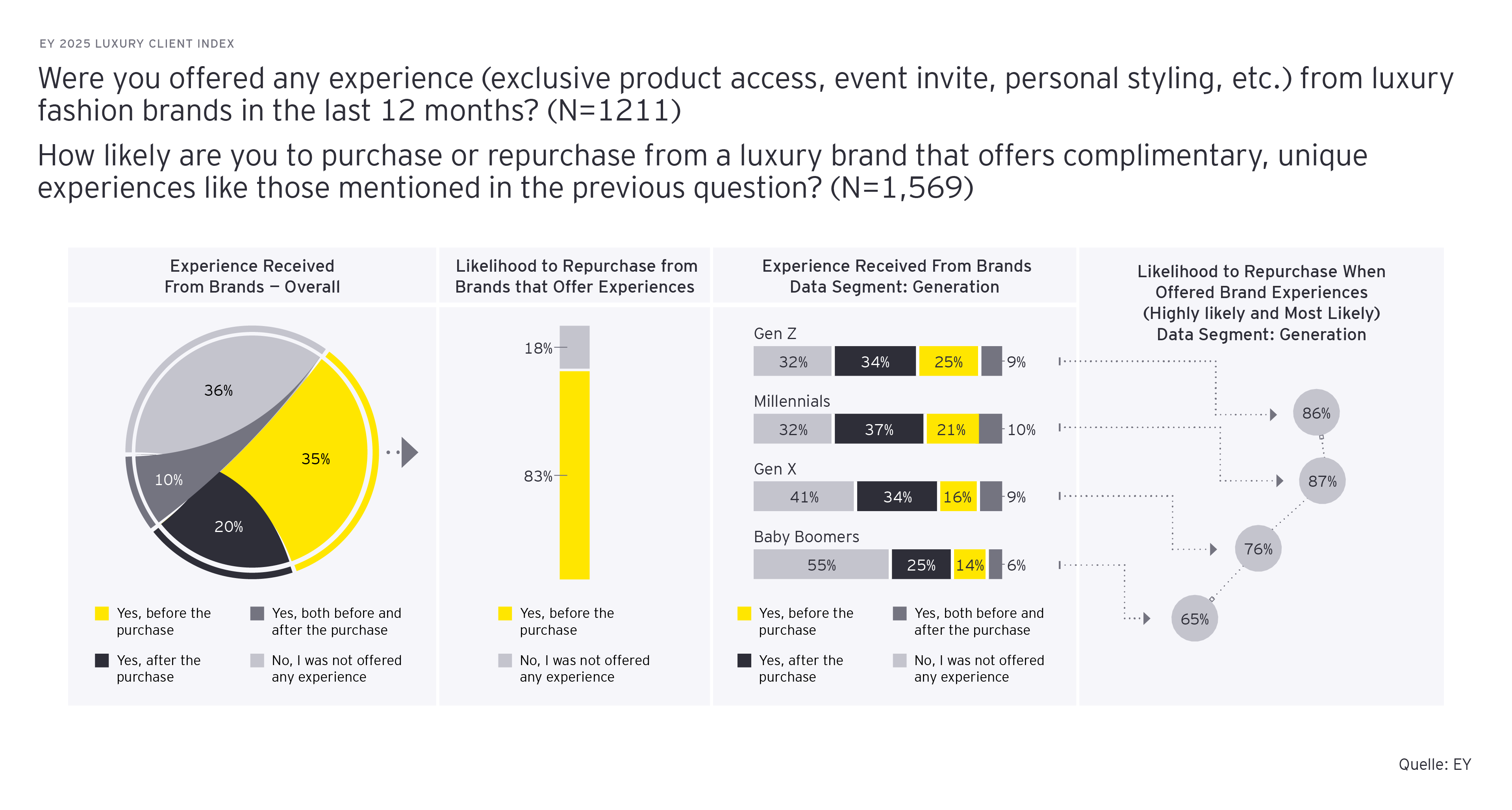
While customers want access to exclusive products and a personalized service, the data shows that 66% of those spending under EUR 5,000 annually are not being offered meaningful brand experiences. This presents a massive missed opportunity, given that 83% of them say that such experiences would influence them to purchase from the brand again and 70% are even willing to pay for such unique experiences alongside their purchase.

New business models

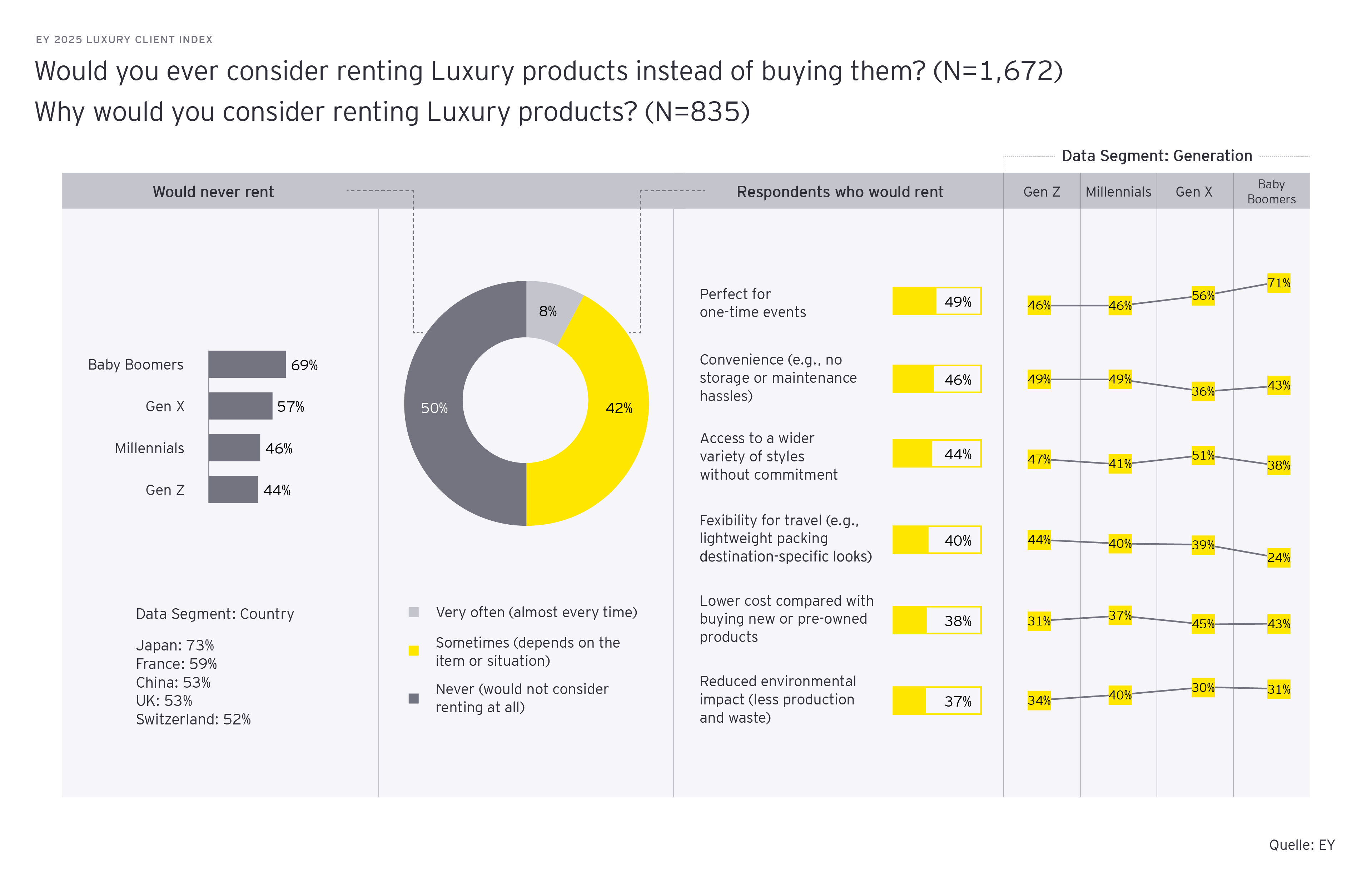
Some luxury brands are finding growth opportunities by expanding into adjacent areas. Forerunners are finding strong customer appetite for services such as branded travel experiences, product rentals and certified pre-owned sales, which are set to become a strategic pillar of the future luxury ecosystem and reflect the growing importance of sustainability as a purchase driver. Although scepticism around authenticity persists in the pre-owned market, 54% would buy pre-owned items directly from a trusted maison. Similarly, 50% would consider renting for convenience or for special events. 

luxury brands are finding growth opportunities by expanding into adjacent areas.

Subscription models for limited-edition products can also serve to engage customers consistently and build community around the brand, aside from unlocking steady revenue streams.

Luxury brands are finding growth opportunities by expanding into adjacent areas

Winning back aspirational luxury customers

The expectations of aspirational luxury customers have evolved. They now demand meaning, innovation, experience and sustainability. Brands need to move beyond heritage to stay relevant – by strengthening perceived quality, elevating digital experiences and embracing certified pre-owned models. New services like rentals and subscriptions offer accessible luxury without diluting brand equity. Forerunners are reframing sustainability as intrinsic to luxury, rooted in longevity and craftsmanship. The future lies in delivering exclusivity, value and emotional connection across all touchpoints – digital and physical – while aligning with the principles today’s customers care about most.

Brands are reframing sustainability as intrinsic to luxury, rooted in longevity and craftsmanship

Summary

Luxury brands have reached a crossroads. To thrive in tougher market conditions, they must go beyond exclusivity and re-center on what their customers truly value: authenticity, quality, immersive experiences and sustainable innovation. By embracing new models and reconnecting personally with their customers, brands can navigate the slowdown – and emerge stronger.


About this article


Related articles

    Request for proposal (RFP) - exclusively for Switzerland

    |

    Submit your request now!