





Business Finance, accounting, contract, advisor investment consulting marketing plan for the company with using tablet and computer technology in analysis.

Global IPO highlights in Q3 2025 and insights for future IPO candidates


Read about IPO activities in Q3 2025 and find the right financial reporting standard for life as a public entity.


In brief

  • Global IPOs surged in Q3 2025, with 370 IPOs and an 89% rise in issuance volume. Switzerland led Europe with the largest IPO, SMG Swiss Marketplace Group. 
  • Choosing the right financial reporting standard for an IPO impacts compliance, investor confidence, valuation, and access to capital – early planning ensures smooth conversion and transparency.
  • Swiss GAAP FER, IFRS, and US GAAP differ in complexity and disclosure. A structured approach reduces risk, accelerates filings, and supports stronger market positioning.

Q3 2025 IPO barometer

The global IPO market experienced a significant upswing in the third quarter of 2025. A total of 370 companies went public worldwide, marking a 19% increase compared to the same quarter of the previous year. The issuance volume saw an even more impressive rise, increasing by 89% to $48.3 billion.

This positive trend is also reflected in the nine-month figures, with 914 IPOs in the first three quarters of 2025, a 5% increase from the previous year. The placement volume for this period reached $110.1 billion, representing a 41% year-on-year increase.

Regional Highlights

Switzerland: The SMG Swiss Marketplace Group went public on the Swiss stock exchange with an issuance volume of around 903 million CHF, making it the largest IPO in Europe this year and placing it among the top 10 worldwide. Switzerland recorded three new listings in 2025 so far, including Amrize’s dual listing on SIX and NYSE and Bioversys AG’s February IPO.

USA: The number of IPOs in the USA increased significantly to 180 in 2025 (2024: 121), with an issuance volume of $33.0 billion (2024: $27.3 billion).

China: The IPO market in Greater China also grew significantly, reaching 155 IPOs (2024: 119) with an issuance volume of $35.9 billion (2024: $13.1 billion). The largest IPO by issuance volume in Q3 took place in Hong Kong – Zijin Gold International Co Ltd. with $3.2 billion.

Europe: European stock exchanges saw fewer companies listed year-on-year, with 73 IPOs compared to 97 in 2024. The issuance volume reached $9.4 billion compared to $15.4 billion during the same period last year.

Sector Performance

The highest shares of the global issuance volume in the first three quarters were in the Technology ($23.8 billion), Mobility ($14.2 billion), and Real Estate/Hospitality & Construction ($13.2 billion) sectors.


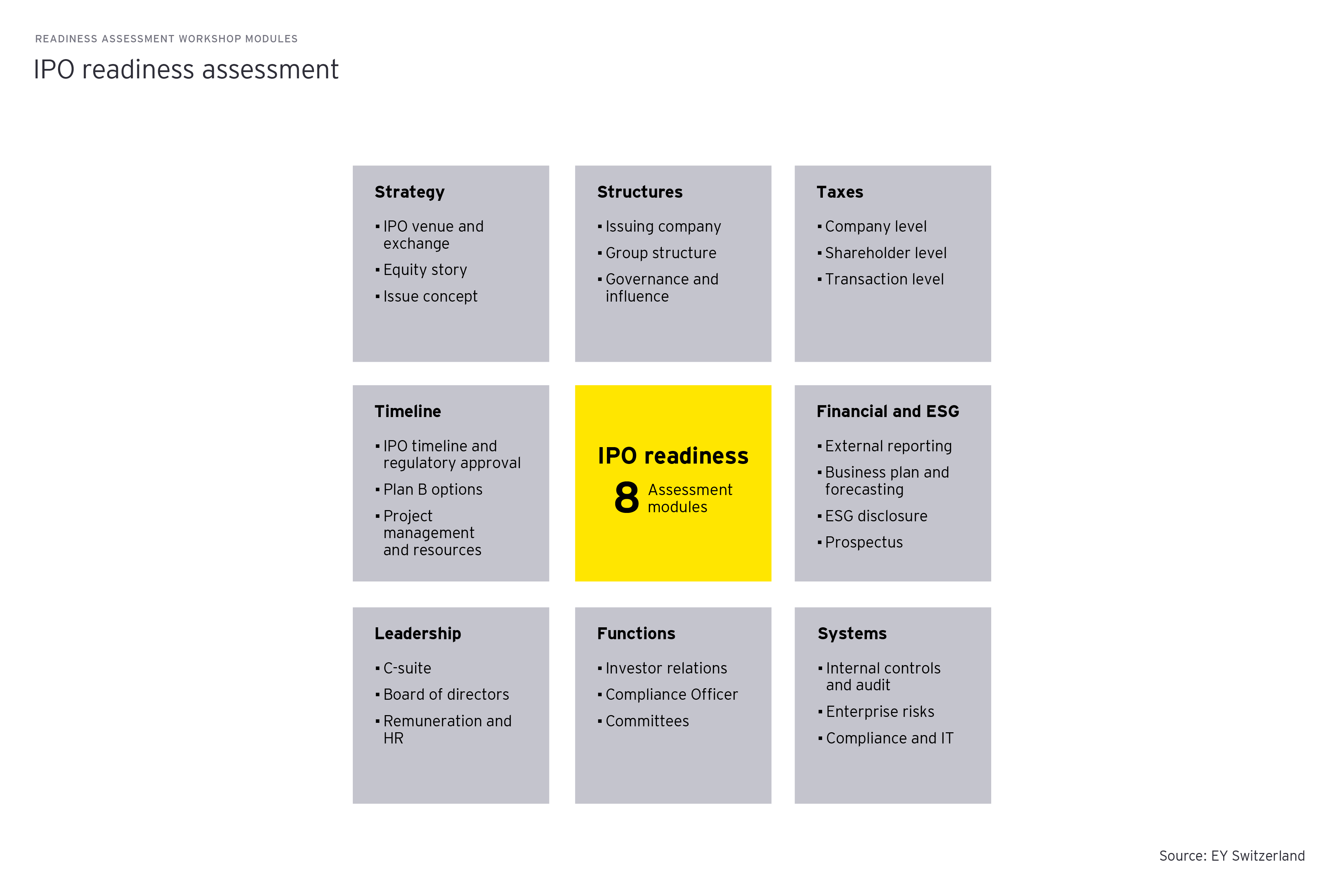
Going public is a significant milestone for any company, but it comes with a host of new responsibilities, particularly in terms of reporting requirements. Candidates need to ensure that they are well prepared and may benefit from external support in assessing readiness and developing a roadmap toward the target structure across eight key areas:

Selecting the financial reporting standard: A strategic IPO decision

Selecting the right financial reporting standard (“GAAP”) is not just a compliance exercise – it’s a strategic decision that can significantly influence your IPO journey. It determines how you present historical financials, the transparency of your disclosures at listing and thereafter, including how easily investors can benchmark you against peers.

The listing location you choose will also dictate not only the permitted financial reporting standard but also the disclosure and reporting obligations. The requirement for the track record of mature companies is typically three years of audited financial statements. 

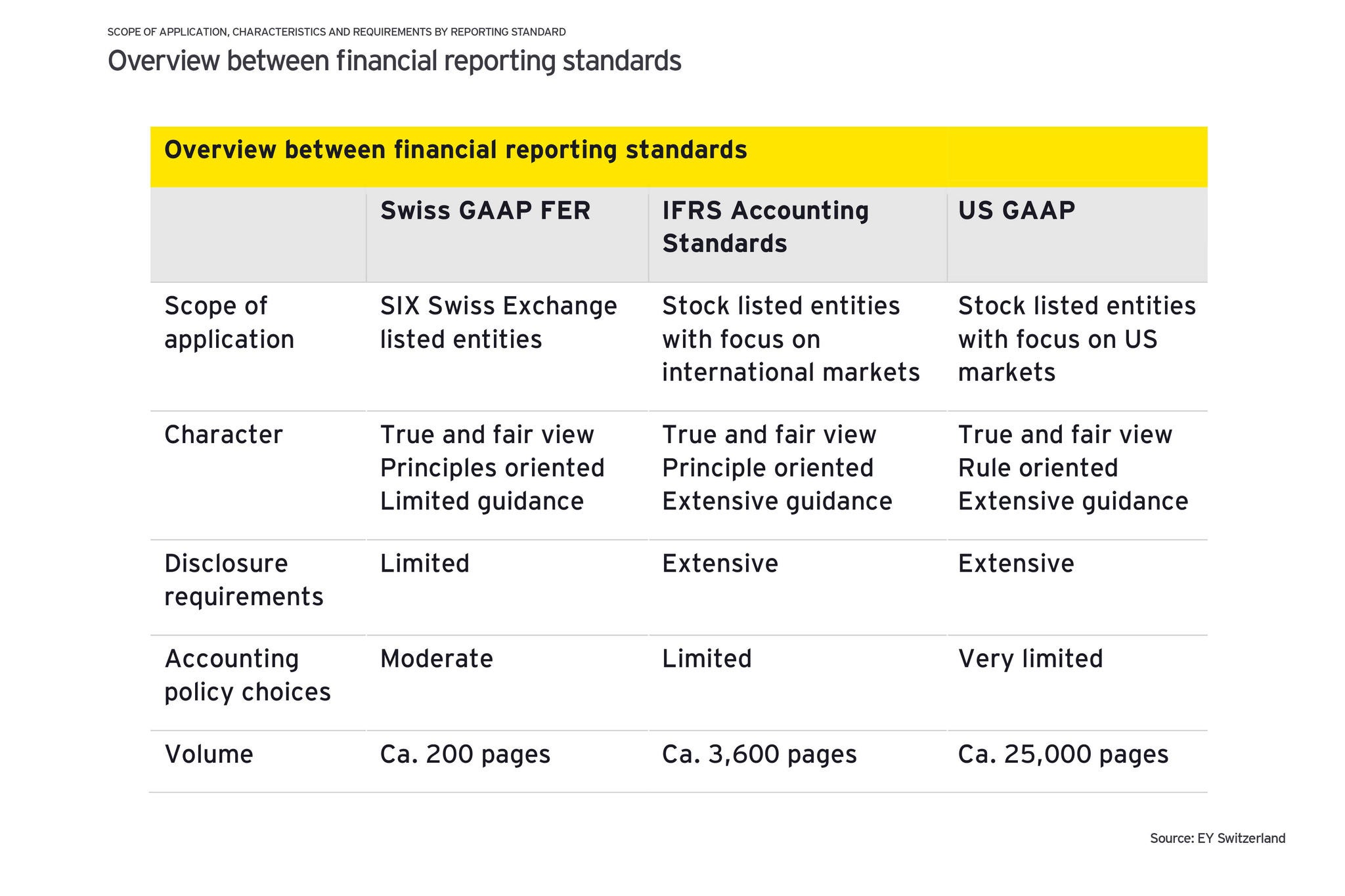
Scope of application, Characteristics and Requirements by reporting standard

Choosing the right GAAP when going public

Choosing the financial reporting standard influences not only compliance but also long-term reporting obligations and investor perception. The latter varies considerably across different financial reporting standards, and this variation can directly impact factors such as valuation, demand during book-building, and overall market confidence.

Therefore, before going public, many companies choose to convert their financial reporting standard to align with regulatory requirements, market expectations and investor preferences – decisions that can significantly influence the IPO preparation process.

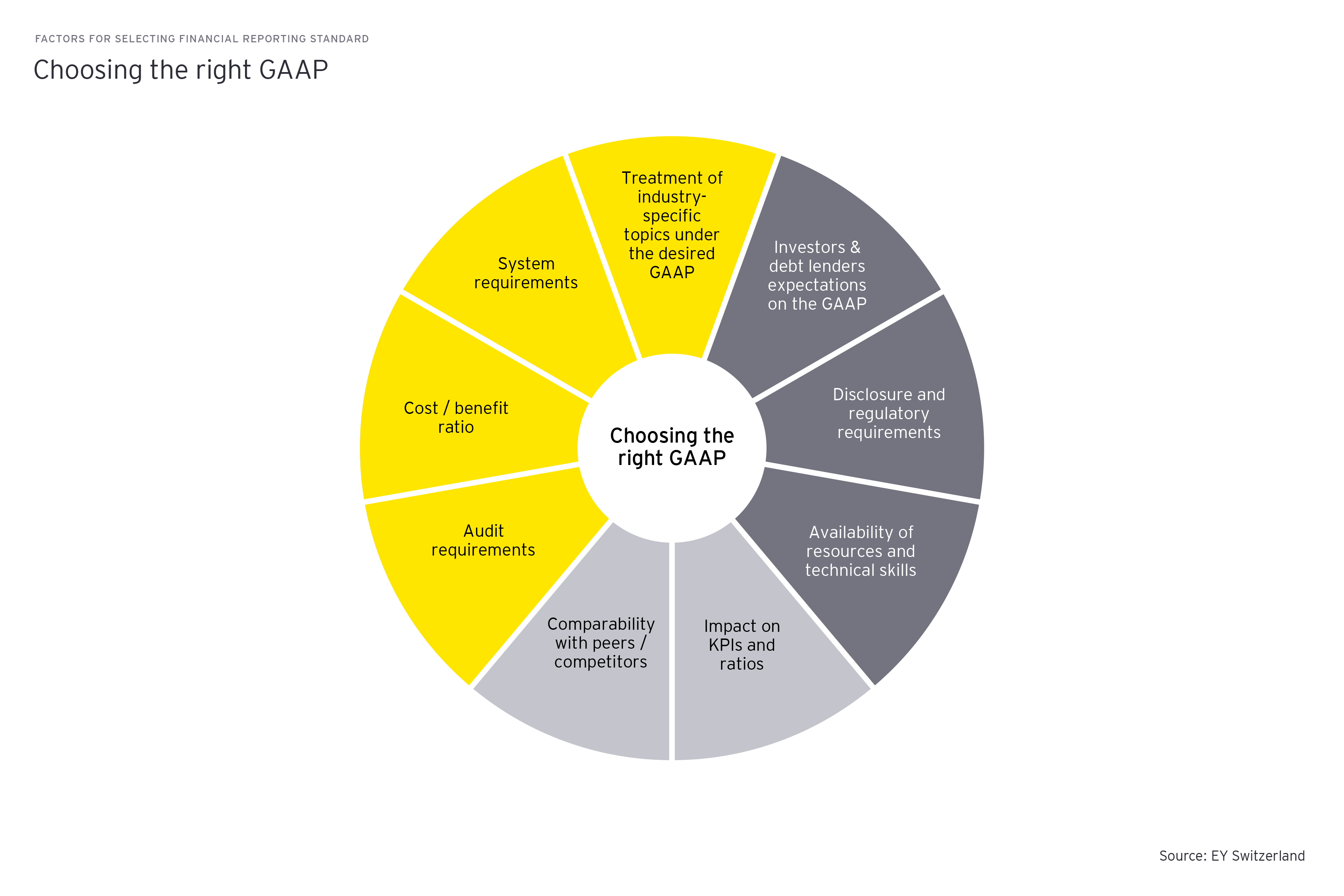
For companies planning to go public, the choice of GAAP is influenced by several factors, as shown below.

However, companies preparing for an IPO must also weigh additional considerations that extend beyond these priorities:

How the choice of financial reporting standard can lead to accounting complexities

Selecting or converting to a new financial reporting standard before an IPO can introduce significant accounting complexities. Each framework applies different recognition, measurement, and disclosure rules, which can fundamentally change how financial performance and position are presented. If these differences are not addressed early, companies risk restatements, delays, and credibility issues during the IPO process.

Several accounting areas that seem routine as a private company can become challenging during an IPO, as the transition to public company reporting introduces new rules, disclosure requirements, and investor scrutiny.

  • Share-Based Payments
  • Transaction Costs
  • Earnings per Share (EPS)
  • Segment Reporting
  • Revenue recognition
  • Financial Instruments

Public versus non-public transition periods

The transition from a private to a public company often requires adopting a different financial reporting framework, and the timing of this conversion is critical. Private companies typically have more flexibility in applying local GAAP or simplified standards, but once the IPO process begins, they must comply with the chosen reporting requirements. The conversion period can be challenging because it overlaps with other IPO readiness activities, requiring alignment of accounting policies, systems, and internal controls. Starting early – ideally 12 to 24 months before listing – helps avoiding compressed timelines, reduces execution risk, and ensures that investors receive consistent and, comparable financial information from day one as a public company.

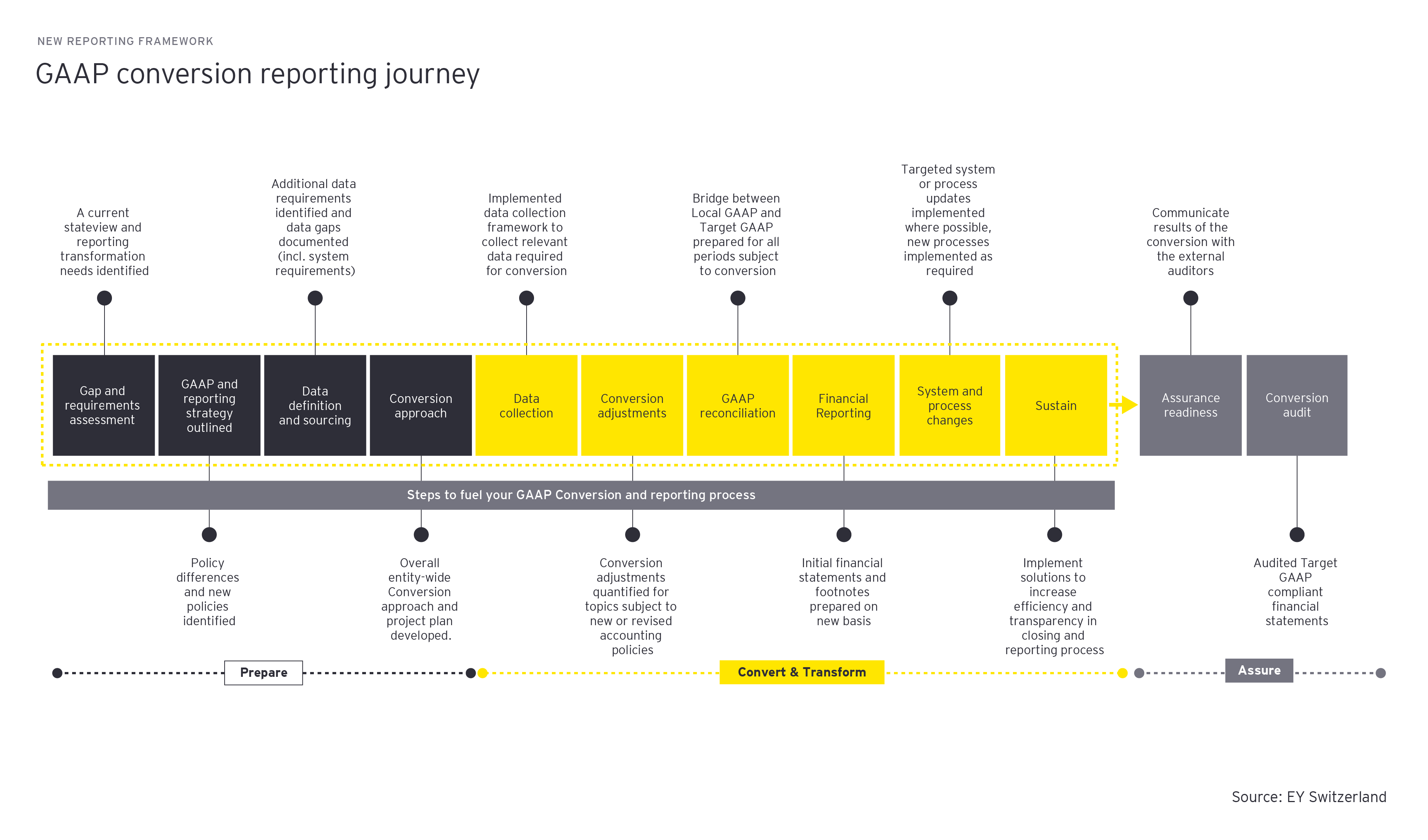
GAAP conversion and reporting journey

Transitioning to a new reporting framework is a significant change. Planning ahead minimizes the burden on the finance organization. With a clear roadmap, a solid foundation can be built, starting with accurate and timely data, which can then be consolidated into insights needed for value creation. Ultimately, this may lead to a Finance organization that is ready to take on a more strategic and forward-looking role, while delivering reliable and accurate data.

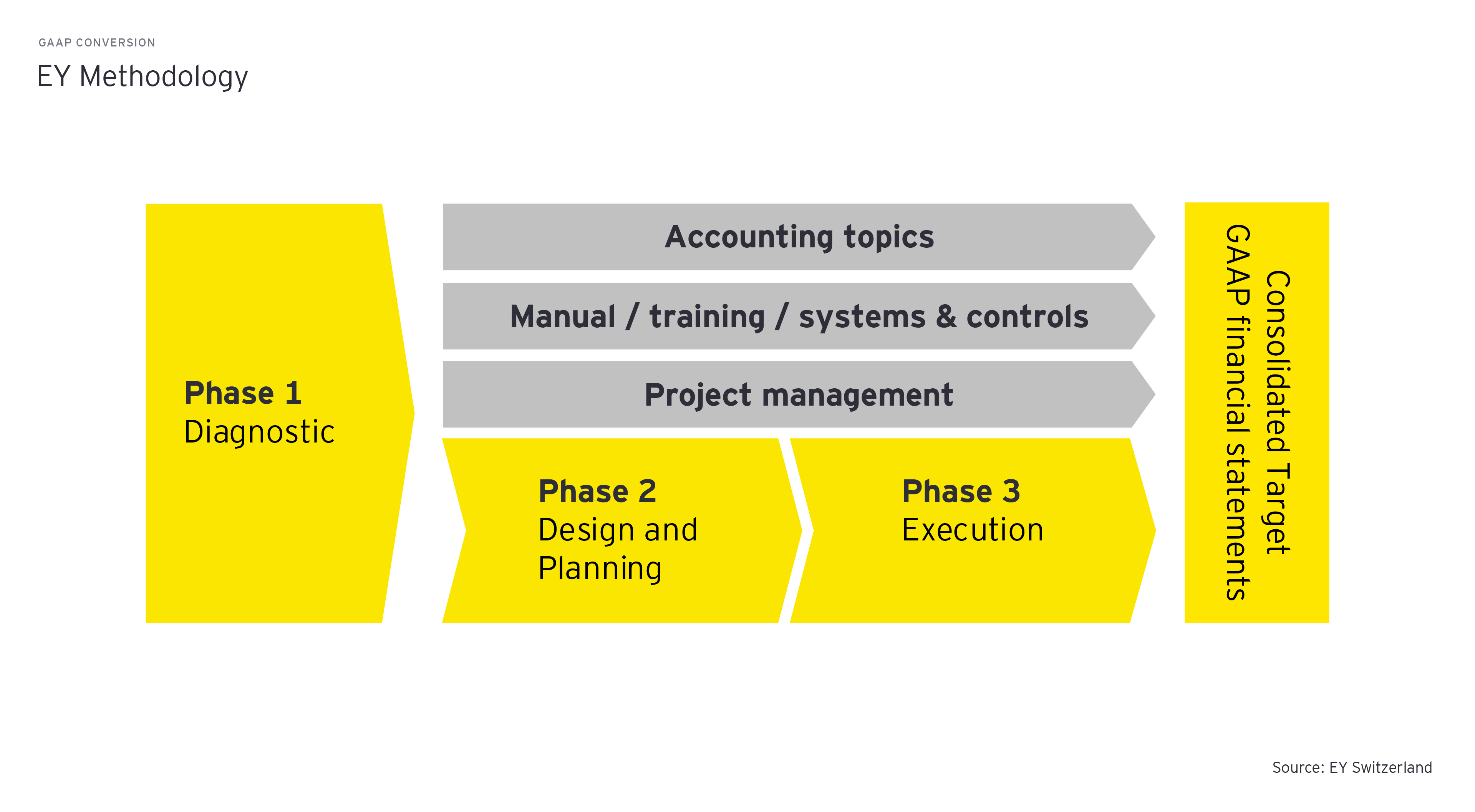
EY Methodology

EY applies a structured, three-phase methodology that has been tested across numerous engagements, enabling companies to anticipate and manage the impact on their financial statements well in advance.

Phase 1: Diagnostic

The process begins with a comprehensive diagnostic to identify key differences between existing accounting policies and the requirements of the target GAAP. This early-stage analysis provides clarity on potential adjustments and their implications.

Phase 2: Design and Planning

Building on these insights, EY develops a detailed project plan that addresses all relevant workstreams. This phase also includes creating a “Blueprint” for the future financial statements under the target GAAP, ensuring alignment with regulatory expectations and investor needs.

Phase 3: Execution

The final phase focuses on executing the conversion and embedding the new reporting framework into the organization. EY supports clients in implementing the target GAAP effectively, laying the foundation for accurate, transparent, and investor-ready financial reporting.

Thereafter: Optimize & Sustain

After conversion, organizations should embed the new financial reporting standard into daily operations through robust governance, updated accounting policies, automated controls, and ongoing training. Continuous monitoring of standards and periodic reviews help ensure compliance, mitigate risk, and maintain investor confidence post‑IPO.

Summary

Choosing the right financial reporting standard for an IPO is a strategic decision that shapes compliance, investor confidence, and market perception. Standards such as Swiss GAAP FER, IFRS, and US GAAP differ in complexity, disclosure, and global acceptance. Early planning—ideally 12–24 months before listing – enables smooth conversion and consistent historical reporting. Addressing key accounting areas is essential to avoid delays and restatements. A structured approach, from diagnostic to execution, reduces risk, enhances transparency, and supports stronger investor demand and valuation, ensuring a successful transition to public company reporting.

Acknowledgement

We kindly thank Ken Brandstetter for his valuable contribution to this article.

FAQs


Related articles

Global IPO highlights in Q2 2025 and insights for future IPO candidates

Explore the Q2 2025 global IPO market performance, ESG practices, key trends, and how companies can prepare for effective Sustainability Reporting

Global IPO highlights in Q1 2025 and insights for future IPO candidates

Discover in our global IPO market insights how frontrunners are securing IPO strategy and IPO process success by going public in best-fit capital markets


    Explore how EY can help you with IPO

    Supporting companies to go public and evaluate strategic transactions.


    About this article

    Authors

    Request for proposal (RFP) - exclusively for Switzerland

    |

    Submit your request now!