





default

Global IPO highlights in Q2 2025 and insights for future IPO candidates


Read about IPO activities in Q2 2025 and find out how ESG expectations shift when a company goes public.


In brief

  • Q2 2025 saw global IPOs down 14% to 241. Emissions rose to $31.5B, driven by Asia. Europe declined, while the U.S. had mixed results in IPOs and volumes.
  • An IPO comes with sustainability reporting requirements. Understanding the relevant listing rules and applicable regulations is crucial.
  • An enhanced sustainability reporting journey entails transparency on governance, strategy and business processes and should be seen as a long-term value driver.

Q2 2025 IPO barometer

The latest IPO Barometer reveals a stagnation in global IPO activity during the first half of 2025, with 539 companies going public, a 4% decrease compared to the previous year. However, the total emissions volume increased by 17% to $61.4 billion. The second quarter saw a 14% drop in IPOs, totalling 241, yet emissions rose to $31.5 billion, up from $28.2 billion in Q2 2024.

Asia showed significant growth in H1 2025, with emissions volume soaring by 172% to $28.4 billion, driven by a rebound in China and Hong Kong. In contrast, Europe experienced a decline, with IPO numbers falling by 24% to 51 and emissions dropping to $5.9 billion from $14.7 billion. The U.S. market presented a mixed picture, with IPOs increasing by 35% to 109, but emissions decreasing to $17.1 billion.

The technology sector led the global emissions volume in the first half of 2025, followed by mobility and real estate. Notably, the largest IPO of the year occurred in China, with Contemporary Amperex Technology Co. Ltd. raising nearly $5.3 billion.

In Switzerland, Bioversys AG is still the only company that went public this year, raising approximately $85 million. Additionally, on June 23, Amrize made its trading debut on the SIX Swiss Exchange after successfully completing a 100% spin-off from Holcim. This transition established Amrize as an independent, publicly traded leader in building solutions within the North American market, with a resulting market capitalization of around CHF 26 billion. On the same day, the shares were also listed on the New York Stock Exchange. Furthermore, the shareholders of the US group Shyft approved the merger with Aebi Schmidt at the end of June. This approval allowed the Swiss company Aebi Schmidt, based in Frauenfeld, to definitively integrate the US company. The transaction has been completed and the stock began trading under the ticker symbol AEBI on the New York Stock Exchange (NASDAQ) on July 2, 2025.

Geopolitical tensions and market volatility have dampened IPO activities, but improvements in market conditions could lead to a resurgence in the second half of the year. Investors are becoming more selective, emphasizing the need for a resilient equity story and market readiness for successful IPOs. Overall, the outlook remains cautiously optimistic for the upcoming months.


Download the latest IPO Trends PDF : The IPO Trends Report


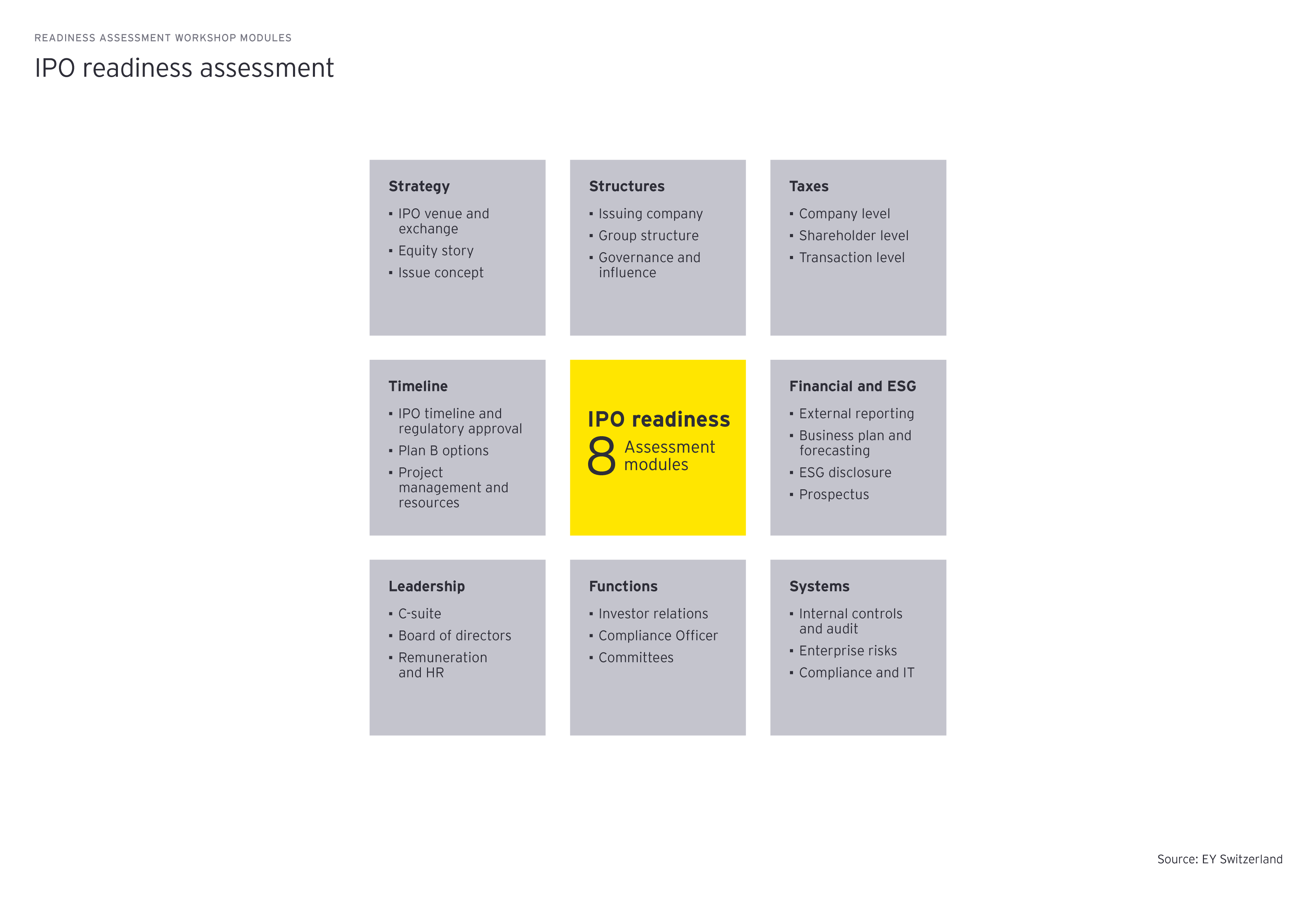
Going public is a significant milestone for any company, but it comes with a host of new responsibilities. Candidates need to ensure that they are well prepared and may benefit from external support in assessing readiness and developing a roadmap toward the target structure across eight key areas:

How ESG expectations shift when going public

While most private companies currently report on sustainability matters on a voluntary basis, a listing may involve enhanced sustainability reporting requirements – sometimes subject to certain size thresholds – and increased stakeholder expectations. Most jurisdictions link mandatory transparency on ESG topics to company size and status as a public interest entity (PIE), which typically is triggered through a public listing of stocks or bonds.

While the specific requirements may vary, the intention behind these obligations goes beyond regulatory compliance; they are designed to foster transparency towards stakeholders such as capital providers on how the company manages sustainability-related risks and opportunities and how it aligns corporate behavior with stakeholder expectations. Ideally, sustainability becomes a central part of the company’s equity story and long-term value creation, with key sustainability matters along the entire value chain being addressed.

Sound ESG management considers both external impacts that the company generates (inside-out perspective), as well as how the company is impacted by sustainability matters (outside-in perspective). This is what the European Sustainability Reporting Standards (ESRS) define as double materiality and require reporting companies to assess. Other jurisdictions and standards may prioritize one or the other perspective.

Good sustainability management and reporting can produce internal and external benefits, by contributing to elements such as:

  • Competitive advantage
  • Access to capital (e.g. green bonds, impact investing)
  • Employee motivation
  • Reputation and trust

While detailed monitoring and assessment of ESG regulations is strongly recommended for all countries in which a company operates, we can take a simplified look at three main layers that are relevant for Swiss companies with international exposure:

Companies must comply not only with national law, but also with the sustainability reporting rules that are set by the stock exchanges where they are listed. These requirements can vary significantly from one stock exchange to another and may be either mandatory or voluntary in nature. For example, at the Swiss Stock Exchange, sustainability reporting follows an opting-in approach where companies must follow accepted international standards if they decide to opt in. In contrast, many other stock exchanges mandate sustainability reporting for listed companies, often driven by the global adoption of the IFRS Sustainability Standards.

Preparing for sustainability reporting

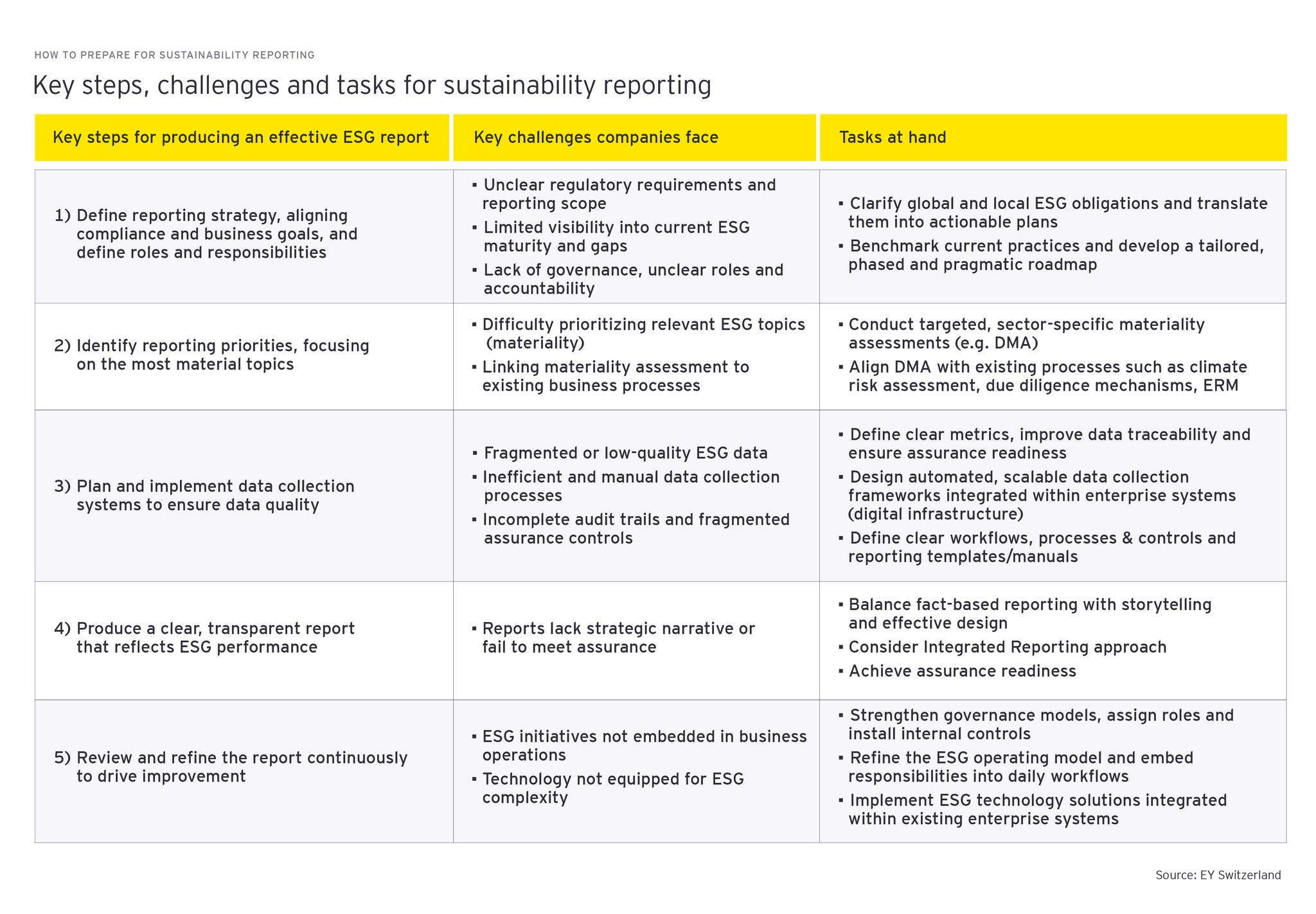
To prepare for sustainability reporting, companies can follow a structured journey that integrates both strategic planning and operational execution. This begins with defining a clear roadmap and reporting strategy across all governance and organizational levels to enable alignment and guide the transformation process. Defining clear roles and responsibilities among the relevant functions and departments is essential for efficiency and effectiveness. As part of this journey, it is key to assess the current maturity of ESG reporting practices, stakeholder expectations and the company’s level of ambition. A robust data collection framework should then be implemented to enable timely and reliable performance insights. At EY, we see sustainability reporting as much more than just a compliance task – it’s a chance to drive long-term value creation, manage risks and opportunities, strengthen trust and embed sustainability into the core of your business by integrating it into the corporate purpose and strategy.

Companies often face challenges during each phase of report production. It is important to bear in mind that, first and foremost, reporting is a transparency exercise. At the same time, in order to have a convincing story to tell, it requires good management. As such, it can be seen as a journey of constant improvement and development.

ey.com-graphic-template 5

An IPO marks not only a financial milestone but also a pivotal moment in how companies address sustainability and provide transparency on their sustainability efforts. By embedding ESG into governance, operations and capital market communications, companies can go beyond compliance and unlock long-term value. Done right, ESG reporting is transformed from a checkbox exercise into a catalyst for reviewing and rethinking strategy, business model, trust, performance and future readiness.


Summary

In Q2 2025, global IPOs dropped 14% to 241, while emissions volume rose to $31.5 billion, largely driven by Asia. Europe's volume declined significantly, and the U.S. showed mixed results, with the number of IPOs increasing but volumes declining.

As private companies prepare for a public listing, they must navigate these shifting market conditions, including their approach to sustainability reporting. While an IPO opens access to capital markets, it also heightens regulatory scrutiny including regarding ESG transparency. Aligning sustainability reporting with investor expectations and disclosure frameworks becomes critical – not just for compliance, but for building long-term value and trust.

Acknowledgements

We kindly thank Beat Schweizer, Rafael Barayón, Marc Ledermann and Ken Brandstetter for their valuable contribution to this article.

Related articles

Global IPO highlights in Q1 2025 and insights for future IPO candidates

Discover in our global IPO market insights how frontrunners are securing IPO strategy and IPO process success by going public in best-fit capital markets

Global IPO highlights in Q4 2024 and tips for future IPO candidates

Read about global IPO activities in Q4 of 2024 and learn more about how to prepare for enhanced reporting requirements to meet regulatory and stakeholder expectations.


    About this article

    Authors

    Request for proposal (RFP) - exclusively for Switzerland

    |

    Submit your request now!