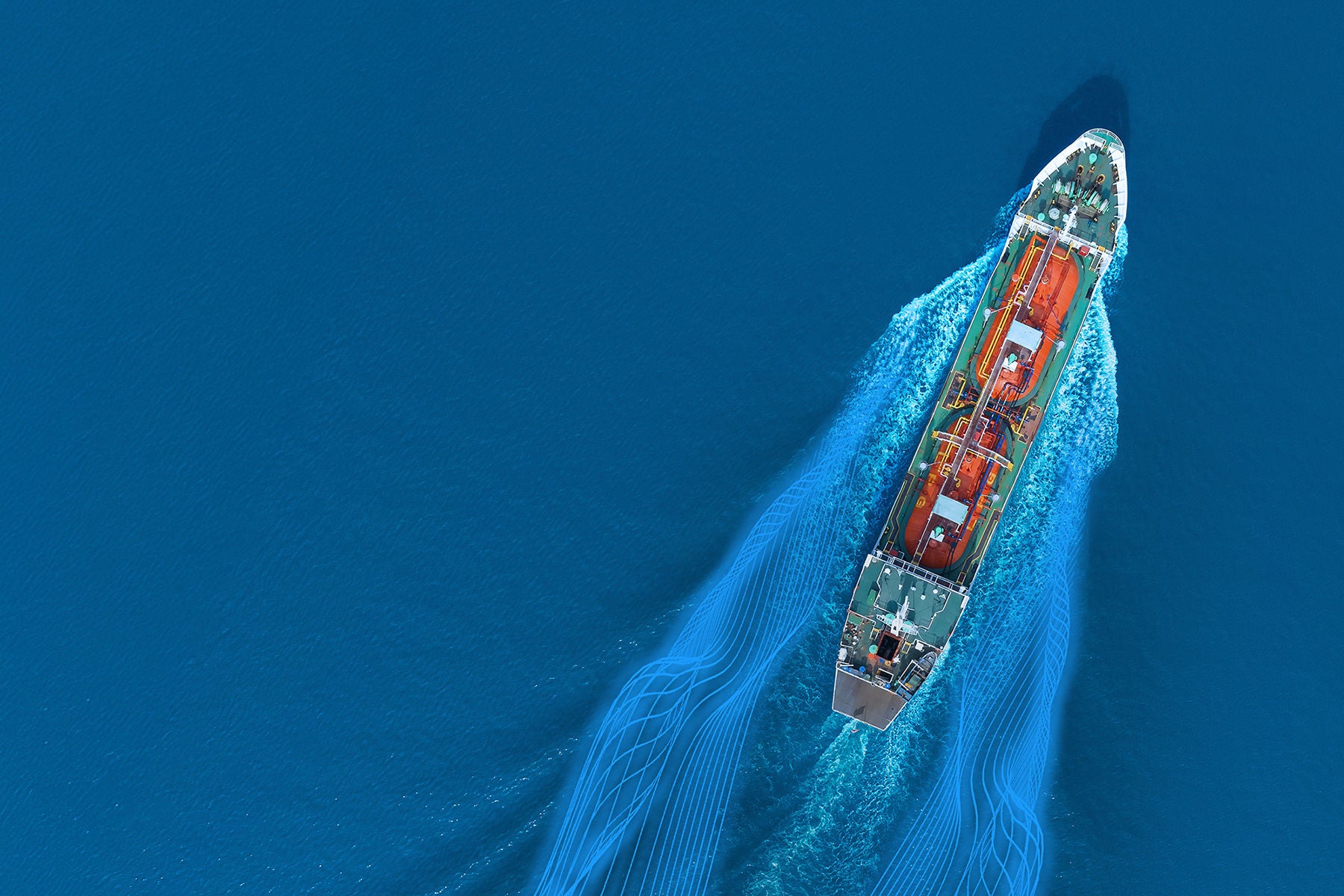
image of shipyards - eyp analysis

Shipping decarbonization and the challenges of the green transition
 

Shipping decarbonization is a complex transition that requires coordination across regulation, infrastructure, shipyards, financing and commercial incentives throughout the value chain.


Contents

  • Shipping decarbonization as a system-wide challenge
  • Regulatory frameworks and compliance costs in shipping
  • Alternative fuels, port infrastructure and shipyards: The critical bottlenecks
  • From immediate switch to a managed transition
  • A realistic roadmap for shipping decarbonization

According to a new study by EY-Parthenon, shipping decarbonization is one of the critical challenges the sector is currently facing. It represents a multilayered transformation that affects the design, financing, construction and operation of vessels.

Against this backdrop, the success of the transition will depend on the readiness of the wider ecosystem - from the availability of alternative fuels and the development of infrastructure to financing and the market’s ability to absorb higher costs.

For shipping in Greece, as well as globally, the key issue is not only achieving environmental targets but also ensuring that the transition is feasible and competitive.


1

Chapter 1

Shipping decarbonization as a system-wide challenge

Beyond the shift to alternative fuels and fleet modernization, shipping decarbonization requires coordination across the entire maritime ecosystem.

Shipping decarbonization is crucial, but it cannot be approached as a simple process. Rather, it depends on a wider ecosystem where energy production, port infrastructure, shipbuilding capacity for newbuilds and retrofits, financing, regulatory requirements and shipping’s commercial operating models intersect.

With over 80% of global trade by volume - and approximately 45% by value - transported by sea, shipping remains essential for supply chain continuity and economic resilience. Despite its relatively limited share of global greenhouse gas (GHG) emissions - only 2%-3% of total GHG emissions and approximately 11% of transport-sector emissions - the scale and role of shipping require a meaningful transition to alternative fuels, without disrupting maritime transport and international trade flows.

The key challenge is that compliance obligations are largely imposed at vessel level, while many of the factors that determine the success of the transition lie outside shipowners’ direct control. In this context, critical variables include the availability and cost of alternative fuels, the development of bunkering infrastructure, the ability of shipyards to deliver newbuilds or retrofits, and the willingness of charterers and cargo owners to absorb higher costs.

2

Chapter 2

Regulatory frameworks and compliance costs in shipping

New emissions regulations are turning shipping decarbonization into an immediate economic and operational challenge.

The regulatory environment is radically changing the way shipping evaluates its emissions. Frameworks such as the IMO regulations, FuelEU Maritime and the EU ETS integrate carbon considerations into the day-to-day operations of shipping, affecting not only investment decisions, but also transport costs and market functioning.

As requirements become stricter, exposure to non-compliance costs increases, while the transition to alternative fuels remains expensive and constrained. Demand for such fuels in shipping could increase by as much as 25 times by 2030, without total supply growing at a similar pace.

The challenge, therefore, is not only regulatory, but also economic. Alternative fuels are currently three to seven times more expensive than conventional marine fuels, while total transport costs may increase significantly by 2050, reshaping competition between markets and sectors.

Up to
25x
25x
increase in shipping demand for low- and zero-emission fuels needed to meet the IMO’s 2030 targets, while total supply is projected to increase by only ~2.3x.
3

Chapter 3

Alternative fuels, port infrastructure and shipyards: The critical bottlenecks

Shipping decarbonization will depend on the availability of alternative fuels, the readiness of port infrastructure and the capacity of shipyards to deliver newbuilds and retrofits.

The availability of alternative fuels is one of the first and most important constraints. Alternative fuels currently account for less than 1% of global shipping energy demand, while their production depends on renewable electricity, green hydrogen and sustainable biomass feedstocks. As a result, shipping will need to compete with other sectors, such as aviation, power generation and heavy industry for access to the same limited resources.

At the same time, the development of port and bunkering infrastructure remains uneven. Liquefied natural gas (LNG) currently has the most developed bunkering infrastructure, while methanol remains geographically concentrated and ammonia and hydrogen infrastructure is still at an early stage. As a result, access to low-emission fuels is initially expected to be concentrated around specific hubs and predictable routes.

The third bottleneck is shipbuilding and repair capacity. Today, only 2.4% of the existing global fleet can operate on alternative fuels. Despite growing interest in the construction of new “green” vessels, fleet transition to alternative fuels cannot move faster than the pace at which shipyards can deliver newbuilds and retrofits. The significant decline in the number of large active shipyards, their geographic concentration and delivery times that often exceed three years act as additional constraints.

Only
2.4%
2.4%
of the existing global fleet can operate on alternative fuels.
4

Chapter 4

From immediate switch to a managed transition

Shipping decarbonization should rely on energy efficiency, technological flexibility and the gradual use of alternative fuels.

There is no single solution that can lead the sector toward decarbonization on its own. Instead, the transition requires a combination of energy efficiency, operational improvements, transitional fuels, technological flexibility and the gradual deployment of zero- and near-zero-emission solutions, as these become available at scale.

In the near term, energy efficiency represents the most realistic pathway to decarbonization, with improvement potential of up to approximately 40% by 2030. Measures such as speed and route optimization, AI-enabled digital solutions, technical vessel upgrades and waste heat recovery can reduce fuel consumption and emissions, regardless of which fuel ultimately prevails.

At the same time, transitional fuels and technological flexibility enable gradual emissions reductions, leveraging existing infrastructure and limiting the risk of technological lock-in until zero- and near-zero-emission solutions become available at scale.

Up to
~40%
~40%
potential reduction in fuel consumption and CO₂ emissions per vessel through energy-efficiency measures by 2030 - regardless of which fuel prevails.
5

Chapter 5

A realistic roadmap for shipping decarbonization

The success of the transition to alternative fuels requires coordination between the public and private sectors, targeted financing and a clear allocation of costs and risks across the maritime value chain.

The EY-Parthenon study shows that shipping decarbonization requires realistic and targeted strategic planning that links regulatory requirements with fuel availability, infrastructure readiness, shipyard capacity, market conditions and financing needs. Setting targets is not enough – the conditions that will enable their implementation must also be mapped.

Financing and the allocation of responsibilities are critical elements of the transition. Decarbonization creates capital expenditure needs for vessels, retrofits, ports, bunkering infrastructure and technologies, as well as additional operating expenditure due to more expensive fuels and compliance. At the same time, shipowners cannot bear alone the cost of a transition that depends on decisions and investments across the entire value chain.

Strategic planning must also reflect the fact that shipping does not operate as a single market. Liner shipping, with more predictable routes and fixed port calls, can better support investments in infrastructure and long-term supply contracts. By contrast, tramp shipping requires greater flexibility, tailored timelines and mechanisms for sharing costs and risks.

According to the study, shipping decarbonization will depend on whether the sector can organize a coordinated, financeable and commercially viable transition. The challenge is significant, but realistic strategic planning can enable meaningful emissions reductions, balancing environmental targets with operational reality.

The next step is to translate strategic ambition into a dedicated sectoral decarbonization Master Plan, mapping the applicable regulatory framework, feasible decarbonization pathways, supply-and-demand constraints and the sector’s financing needs.




EY-Parthenon study:
"Shipping decarbonization:
A system-wide transformation"


Summary

According to a new study by EY-Parthenon, shipping decarbonization is a necessary, but complex and multilayered transition. Its success will depend on coordinated progress across fuel availability, infrastructure readiness and investment, enabling a gradual shift to alternative fuels without undermining the sector’s competitiveness.


About this article

Authors