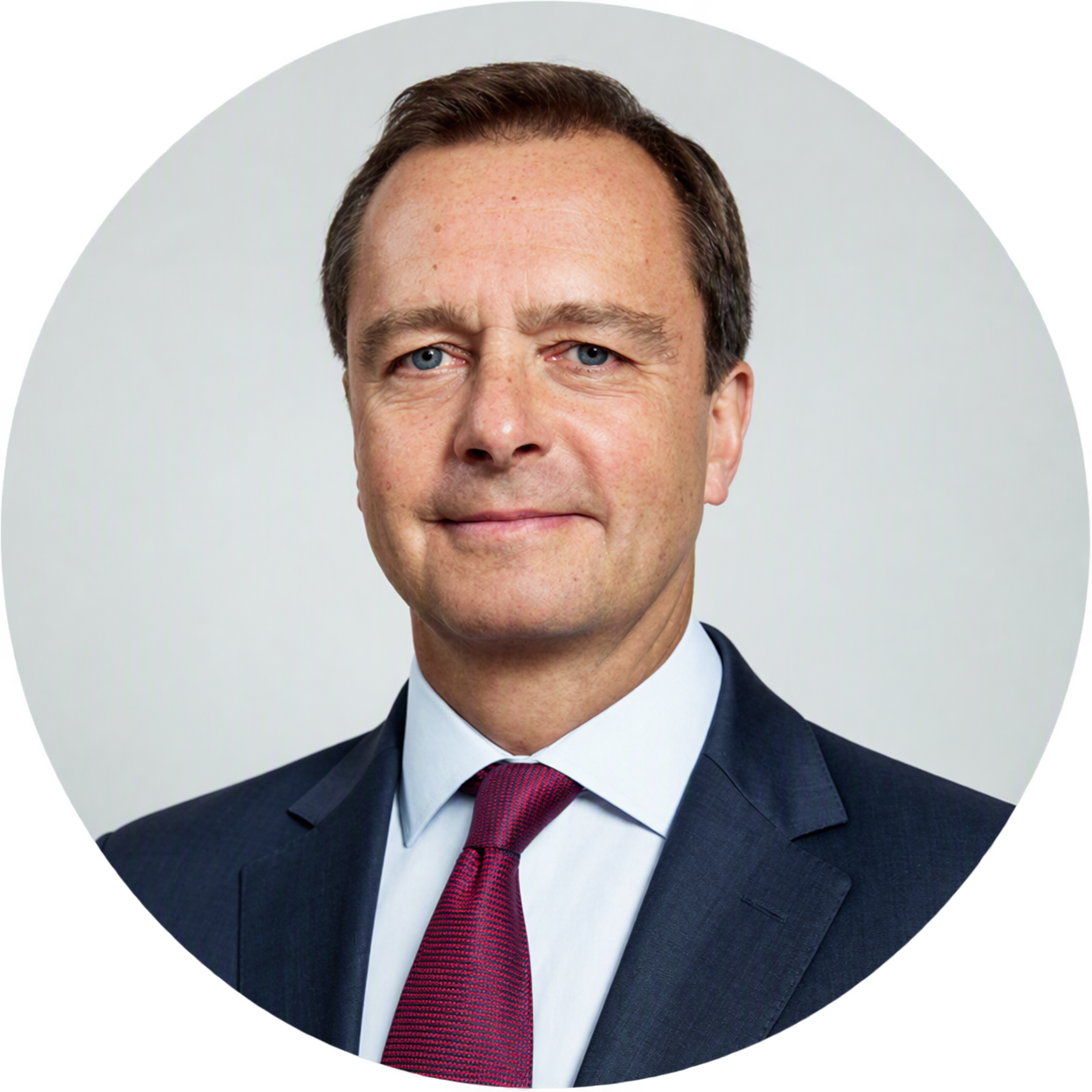
Theo Yameogo: It's my pleasure to welcome my good friend Richard Williams, who is former COO of Barrick Gold and currently Executive Chairman at Bunker Hill Mining. Welcome, Richard.
Richard Williams: Thank you very much, Theo. It's a great pleasure to be here.
Theo Yameogo: So, let's kick things off and I’ll lead with this first question. As a former COO and now sitting in a new chair with the Executive Chairmanship, you've had the luxury to see the evolution of COOs in the metals and minerals sector. What are the key trends you've seen?
Richard Williams: The common thing for a Chief Operating Officer, regardless of being something today or something 30 or 40 years ago, is the Chief Operating Officer is the executive on the Executive Committee that is held accountable for performance. Performance in terms of operating outputs, but also performance in terms of risk and sustainability. The one who has the greatest connection to the people on the ground that are running the operations, that's a constant.
What's changed over time, of course, is the demands placed on the mining industry for sustainability and risk management has created more work for the Chief Operating Officer in a performative respect, but also from a mentoring and leadership respect, because I'd say that today there are more pressures on those who are running mines to do it well and effectively than there were in the past.
And so, what we've seen with the Chief Operating Officer role is an increase in the responsibilities, the intensity of the responsibilities, and the need to incorporate technology and other systems to allow them to do that as effectively as possible. But the common theme is performance. And the common second theme is that this is, regardless of the technology, a people business. And so, the Chief Operating Officer is the one who has that personal relationship with those who are held accountable for outcomes on the ground. And that hasn't changed.
Theo Yameogo: Now Richard, let's stick to the people aspect of the of the COO. There's no school for COOs, maybe school of life, but there's no school per se where you go and get this accountability and performance focus. How do we create those skills into somebody that's willing?
Richard Williams: Well, what you're looking for in a Chief Operating Officer is what's generically called leadership skills. The ability to get the most out of people in a company or an operation that's typically dispersed, by which I mean you've got a large company, multiple assets operating in multiple countries, a long way away from the head office. And you have to be able to select leaders who are able to deliver on the outcomes that you all agree in ways that conform with the company's objectives. And you, as Chief Operating Officer, have the principal relationship on behalf of the Executive Committee with those people. And as we know, in mining, all of our plans are estimates. Estimates based on our own understanding, but estimates based on what we consider third issues to be such as commodity pricing and taxation and elsewhere. So, it's very dynamic.
And so, when you're selecting a Chief Operating Officer, it can't just be a very good general manager. It has to be a general manager, if we're using that particular route, that has the ability to get the most out of multiple other general managers in different jurisdictions globally and so much of that is about general leadership skills, building a culture of trust and transparency between that senior executive, the Chief Operating Officer, and the people on the ground. The only complicating factor to that, because it's from ground up to ExCo, is that very senior executive, must be able to build exceptionally powerful and transparent relationships with the other members of ExCo.
You're looking for human qualities, leadership qualities, diplomatic qualities, all of which are based on a sound technical understanding of how to make money sustainably in the mining industry. It's a very tough job.
Theo Yameogo: Yeah. And I find that maybe in most places it’s probably misunderstood in terms of what they represent. Like you're saying, sometimes people see them more as a trade union leader rather than part of the team trying to make things up. Are the people that now report to the COO also changing? And how are they adjusting to it? Are we seeing some generational differences?
Richard Williams: We've seen a trend in the industry where the decentralization of operating management is the optimal way to go. Decentralizing and delegating authority to the running of the mines to the general managers, in accordance with the corporate strategic plan, means that the general managers are empowered to use their experience, common sense and their team to deliver the best outcomes. But left on their own, a decentralized leader without remarkable degrees of communications and insight, will find it very hard to do exactly what the corporation wants to do.
So, what we're seeing, I think, and we should be seeing in this type of model, not just in the mining industry wider, is the type of general manager that is successful one that can't just run its mine for its own sake, but is able to think corporately, commercially, as a businessman, almost as a CEO. And we're looking for those leaders on a mine site who aren't just the best engineer or the best metallurgist, or the best geologists, are those that actually can lead what is a very complicated business and do it in ways that conform with the corporate direction.
So as Chief Operating Officer, what you are responsible for is not just outcomes, but those on the ground that are to deliver those outcomes. Leadership is what happens when you're not in the room. And that means selecting the right general managers on the ground that will trust you, that you can communicate with, that have the ability to understand what the corporation needs and in my experience as Chief Operating Officer, most of one's time was spent reflecting on whether those choices, general managers, are the right ones or not. And if they're not, what do we do about it?
And so, I'd say that the general managers, the people on the ground are having to become more commercial, more broader in their thinking, more respectful of the various regulations, rules and expectations that are placed justifiably on the industry, but they're having to be able to be much more of a, I hesitate to say, a corporate animal, but geared towards the corporation's needs, than perhaps was the case in the past.
Theo Yameogo: And does that take formal education, or does it take coaching of the COO to those teams on a trusted basis, for the GMs to really see themselves as part of the corporation or the corporate office?
Richard Williams: Well, I think corporate education can help in a mid-career sense. Some formal education works. A lot of experience, hands-on experience of getting the most out of people. Some people do it well, some people don't do it well. And the ones that you're wanting to select are the former. And leadership isn't for everybody. And business leadership certainly isn't for everybody. A mine is a very complicated and difficult thing to run. It has to have relationships with the external community, the local community, but much more importantly, or as importantly as that, the government and the regulators in the country within which they're operating. That's a lot more than basic engineering.
As a Chief Operating Officer, what you're wanting, if we were selecting it coming up from general managers, is those who have a proven ability to lead in complex circumstances and get the most out of their people and are obsessed with human talent and how they can select the right people to do their jobs without having to rely on day-to-day guidance.
The Chief Operating Officer isn't the Chief Technical Officer. It isn't the most accomplished technical person in the company typically. It’s somebody who is able to get the most out of technical teams, financial teams, government relations teams, legal teams and do it all in ways that ensures the Chief Executive Officer, who's responsible for strategy and the whole business of the company, can trust.
And the last thing you want is a Chief Executive Officer, or in my case now, an Executive Chairman is a Chief Operating Officer that can't build the relationships with the finance team or the legal team or the board. So, you have these vertical relationships with those on the ground, and you have these horizontal relationships with your teammates in the Executive Committee that give you the best possible chance of contributing the right advice to the CEO’s decision-making process.
Theo Yameogo: Yeah. And we talk about busy and transparency. What's the role of data and technology in enabling transparency from the site to the COO and also for that horizontal layer, so that people have line of sight to what's going on without necessarily calling it micromanagement?
Richard Williams: Well, I think a good principle to apply as a leader that is gathering data in a delegated operation, where you've given the authority to the mine manager, is eyes on, hands off. In other words, you can see what's happening. Everybody can see, you have complete transparency on the situation, and you're able to observe the decisions happening in the extreme analysis in real time, which is then allowing you, as a senior leader, to anticipate issues that are going wrong, provide support where necessary, and in extremes if you find you have a leader that's not able to deal with it, help to change them out.
So, data has always been important in any complex organization, and mining is such a thing. And what we find with new technology is, rolled out the right way and the right technology, you can end up with not quite a real time, but certainly a week-by-week in an operating perspective, month-by-month in a financial perspective, very clear dashboard showing you how risks are increasing, how opportunities are emerging, and how your leaders are performing.
And so, data sets you free. Data with a culture of transparency means that you aren't surprised by risk. You aren't surprised by negative performance of individuals or collectively. And it allows you, who are held accountable for performance, to have the best possible chance of success. But again, go back to the starting point. You can't be a micromanager. You can't see yourself as the god making all these decisions.
You are running a delegated operation. You've selected people to run their operation to the maximum effect. And what data allows you to do is to test whether that's happening. And when it's not happening, to go and have a conversation with those leaders who are clearly excellent, otherwise you wouldn't have selected them, and see why things are not going well or could be going better.
And so, you spend all of your time, in my case, looking at human performance more than just in the first instance because it's from human performance comes the technical output performance, be it financial or physical that you're looking at. And that data allows you to do that in a meaningful way. And imagine also what that does for a challenging conversation between a CFO and an operating leader. There is no difference of opinion about what's happening. There'll be a difference of opinion about what we can do about it. And that's a much more constructive conversation than a backward-looking blame game that, as you know, can sometimes happen.
Theo Yameogo: Yeah. So that performance view is very critical like you're mentioning. What are the other culture attributes that you will expect a COO to be driving in operation?
Richard Williams: Creating a culture of transparency and trust between the mine site leaders and those that work for them. By the way, you need to go two, three levels below. You mustn't be a distant Chief Operating Officer. The shift bosses and each of the underground mines must recognize you as someone they want to speak to, and they want to listen to. That requires a lot of time on the ground. Creating this culture of transparency and trust between people on the front line, the frontline leaders, all the way up to the corporation, is essential and you have to walk that.
In a mining operation a lot of our planning is done in ways that will deliver a safe result. Corporations are very safe in terms of health and safety is vital, but safe in terms of financial or production output is not always the optimal performance. And so, you have lots of conversations about how we're going to take plan A and incorporate some sensible stretch into it so we end up outperforming what people expect externally. And the only way as a Chief Operating Officer you can get a mine to outperform, stretch its targets is if the leaders believe in that stretch, that it's possible, that it's worth doing. Because when you leave that mine site, those guys, men and women, the people who are there to deliver this new target, have to believe in it, because leadership is what happens when you leave the room. Not when you're there.
And so, I'd say that as part of this Chief Operating Officer conversation when you're looking for performance, you've got to be a pretty hungry, ambitious, determined person. And you're not there just to deliver the bare minimum for the company, you’re there to deliver the maximum for the company, and you're there to inculcate that attitude in multiple operations.
Our greatest challenge is how do we, as executives, get those on the ground to do more than the bare minimum? Not because they're lazy, but because it requires effort, strain, risk, work and getting people to do that is more than just paying them more. They've got to believe in the plan. They've got to understand it's important and that, to me, and I hope it's coming across in this interview, is what I think is the essence of the Chief Operating Officer, the Chief Executive Officer needs. That Chief Executive Officer needs to be able to leave the room and say the Chief Operating Officer is going to get the most out of these mines, has got the relationships with the people on the ground that he has chosen, and is able to manage not just performance in an output sense, but performance in a risk and safety and health sense in ways that I trust. And that's transparency, trust, understanding people, picking talent, mentoring talent and all doing it from the basis of a sound technical understanding of what is possible is what a Chief Operating Officer is about.
Theo Yameogo: When you were in the role, and today I'm guessing some COOs also come to you to get some mentorship. Was it easy to collaborate with other COOs to pick the brain, share lessons learned, or is it borderline a lonely job? How much interaction did you have with other COOs?
Richard Williams: I think the longer you're in the industry, the more you build a supportive network. And so, I think if I went back over 10 years ago when I started the Chief Operating Officer job there, I've got a much bigger network now, more people to speak to. Back then, it was pretty lonely. And as Executive Chairman of Bunker Hill, as I recruit people into the team, one of my key questions for them is: who are your mentors and who's your network? Because I know what it's like to sit in that room and try and solve problems on your own. And who are you going to call outside the company that will help you? And if you find somebody arrives with absolutely no network and no friends and no mentors, the probability is he or she is not the right person. Because really serious, ambitious, performance-focused leaders are hungry for advice, hungry for a network because they know, to take this job seriously, that they don't know all the answers. And so I'd say that point that you raise about feeling isolated is a natural thing when you first arrive in any job, but if you are the right person, you'd have developed a network within the mining sector, within the mining operating environment, but also beyond that in the financial environment, in the ESG environment, in the compliance department environment, and in the political environment, so that when something pops up that you haven't directly seen before, you're able to ring somebody about it and come up with a better idea than what you'd be doing on your own.
Theo Yameogo: Absolutely. A lot of operations we've been seeing in recent years sometime hit roadblocks within 12 to 18 months of starting and what is the role of the Chief Operating Officer in ensuring that there's a massive difference between the people that build the mine versus the people that operate the mine, because sometimes we see more younger COOs in those one-asset operations that go from development, like construction to production. In your current seat, as Executive Chairman, you get to see, okay, if I was the COO, what would have happened here?
What's your advice for COOs that are going through that?
Richard Williams: Well again, great question, Theo. Firstly, the outputs during construction that you are holding people accountable for. You know, have you built this on time and on budget, safely, are different to the outcomes for operations. Are you delivering sufficient tonnes at the right cost to deliver the revenue and profit targets? So, I would say as Chief Operating Officer in this case of a single asset, but it could be multiple assets that you're bringing things into production. You want to very early on in the construction phase, start getting your operating mentality embedded within the construction and commissioning team. So, as they are starting the process of commissioning the processing plant, they have a revenue target to get to. Well, they have a profit target to get to. You do that early on. So even during the very early stages of ramp-up, people are starting to work, to operate in performance outcomes.
And you'll find that perhaps you may hit your commercial production faster than the dear old McNulty Curve tells you it will do, as long as you're not compromising on safety all of these things are vital. And if you can bring in an operating team to take over the latter stages of that construction and bring it in through commissioning and hold them accountable for operating outputs. Those sorts of things matter if you can.
Theo Yameogo: Yeah. We can’t close the interview without talking about AI because that's important nowadays. What do you think AI can do for a COO. Not necessarily for the COO job, but how should COOs think about adopting AI or adopting part of it? What kind of advice do you want to give them?
Richard Williams: We've all got to find AI useful in everything that we do, if we're going to maximize it. And it'll be little things as well as big things. It'll be working out what is the greatest probability of success using AI that shortens the analytical time frame, but even when you have that AI incorporated optimization plan, it has to be believed by the operators on the ground that are going to do it. So, AI will only take it so far. It has to be believed thereafter.
So, getting used to where AI can be useful across an organization is an important part of our jobs as leaders right now, just as it was when the first digital systems came in play and said, wow, we could work out precisely how many tonnes we're moving every day, as opposed to it being a rough estimate done by an eyeball.
So, I'd say that the general comment is, just as we are learning to use it in our own lives, we must learn how to get the most out of it across our organization. Because if it helps us be more accurate, safer, and faster, all of those things will effectively lower our cost base, which will increase the amount of resources and the length of mine, and allow us to be more trusted and effective as business owners.
And I also think with respect to talent and recruiting, the young of today expect to be able to use AI in everything they're doing. And so, if they come into an organization where they say AI is not allowed, they're probably going to leave and go somewhere a little bit more modern. And I think actually being driven as elder leaders as we are by the young generation who are saying, look, here's a whole bunch of good ideas that we should incorporate, is something we must also inculcate within the culture of our company and embrace, because getting young people into mining is probably our biggest challenge. And I think the role of AI as a magnet to attracting young talent is also part of what we must do.
I mean, the final thought, could you imagine visiting a mining company maybe in five years’ time where there is no talk of AI? No. It's a question of, as you quite rightly asked, how do we make the most of it? And we must feel our way, embrace it where it's useful, reject it where it's not useful but whatever we do, don't close the door to it.
Theo Yameogo: Well, thanks, Richard, for your time today and all these valuable insights.
Richard Williams: Thank you, Theo, and thanks to you and Ernst & Young for putting this on. Congratulations for this initiative that helps all of us that attempt to be effective Chief Operating Officers do a better job. Really appreciate it.