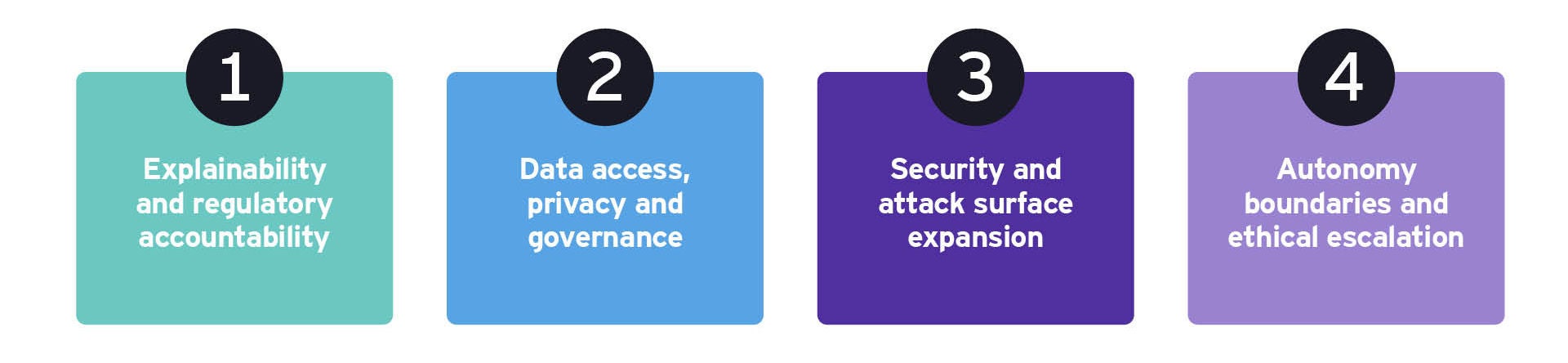
Explainability and regulatory accountability
Agentic AI systems may operate in ways that are nonlinear and opaque, particularly when drawing conclusions from unstructured or ambiguous data. This poses challenges in highly regulated sectors such as financial services, where decisions must be:
- Explainable to internal stakeholders, clients and regulators
- Traceable through logs and decision histories
- Defensible in the event of disputes, regulatory scrutiny or litigation
Emerging legislation, including the EU AI Act and Canada’s Bill C-27, makes explainability not only a best practice but a legal requirement. Organizations must ensure that agentic systems can justify their actions in a manner that is intelligible and auditable.
Data access, privacy and governance
Agentic AI will require access to a wide array of internal systems — from transaction history and customer data to authentication and communication logs. Without strict governance, this level of access introduces substantial privacy and compliance risk.
To manage, this organizations should:
- Implement principle-of-least-privilege access controls
- Monitor agent queries and decisions for policy compliance
- Enforce robust data minimization and retention practices
It's essential to consider agentic AI alongside gen AI, since both technologies present similar considerations. Additionally, organizations must prepare for potential insider misuse, where agents may be exploited for surveillance or unauthorized data aggregation.
Security and attack surface expansion
Agentic AI will soon become part of the organization’s digital attack surface. These systems may be vulnerable to:
- Undesired outcomes
- Adversarial examples designed to deceive the agent into misclassification
- Prompt injection, where adversaries manipulate the agent’s input to or action
- Exploitation of APIs or execution logic, particularly in agents connected to other systems
As such, agentic AI must undergo rigorous security testing, including red teaming and adversarial simulations. To prevent compromise or misuse, it’s vital to isolate agent actions, sanitize inputs and establish clear privilege boundaries.
Autonomy boundaries and ethical escalation
Organizations need to define the boundaries of an agent’s autonomy. Not all decisions should be made without human oversight, particularly in scenarios involving vulnerable customers, such as elderly clients or victims of social engineering, high-risk investigations or high-stakes financial outcomes.
Key questions include:
- Under what circumstances must the agent defer to a human operator?
- Which types of fraud cases should always trigger ethical review or escalation?
- How should the agent respond when uncertainty or emotional harm is involved?
Embed ethical guardrails and escalation protocols into your organization’s system design so AI agents’ behaviour remains proportionate and contextually appropriate.
Conclusion – agentic AI and fraud: a doubled-edged revolution
A paradigm shift in both attack and defence.
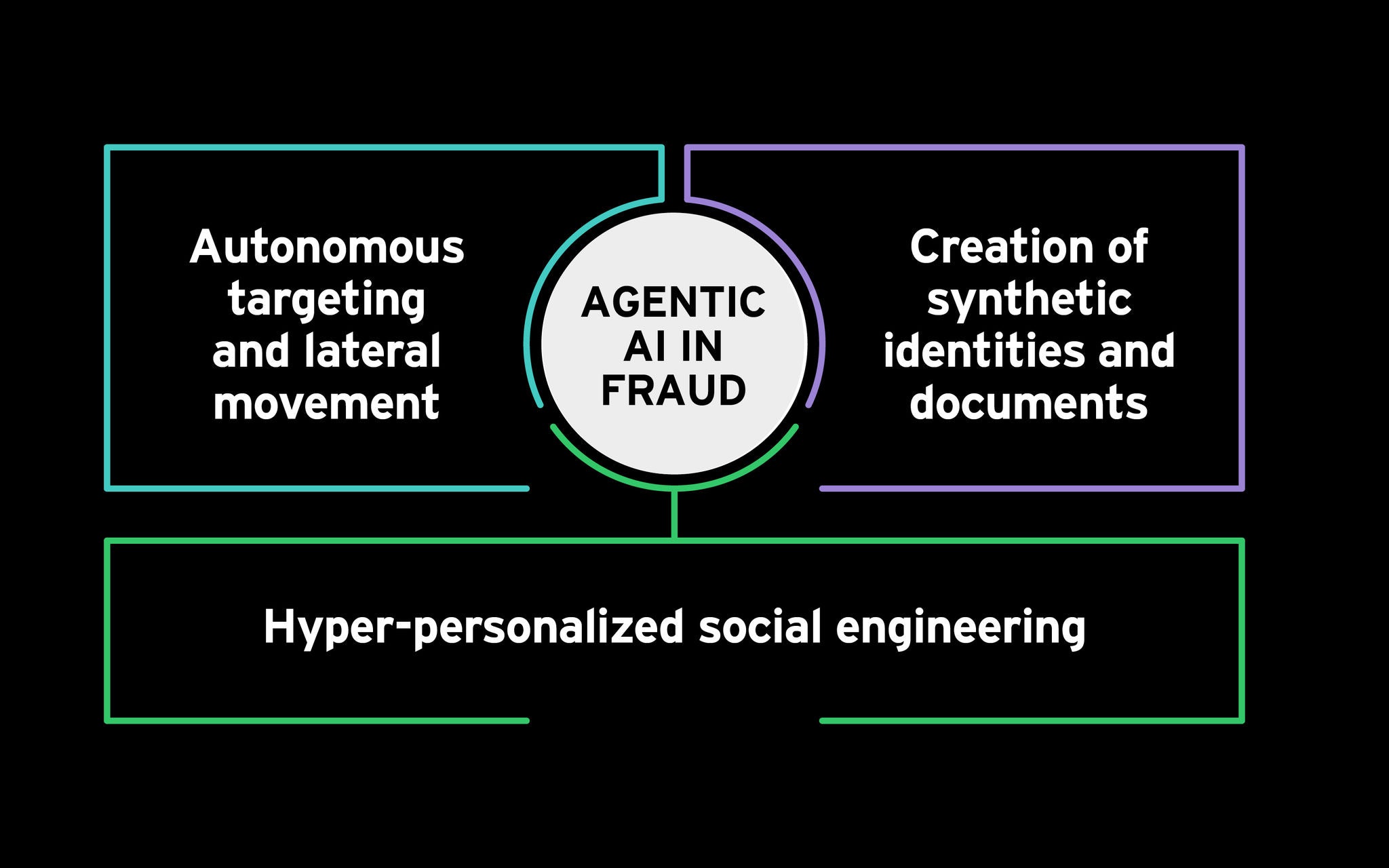
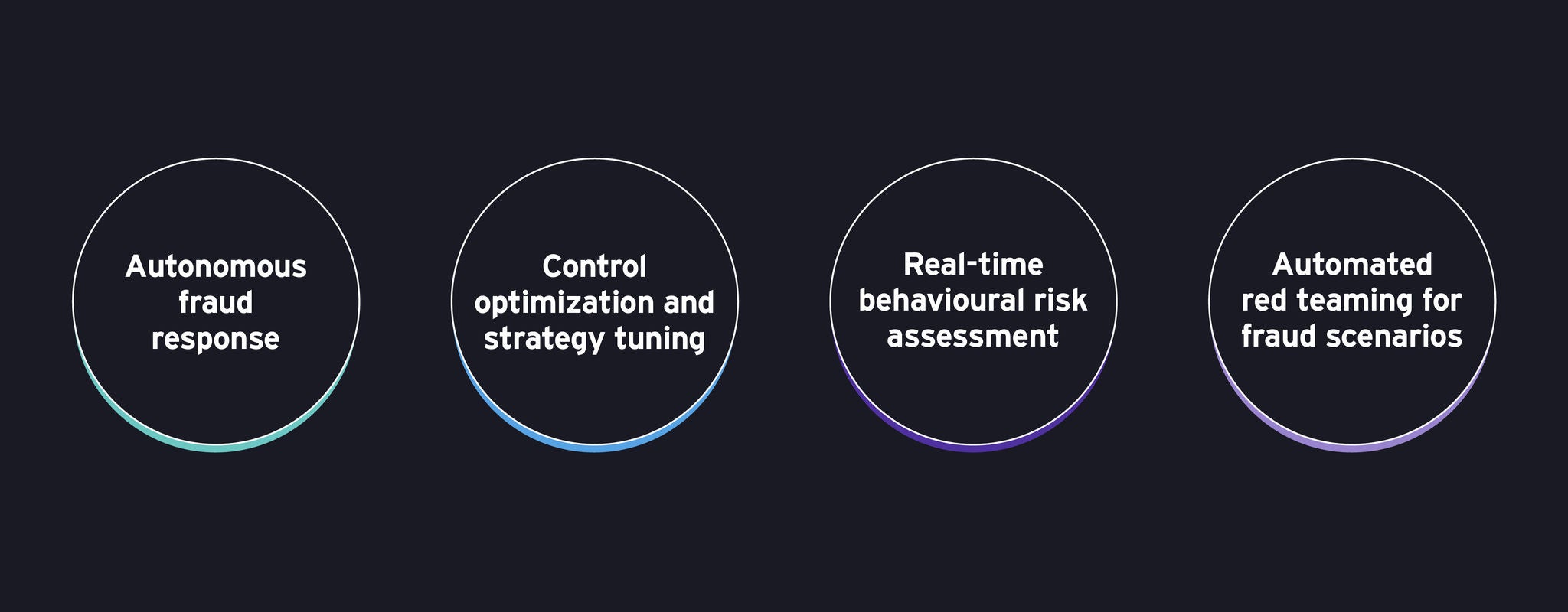
Agentic AI will redefine how fraud is committed and how it’s mitigated. It will enable fraudsters to operate at an industrial scale, automating manipulation, impersonation and adaptation in real time. But it will also equip organizations with powerful tools for prevention, detection and response — in ways never before possible.
The human factor remains critical
Agentic AI will make systems smarter, faster and more efficient — but it won’t replace human insight. Organizations must ensure that human oversight, ethics and empathy are built into every layer of AI deployment.
This includes:
- Establishing robust AI governance and control frameworks.
- Building cross-functional teams of fraud experts, AI engineers and risk officers.
- Preserving explainability and accountability at every decision point.