



EY refers to the global organization, and may refer to one or more, of the member firms of Ernst & Young Global Limited, each of which is a separate legal entity. Ernst & Young Global Limited, a UK company limited by guarantee, does not provide services to clients.
How EY can help
-
Learn more about our Financial Services teams and how they can help your business focus on delivering value while navigating risk and managing disruption.
Read more -
EY helps insurers modernize through digital transformation, data and AI, strengthening resilience, regulatory compliance and sustainable growth.
Read more
Brokers take on a heightened role in consumer guidance
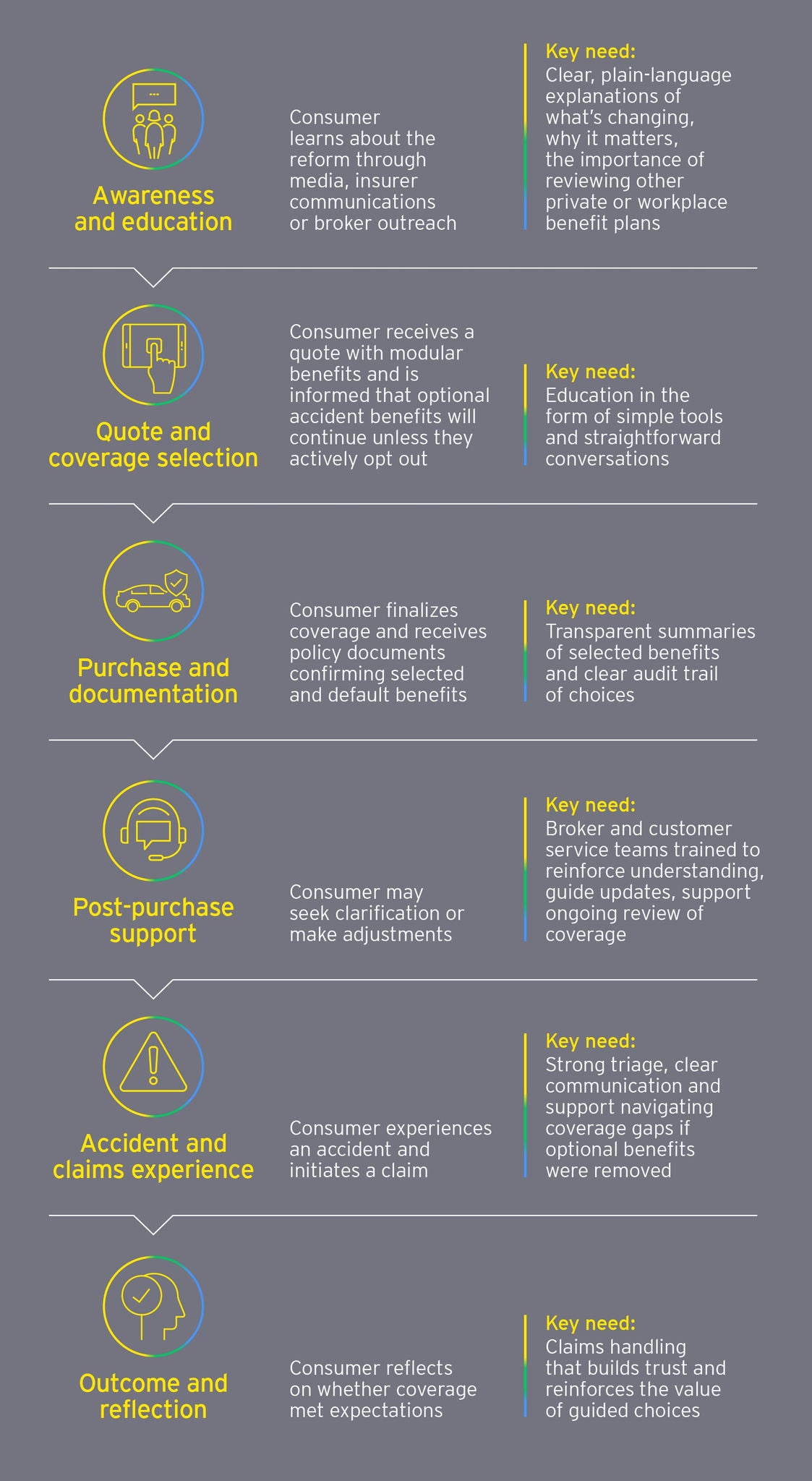
While brokers have long guided consumers through coverage decisions, the reform amplifies the importance of that advice. With consumers now holding greater decision-making power, brokers must help navigate increasingly complex trade-offs and ensure every choice is clearly explained and documented to ensure transparency and accountability in the event of consumer inquiries or disputes. How the removal of specific benefits could impact households’ livelihoods will become a central part of the conversation.
When a policyholder finds themselves underinsured and facing unexpected consequences, brokers may find themselves answering to customers in distress. That’s why brokers could benefit from stronger support resources, including:
- Practical discussion toolkits
- Robust training of available trade-offs
- Incentives aligned with customer needs
Brokers should weigh the long-term consequences of their advice on consumers’ financial wellbeing, recognizing that poor guidance can undermine not only client trust but also the stability and reputation of the organizations they represent.
Modernizing claims management for the next era
With Ontario auto insurers now becoming the first payer for medical or rehabilitation claims, excluding medication expenses, cash outflows are likely to accelerate. Insurers are responsible for covering these costs upfront, even when the policyholder has other health or workplace benefit plans. This means insurers must pay the full cost of eligible claims, rather than waiting for claims to be settled by other plans or government programs. At the same time, reduced no-fault coverage may prompt more claimants to pursue tort cases, introducing longer timelines, higher costs and greater uncertainty.
Quick and thoughtful action at first notice of loss will be important to spot high-risk claims early and manage them with care. Ultimately, insurers are evaluated by the fairness and effectiveness of their claims handling, as nearly 90% of Canadian P&C brokers now cite claims quality as the top factor when recommending an insurer, surpassing even policy terms and pricing.1
Operationally, claims teams may feel the pressure. As claims decisions could face greater scrutiny, documentation will need to be thorough and defensible. Internally, adjusters should collaborate more closely with underwriting and legal teams to ensure alignment across functions and to withstand external review.