

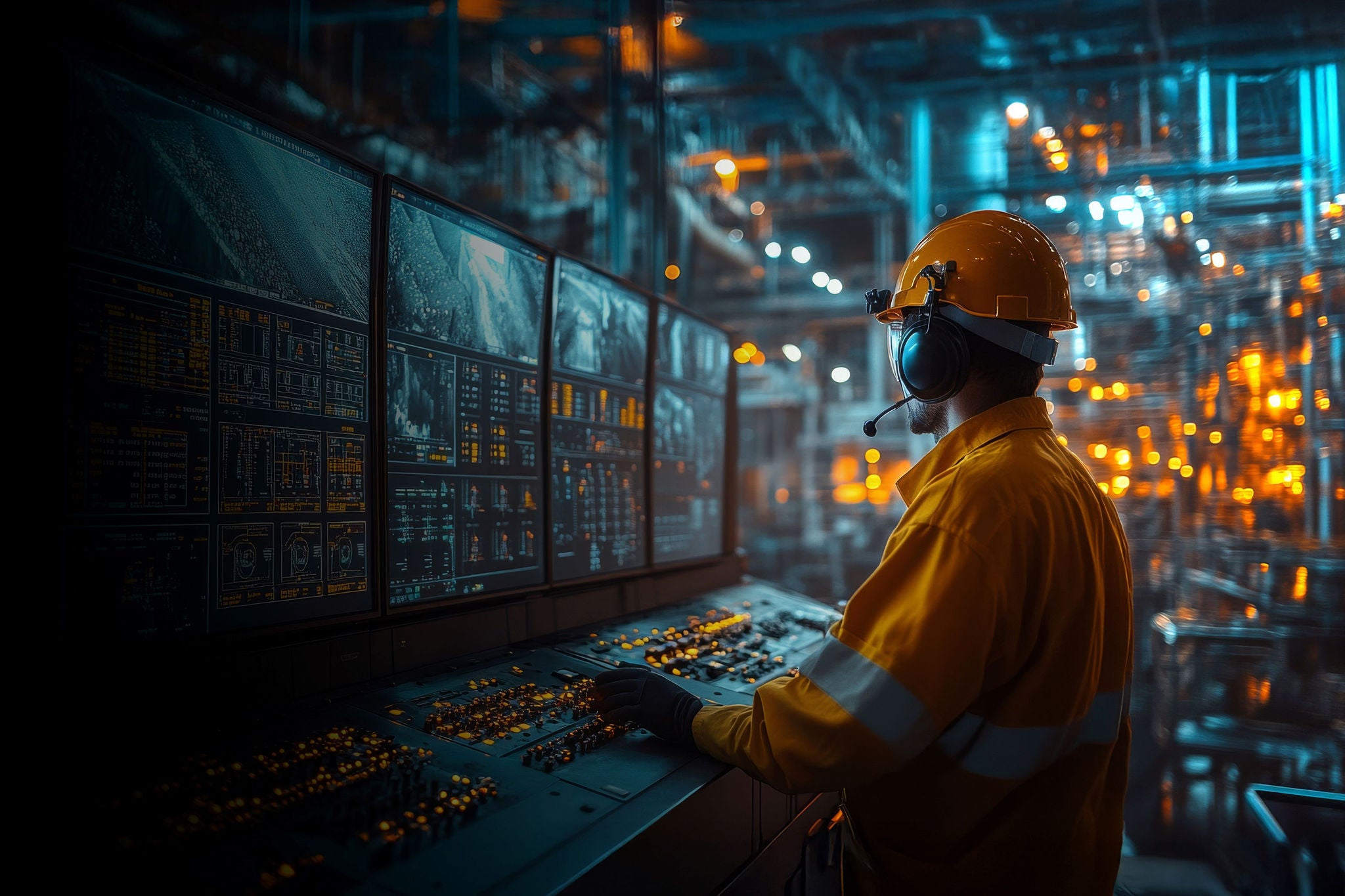


Miner monitors multiple sceens inside an industrial control room

Harnessing AI: proactive management of capital projects in mining

Related topics

Authored by:
Tushita Garg, EY Canada Mining & Infrastructure Capital Projects Leader
Theresa Sapara, EY Americas Metals & Mining Center of Excellence Co-Lead

The metals and minerals sector is being disrupted by technological, economic and environmental change. It’s time to adapt and innovate.


In brief

  • Metals and minerals companies are shifting focus to managing short-term risks and preserving cash until certainty returns.
  • Despite being in a digital age of sophisticated IoT and unlimited data, project managers still lack adequate information to make decisions and manage risks.
  • AI is moving from “nice to have” analytics into mission-critical support for capital projects: faster decision-making with fewer surprises.

Capital projects in the metals and minerals sector are increasingly under scrutiny from investors looking to understand how investment is deployed. With big-ticket mergers and acquisitions proving difficult, metals and minerals companies are instead focusing on getting the most out of existing assets, enhancing productivity, capital discipline and technology adoption to meet demand and take advantage of higher commodity prices.

According to the latest EY Top 10 Business Risks and Opportunities for 2026 survey, access to capital and its allocation came third in a list of priorities that global leaders are struggling with.1

Top three challenges

Mine owners and operators will have to navigate a complex landscape of challenges that may significantly impact their operations and profitability. But there are three challenges that can’t be ignored:

  1. Technological integration. The rapid advancement of technologies such as AI, automation and data analytics will require mining companies to continuously invest in and integrate these innovations. Successfully deploying technology will be crucial for improving operational efficiency, safety and competitiveness.

  2. Market volatility. Mining companies will continue to face significant risks from fluctuating commodity prices, influenced by global economic conditions, geopolitical tensions and changes in demand. This volatility can impact project feasibility, profitability and overall financial stability.

  3. Environmental and social responsibility. There will be increasing demands for sustainable mining practices from stakeholders, including consumers, investors and regulatory bodies.

Drawing inspiration


Against this backdrop, asset-intensive companies are actively exploring the value that emerging technologies like AI can have on improved efficiency and profitability of capital project portfolios.
 

As the sector weeds through outdated, manual and time-consuming methods for long-term business planning, portfolio and project management, risk management often takes a back seat. This often results in reactive response to risks, with potential issues only being addressed once they’re escalated, rather than anticipated and mitigated in advance.


Some recent examples illustrate the transformative potential of AI in this domain.
 

Showcasing agile development and modular AI integration, SpaceX is using AI to enhance project coordination and risk visibility.1
 

Integrated through project timeline optimization, the aerospace leader is using AI to analyze historical data and engineer workflows that predict realistic launch timelines and identify delays. Their AI tools evaluate technical and logistical risks across mission phases, enabling proactive mitigation strategies and supporting the dynamic allocation of resources based on real-time project needs.
 

Literally a world apart, the global oil sector is addressing the challenges of time, cost and risk in upstream exploration and production by integrating AI to enhance subsurface analysis and drilling processes. AI algorithms are significantly reducing the time required for seismic interpretation from nine months to nine days (or under!) and streamlining the identification of hydrocarbon reservoirs.
 

Reinforcement learning is providing real-time insights for drilling operations, improving wellbore placement accuracy and reducing equipment wear while enhancing safety. And AI is being used to expedite the evaluation of legacy wells for carbon storage projects by over 60%, allowing for quicker site selection and earlier CO2 abatement activities.2

Capital portfolio and project management

Global metals and minerals organizations are integrating AI into project delivery and operations, demonstrating the potential of technology to drive innovation and improve sustainability.

AI at work in capital projects

  • Rio Tinto — Using data, analytics and AI across optimization, safety and planning, the mining giant is actively working with digital twins and analytics to guide project decisions and support operations.3

  • Anglo American — As an early adopter of digital twins, Anglo reported cases of AI and digital twins finding haul-road and bottleneck issues that, once resolved, helped increase throughput.4

  • Fortescue Metals Group — Successfully operating large-scale automation or autonomous haul-fleet programs, Fortescue is already applying schedule optimization and AI tools in project scoping and design hubs.5

By employing AI-driven tools and methodologies, metals and minerals companies can navigate the complexities of portfolio composition, capital planning and project management with precision and agility.

Let’s explore a few use cases for emerging technologies can enable useful data and insights to be shared across the capital projects ecosystem:

  1. AI-enabled capital portfolio composition and prioritization

    The capital planning process is often a lengthy annual process and fraught with challenges. Particularly when it comes to portfolio composition and prioritization.

    AI-driven scenario analysis tools can revolutionize this complex process by enabling organizations to assess opportunities, consider constraints and compare initiatives across asset categories prior to allocating capital.

    Decision-makers are better able to evaluate impacts - from anticipated benefits and alignment with strategic goals to resource availability and timing - and take a more structured approach to stage gate processes and approvals, ensuring projects align with organizational priorities and risk tolerance.

  2. AI-enhanced project planning, monitoring and controls

    AI can boost planning and scheduling efficiency by analyzing historical data to accurately forecast project timelines and resource requirements. This predictive capability helps streamline resource allocation and enhance project outcomes.

    By simultaneously automating the creation and maintenance of essential project documentation, AI can improve accuracy, deliver with consistency and free up program managers to focus on strategic decisions.

    Through predictive planning and scheduling, AI technologies can forecast timelines and resource needs with greater accuracy, help reduce delays and optimize resource allocation. Or they can generate automated reports and updates to improve consistency, freeing up program managers to focus on strategic decisions.

    And through the use of drones, AI-enabled computer vision can monitor and quantify site progress, reducing disputes and eliminating unnecessary rework.

In summary

The sector stands at a pivotal moment. As capital continues its shift towards future-facing minerals - and brownfield exploration is favoured to ride out uncertainty - embracing AI can unlock innovation, minimize environmental impacts and enhance social responsibility. AI-driven analytics can deliver real results and offer incredible promise for a more efficient and proactive capital portfolio delivery.


Related content

Top 10 business risks and opportunities for mining and metals in 2026

Unpredictable output and tariff tensions mean companies face a new era of operational risk. It’s time to reimagine mining.

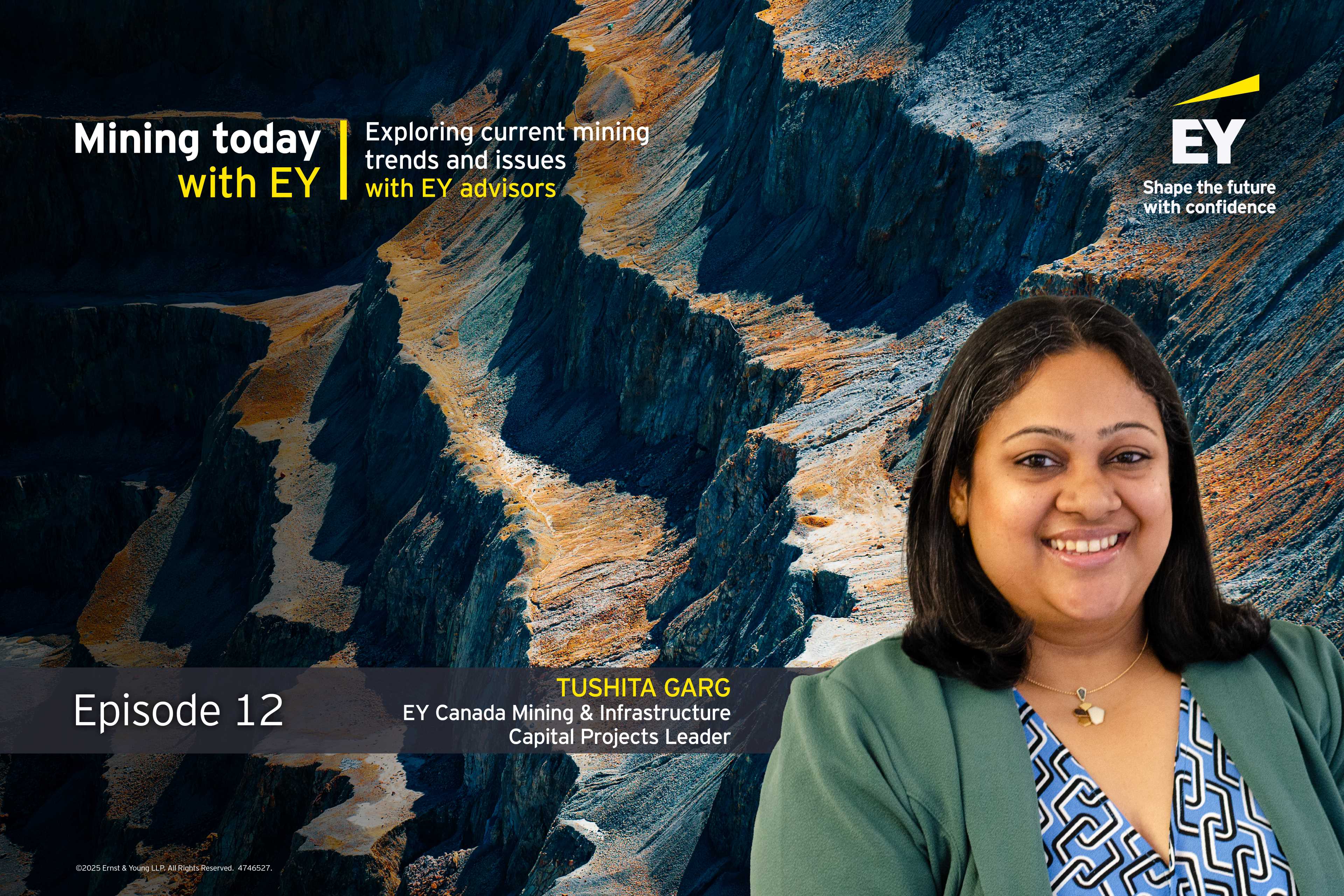
Mining today with EY – EP 12: Current capital projects trends and opportunities in metals and minerals

Insights from our sector advisors on current mining trends, issues and opportunities.

Unlocking value in mining capital projects: the role of digital

Explore how digital technologies like AWP, BIM, GIS, and digital twin optimize mining capital projects, improving efficiency, safety, and timely delivery.

    About this article