


EY refers to the global organization, and may refer to one or more, of the member firms of Ernst & Young Global Limited, each of which is a separate legal entity. Ernst & Young Global Limited, a UK company limited by guarantee, does not provide services to clients.
Recent Searches
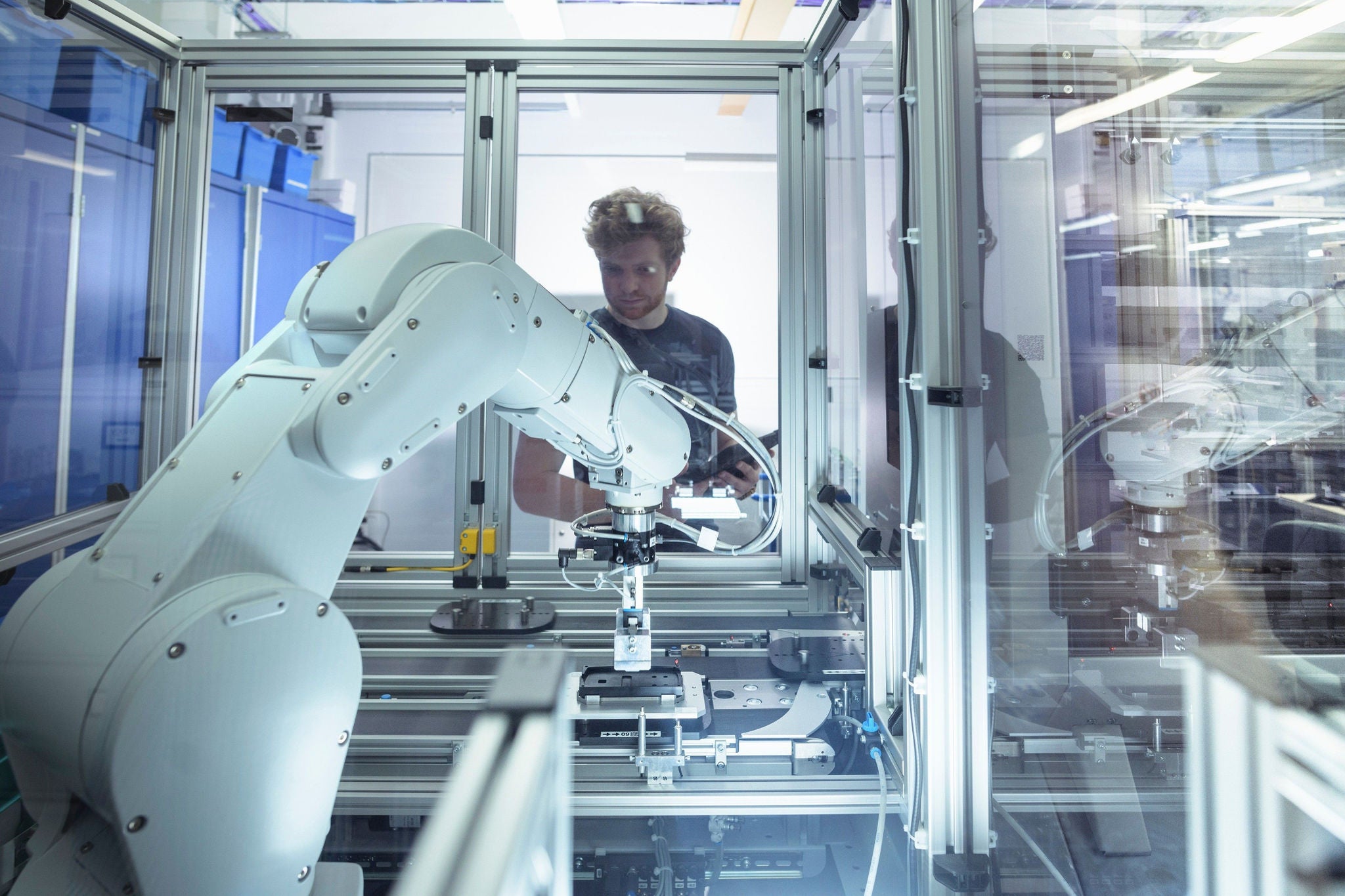
Technology delivers more value when supply chain and manufacturing teams connect data, decisions and operations.
In brief
- AI and automation deliver greater value when supply chain and manufacturing teams work as one connected system.
- Connected data and aligned decisions improve productivity, resilience and operational performance.
- People, process and data help turn technology investments into business value.
Why Supply Chain and Manufacturing Can No Longer Be Transformed Separately
Right now, Life Science companies are investing heavily in AI, automation and digital technologies, while expanding their manufacturing capacity.
Yet many company leaders, who have signed off on future-focused spend across planning, procurement, manufacturing and logistics are asking the same question.
‘Where’s the value?’
When pilots are underway and the implementation of new technologies are going as planned, it’s reasonable to expect positive progress. Many organisations are already seeing results from individual projects.
However for many companies, the expected enterprise-wide performance improvements are proving more difficult to achieve.
Individual projects are showing success and delivering results. The challenge is that value is being lost between functions – planning, procurement, manufacturing and logistics, where information, decision and priorities are misaligned. The result is isolated successes but a lack of sustained business wide performance improvements
Teamwork makes the… investment deliver value
For many manufacturers this inability to realise value is down to a lack of interoperability across workstreams.
Supply chain initiatives, manufacturing improvements, digital and AI investment and operational excellence programmes typically have different priorities, governance models and success measures.
Now, there needs to be a shared goal in order to achieve successful and lasting transformation through new technologies.
As a result, improvements in one area do not always translate into broader business value. To unlock the benefit of these investments, Plan, Source, Make and Deliver must work as truly connected components of the same system.
Manufacturing is full of trade-offs.
Much of the value created by these new technologies and AI depends on hundreds of decisions made every day across the organisation.
Decisions made in one part of the business naturally influence costs, productivity, inventory, customer service and operational flexibility elsewhere. Most teams are managing several priorities at once. The challenge comes when the wider impact of those decisions is difficult to see as teams are working from different data sources, systems and assumptions.
For example:
- Procurement secures lower-cost materials and manufacturing processes become more complex.
- Production capacity increases and scheduling flexibility becomes more limited.
- Customer service levels improve and inventory levels rise.
- Supplier issues are identified and production plans continue unchanged.
- Changes in customer demand are recognised but other teams receive the information too late to act.
Each decision may make sense within a particular function, but, the greatest value comes when teams have visibility of how those decisions affect the wider business.
Planning, procurement, manufacturing and logistics all contribute information that helps organisations balance cost, service, productivity and resilience across the value chain.
The organisations that are making the greatest progress are creating stronger connections between these functions through connected data that provides a consistent and timely view of what is actually happening across the business.
This is where connected ways of working drive better results across the organisation.
AI can accelerate planning, improve forecasting and optimise operations, but its greatest impact comes when it connects decisions across the value chain. The organisations seeing the strongest returns are where the AI tools have access to a connect data to create a shared view of demand, supply and production that helps teams make faster, better-informed decisions every day.
Brian Moroney
EY Ireland Partner, Head of Digital & Emerging Technologies
One source of truth
Effective decision making depends on trusted shared data.
Planning, procurement, manufacturing and logistics all generate valuable business information. Most companies often store that information across multiple systems, reports and spreadsheets that don’t always talk to each other. Bringing those insights together gives teams a clearer view of demand, supply, production and customer requirements. It helps people identify issues earlier, respond faster and make better decisions when conditions change. When functions operate from a shared source of information, decisions are quicker, better aligned and opportunities for improvement are easier to realise.
Process, Data and People
Technology is one part of the equation. Long-term value depends on how technology is embedded across the organisation through process, data and people. Without these foundations, organisations risk creating a collection of isolated pilots rather than driving a meaningful transformation.
Why this is so important for the Life Science Sector
These challenges carry real weight in pharmaceutical and medtech manufacturing, where products move through highly-regulated environments and supply chains involve multiple countries, suppliers and production sites.
In these environments, decisions made in planning, procurement, manufacturing and logistics have implications not only for operational performance but also for quality, compliance and continuity of supply
Changes in demand, supplier disruption, production delays and inventory pressures can have consequences beyond the factory floor. Multiple teams all contribute to maintaining quality, compliance and continuity of supply.
For Ireland, as home to a large concentration of global pharmaceutical and medtech manufacturing companies, this is particularly relevant. Organisations that can connect information, coordinate decisions and respond quickly to changing conditions will be better placed to support productivity, growth and future investment.
Ultimately, the goal is straightforward: helping products reach customers, healthcare providers and patients reliably, consistently and at scale.
EY helps organisations connect planning, procurement, manufacturing and logistics to improve performance, productivity and resilience across the value chain. To learn more, contact our Supply Chain and Operations team.
Summary
Manufacturers are investing heavily in new technology right now, but technology alone will not deliver sustained enterprise-wide value. The organisations achieving the strongest results are choosing to connect planning, procurement, manufacturing and logistics through trusted shared information, aligned decision making and integrated ways of working. With the right processes, data and people in place, organisations can scale the benefits from their technology and AI investments across the wider business.