



EY refers to the global organization, and may refer to one or more, of the member firms of Ernst & Young Global Limited, each of which is a separate legal entity. Ernst & Young Global Limited, a UK company limited by guarantee, does not provide services to clients.
Recent Searches
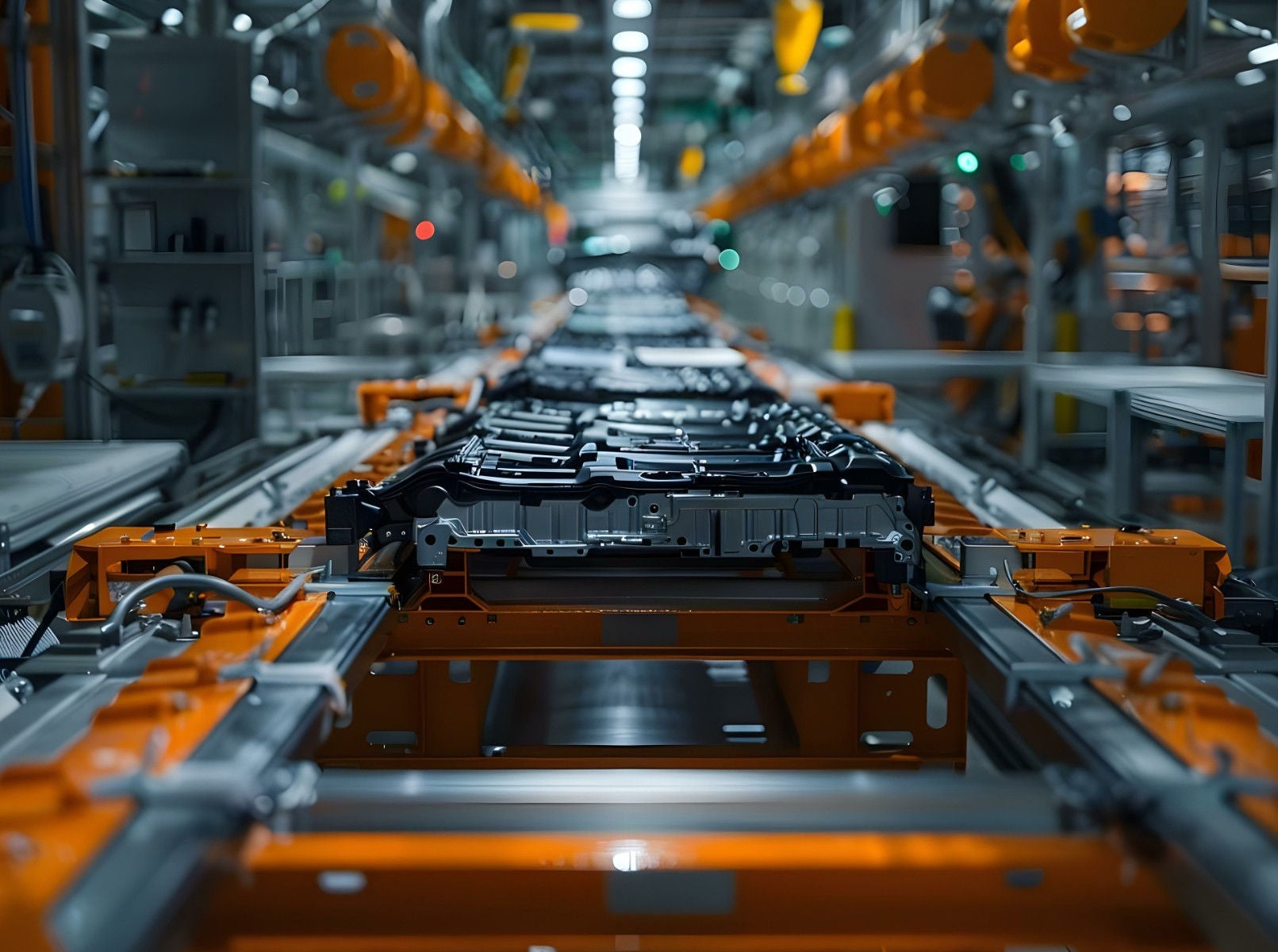
Unlock green manufacturing's potential with Canada's recent tax credits and incentives for a sustainable future.
In brief
- With Bills C-59 and C-69 having recently received Royal Assent, the federal government pronounced its intent to incentivize qualified zero-emission technology manufacturing activities and establish a clean technology ecosystem in Canada.
- From mining to manufacturing, clean technology manufacturing and EV supply chain ITCs will allow for an integrated approach, helping to advance green technology projects and entice those mining, extracting, processing and recycling critical minerals to produce the materials needed to establish Canada’s clean economy for the future.
- Planning and partnership will be critical to meeting eligibility criteria and optimizing benefits, both for today and tomorrow.
In June, Bills C-59 and C-69 received Royal Assent. Bill C-69, specifically, included the clean technology manufacturing (CTM) investment tax credit (ITC) — welcome news to those looking to invest in property needed to support the manufacture of clean technologies in Canada.
The passing of the CTM ITC, along with enhancements announced this past budget season and the introduction of a new electric vehicle (EV) ITC, should encourage further investment in green manufacturing activities and enhance Canada’s competitiveness in the clean economy.
As decarbonization efforts continue to ramp up in support of Canada’s net-zero targets for 2050, the expansion of ITCs is proof the government isn’t simply listening to feedback but acting on it. Part of the federal government’s ambitious “Made in Canada” plan for clean technology released in 2023, CTM tax credits are designed to offset capital costs of new equipment and technologies used to manufacture or process clean technologies and extract, process or recycle critical minerals, while their legislated nature offers cost certainty on these investments.
Working hand in hand
As details of initial CTM ITCs emerged, certain rules proved limiting, restricting access for some manufacturers and mining companies. In good faith, following feedback, the government went back to the drawing board, taking an integrated approach to modifying credits with the broader supply chain in mind.
When initially announced, for example, CTM ITC draft legislation outlined that property used in the production of battery cells of modules that benefited from a contribution agreement with the Government of Canada would be considered “excluded property.”
This resulted in uncertainty for businesses receiving or seeking additional government assistance for battery projects through discretionary grant programs. Recent legislation updates clarified the definition of “excluded property” to reflect this concern, providing manufacturers with peace of mind that only certain agreements with the government would qualify under the definition of excluded property.
As a second example, the 30% credit applied to the cost of investments in new machinery and equipment used to manufacture or process clean technologies, as well as to extract, process or recycle critical minerals. However, this credit only applied to qualifying mineral activities that produced “all or substantially all” qualifying materials, disqualifying many critical mineral operators and significantly limiting the accessibility of the ITCs.
Recognizing that some of these activities applied to polymetallic projects or projects where multiple metals are produced, the government redefined the thresholds. “All or substantially all” activities — generally accepted as relating to 90% or more — was reduced to a primary test understood to relate to more than 50%. This adjustment is specifically for polymetallic projects that produce qualifying materials at the mine or well site, thereby opening doors for a broader range of mining activities to support manufacturing efforts.
Along with this proposal, the government clarified that the primary test would be based on the value of the qualifying materials produced and provided a “safe harbour” rule to prevent fluctuating mineral prices from triggering a recapture of the tax credit.
By making ITCs friendlier to companies that produce qualifying materials at polymetallic projects, the government is making critical minerals that are abundant in Canada and integral to clean technology manufacturing — like lithium, nickel and copper — available to businesses producing solar panels, wind turbines and EV batteries needed to move towards the clean economy.
Furthermore, clarifying the definition of “excluded property” as it pertains to battery manufacturers will provide greater clarity around the types of government funding businesses can receive and how it will interact with the CTM ITC.
Partnerships and new horizons
New incentives are also expected to create additional opportunities. With the introduction of the proposed EV ITC, the government is again looking beyond key suppliers to create value and help establish EV supply chains in Canada.
Though small in number, EV builders and precursors that are eligible for the 30% ITC on investments in machinery and equipment may also be eligible for a 10% credit on the cost of buildings, essentially augmenting the CTM ITC and providing a much-needed injection of cash to compete in this space.
To qualify, businesses need to invest and claim ITCs in three segments of the supply chain: electric vehicle assembly, electric vehicle battery production and cathode active material production.
Alternatively, they can claim credits in only two segments, while holding a “qualifying minority interest” in a company that has claimed the CTM ITC in the third segment to be eligible to claim the EV ITC for building costs related to that segment.
Navigating complexity
With so many new opportunities, however, come new challenges. These modified credits are expected to impact manufacturing in big ways, broadening opportunities to newer players and suppliers. The ITC outlays will be significant, and with more businesses making investments in the space, qualifying won’t necessarily be a sure thing.
Inasmuch as requirements are loosening, navigating guidelines and providing proof of eligibility will remain complex, particularly for businesses lacking robust documentation processes. With Canada Revenue Agency (CRA) reviews anticipated, it will be vital to meet eligibility requirements thorough documentation and project preparation.
But with this new legislation, recent federal incentives like the clean technology ITC and new provincial programs rolling out each year, swift action will be critical to take full advantage of a variety of incentives — or a combination of incentives — and moving businesses towards tomorrow.
With manufacturing tax credits already underway in some provinces, including Québec, Manitoba and the Atlantic provinces, investments in equipment needed to manufacture clean technologies can be curtailed even further.
You’ll need to understand what’s available and how it may dovetail with the CTM ITC to fully optimize costs. The following are a few preparations manufacturers should be considering today to get a jump on competition and make sure they’ve checked all boxes to set them up for future success.
Planning for potential. Effective planning will be critical to preventing future surprises. Organizations should be thinking about future investments and how to document projects so they’re prepared for CRA review — maintaining documentation in real time, for example, and appropriately aligning purchase orders, invoices and expenditures with outlined legislation.
Optimizing opportunities. In either/or cases where only one ITC can be claimed, the 30% CTM ITC will often prove more beneficial than a 10% EV ITC. As such, benefits can be found by pulling costs away — from buildings, for example — and applying them to equipment costs, using site modelling and cost segregation approaches. EY has used cost segregation to successfully help optimize applicable credits and brought cross-border experience and collaboration to the table to take advantage of both Canadian and US incentives.
Partnering strategically. When competing for incentive dollars, we’ve found partnering presents unique opportunities. With the EV ITC, for example, for suppliers to claim the 10% credit on the cost of buildings, they will be required to claim CTM ITCs in all three segments outlined above — which is a challenge for most companies. But claiming in two of the three specified segments and holding a minority interest in a corporation that claims the CTM ITC in the third creates a win-win, with both businesses potentially benefitting from EV ITC building costs. Similarly, collaborating with small to medium sized enterprises on problem solving can help identify new technology opportunities and capitalize on incentives.
The government’s action on industry advice has proven there is strength in numbers. It’s important to keep in mind that while these new incentives present significant opportunity, their lucrative nature means they won’t be a slam dunk for many businesses. EY teams can help navigate even the most complex of situations to help manufacturers offset the costs of implementation, and help Canada build back its mining and processing investments, contributing to stronger economic growth as we transition to carbon-free operations.
Please reach out if you would like to start the conversation today and we can help keep your teams apprised of nuanced changes as they roll out to help make the best investment decisions as Canada strives to play a contributing role in industry sustainability and meet its climate directives.
Summary
The stakes are high. Collaboration and maintaining a holistic view when it comes to ITCs will be key to getting these projects off the ground, establishing Canada’s green technology supply chains and advancing a clean economy for the future.
Please reach out if you would like to start the conversation today and we can help keep your teams apprised of nuanced changes as they roll out to help make the best investment decisions as Canada strives to play a contributing role in industry sustainability and meet its climate directives.
Related article
Top tips for Canadian manufacturers on clean technology tax credits and government incentives
Considerations for the manufacturing and mobility sector on how to take advantage of new clean technology tax credits.