





A person holding a tablet stands in a futuristic corridor illuminated by bright blue and purple lights.

Financial institutions: Four considerations to mitigate insider threats in Canada

Insider threats are rising in Canada. Learn how financial institutions can strengthen fraud prevention and AML and ATF compliance.


In brief
  • Insider threats are a growing source of fraud and compliance risk for Canadian financial institutions, extending beyond employees to vendors, contractors and third parties.
  • A multi-layered defence grounded in governance, access controls and behavioural monitoring can help mitigate insider threats while strengthening AML and ATF compliance.
  • Proactive insider risk management supports regulatory readiness, protects data integrity and helps preserve trust in an evolving financial crime landscape.

Insider threats are a critical — and growing — risk for financial institutions in Canada. Whether driven by personal grievances or financial gain: insiders can commit significant fraud, as well as anti-money laundering (AML) and anti-terrorist financing (ATF) regulatory violations.

To effectively combat insider threats, institutions must develop robust strategies and fraud prevention measures that are capable of preserving sensitive information, strengthening financial integrity and supporting regulatory compliance.

Changing nature of insider threats mean Canadian institutions must do more to proactively mitigate risk

When leaders hear “insider threat,” they tend to focus on current employees. By the numbers, about 70% of insider threats do originate within employee workforces.1 But the insider threat landscape is much wider than many realize.

Vendors. Contractors. Former staff. Board members. Third-party service providers. Essentially, anyone with access to sensitive data, customer systems or critical information can potentially pose a risk.

Insiders can offer external bad actors valuable intel on internal processes and controls needed to generate more sophisticated and targeted attacks. Insider information gives bad actors opportunities to:

  • Manipulate customer records
  • Override controls
  • Facilitate unauthorized transactions
  • Create know-your-customer (KYC) vulnerabilities
  • Weaken existing AML or ATF defences

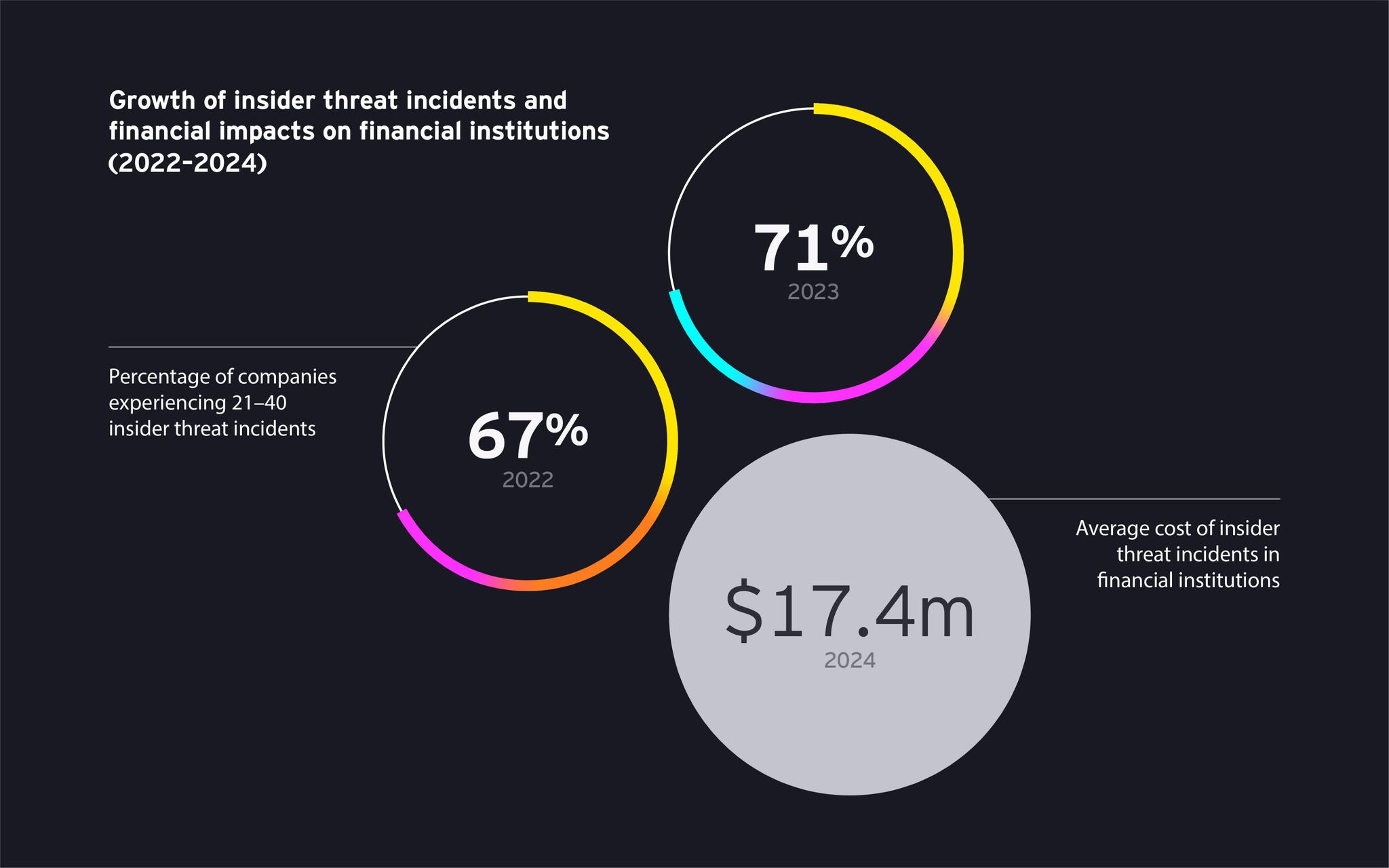
These kinds of insider threats are on the rise. Research shows 67% of companies experienced between 21 and 40 insider threat incidents in 2022. That figure grew to 71% in 2023.

And incidents disproportionately impact certain industries and sectors. Financial institutions are prime targets for expensive breaches. One report shows the average cost of insider threat incidences topped $17.4 million for financial institutions in 2024 — substantially higher than the cross-industry average2

Growth of insider threat incidents and financial impacts on financial institutions

What’s more, potential losses extend well beyond dollars and cents. Insider fraud can encompass theft of data, intellectual property and other assets in addition to financial capital. This affects chargebacks and write-offs while weakening governance. In addition, AML and ATF gaps can make it even harder for financial institutions to meet compliance requirements. Incidents like inadequate customer risk rating in client assessments, insufficient monitoring, ineffective due diligence or failure to submit suspicious transaction reports are all potential risks stemming from these gaps.
 

Such incidents expose financial institutions to potential regulatory penalties and reputational damage in a market where trust is a competitive advantage. It also opens the door to potentially expensive litigation. That’s to say nothing of the potential costs of operational disruptions like downtime, productivity dips and delivery delays that could hinder future growth and collaboration opportunities.
 

Compounding this complexity is a range of AML and ATF changes announced in Canada’s 2025 federal budget . As financial institutions work to understand evolving regulations, they will need a proactive approach to effectively mitigate risk while simultaneously closing potential governance gaps. That should include recognizing that insiders pose just as great a threat as external bad actors. As institutions focus on strengthening fraud prevention measure, leaders will want to prioritize defences on both fronts.
 

Financial institutions in Canada should consider a multi-layered defence strategy for insider threats
 

Rooting integrated defence strategies in governance, technology and a culture of compliance empowers financial institutions to proactively mitigate the risk of insider threats. Incorporating these levers within the institution’s operating model can dial down insider-driven fraud, AML and ATF risks while both helping maintain regulatory alignment and protecting stakeholder trust. That’s key.

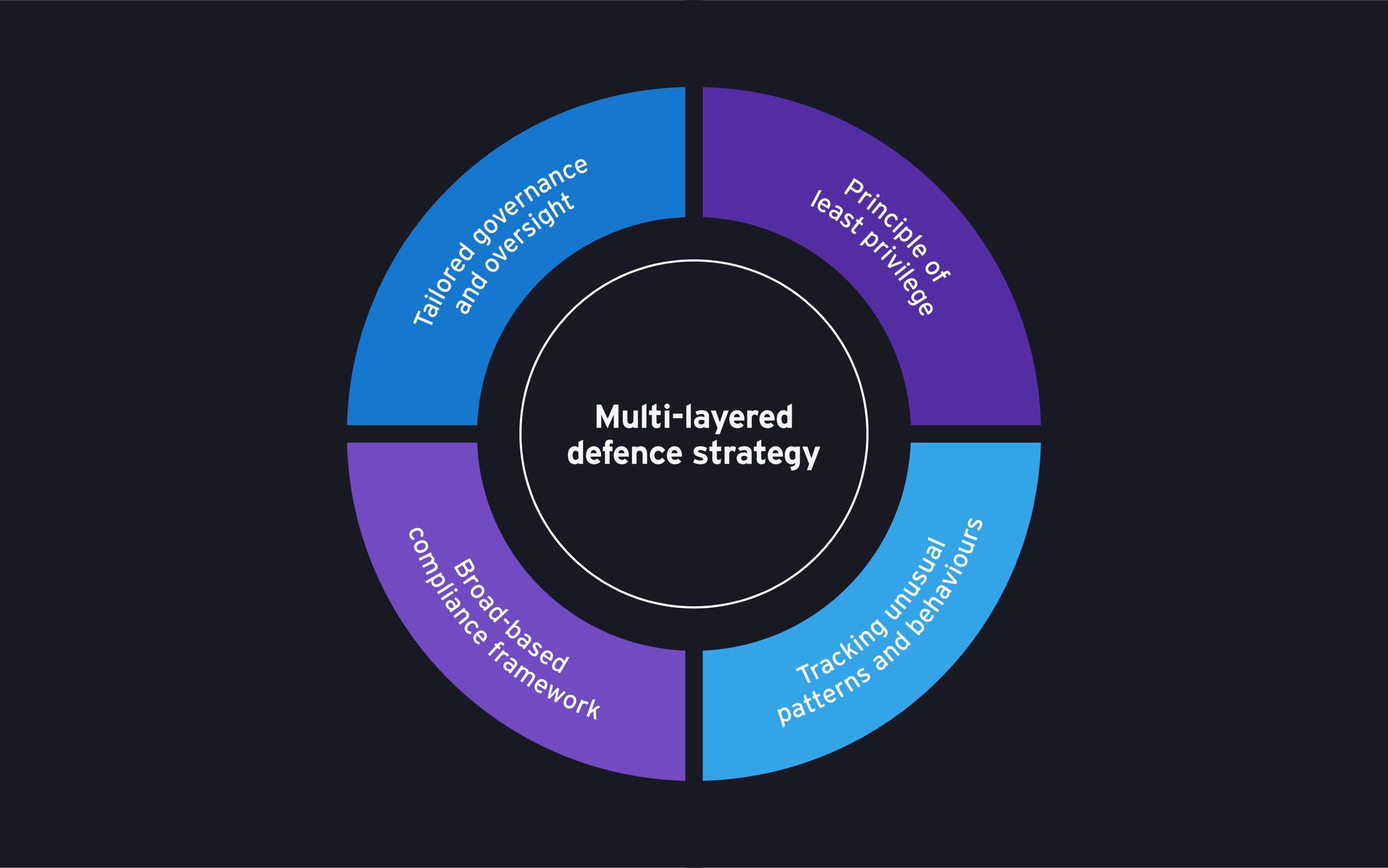
How can financial institutions enhance defence strategies with a multi-layered approach to insider threats? We suggest building four key levers into an integrated risk management model:

Multi layered defense strategy

1.    Establish a tailored governance and oversight approach aligned with the institution’s operational complexity.
Preserving data integrity is the goal. To get there, develop a framework that clearly outlines role-based access authority, limiting who can modify or approve financial records. Segregating duties across critical functions can reduce opportunities for unauthorized or collusive activities. You will also want to weave governance into the framework from the start.

For example:

  • Maintain immutable audit trails and detailed logs to establish traceability of every record change.
  • Deploy advanced detection tools to proactively flag record alterations.
  • Implement periodic audits and effectiveness reviews, as well as risk assessments, to spot vulnerabilities early, proactively manage risk and strengthen accountability.

2.    Enforce the Principle of Least Privilege to safeguard sensitive data and maintain operational integrity.
This security framework ensures employees have access only to the minimum data and systems necessary for their roles. By designing and deploying data-loss prevention tools to monitor and block unauthorized transfers of sensitive financial data, institutions can help maintain data integrity and regulatory compliance.

For example:

  • Implement privileged access management (PAM) to restrict and track elevated access among key users.
  • Establish real-time alerting and centralized logging mechanisms to segregate access rights.

3.    Create a broad-based compliance framework that aligns to regulatory policies.
Mandatory training, coupled with tracking mechanisms, weaves compliance into the institution’s cultural fabric. This learning should reinforce standards and promote awareness. Enabling insiders with resources and tools to support compliance can also bolster uptake.

For example:

  • Develop compliance dashboards that provide real-time visibility into key metrics, enabling proactive and efficient oversight.
  • Implement whistleblower programs with secure, anonymous reporting channels to promote ethical behaviour, support early detection and nurture trust.
  • Use policy enforcement and monitoring tools to prevent unauthorized process bypasses.

4.    Track unusual patterns in communication, access, habits and behaviours.
Shifts in behaviour may signal potential financial misconduct. The ability to identify early signs of malicious intent allows financial institutions to mitigate associated risks of insider threats.

What should institutions watch for? Record manipulation, patterns of inadequate adherence to regulatory requirements or internal policies, and sudden changes in employee behaviour, such as increased secrecy, role dissatisfaction, unexplained wealth or high-value purchases inconsistent with individual’s income.

Financial institutions will also want to be on the lookout for unusual access patterns and data exfiltration, like accessing data unrelated to an employee’s role, especially outside of normal working hours; unexplained, high-volume data transfers; or interest in sensitive financial information).

For example:

  • Integrate risk mitigation as a cross-functional priority to safeguard assets and maintain robust defences against financial crimes.
  • Encourage IT, compliance and HR to work together in the spirit of enhancing detection, enabling coordinated investigations and honing an integrated response framework.
  • Analyze patterns as part of an integrated and connected cross-functional focus.

What’s the bottom line?

Insider threats represent an evolving and growing risk to Canada’s financial institutions. Deploying a proactive defence strategy can help the risk of insider threats while preserving financial integrity, stakeholder trust, brand equity and regulatory compliance.

Contributor/s  :
Taher Talib, Manager, Risk Consulting
Ifedoyin Awe, Senior Consultant, Risk Consulting


Summary 

Insider threats are a critical and growing risk for financial institutions in Canada. A proactive, multi-layered defence strategy rooted in governance, technology and a culture of compliance can help mitigate insider-driven fraud, AML and ATF risks. By preserving sensitive information, strengthening financial integrity and supporting regulatory compliance, institutions can reduce exposure to regulatory penalties, reputational damage and operational disruption while maintaining stakeholder trust.


Related articles

Canada’s watershed moment on financial crime

Canada is reframing financial crime as a national security priority. Discover how Budget 2025 reshapes AML, fraud and sanctions compliance.


    About this article