




EY refers to the global organization, and may refer to one or more, of the member firms of Ernst & Young Global Limited, each of which is a separate legal entity. Ernst & Young Global Limited, a UK company limited by guarantee, does not provide services to clients.
How EY can help
-
The EY Americas Metals and Mining Center of Excellence offers companies access to cutting-edge services and innovation-led solutions.
Read more
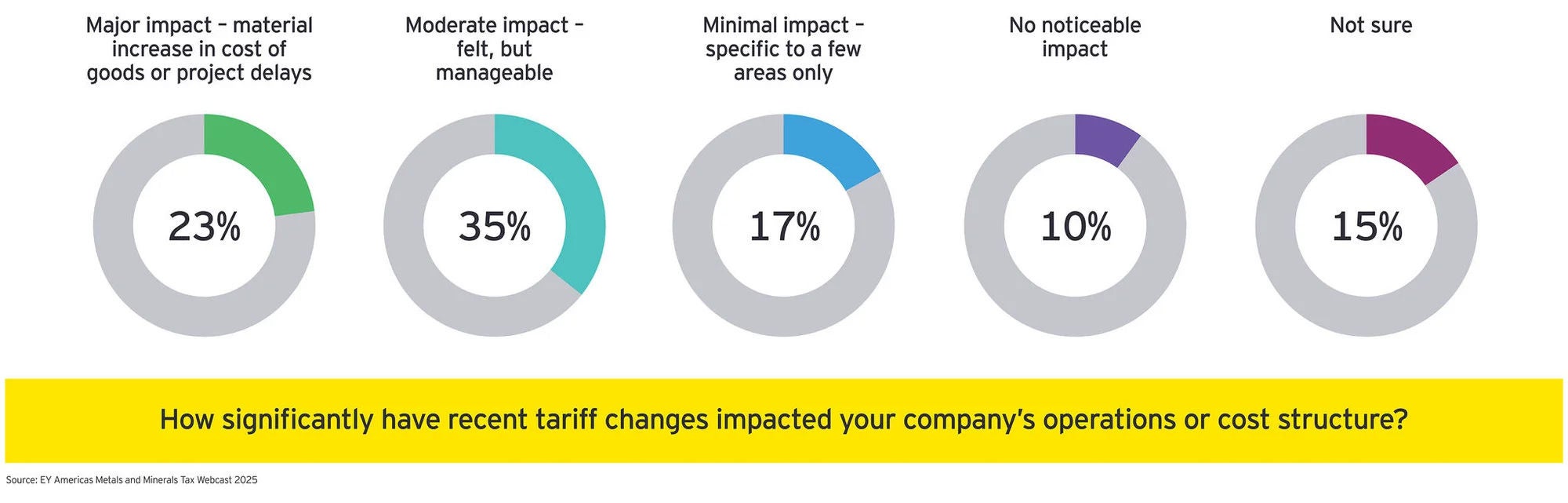
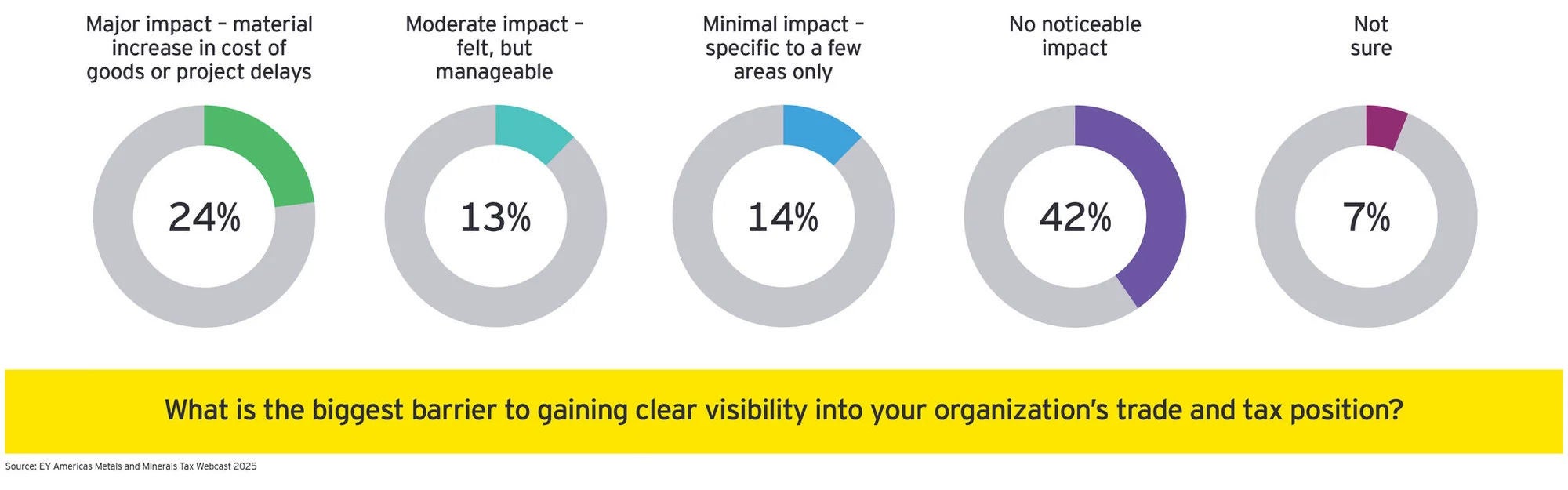
Almost 58% of respondents anticipate that tariffs would have a major or moderate impact on operations or cost — and not only on exports to the US. Canadian counter tariff measures are contributing to the uncertainty metals and minerals organizations are facing.
In early March, the federal government introduced a 25% surtax worth a projected $155 billion on over 1,000 products coming to Canada from the US4. A further 25% surtax on imported motor vehicles, steel and aluminum products followed shortly after, introducing new obstacles to overcome5. To address the destabilizing effect these measures had on Canadian businesses, the government announced a relief remission process, initiating a deep-dive examination into the need for imports — from a lack of resources preventing goods from being produced in-country to down-the-line impacts on Canadian suppliers.
And while recent orders have been issued to automatically grant relief in select circumstances, they have raised questions around eligibility. Where metals and minerals producers often qualify for relief based on inputs entering the US for the purpose of manufacturing and processing, further investigation may be required to determine if imports are intended for the purpose outlined — a seemingly gray area that is prolonging the remission process.
And uncertainty doesn’t end there. In a sector dependent on heavy equipment, a 25% surtax on imported vehicles, engines and the parts needed to maintain equipment6 used for haul trucking, for example, demands that businesses pay close attention and thoroughly think through how to manage capital and equipment needs for the future.
In addition to the outcomes of US investigations looming, concerns that such decisions may contribute to steel products being diverted into Canada are also being tabled. Governments are considering safeguards to prevent US steel from flooding Canadian markets, conducting investigations under Canada’s anti-dumping and countervailing duty laws and looking deeper at the Special Import Measures Act, which is being increasingly used as a trade remedy measure.
In Mexico
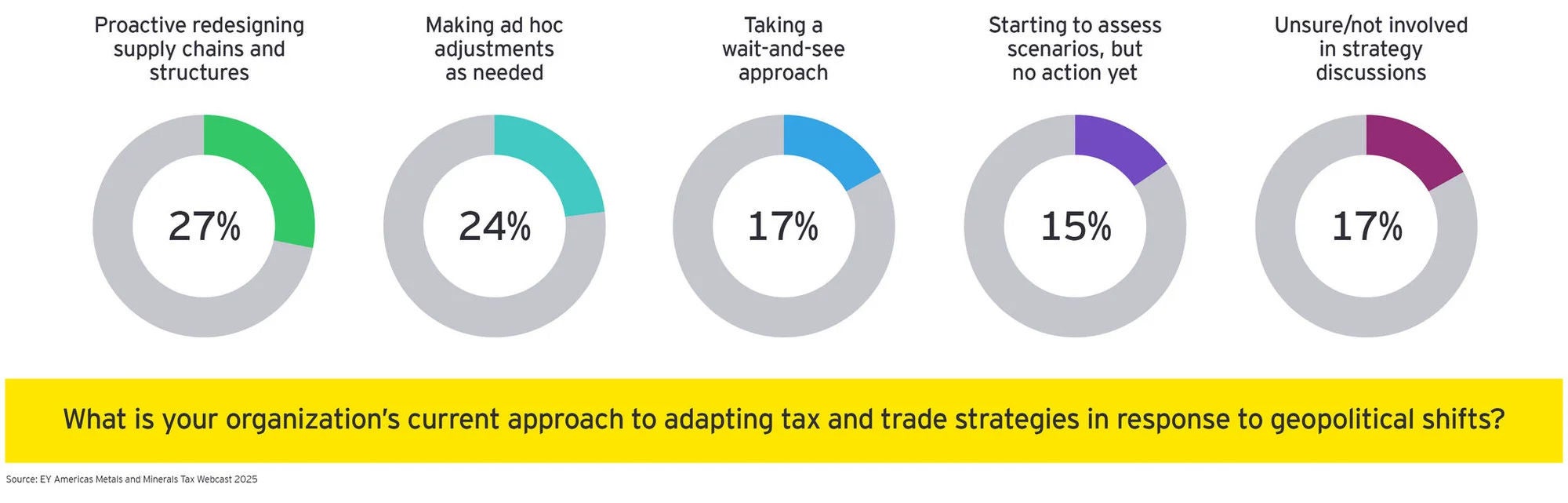
With the trade environment in such flux, it stands to reason that confusion and uncertainty at the national and international level will present similarly for sector leaders navigating the landscape with company interests in mind — those being tapped to come up with solutions, new approaches, a plan of action.