



EY refers to the global organization, and may refer to one or more, of the member firms of Ernst & Young Global Limited, each of which is a separate legal entity. Ernst & Young Global Limited, a UK company limited by guarantee, does not provide services to clients.
Recent Searches
Trending
-
Advancing Canada’s defence innovation
09 Apr 2026 -
Canadian Insurance Outlook 2026: navigating uncertainty, unlocking opportunity
13 mar. 2026 Financial services -
From bottleneck to accelerator: the strategic role of digital identity controls for industrials and energy companies
18 Feb 2026 Energy and resources
Strategic alignment for enterprise technology transformation
Strategic alignment is a transformation business discipline that helps identify and address unseen roadblocks at the executive level ahead of program inception to de-risk execution.
Executive alignment is the number-one risk factor in transformations.
Enterprise technology transformations are typically of a size, scope and complexity that requires both significant capital investment and resource-intensive cross-enterprise coordination of people and effort. However, few organizations apply a proactive discipline to get the timing, functionality and resource requirements understood and agreed across stakeholders. This is why large IT projects are 20 times more likely to fail than other large-scale initiatives.[1]
Strategic alignment is a transformation business discipline that helps identify and address unseen roadblocks at the executive level ahead of program inception to de-risk execution.
What strategic alignment delivers
Our approach
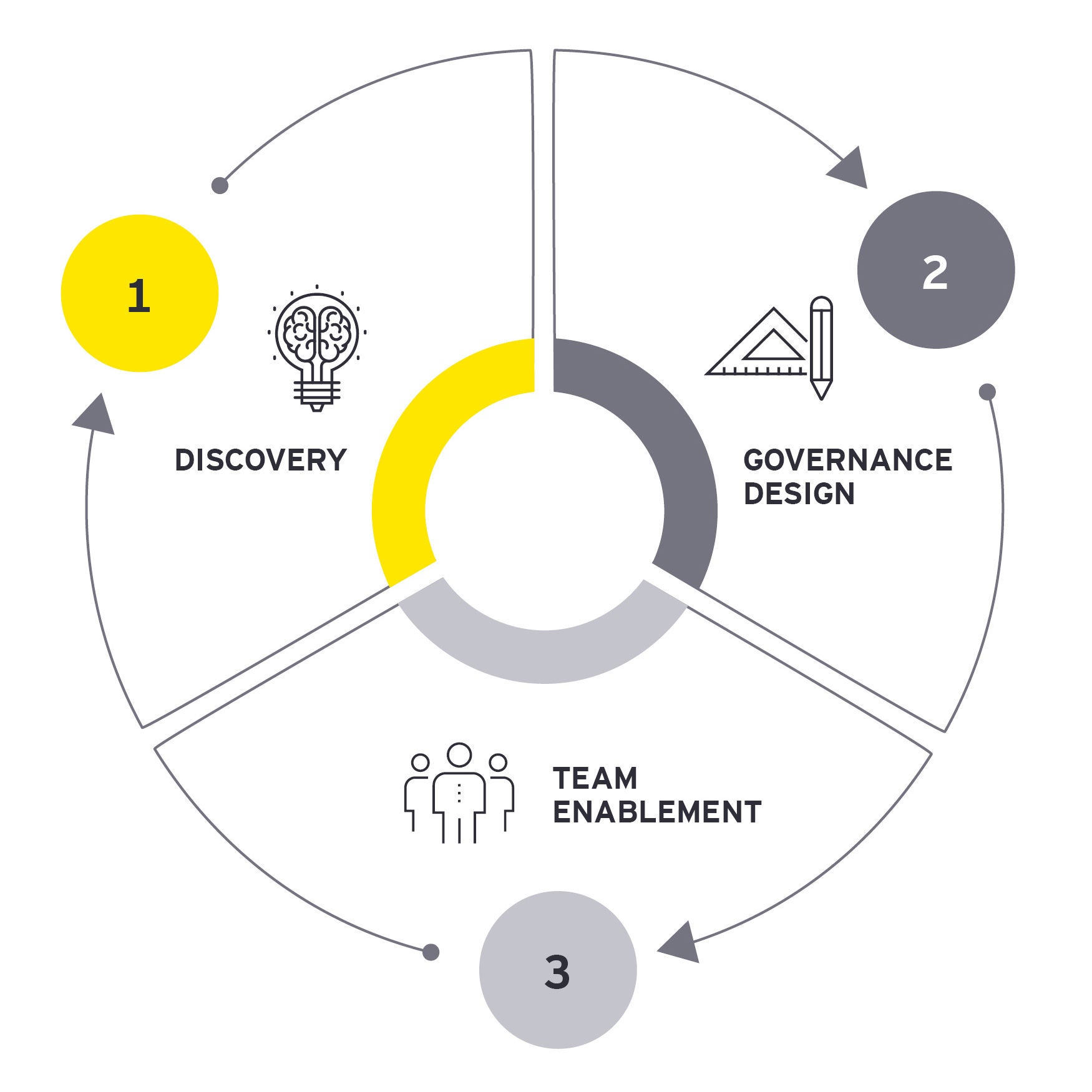
Applying a business discipline to gaining executive team alignment drives clearer visibility and accountability for risks, reducing the likelihood of derailed program timelines. There are three key components.
1. Discovery and alignment
The process begins with hearing from key stakeholders to identify and codify alignment gaps among program leadership and recommend mitigation strategies.
2. Governance design
Once those gaps are understood, EY’s Strategic Alignment team will codesign a decision governance model that clarifies roles, decision principles and decision-making processes across the program to mitigate execution risks.
3. Team enablement
With governance in place, we set up a discipline to address the gaps in team dynamics, establishing trust and creating the conditions that can lead to long-term success and ongoing alignment.
Related offerings
- Executive Top Team Coaching
Evaluating top team dynamics and supporting the development of high-performing leadership teams. - Executive Coaching and Leadership Development
Delivered by a diverse network of certified coaches with cross-industry expertise, our coaching enhances leadership effectiveness at the individual, cohort, and team levels.
Find out more about Executive Coaching and Leadership Development