Woman’s hand using touchscreen showing climate-related data, images and animated graphics

How circularity drives growth and resilience in manufacturing


Circularity transforms pressure into progress, helping advanced manufacturers grow stronger, smarter and more resilient in the new economy.


In brief

  • Circularity is redefining industrial manufacturing. Resource pressure, fragile supply chains, technology and new regulations are forcing a shift beyond linear models.
  • Manufacturers must redesign business models around circular principles that build resilience and rethink how they price, and capture the full value of sustainability.
  • Tomorrow’s leaders already treat circularity as a growth engine, not a compliance task. They unlock new revenue, reduce risk, and secure an enduring competitive edge.

The industrial manufacturing sector is experiencing profound change from converging forces that are rapidly opening the door for companies to move away from traditional linear "take-make-dispose" models toward business models based on circular economy principles. This shift represents more than just an environmental imperative; it's a strategic business opportunity that unlocks significant economic value for those manufacturers who dare push beyond the linear models and adopt circular approaches that design out waste, extend product lifecycles, and enable material regeneration.

In this article, we explore how manufacturers can turn circularity into competitive advantage:

Surreal landscape with sky reflected in circular water ripple
1

Chapter 1

Circularity: the next profit engine for advanced manufacturers

Circularity isn’t a duty but a strategy. Manufacturers turning reuse and service into value will lead the next wave of growth.

Key factors are accelerating the global shift toward circular manufacturing. Resource scarcity and fragile supply chains are putting growing pressure on manufacturers to reduce material dependency, limit cost volatility, and strengthen resilience against global disruptions. At the same time, rapid advances in digital and industrial technologies are removing long-standing barriers such as production inefficiencies, limited supply chain transparency, and rigid product designs. These innovations are enabling more flexible and transparent processes, making the scaling of circular solutions increasingly practical and economically viable.

Adding to this momentum, European regulatory frameworks on circularity have matured significantly over the past decade. The 2020 Circular Economy Action Plan aims to make products more sustainable, boost resource efficiency, and reduce waste across key sectors. The Ecodesign for Sustainable Products Regulation (ESPR) strengthens product durability and recyclability standards. Building on this, the upcoming Circular Economy Act, set for 2026, will harmonize rules across member states to create a single market for recycled materials and increase demand for sustainable inputs. While these policies impose compliance requirements, forward-thinking manufacturers recognize that embracing circularity as a strategic growth driver, not just a legal obligation, can unlock far greater value.
 

Circularity as the new competitive advantage

In this context, manufacturers who rethink their business models, shifting product ownership to Product-as-a-Service or performance-based models where they retain ownership and responsibility over products and materials, alongside innovative product designs and sustainable material inputs, stand to capture substantial value. Yet, most companies have only begun to embed circularity into their operations, leaving a significant opportunity for early movers to lead the transition.

By shifting operations towards more circularity, companies offer incremental value to the end customer. This value takes the form of more durability and extended use, supports the compliance of customers with sustainability goals, or even simply provides value to customers that was not previously addressed. Yet, in a similar way that traditional products are often born out of engineering excellence, what is often forgotten is that creating value is not enough; companies must strive for value excellence. The truth is that all circular business models do not equally meet customer needs and willingness to pay, and so it is about creating value that is recognized. If there is a willingness to pay for the value created, then it also needs to be captured through differentiated monetization approaches. Only then a true competitive advantage is born.

In essence, circularity presents a compelling economic opportunity to develop innovative business models, optimize costs and increase revenue streams typically, enhancing operational resilience as it transforms business operations. However, the success of a sustainable circular business model hinges on carefully crafting a company’s unique capabilities, resources, and operational constraints into a value proposition that customers are willing to pay for.

Most companies have only begun to embed circularity into their operations, leaving a significant opportunity for early movers to lead the transition.

Three moves turning circularity into profit

Companies can embed circularity in their business models at different levels, each representing a greater degree of disruption and transformation in how they create, deliver, and capture value. The most common today is circular supply chain integration. It focuses primarily on recycling and using sustainable materials and is typically considered first because of the cost-reduction effect it can have in environments where raw material scarcity is at play. A next-stage circular approach consists of product life extension through remanufacturing and refurbishment effectively prolonging product use and enabling secondary markets. The ultimate transformation towards circular business models lies in Product-as-a-Service (PaaS) models, where ownership shifts away from customers to manufacturers, who retain control over products across their lifecycles, fundamentally changing how value is sold and delivered. Any of these models fundamentally changes traditional linear manufacturing economics and opens new pathways for growth and resilience.

1. Closing the loop to build supply chain strength

While not a business model per se, circular supply chain integration is a vital strategic approach to building operational resilience. This involves replacing virgin raw materials with recycled, renewable, or bio-based inputs, embedding circularity directly into production processes. The commercial benefits are significant: manufacturers can reach sustainability-focused customers, comply with Scope 2 and 3 emissions regulations, and command premium pricing for verified low-carbon products. This approach directly addresses manufacturers' dependency on finite resources while significantly lowering environmental footprints and enhancing supply chain resilience against material price volatility and availability disruptions.

Norwegian aluminum producers leverage advanced recycling technologies to create premium, low-carbon aluminum for automotive clients. Specialty chemical firms, such as those producing bio-based solvents, are substituting fossil feedstocks with renewable biomass and plastic waste, ensuring traceability and sustainability certification throughout their supply chains. Other examples include agricultural companies developing biodegradable plastics from cereal-based enzymes and agricultural residues, providing circular alternatives to petrochemical plastics. For instance, a specialty agritech firm produces soil-biodegradable mulch films using bio-based polymers such as starch and cellulose derivatives. These materials decompose naturally in soil, reducing plastic pollution while enhancing soil health. These strategies not only address environmental concerns but also boost resilience to resource volatility while unlocking new markets created by the requirement for verified sustainability and regulatory compliance.

2. Rebuild and reuse, long live the product… and the value

Another powerful circular pathway lies in extending the life of products and components through repair, refurbishment, and remanufacturing. By creating multiple economic cycles from a single product, manufacturers reduce waste and resource dependency while unlocking new sources of margin and performance value. This model also strengthens one of the most underestimated levers in manufacturing: customer loyalty. Keeping customers connected to trusted products builds lasting relationships and repeat revenue. As this approach scales, it opens new markets, from cost-conscious buyers seeking reliable, affordable options to those entering a brand ecosystem for the first time through renewed products.

Some manufacturing companies in the industry have already embedded this model at scale. Take heavy-duty equipment providers; they run remanufacturing programs restoring engines and drivetrains to like-new condition, sharing value with customers by offering quality-replenished products at a smaller fraction of the cost. Another example is with electronic equipment firms, remanufacturing network equipment, printers, and servers to “as-new” standards, backed by warranties comparable to new products. Industrial printer makers also use recyclable materials and modular design to facilitate refurbishment and remanufacturing.

By extending product lifecycles, companies not only meet diverse customer needs but also maximize resource efficiency, creating multiple revenue streams from a single asset, and building lasting competitive advantage through strengthened customer loyalty.

3. Owning less, accessing more: the rise of Product-as-a-service (PaaS)

PaaS disrupts traditional ownership by shifting focus from selling products to delivering usage or outcomes. This approach allows manufacturers to maintain control over product lifecycles, encouraging designs that prioritize durability, maintainability, and efficiency. As a result, companies can achieve higher product utilization, create recurring revenue streams, and reduce resource waste.

Successful implementations of the PaaS model are already emerging across the advanced manufacturing industry. In aerospace, engine providers have adopted service models based on flight hours rather than outright ownership, aligning incentives to maximize reliability and minimize waste from unnecessary maintenance. Similar examples exist in planes’ landing gear, with all-inclusive business models for maintenance, based on the number of landings performed.

Similarly, in urban lighting, with the advent of LED, companies are shifting from selling bulbs to offering pay-per-lux or “Light-as-a-service” subscriptions, where you buy a guaranteed illuminance. This encourages durable, repairable designs while delivering consistent quality of service. In the life sciences and MedTech sectors, capital-intensive medical equipment, such as imagery and diagnostic devices, is increasingly offered as PaaS, often bundled with digital solutions and cloud-based analytics. This combination allows hospitals to pay for usage or outcomes rather than owning costly equipment outright, driving operational efficiency while enabling manufacturers to maintain control of the product lifecycle and continuously improve performance through real-time data insights.

As these examples illustrate, the nature of circular offerings, like PaaS, requires modern technological infrastructure, like connected sensors that provide real-time insights into product performance and usage, and analytics that predict maintenance needs to maximize asset utilization. Digital platforms are required to facilitate flexible billing, coordinate product returns and refurbishments, and give customers easy access to track service agreements and usage. Such technology is essential for managing the complexity of circular systems where products are continuously repaired, upgraded, and reused. These elements fundamentally affect how value is delivered alongside the customer journey, especially in the case of PaaS, where a product is now delivered as a service. A shift in how the product and its usage are thought about is therefore necessary and must lead to a fundamental rethink of the offering and how it is monetized. And this is where strategic monetization approaches come into play.


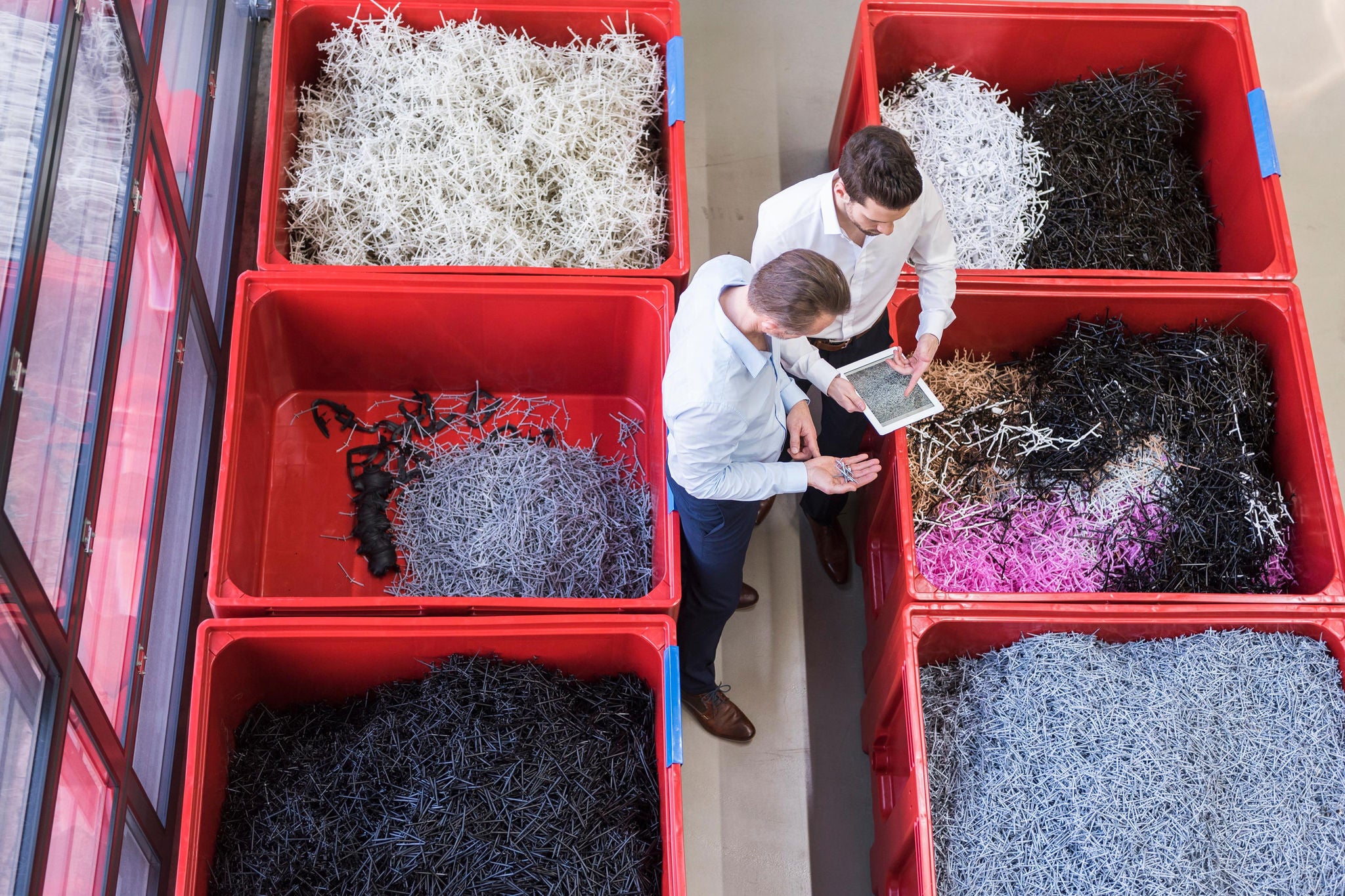
Two businessmen with tablet in factory standing at containers with shred
2

Chapter 2

Selling outcomes, not products: how to monetize the circular shift

Shifting from ownership to outcomes, smart pricing and service models unlock the true value of circular manufacturing.

Transitioning to circular business models requires more than operational changes; it demands a strategic redefinition of how manufacturers create, communicate, and capture value. Successfully monetizing circularity means rethinking traditional value propositions and shifting customer perceptions from owning products to valuing outcomes. This involves understanding diverse customer segments, tailoring offers accordingly, designing pricing models aligned with circular principles, and building distribution and service channels that support ongoing relationships and reverse logistics.

The challenge is complex, as it touches on organizational culture, technological and operational capabilities, ecosystem partnerships, and evolving market expectations. Yet, when executed deliberately, monetization and pricing strategies enable manufacturers to unlock the full economic potential of circularity.

Successfully monetizing circularity means rethinking traditional value propositions and shifting customer perceptions from owning products to valuing outcomes.

Circular value means nothing without customer insight

A successful circular offering begins with a deep understanding of what customers truly value. Traditional ownership models emphasize product features and upfront costs, but circular business models require understanding customer perceptions beyond ownership and consider what outcomes and flexibility are delivered, as well as the total cost of ownership. Manufacturers must look at customers by their distinct value priorities: some seek cost savings, others prioritize sustainability credentials, and some demand operational convenience or regulatory compliance. Once that understanding is there, it becomes straightforward to define the right monetization model to apply to your circular offering.

For example, usage-based pricing links cost transparently to consumption, encouraging responsible use. Meanwhile, outcome-based pricing focuses on measurable business results, helping customers realize value in uptime or energy savings. Ultimately, understanding customer needs and use cases supports delivering transparently on value and translating this into total cost of ownership with clear and targeted monetization and pricing models that efficiently capture the value delivered.
 

The wrong pricing model can break your circular strategy

Once customer value preferences are clear, manufacturers need to choose monetization models that fit both customer needs and internal capabilities, while adapting their approach to the diversity of their customer base. This decision is never one-size-fits-all. The most successful strategies blend multiple pricing structures to reflect different user profiles and usage patterns, turning complexity into a source of competitive strength.

Large enterprises with predictable and stable consumption tend to favor fixed-fee service contracts, which provide budgeting certainty and comprehensive coverage. For instance, industrial equipment providers often offer annual maintenance subscriptions that cover full lifecycle support. Conversely, smaller customers or those with variable demand may prefer flexible pay-per-use or tiered pricing models, enabling costs to match actual consumption better. Software-as-a-Service (SaaS) models, widely adopted in manufacturing technology, exemplify this approach by billing based on usage tiers.

Hybrid pricing models that blend fixed subscriptions with usage overage fees or performance-based incentives are also increasingly popular. These arrangements equitably share risks and rewards between manufacturers and customers. For example, advanced machinery providers may combine base subscription fees with charges linked to actual operational hours or performance metrics.

Integral to these models is risk management: as manufacturers assume responsibility for product performance across their lifecycle, pricing strategies must incorporate accurate cost forecasting, real-time usage monitoring, and adaptable pricing frameworks responsive to changing conditions.

Choosing the right pricing model is more than an analytical exercise. It is a strategic bet on how customers define value. Understanding usage patterns, competitive dynamics, and willingness to pay for different service levels or product conditions is essential, but insight alone is not enough. The real advantage comes from iterating fast, using data to test, learn, and adapt until pricing becomes a true enabler of profitable and scalable circular growth.

Circular service delivery demands expertise in customer support, product refurbishment, and reverse logistics.

Your value chain is not ready for circularity… Yet

Delivering circular models profitably depends on translating strategy into strong service and distribution networks that often differ from traditional product channels. Manufacturers must decide whether to build service capabilities internally for greater control and margin capture, partner with specialists to gain speed and expertise, or acquire service firms to integrate operations end to end. This choice shapes customer experience, cost efficiency, and scalability, ultimately determining who can make circularity both viable and profitable.

To execute these strategies effectively, service networks must emphasize ongoing customer engagement, rapid response, and reverse logistics for product returns, refurbishment, and reuse. Successful networks combine local presence for hands-on support with digital tools such as remote monitoring, predictive maintenance, and customer self-service portals to enable efficient service delivery.

Equally important are new organizational skills and collaborative partnerships. Circular service delivery demands expertise in customer support, product refurbishment, and reverse logistics. Manufacturers often work closely with specialized providers, technology partners, and even competitors to offer seamless circular solutions. Carefully selecting partners who complement a company’s strengths while protecting core value-creating activities is crucial for success.

By restructuring and leveraging distribution and service value chains in these ways, manufacturers position themselves to capture new revenue streams, enhance customer loyalty, and advance sustainability goals while managing operational complexity.
 

The bottom line is not linear anymore

Circularity is no longer an environmental ambition driven by compliance. It is now a decisive competitive advantage for advanced manufacturers seeking new growth. Companies that move fast to redesign their business models, embrace strategic value and pricing approaches, and rethink their value chains will unlock new revenue, strengthen resilience, and lead the next wave of sustainable growth.

Capturing circular value depends on adopting outcome-based monetization models that reflect customer preferences. These models link pricing to lifecycle performance and bring the transparency and flexibility customers expect. They accelerate adoption and create lasting trust and loyalty.

The future is not linear. Industry leaders are already delivering circular value, driving innovation, and deepening customer relationships through new business models. The winners will be those who master both the operational and the value dimensions of circularity, turning sustainability into strategy and strategy into profit.


Summary 

Circularity is no longer a sustainability gesture but a strategic knife for advanced manufacturers. Resource scarcity, fragile supply chains, digital disruption, and tightening EU rules are forcing a shift toward models that are both circular and profitable. Product-as-a-Service, product life extension, and circular supply chain integration are leading the charge. Winning in this space demands bold monetization strategies that reward outcomes and reimagine customer value. Those who move first, supported by strong service networks and digital platforms, will capture new revenue, build resilience, and set the pace for sustainable growth.


About this article