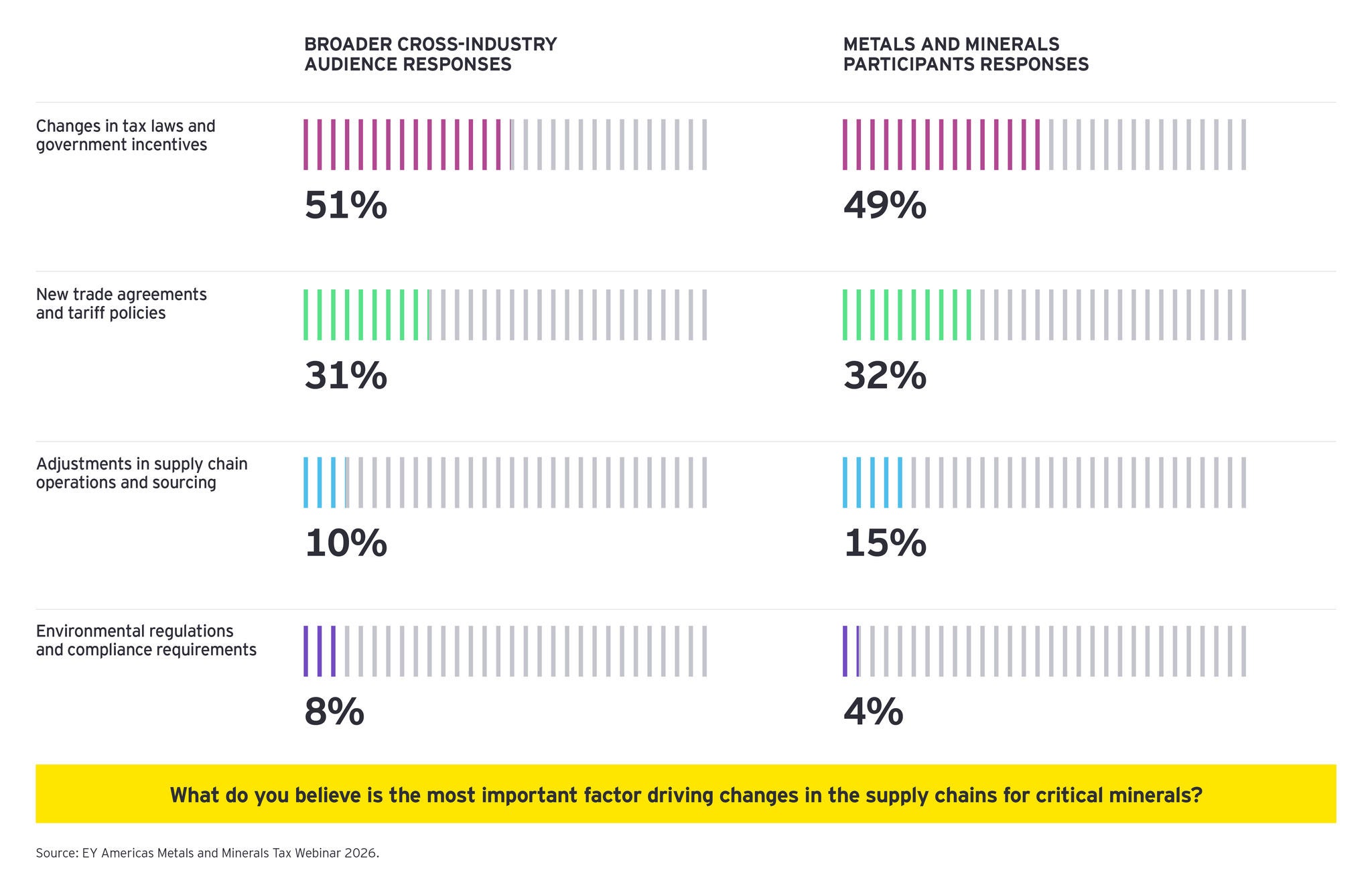
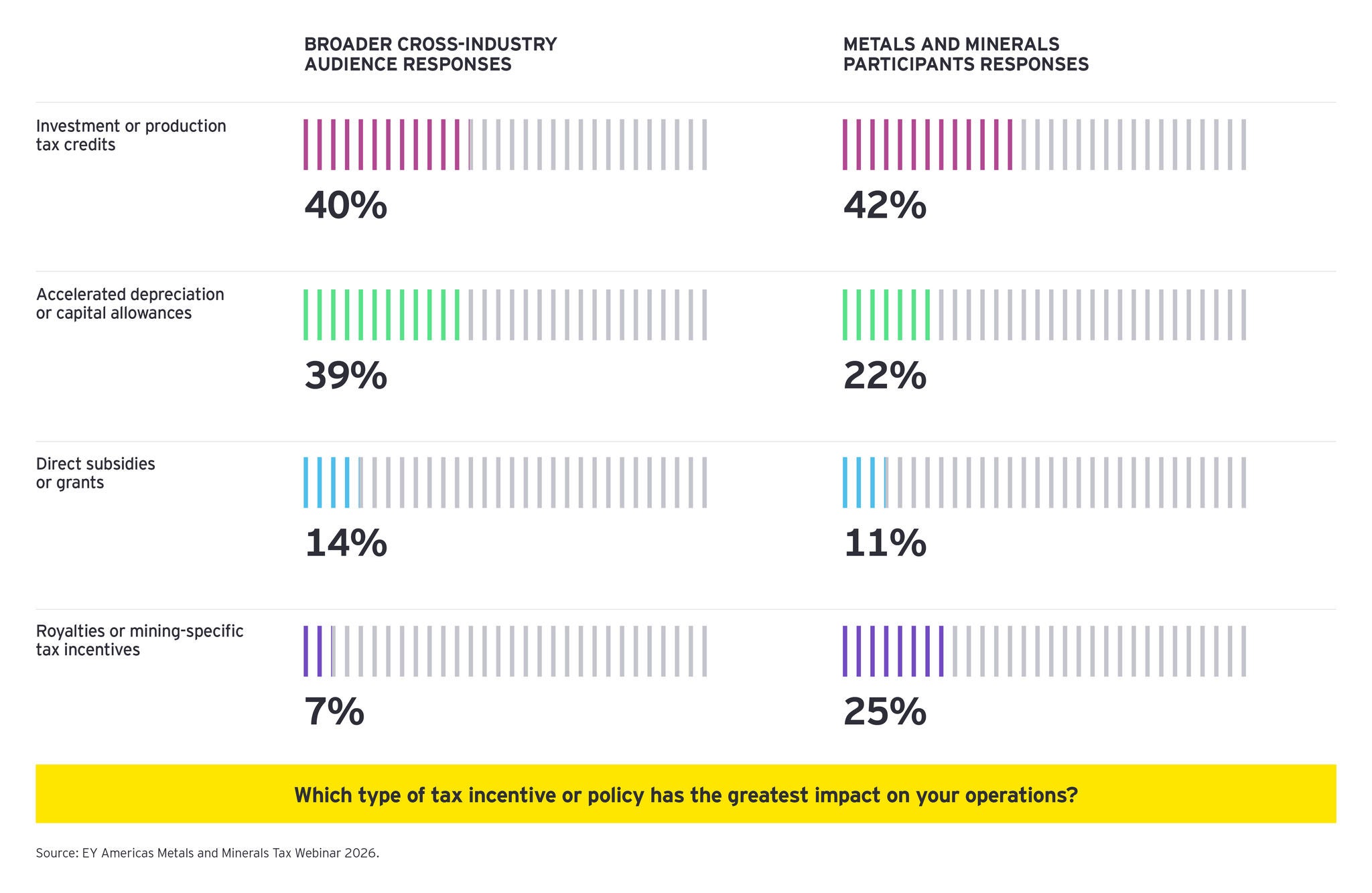
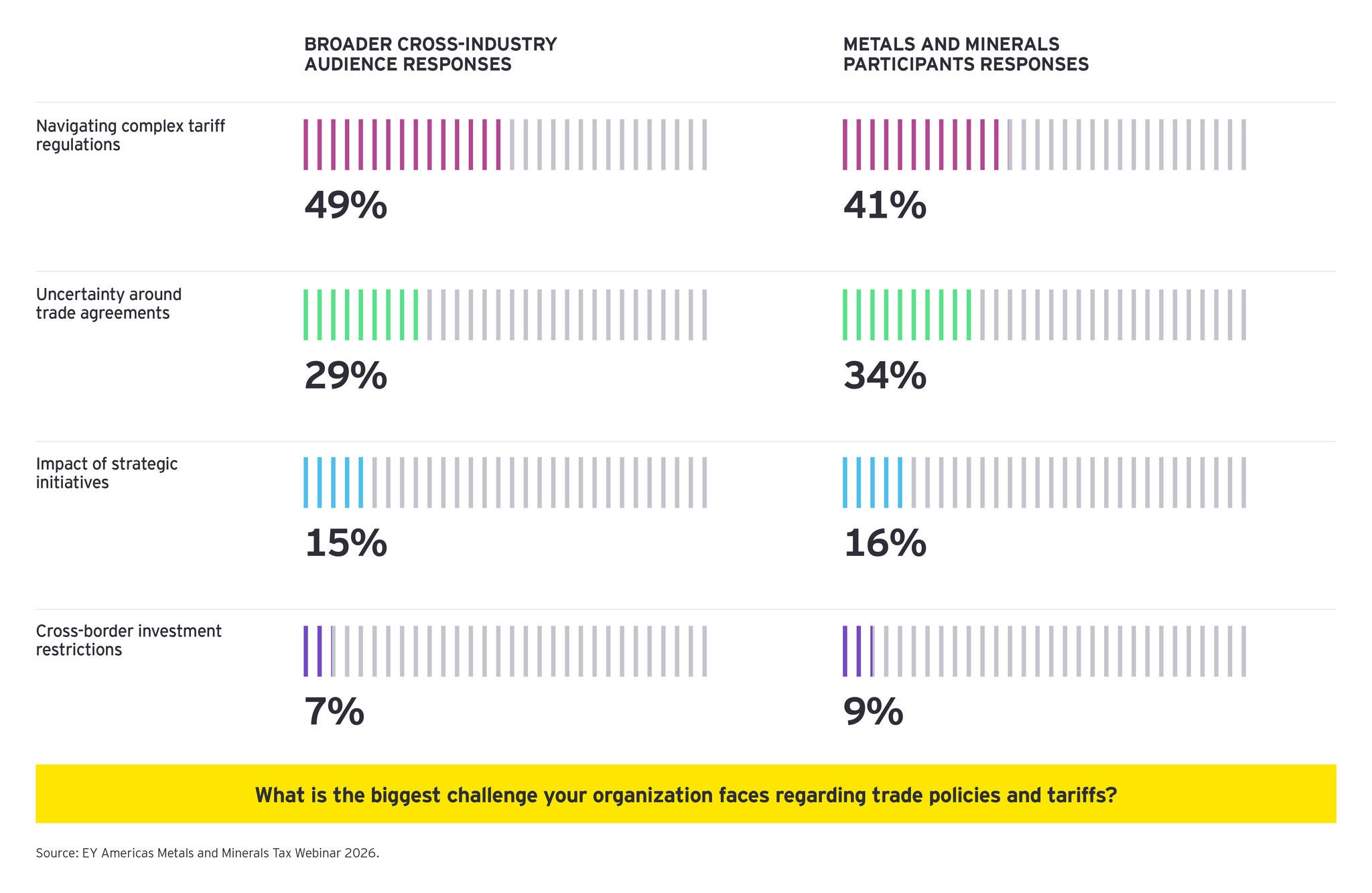
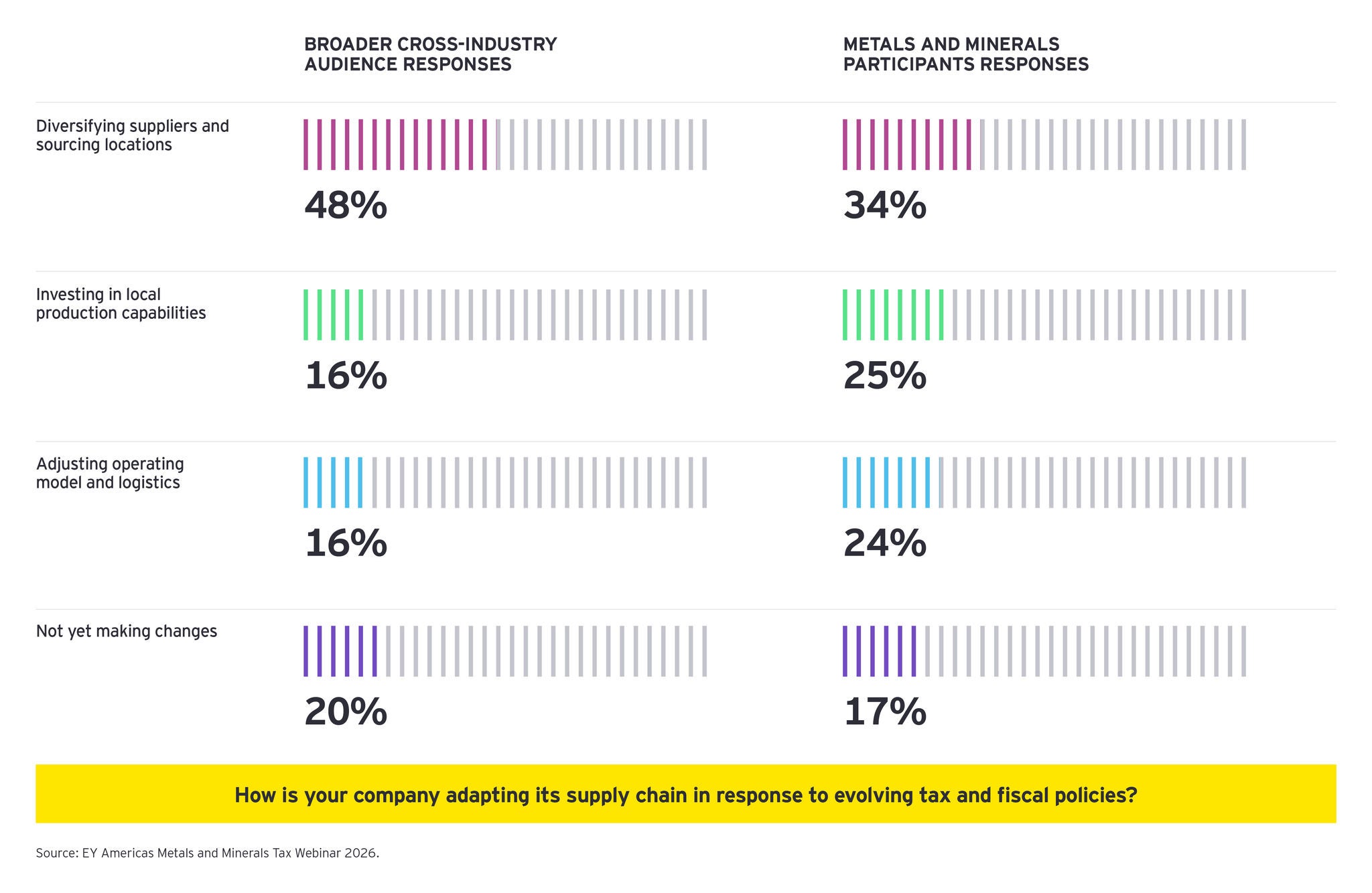
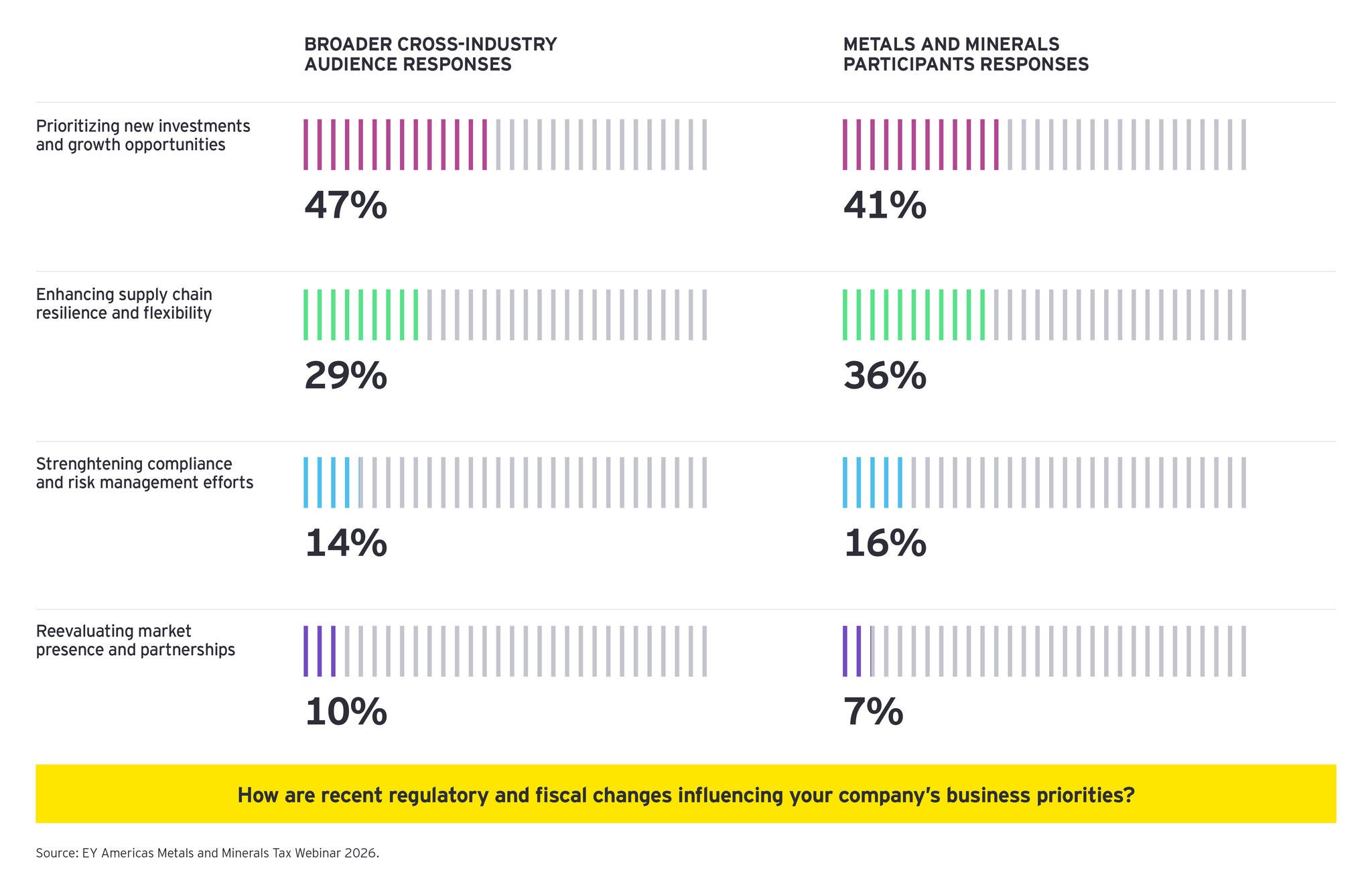
Audience responses reinforced the growing importance of these issues. When asked about the top challenge related to trade policies and tariffs, tariff complexity was cited by nearly half (49%) of the broader cross-sector audience and 41% of metals and minerals participants. This suggests respondents are grappling not only with trade-policy risk itself, but with the complexity and uncertainty around evolving agreements. Among metals and minerals participants, the need for greater policy visibility (34%) and more agile cross-border planning (10%) is clear.
Increasingly difficult challenges, as planning horizons for mining and processing investments often span decades while trade frameworks, tariffs and geopolitical situations can change drastically in mere months. In response, organizations are beginning to evaluate supply chains differently. Organizations now balance efficiency with resilience, flexibility, alignment with trusted markets and greater diversification, rather than optimizing for cost alone.
The rise of resilience
In keeping with that direction, the supply chain playbook is being rewritten.
For years, organizations optimized for scale and efficiency, concentrating activities for cost advantage. But many leaders are seeing that very concentration as a source of risk, with trade and tariff policies impacting the import and export of critical minerals.
Strategic planning is shifting from cost optimization toward supply chain resilience. In Canada, supply chain redesign has become a strategic imperative. Companies are reassessing historical North American trade flows and repositioning supply chains to align with shifting regimes. The interruption of traditional steel and aluminum trade patterns is accelerating efforts to identify alternative markets and optimize the value chain around competitive advantages, including Canada's low-carbon energy resources.
Discussion in the webinar emphasized the importance of influencing policy and lawmakers as regulations are defined, with alliance “friend-shoring,” diversification and geographic flexibility highlighted as important themes affecting operating model decisions. Rather than relying on a single processing hub or downstream market, evaluating multiple pathways and exploring regional cooperation agreements can reduce vulnerability to policy shifts, trade disruptions and geopolitical tensions.
Value chains: ratcheting up
Beyond diversifying, companies are advancing into adjacent areas of their value chain, participating in processing, refining, recycling and downstream activities to build more resilient value chains.
Processing capabilities have become strategic assets, with governments increasingly structuring incentives around their activities. But as complexity increases, so do other aspects of the business, from tax compliance and ownership structures to regulatory requirements and supply chain coordination. Changes in sourcing, processing and operating models, for example, affect where value is created and how profits are allocated across jurisdictions. As a result, transfer pricing becomes a strategic lever rather than a compliance requirement.
Decisions made in one area of a business increasingly affect outcomes in the others. With this in mind, tax, trade and supply chain strategy can no longer operate independently. Leading organizations will be those best able to vertically integrate these decisions into a cohesive strategy that recognizes interdependencies. That’s a significant shift in thinking, which polling suggests is already underway.
From forecasting to scenario planning
Traditional planning models assumed a relatively stable environment in which companies could forecast future conditions and optimize decisions accordingly.
Today’s trade frameworks continue to evolve. Tax incentives are periodically revised. Regulatory standards vary by jurisdiction. New geopolitical developments can quickly alter investment assumptions.
Under these conditions, planning against a single forecast becomes increasingly problematic, leading companies to develop decision frameworks around multiple potential futures instead. Rather than predicting one outcome, they evaluate strategies across a range of policy, regulatory and market scenarios.