



Rear view of female architect in protective workwear photographing quarry through digital tablet

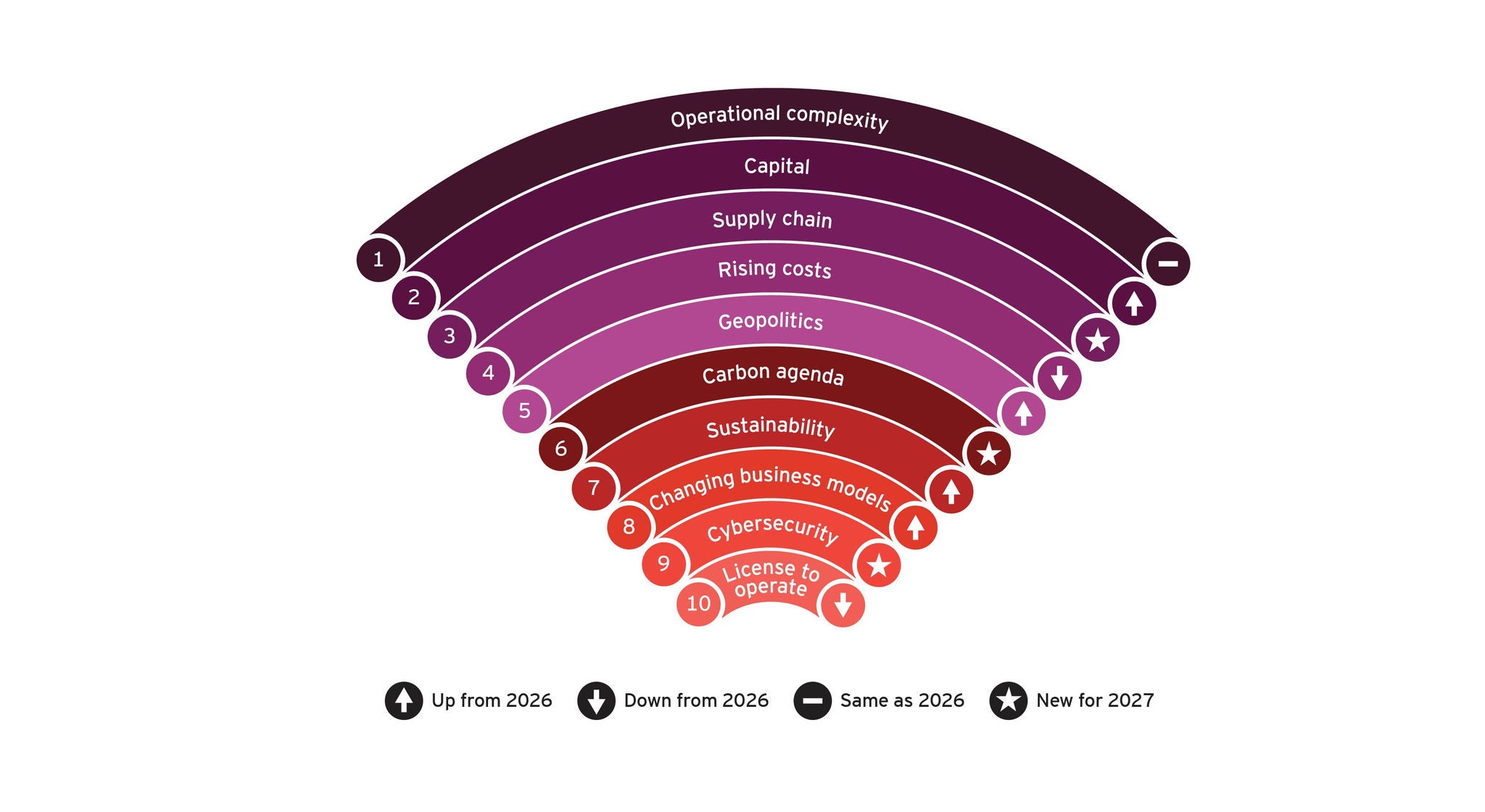
Top 10 business risks and opportunities for mining and metals in 2027

Related topics

As commodity outlooks diverge and operations become more complex, miners that adapt with confidence can capture growth.


In brief:

  • Uncertainty is here to stay, demanding miners rethink strategies, partnerships and portfolios.
  • Operational complexity, capital and supply chain top the risk ranking as companies prioritize continuity and flexibility.
  • AI remains critical to productivity even as innovation falls out of the top 10.

Mining has always been cyclical. But in 2027 a broader range of forces is shaping that cycle at speed, making it more difficult for companies to know how to respond. Geopolitical volatility, rising costs and supply chain pressure are colliding with the realities of maturing assets, changing government policies and the ongoing tension between sustainability commitments and productivity imperatives.

At the same time, miners must prepare for growth. Demand is rising, largely driven by electrification and AI, offering opportunities to capture value, sometimes in entirely new ways across the value chain.

The challenge is to plan for uncertainty rather than assume it will pass. That means building the operational capabilities, financial flexibility and strategic options to manage near-term disruption while laying the foundations to achieve long-term ambitions.

Top 10 business risks and opportunities for mining and metals in 2027

Top 10 risks and opportunities for mining and metals graphic
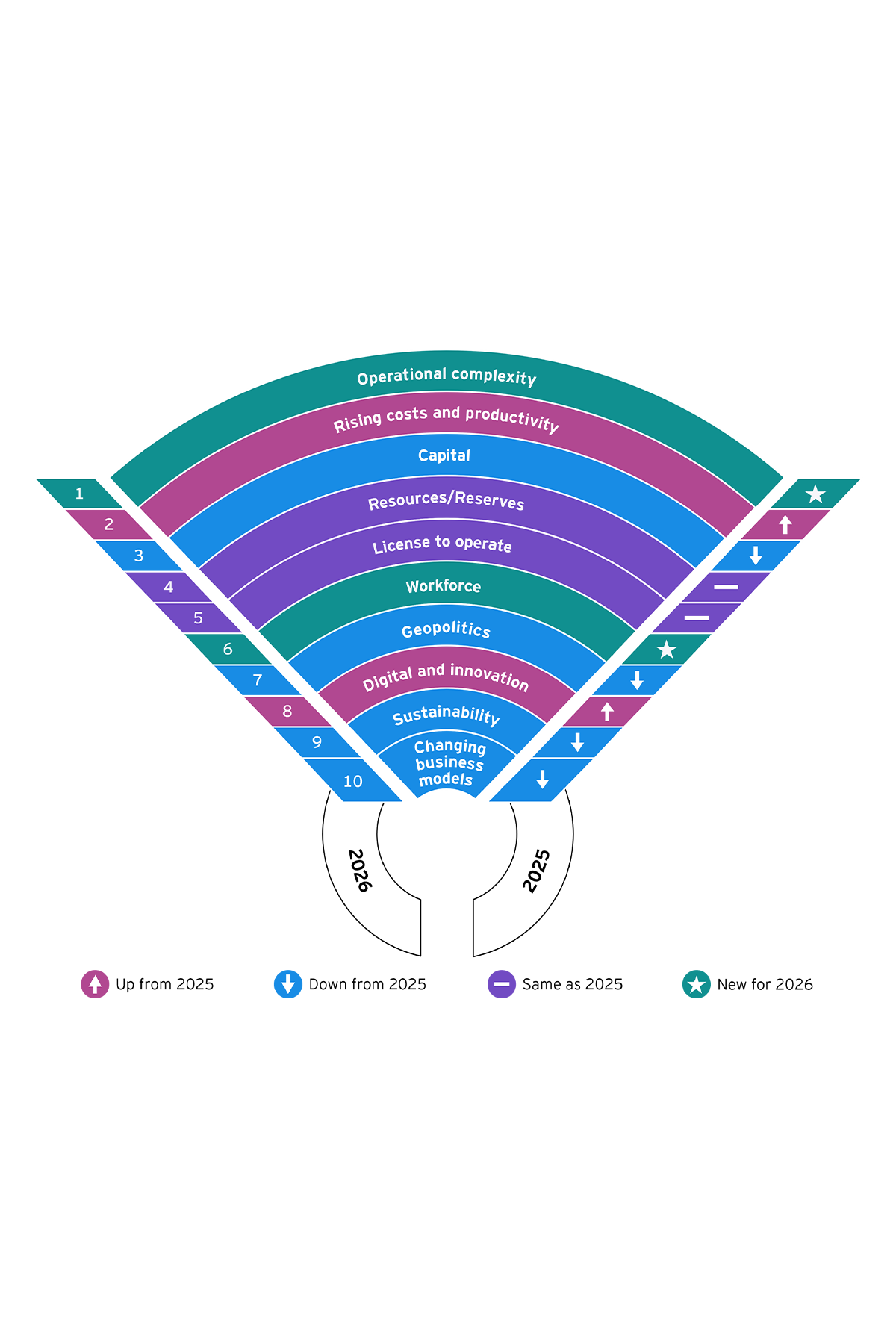
Top 10 risks and opportunities for mining and metals companies in 2025

1. Operational complexity  

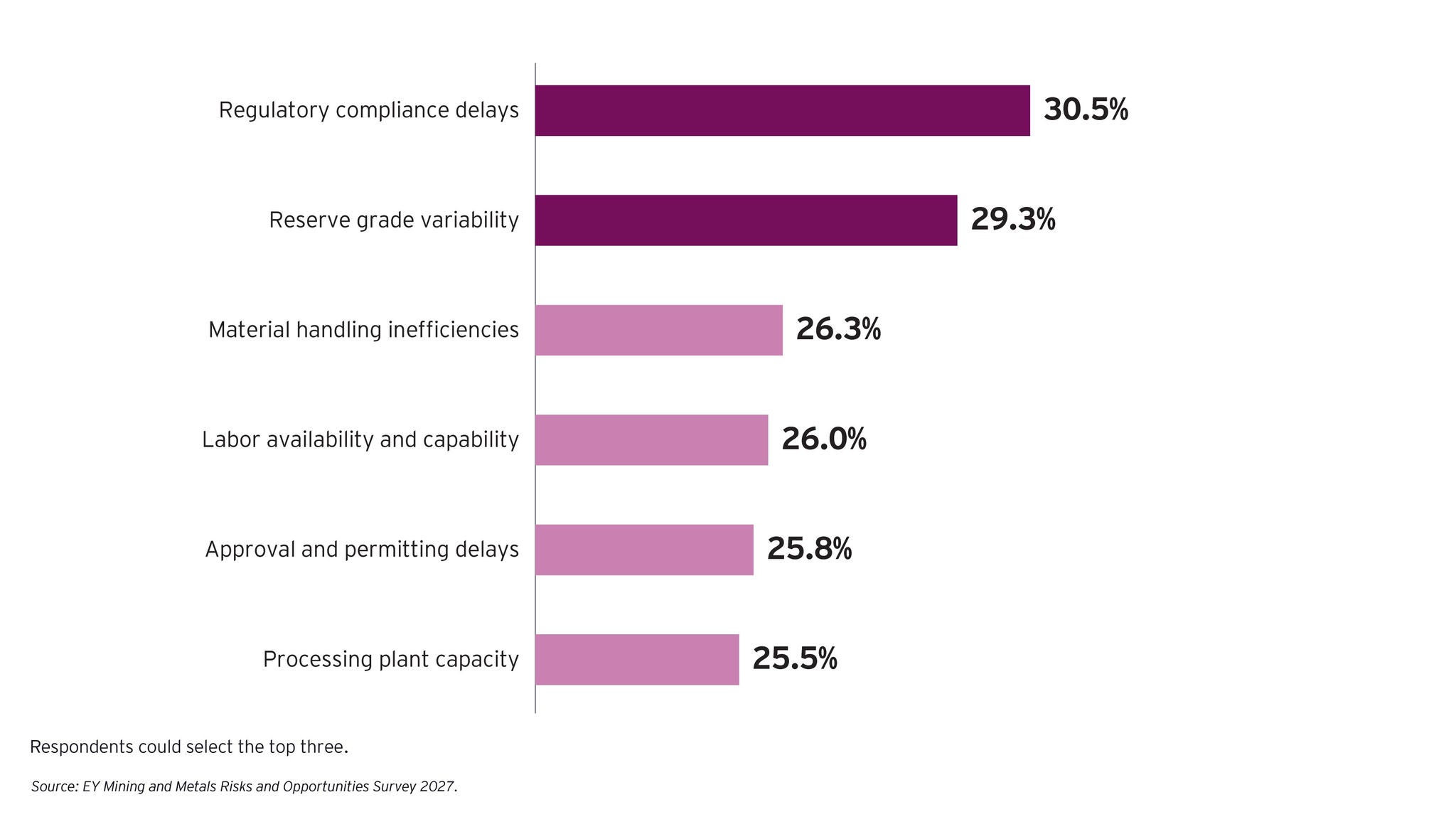
Older mines are tougher and more expensive to mine. Grade variability was ranked by 29% of respondents as the most significant operational complexity issue, with material handling, labor availability, processing capacity, logistics and equipment reliability also ranking highly.

Depletion can reduce operators’ choices. Fewer accessible or economically attractive mine faces often mean less flexibility around feed blends and operating routes, making it harder to manage inevitable disruption. Decisions that protect near-term performance, such as prioritizing higher-margin ore or changing cut-off grades, can have implications for future operations.  

Which operational bottlenecks most significantly impact your production throughput?

Top three expected government actions in mining and metals

Committing capital before production performance deteriorates is critical to avoid disrupting output. Miners need to consider both the value of protecting future operating choices, as well as project returns, as part of capital discipline.

Key question: How can we maintain operational flexibility as mines mature?

2. Capital

Capital is available, but investors are becoming more selective and opting for strategically important commodities and regions offering greater policy certainty, strategic support and market access. Miners themselves are also scrutinizing their portfolio strategy, deciding whether to invest, divest, partner or retain exposure through alternative structures.

The question is no longer simply whether funding is available, but which source is best matched to the project’s risks and strategic requirements. Financing from original equipment manufacturers (OEMs) and customers can link funding to equipment, supply or offtake; sovereign and government-backed capital may support strategically important projects; while joint ventures, royalties and streaming can share risk or reduce balance-sheet demands.

These options broaden access to capital but also introduce trade-offs across cost, ownership, control and future options. Financial flexibility will increasingly depend on selecting partners deliberately, maintaining more than one financing route and understanding what is exchanged for capital.

Key question: How can we secure the capital we need for growth while preserving our future options?

3. Supply chain

Continuity is everything in a world of conflict, tariffs and concentrated production and processing. Supply chain challenges put pressure on miners at both ends — disrupting both the flow of critical inputs into mines and the conversion of production into revenue.

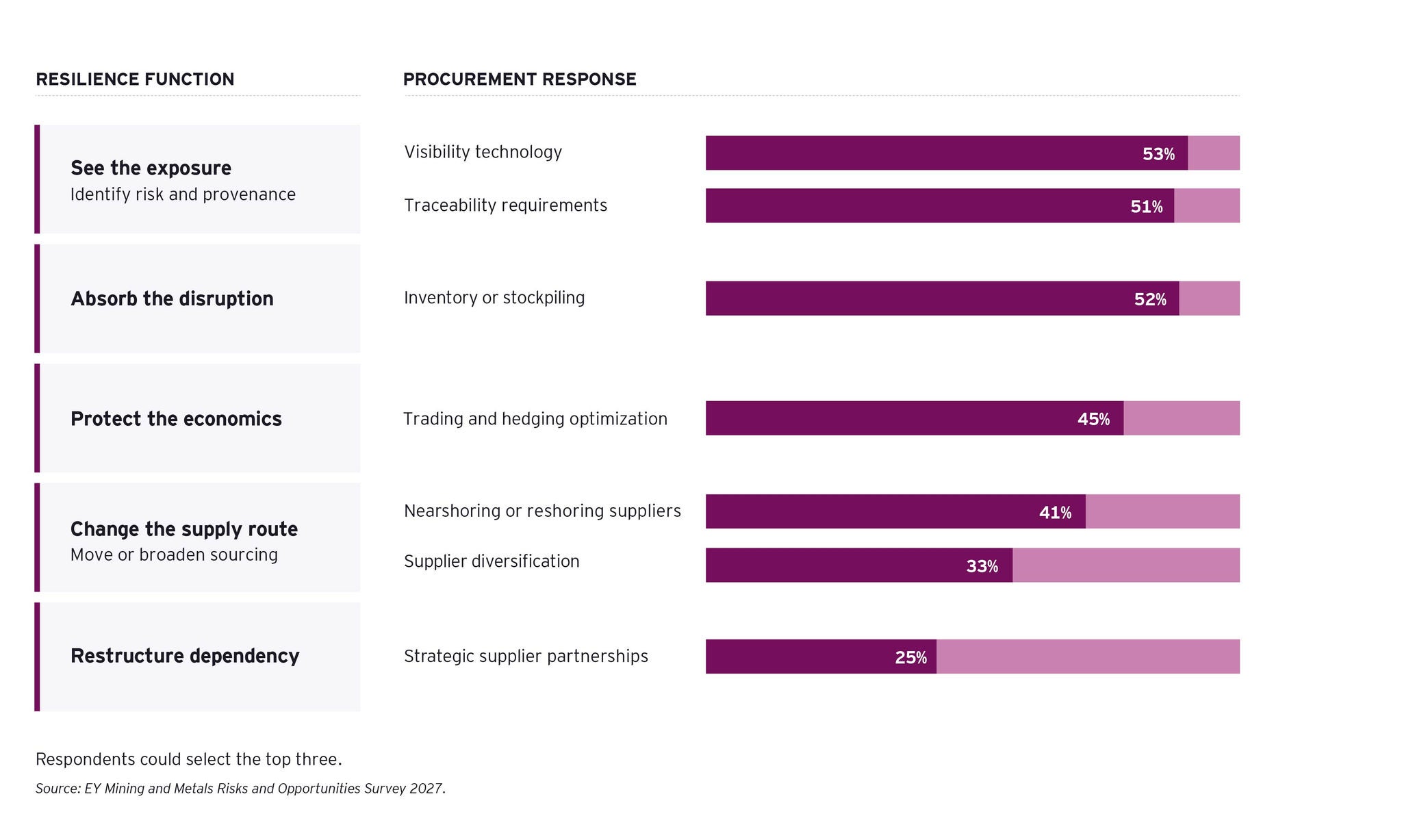
But miners are adapting fast. More than half (53%) of respondents have adopted technology that enhances supply chain visibility and 52% have increased inventories or stockpiles. However, only about one-third have moved to diversify their supplier base and just a quarter are pursuing strategic partnerships.

Miners are adopting multiple strategies to mitigate supply chain disruption

Strategies to mitigate supply chain disruptions graphic

Tactics designed to boost operational resilience must be considered alongside responsible sourcing. Mapping critical dependencies and qualifying alternative suppliers before disruption occurs helps miners strengthen supply chains without exposing companies to potential compliance, provenance or geopolitical risks.

Key question: How can we build supply chain resilience without introducing new risks?

4. Rising costs

Rising costs are driven by operational complexity as well as more costly operating inputs such as energy and logistics and critical consumables like sulfuric acid and explosives. As Paul Mitchell, EY Global Mining & Metals leader, says: “AI agents working in isolation can increase costs, silos and complexity.” 

While innovation has fallen off this year’s radar, miners are continuing to invest in artificial intelligence (AI) to boost efficiency and productivity. But without careful integration and orchestration, the technology can increase costs, silos and complexity.

AI agents working in isolation can increase costs, silos and complexity.

Key question: How can we tackle structural cost pressures while maintaining production and investing for growth?

5. Geopolitics

Governments are moving beyond traditional resource nationalism to directly invest in and finance assets. Public financing commitments in critical minerals more than quadrupled between 2023 and 2025 to about US$65b.

Government intervention extends into processing and refining, with some exchanging downstream investment for longer-term license certainty to create local value.

Key question: How can we capture value from the changing nature of government intervention while preserving strategic flexibility?

6. Carbon

Almost one-quarter of miners (21%) say that delivering decarbonization targets while maintaining productivity and cost competitiveness is the toughest trade-off they face.

Miners aren’t retreating from carbon ambitions, but many are recalculating what can be achieved and at what cost. Flexible approaches to achieving net zero are emerging, tailored around portfolios, markets and goals. For example, some companies are repositioning portfolios around energy transition minerals while others are using lower-carbon processing to develop differentiated “green” products.

Key question: How can we progress decarbonization in a way that creates commercial and operational value?

7. Sustainability

Almost all mining executives acknowledge the link between sustainability performance and value creation, but decisions at asset level don’t always reflect commitments. Water security and stewardship is a priority for 24% of respondents, yet only 54% are confident of meeting water-related commitments.


As demand pushes miners into jurisdictions with weaker governance, higher political risk and more exposure to fraud and corruption, boards need confidence that growth opportunities are supported by clear guardrails around governance, transparency and traceability.


Key question: How can we translate sustainability commitments into outcomes that support responsible growth?


8. Changing business models

Business models are becoming a focus of innovation for 23% of respondents today, rising to 45% over the next two to five years, as miners explore different ways to grow value without owning more assets. Partnerships, contracts, district-level collaboration and alternative sources of capital are all being considered. 


Commercial models are changing too. Around 68% of respondents anticipate greater participation in global trading markets, as miners pursue value through access to higher-value markets, optimized sales and shipments, and blending, processing and refining.


Key question: How far should we extend our role across the value chain without necessarily owning more assets?


9. Cybersecurity

EY research finds that mining is one of the sectors most vulnerable to cyber threats, with only 18% of respondents reporting full visibility across industrial control systems. Exposure is concentrated in operational technologies, but is expanding as assets become more connected, third-party systems proliferate and AI adoption accelerates, often without oversight.

67%
67%
of mining and metals assets sit inside the “vulnerability” zone.

Cyber resilience is no longer an issue confined to the technology function. Boards should define their “minimum viable enterprise” — the critical systems, sites and processes that must remain operational during an incident — and set clear accountability for protecting it.

Key question: Do we know where our cyber vulnerabilities are, and which assets we cannot afford to lose? 

10. License to operate

A miner’s license to operate (LTO) is increasingly determined by how well it manages community and environmental impacts, with stakeholders scrutinizing what’s delivered rather than simply discussed. Community trust is a top sustainability issue for 28% of respondents. A further 26% expect governments to tighten stakeholder consultation requirements over the next 12 months.

Miners need to embed commitments into outcomes at the asset level, integrating LTO into project design and operating decisions from day one to protect continuity, approvals and growth options.

Key question: How can we build community trust into decisions across the mining lifecycle?

Summary

The 2027 Top 10 business risks and opportunities for mining and metals survey highlights a sector grappling with multiple short-term risks – including supply chain disruption, greater government intervention and a more complex operational environment – while preparing for future demand growth, increased stakeholder expectations and the growing impact of AI. The challenge for miners is to respond to today’s disruption without allowing short-term responses to weaken long-term capability. Competitive advantage will come from combining operating discipline, financial flexibility, supply chain visibility and cyber resilience with continued investment in people, productivity, digital and innovation.


Related content

Transparency, trust and the power of people: what sets leading COOs apart

Discover what defines exceptional COO leadership. Former Barrick Gold COO Richard Williams shares insights on transparency, trust and the power of people.

Managing fraud risk and maintaining integrity during growth

Combating fraud risk in the metals and minerals sector with ethics, forensics and technology to protect growth, trust and long-term success. Learn more.

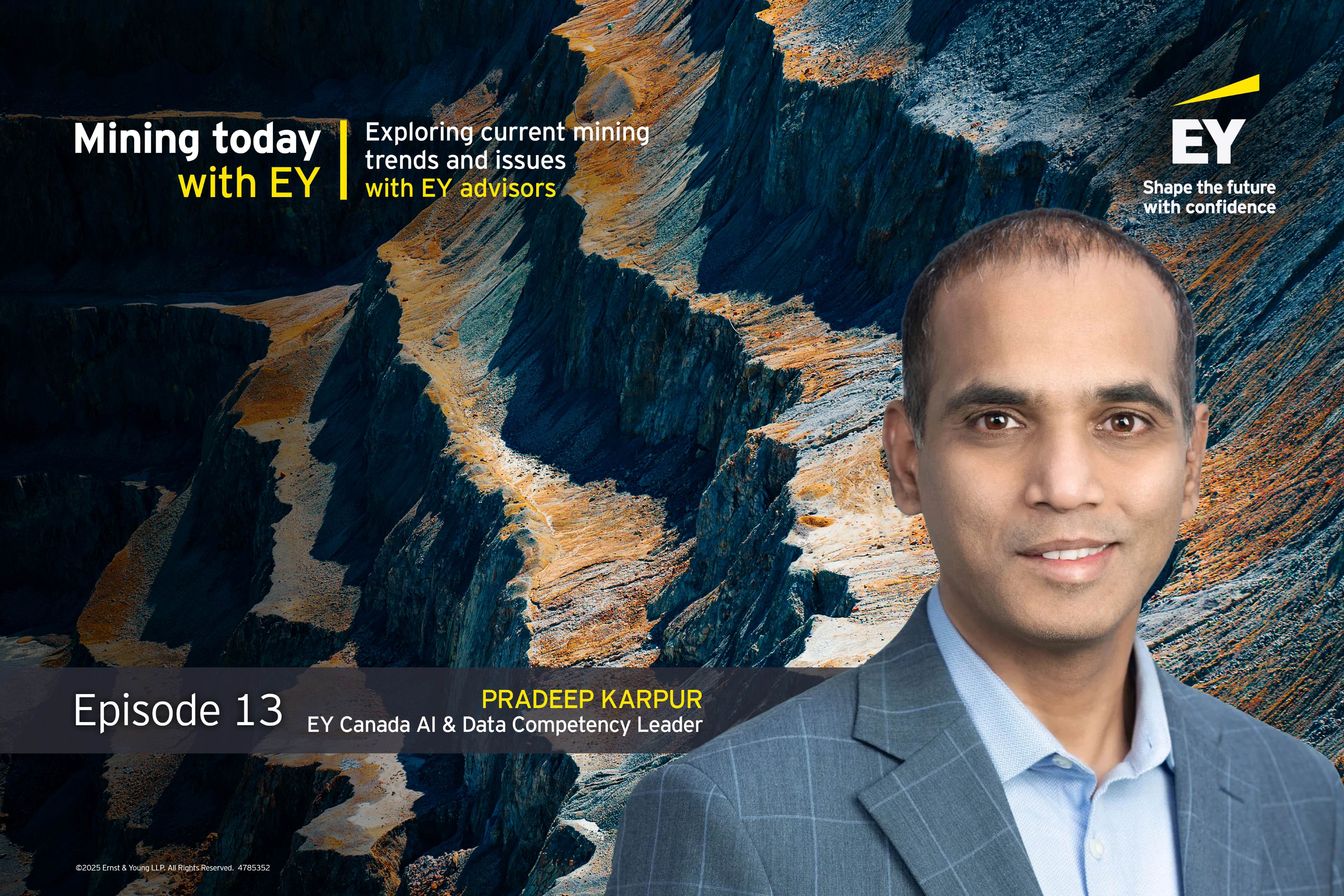
Mining today with EY – EP 13: Navigating responsible AI in metals and minerals

Insights from our sector advisors on current trends in responsible AI in metals and minerals. Learn more.

About this article