



EY refers to the global organization, and may refer to one or more, of the member firms of Ernst & Young Global Limited, each of which is a separate legal entity. Ernst & Young Global Limited, a UK company limited by guarantee, does not provide services to clients.
It’s 2032. Jody is moving house — but energy isn’t on her list of things to worry about. Her personal artificial intelligence (AI) agent has already compared energy plans, balancing cost with her personal preferences and lifestyle, and engaging with other agents to set everything up before she arrives. When a storm hits days later, the lights stay on. Jody’s battery is already charged. Her electric vehicle (EV) is ready. At the end of the month, her bill is just as expected and split into manageable instalments.
For Jody, energy isn’t a source of stress, trade-offs or second-guessing. It just works, giving her the confidence to get on with life without worries or uncertainty holding her back.
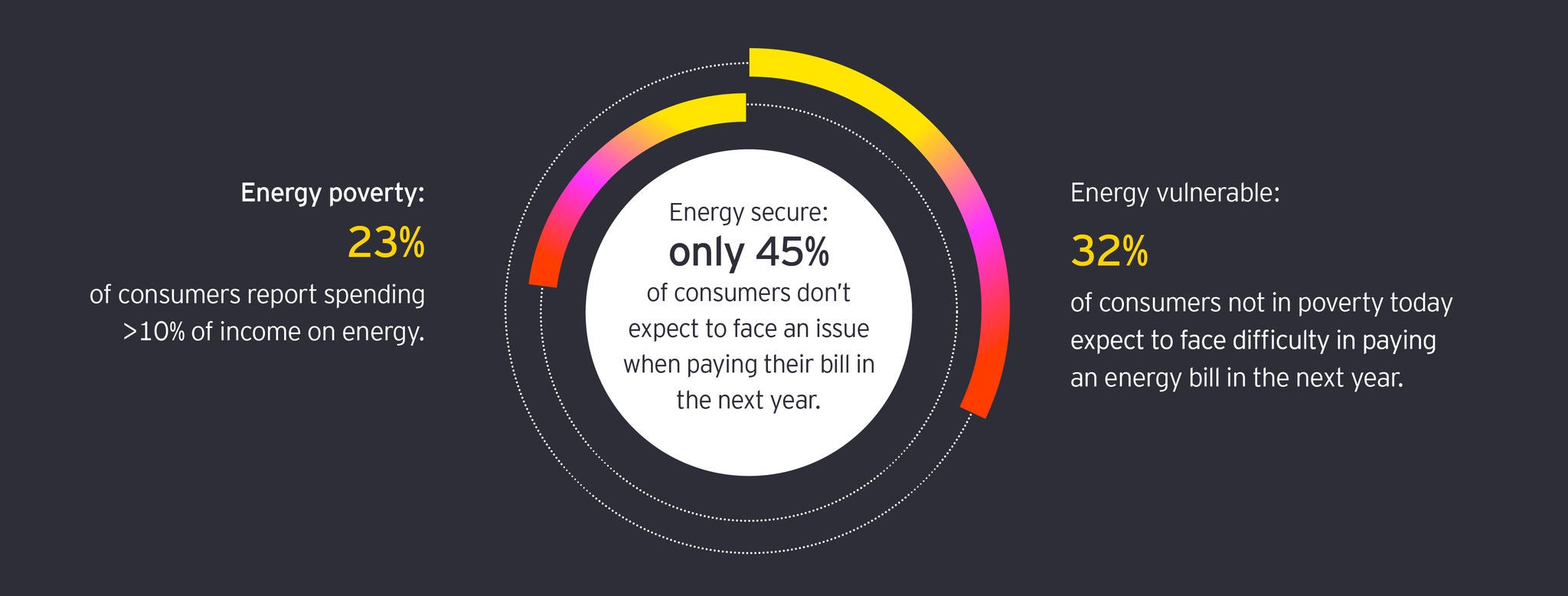
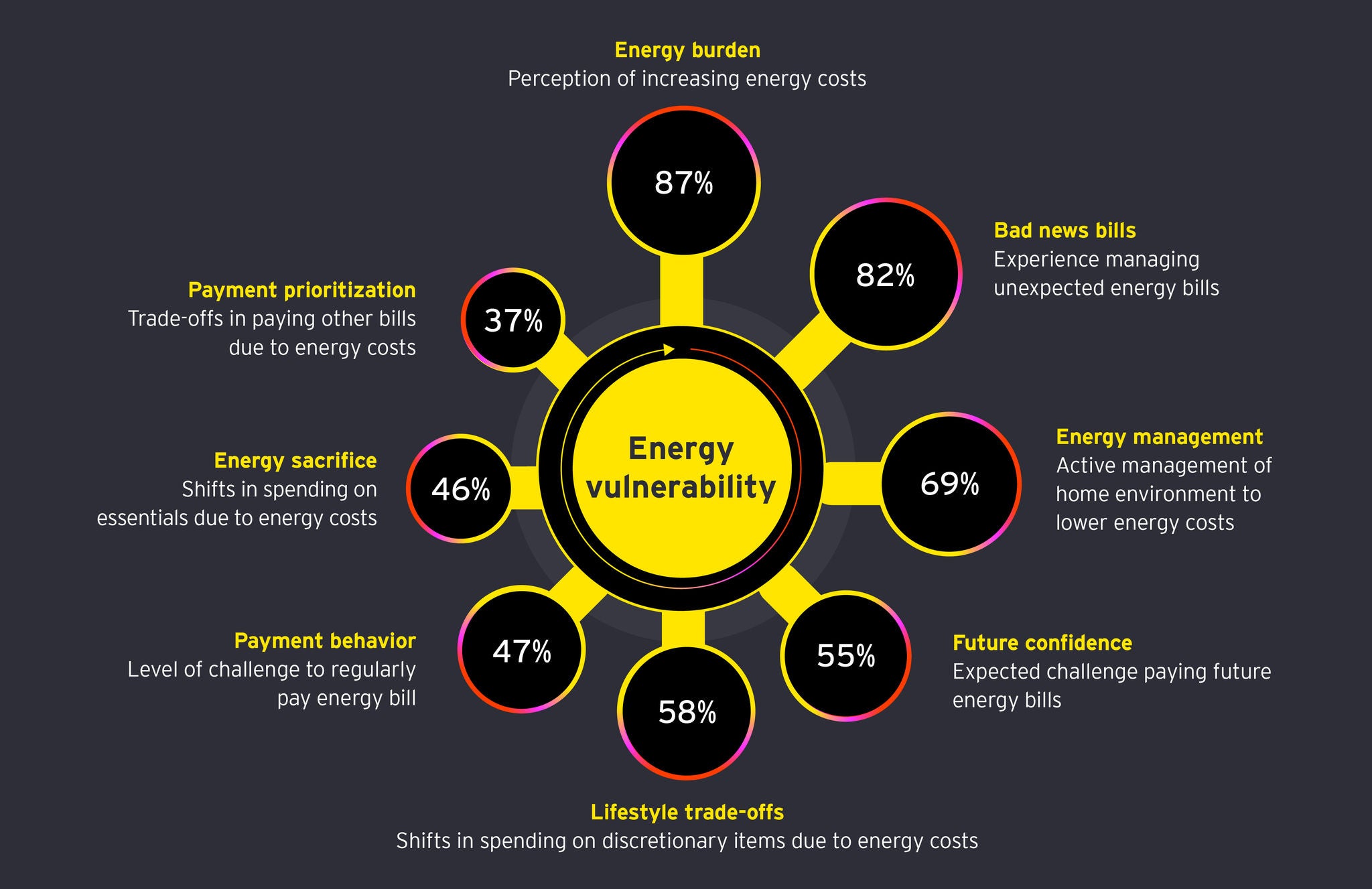
In 2026, this future remains out of reach for most energy customers. The latest EY energy consumer research finds consumers are increasingly stretched and disillusioned by the energy experience. Affordability is the biggest concern, but the impacts of a changing, more complex energy system extend far beyond household budgets.
We’re entering the era of energy wellbeing, where energy shapes how we think, feel, believe and act. Enabling energy wellbeing is now urgent if providers are to engage and empower consumers in the energy solutions that will drive revenue growth and build a more resilient, sustainable system.