






How can AI amplify energy wellbeing in an era of competing priorities

How can AI amplify energy wellbeing in an era of competing priorities?

Rising energy costs impact every aspect of consumers’ lives. How can providers meet expectations for an easier, more affordable experience?


In brief:

  • High costs, complexity and uncertainty are impacting consumers’ energy wellbeing — affecting their day-to-day lives and forcing trade-offs at home. 
  • For the first time in our six-year program, more than half of consumers (55%) experience, or expect to experience, difficulty in paying their energy bill.
  • Three priority areas can help providers make the biggest impact on improving energy wellbeing and restore consumer confidence in their energy future. 

It’s 2032. Jody is moving house — but energy isn’t on her list of things to worry about. Her personal artificial intelligence (AI) agent has already compared energy plans, balancing cost with her personal preferences and lifestyle, and engaging with other agents to set everything up before she arrives. When a storm hits days later, the lights stay on. Jody’s battery is already charged. Her electric vehicle (EV) is ready. At the end of the month, her bill is just as expected and split into manageable instalments.


For Jody, energy isn’t a source of stress, trade-offs or second-guessing. It just works, giving her the confidence to get on with life without worries or uncertainty holding her back. 


In 2026, this future remains out of reach for most energy customers. The latest EY energy consumer research finds consumers are increasingly stretched and disillusioned by the energy experience. Affordability is the biggest concern, but the impacts of a changing, more complex energy system extend far beyond household budgets. 


We’re entering the era of energy wellbeing, where energy shapes how we think, feel, believe and act. Enabling energy wellbeing is now urgent if providers are to engage and empower consumers in the energy solutions that will drive revenue growth and build a more resilient, sustainable system.

What is energy wellbeing?

Energy wellbeing is about more than satisfaction. It is the integrated experience of how energy makes people think, feel, believe and act — and ultimately enables personal prosperity, sustainability and happiness.


Download the 2026 EY Energy Consumer Insights report


The era of energy wellbeing
1

Chapter 1

A changing energy system is leaving people behind

Stretched consumers blame providers for high bills and poor value.

The energy system is transforming fast, but the energy experience is not. As demand growth and innovation create more complexities, customers are struggling to see the benefits. Among the consumers we surveyed across 20 global markets: 

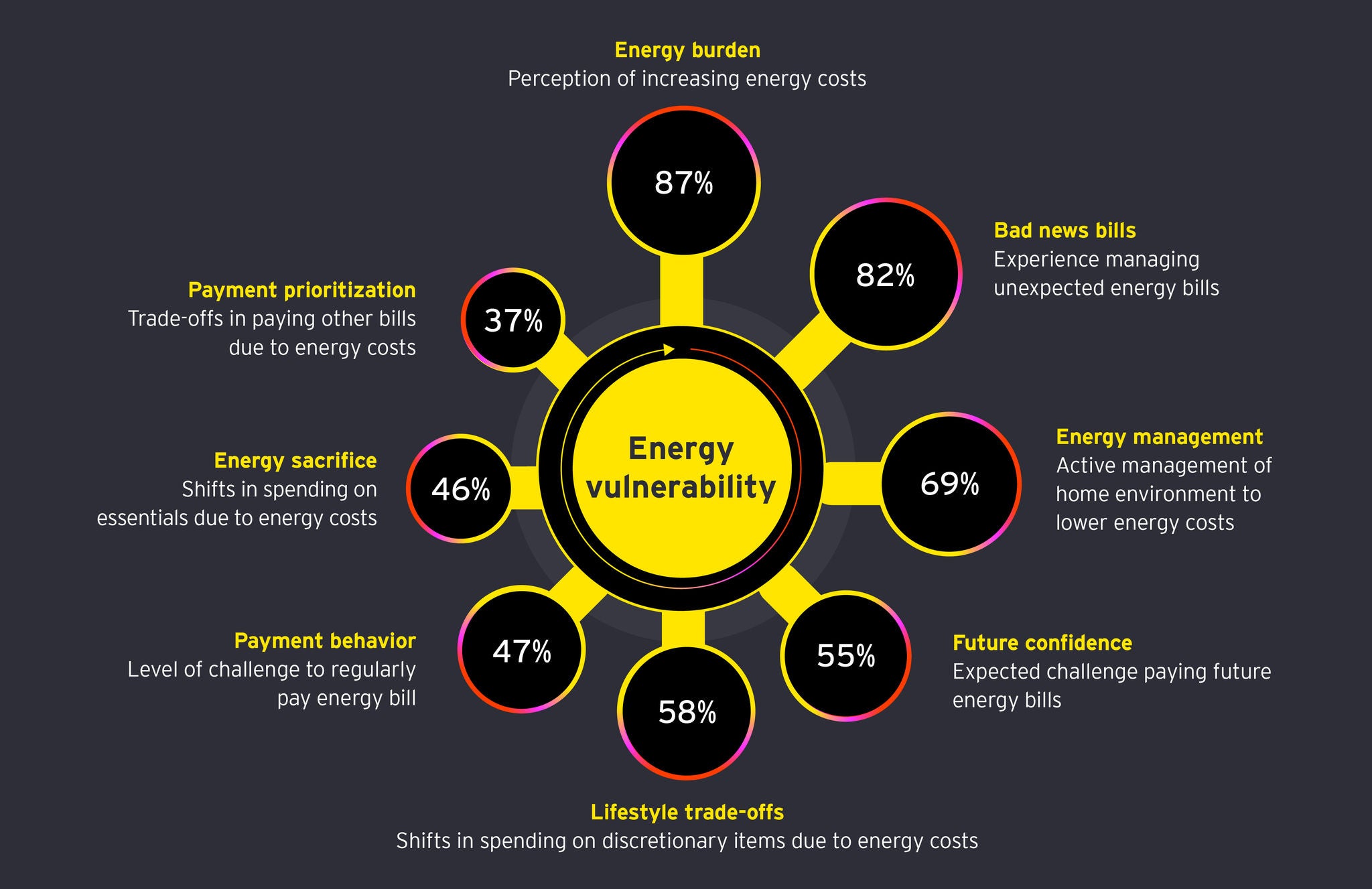
  • 87% are spending more on energy. 
  • 58% have changed discretionary spending behavior to pay energy bills. 
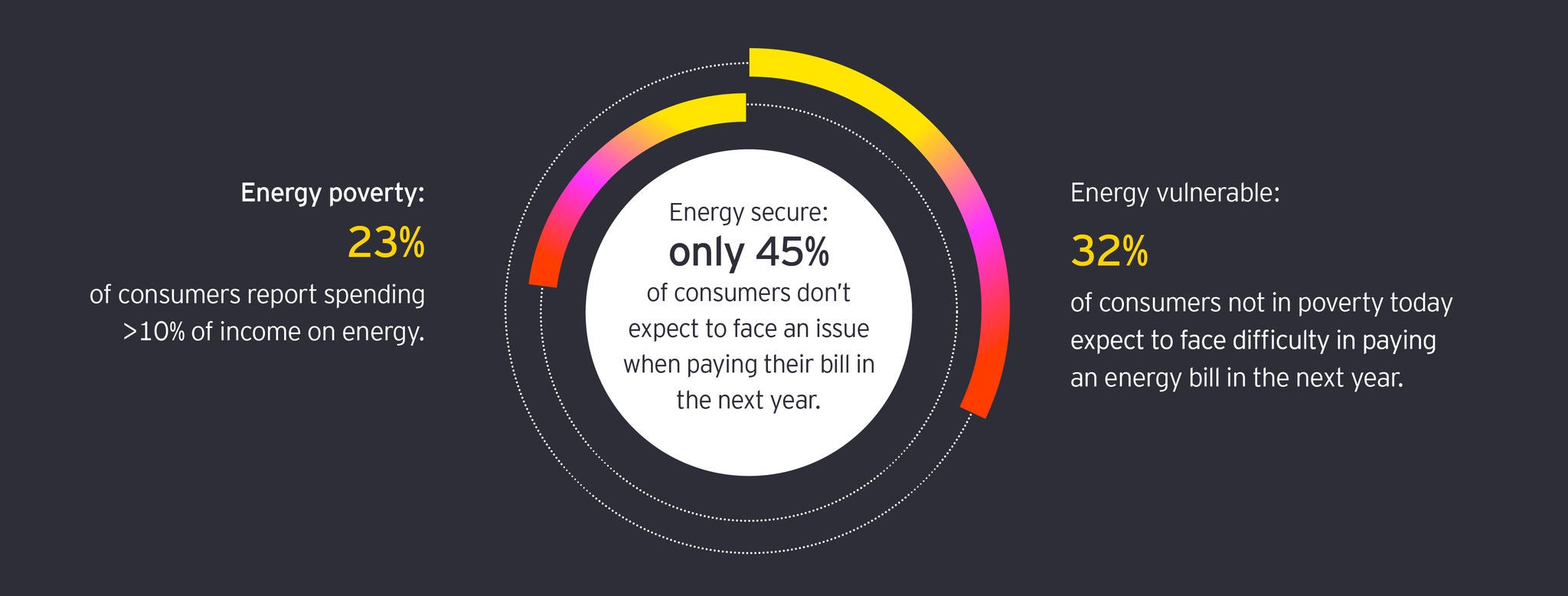
  • 23% are in energy poverty (spending more than 10% of their income on energy). 
  • Only 27% of consumers say the changing energy system is improving their wellbeing.

Consumers understand broader inflationary and cost-of-living pressures. But they still hold providers accountable, citing profits and data center demand as key reasons for rising bills. They expect providers to take the lead on helping them manage costs, but most feel they are falling short. Only 23% feel their provider creates value for them and their communities. Meanwhile, a sense of powerlessness is growing, with 79% of consumers saying they have done all they can to reduce energy costs.

Energy providers aren’t meeting expectations
23%
23%
of consumers feel their provider creates value for themselves and their communities.

This is more than a customer experience issue. Frustrated, dissatisfied consumers are less likely to adopt new products, participate in flexibility programs or trust their provider. We are at an inflection point — unless providers prioritize energy wellbeing now, consumer fatigue threatens to undermine satisfaction, growth and system resilience. 

A changing energy system is leaving people behind
2

Chapter 2

The era of energy wellbeing

Energy wellbeing impacts how people think, feel, believe and act — enabling personal prosperity, sustainability and happiness.

Part of the solution to restoring consumer confidence lies in system-wide change — from regulatory reform to new pricing models and improved operational performance. But providers will also need to directly address the impact of rising costs on consumers.

Our research shows that only 45% of consumers can be considered energy secure — more than half currently have an issue paying their bill or expect to within 12 months. Twenty-three percent are already in energy poverty.

EY 2026 Mobility Reimagined Survey

Current programs aimed at supporting customers in hardship tend to focus on income levels. But this may be a simplistic view — our research found that even high-income consumers are worried about being able to pay future energy bills.

What’s more important is the interaction of multiple factors that influence energy wellbeing, including predictability and lifestyle trade-offs. “Surprise” bills hit consumers particularly hard because they disrupt household budgets, eroding confidence.

EY 2026 Mobility Reimagined Survey

Context matters too. For example, vulnerability tends to grow with household size. And energy’s wallet share can be more important than the actual amount paid. Consumers in some regions with cheaper energy, such as the US, report higher vulnerability scores than those in countries with higher prices, such as Belgium and Germany. 

Explore Canadian data from the 2026 EY Energy Consumer Research report

Three ways to amplify energy wellbeing
3

Chapter 3

Three ways to amplify energy wellbeing

Prioritizing energy wellbeing requires a holistic approach to change that puts consumers first.

For many providers, the push to amplify energy wellbeing comes amid a time of competing priorities and sustained pressure to do more with less. Our research points to action across three priority areas that can make the biggest impact:

1. Agile operations

The ability to pivot at speed, innovate more quickly and navigate sudden shocks is critical to every business in a volatile world. And for energy providers, agility is crucial to meeting changing customer needs and delivering experiences that build trust and satisfaction. 

But for many providers, traditional operating models stand in the way. Siloed workflows and processes fall short when new energy solutions — including EVs, rooftop solar and energy management programs — span organizational lines. Some providers, such as Octopus Energy in the UK, are creating connectivity through customer-focused teams that combine both traditional “front” and “back” capabilities to independently resolve issues for their customer segment.  

It’s an example that highlights how a shifting energy experience impacts the workforce too. Creating agile, seamless customer journeys demands teams of problem solvers who use both data and empathy to improve customer interactions and operational performance. It means shifting from a transactional service mindset to a holistic value-oriented approach.

Actions for leaders:

  • Start it: Centralize accountability for end-to-end journeys. Empower ownership to improve customer and employee experiences as interactions and offerings become more complex.
  • Shape it: Take a horizontal view of experiences across the organization, breaking down operational silos that create unnecessary friction.
  • Scale it: Create a shared vision with employees around the future of talent development. Build career paths that support long-term skill evolution and rapid learning cycles with structured and self-directed opportunities.

2. Digital innovation 

For the first time in the six years of our study, most consumers prefer digital-first across all interactions with their energy provider, even during outages and emergencies. 

Amid a structural shift toward digital, most consumers remain frustrated by providers’ digital offerings, wanting simple, intuitive channels, tailored insights and proactive support — with the option to speak to a human. 

The biggest opportunity lies in transforming the primary customer-provider interaction — billing and payments. Customers tell us they would like near real-time usage and costs, control over devices and automated energy management. 

Leveraging rapid advancements in AI could help accelerate this innovation. Already, 61% of consumers use AI for energy-related tasks, and 34% plan to use it more. But providers designing the AI experience will need to ensure interactions are intuitive and human, not intrusive or complex. EY research suggests that emotional context matters: When consumers are anxious or seeking guidance, AI can enhance the experience. But when they are frustrated or angry, it risks eroding trust. 

Actions for leaders:

  • Start it: Revisit your digital and AI roadmap to focus on consumer and employee needs, including capabilities that empower consumers to manage their energy costs.
  • Shape it: Create a simplified, curated set of channels that deliver consistent omnichannel experiences designed for an AI-powered future. 
  • Scale it: Build seamless pathways that combine digital self-serve and direct personal support.

3. Energy empowerment 

Since 2023, consumer interest in new energy solutions, including heat pumps, energy management and insulation, has increased by up to 20%. However, the same barriers remain: cost, knowledge and effort. Paradoxically, energy providers’ efforts to overcome these through more options and innovative financing may have added to the confusion. Consumers say they don’t know what solutions suit their lifestyle or will save them money. 

Innovative approaches that directly respond to customer needs can cut complexity. US-based Symbium uses AI to help homeowners see potential home upgrades, scope projects, and instantly apply for and receive permits.2

Empowering consumers isn’t just about helping them reduce bills. Energy management is key to creating the flexibility that will strengthen the resilience of our system and curb network maintenance costs. According to the International Energy Agency, flexibility can improve system efficiency by up to 30% and reduce emissions. And even simple options such as dynamic rates can help consumers lower their costs by 5% to 15%.3

Eighty-three percent of consumers tell us they would sign up to at least one type of energy management program but want to stay in control. Only 19% of consumers are interested in direct demand response, citing concerns about savings and data privacy. Twenty-two percent would not enroll any home devices in automated energy management programs, even if they saved them money. 

Winning trust requires providers to create energy management options that give consumers more savings, choice and control, without asking them to sacrifice reliability, privacy or transparency. 

Actions for leaders: 

  • Start it: Reimagine the holistic energy solution adoption journey from a consumer perspective. Take ownership of simplifying and reducing effort, even in areas that may be out of providers’ control.
  • Shape it: Develop curated value propositions around flexibility tailored to appeal to unique groups of customers. Focus on what excites them and address key barriers.
  • Scale it: Create set-and-forget energy management experiences. Deliver peace of mind by design that builds in control, privacy and security.

The defining challenge for energy providers  

Energy wellbeing is becoming the defining challenge — and opportunity — for energy providers.  

As demand rises and expectations shift, providers that harness AI and digital innovation, as well as agile ways of operating, can empower consumers with the simple experiences that improve affordability and build confidence in a new energy future. 

Summary

New EY energy consumer research shows that affordability is pushing consumers to the limit, with impacts that go beyond higher bills. An energy experience that is more complex, sometimes unpredictable and offering less perceived value is shaking confidence in a changing energy system — just as consumer engagement is critical to enabling the flexibility that builds resilience. Providers that take a holistic approach to improving energy wellbeing can create a new energy experience that uses both AI capabilities and the human touch to deliver what matters to every consumer. 


About this article

Authors