Automotive
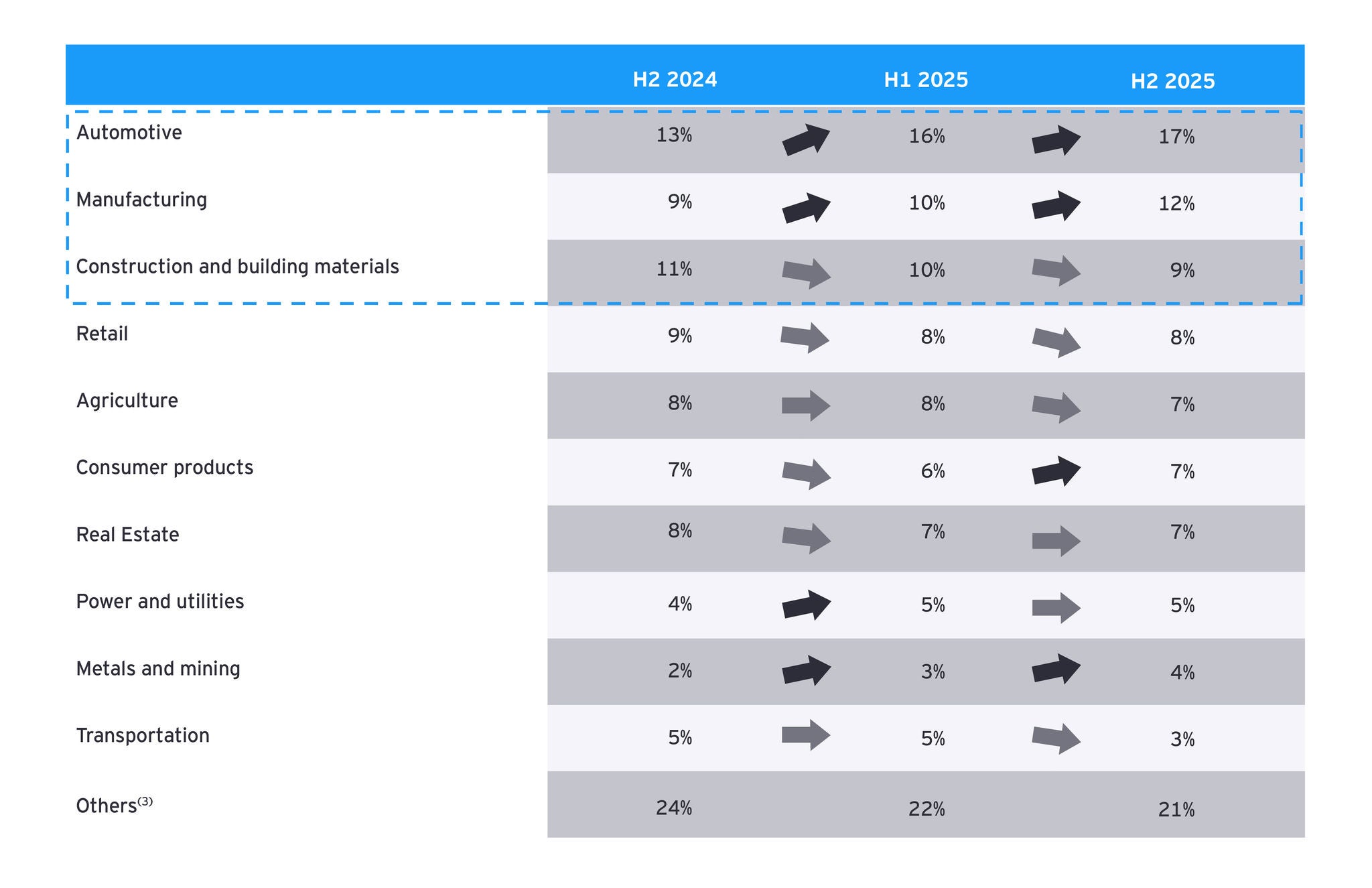
The automotive sector faces mounting pressure from shifting market dynamics, evolving customer expectations, structural cost challenges and intensifying competition from Asian and technology players. Stricter regulations and rising capital costs are adding to the strain, making business transformation critical, yet difficult, particularly for large organisations. Tier 2 and 3 suppliers are especially vulnerable, hit by fierce Chinese competition, US tariffs and a delayed transition to electric vehicles that has compressed margins.
Mixed growth - stagnating in North America and Europe but expanding in Asia – combined with high fixed costs and persistent overcapacity, has left many European automakers exposed. Eastern Europe offers cost advantages and continues to attract investment, although some manufacturers are shifting production to even lower-cost regions such as North Africa, reducing Eastern Europe’s advantage.
UK respondents rank automotive as the second highest for expected restructuring activity. Whilst recent flexibility in Zero Emission Vehicle (ZEV) legislation offers some relief, the industry still lags its mandate target. International competition has also intensified, whilst the impact of cyberattacks has triggered stress across the supply chain.
Manufacturing
Europe’s manufacturing sector is grappling with structural and cyclical challenges. Sluggish growth and weakening demand are eroding revenues, whilst high energy costs, particularly in Germany, Central and Eastern Europe, continue to squeeze margins. Rising financing costs add further pressure, making it harder to fund operations and invest in modernisation. Global competition is intensifying, with Asian manufacturers gaining market share through cost advantages and technological innovation.
These pressures are compounded by geopolitical uncertainty, including trade tensions and tariffs. Beyond macroeconomic headwinds, manufacturers face significant business transformation demands, including electrification, digitisation, and climate neutrality that require substantial investment and additional layers of cost and complexity.
Construction
The survey suggests that we’re seeing a stabilisation of pressures in construction, but with regional pockets of stress - especially in the UK this is identified by respondents as the sector with the highest corporate stress levels. Interest rates have fallen, but fiscal tightening and reduced public spending are constraining infrastructure investment, whilst financing costs continue to weigh on developers and contractors managing capital-intensive projects. Labour shortages and rising employment cost in skilled trades also remain acute. Slower economic growth and weakening demand in both residential and commercial segments compound these challenges, leaving many firms with overcapacity and limited flexibility.
In the UK, regulatory changes such as the Building Safety Act (BSA) have also added compliance complexity and cost, further squeezing margins in an already low-margin industry. These pressures have contributed to a wave of profit warnings, signalling significant strain across the sector.
Consumer sector under pressure
Beyond these three industrial sectors, consumer-facing industries also remain in focus particularly in Western Europe, where retail is expected to be the second biggest sector in workout bankers’ portfolios in H2 2025 with hospitality ranking third highest in the UK. Reluctance to spend on non-essential items is driven by uncertainty and inflation concerns, whilst rapidly changing consumer preferences add further complexity for companies in the consumer products and retail sector.