Close up of nautical compass on yacht

Canadian CEO Outlook Survey – Fall 2025

What’s driving Canadian CEOs this fall? Dive into fresh insights on growth, AI, innovation and risk in a shifting global economy.


In brief

  • Canadian CEOs are increasingly optimistic, with 98% confident in the economy and 92% in company performance, outpacing global sentiment.
  • Most CEOs are embedding localisation and regionalisation strategies to build resilience amid ongoing geopolitical and trade uncertainty.
  • M&A appetite has rebounded, with 76% planning deals focused on technology, IP, and capability-building for long-term transformation.

Building resilience: Canadian CEOs respond to global volatility with action

As we enter the final quarter of 2025, Canadian CEOs are showing renewed confidence in their ability to navigate a business landscape marked by geopolitical uncertainty and evolving strategic priorities.

The latest EY-Parthenon CEO Outlook Survey reveals a notable improvement in sentiment, with Canadian business leaders expressing strong levels of confidence in the economy’s capacity to withstand global volatility and adapt to evolving market conditions. This renewed confidence is closely tied to Canadian businesses taking action to recalibrate their priorities to reinforce resilience in response to shifting market realities.

Three defining themes emerge from the latest survey of Canadian business leaders: a sharp rebound in CEO confidence across macroeconomic and company-level indicators; a strategic pivot toward localization and regionalization as long-term responses to global volatility; and a resurgence in short-term M&A intentions.

The emergence of these themes highlights a fundamental shift in how Canadian CEOs are responding to geopolitical volatility. Rather than delaying action in the face of external pressures, leaders are now proactively implementing actions that improve resilience and position their organizations for sustained growth in a more complex global environment.

1. Renewed confidence in the Canadian economy’s ability to adapt

According to the Bank of Canada’s Business Outlook Survey indicator, which gauges sentiment across a range of business metrics (e.g. future sales, investment levels, labour market conditions, inflation expectations), overall business sentiment in Canada remained subdued in Q2 of 2025.

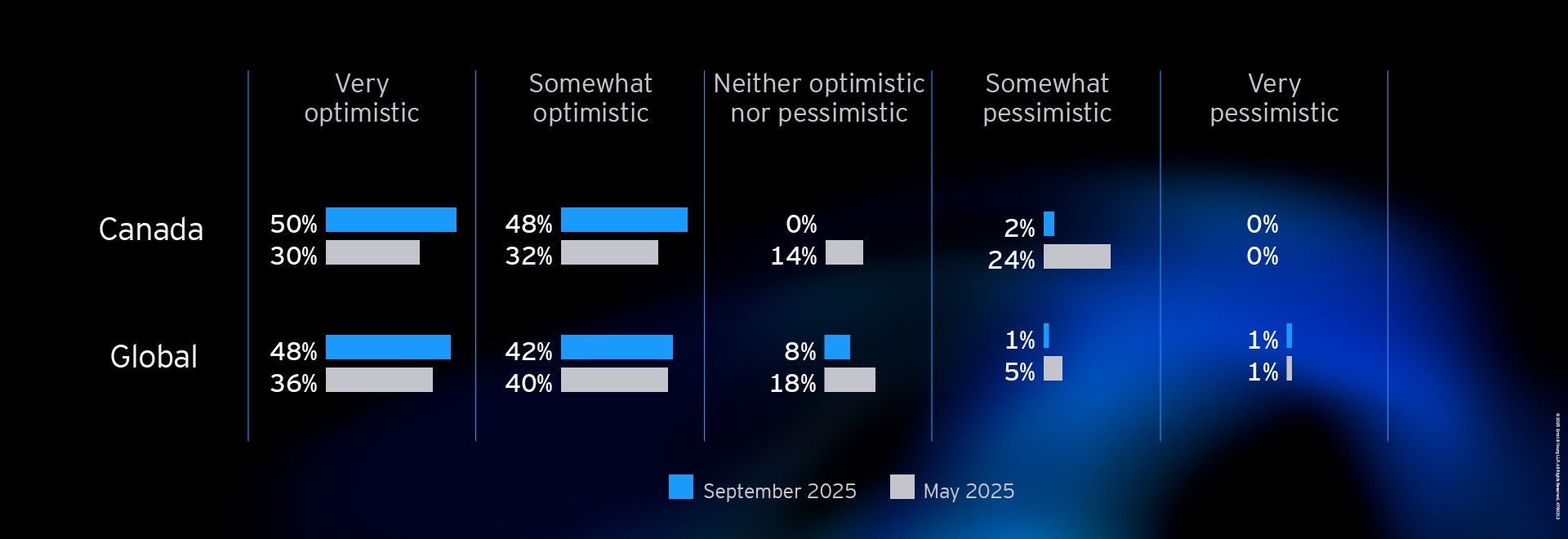
However, Canadian CEOs’ confidence has improved markedly in recent months. In August, our CEO Outlook Survey found that 98% of Canadian CEOs reported being either very or somewhat optimistic about the national economic outlook, up significantly from 62% in May. While global sentiment has also improved, Canadian CEOs’ confidence has rebounded more sharply and now reflects greater confidence relative to global their counterparts in the domestic economy’s ability to navigate global volatility.

CEO outlook for their respective domestic economies

Graphic comparison of optimism and pessimism in Global and Canada

This optimism is not limited to perspectives on the country’s macroeconomic prospects. Confidence in company-level performance is also strong, with 92% of business leaders expressing optimism regarding their revenue, cost and competitive positioning. When surveyed earlier this year in May, just over half of the respondents expressed positive sentiment across these aspects of their business.

This rebound in sentiment was reflected across all company-level indicators in our August survey, with strong gains in optimism for Canadian CEOs witnessed across company growth, pricing, talent and investment plan metrics. This renewed confidence appears to be closely linked to Canadian businesses actively adapting to new economic realities by recalibrating their business strategies in response to evolving market dynamics.

2. Localization and regionalization strategies gain traction

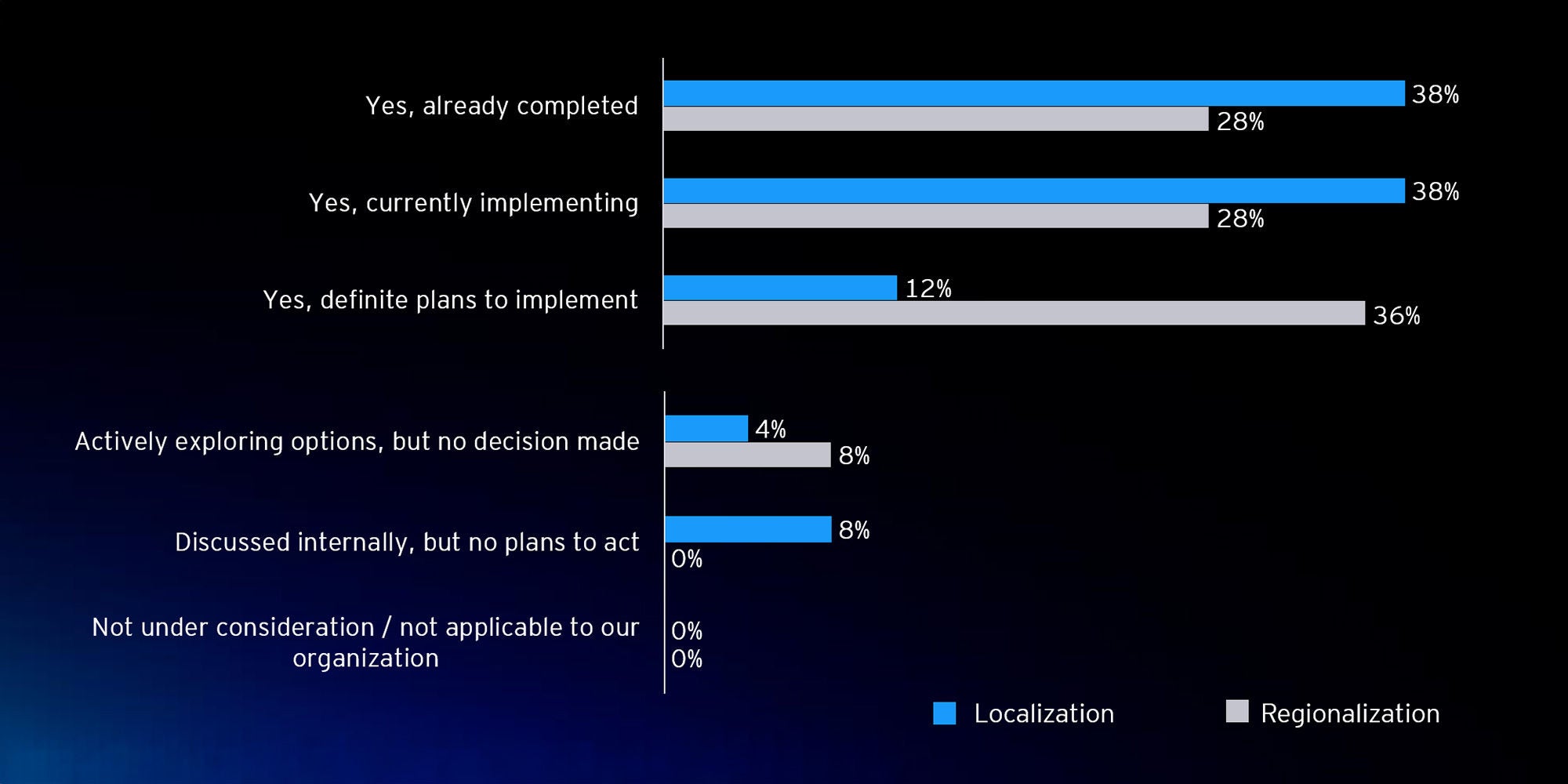
In response to geopolitical uncertainty and trade tensions, Canadian CEOs have implemented localization and regionalization tactics to enhance domestic production and strengthen regional supply chains. 76% of Canadian businesses surveyed have either completed or are currently implementing localization strategies, while 56% have implemented or are currently implementing regionalization strategies.

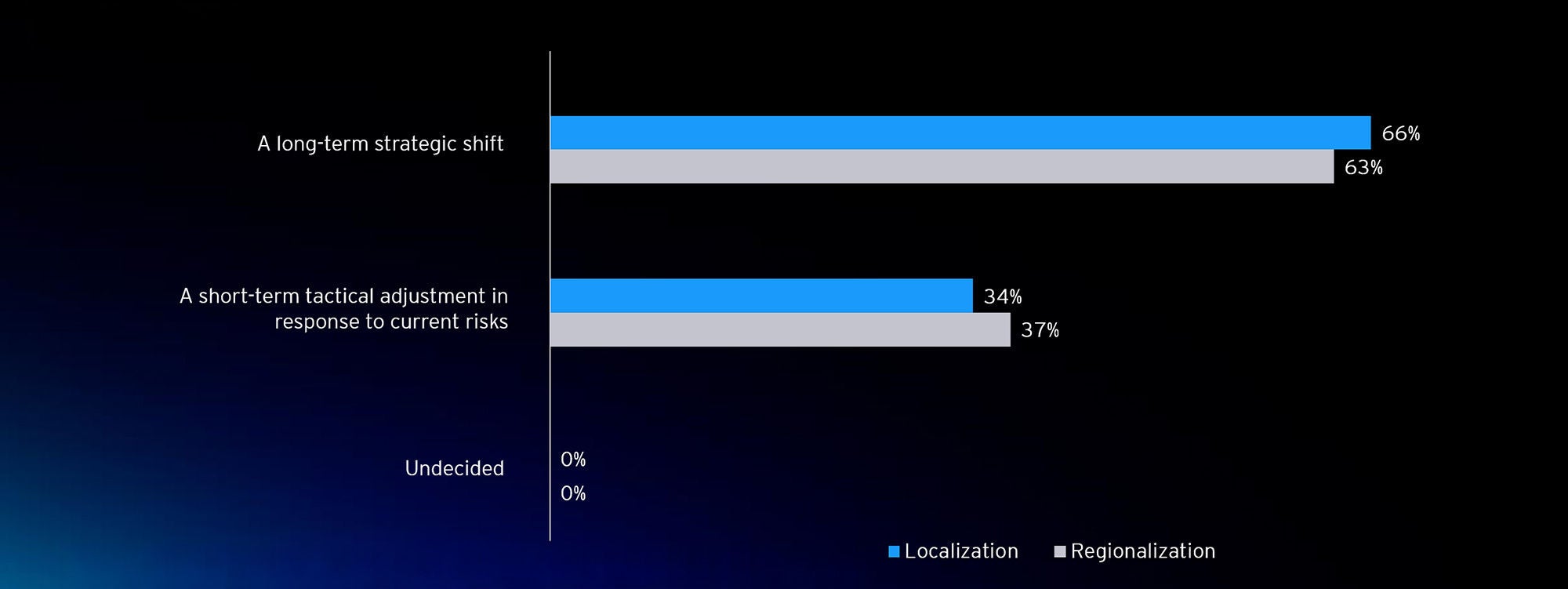
Around two thirds of Canadian CEOs view localization and regionalization as long-term strategies rather than temporary adjustments. With more than 60% of Canadian business leaders believing the current elevated levels of geopolitical and economic uncertainty will likely persist for several years, CEOs are applying localization and regionalization across a broad range of business functions. This may demonstrate a longer-term commitment to embedding these strategies more permanently into their operating models.

Localization and regionalization strategies are gaining traction in response to geopolitical developments

Q: Is your company taking or considering any steps toward localization on regionalization in response to recent geopolitical developments, including tariffs and trade negotiations?

[The respondents were asked to select one option for each tactic.]
Survey results on organizations' implementation of localization and regionalization strategies

Note: By “localization” we mean tactics like producing goods within the country where they will be sold.
By “regionalization” we mean tactics such as creating regional supply chains to serve a particular bloc.
Localization respondent count = 50
Regionalization respondent count = 50

Most Canadian business leaders view localization and regionalization as long term strategic shifts

Q: Are you approaching your company’s overall transition to localization or regionalization as a long term strategic shift or a shoort-term tactical adjustment?

[The respondents were asked to select one option for each tactic. This chart includes responses from CEOs who have either completed localization or regionalization or have decided to implement them.]
Graphical comparison of two strategic approaches: A long-term strategic shift and A short-term tactical adjustment

Note: By “localization” we mean tactics like producing goods within the country where they will be sold.
By “regionalization” we mean tactics such as creating regional supply chains to serve a particular bloc.
Localization respondent count = 44
Regionalization respondent count = 46

3. M&A intentions rebound as strategic priorities shift

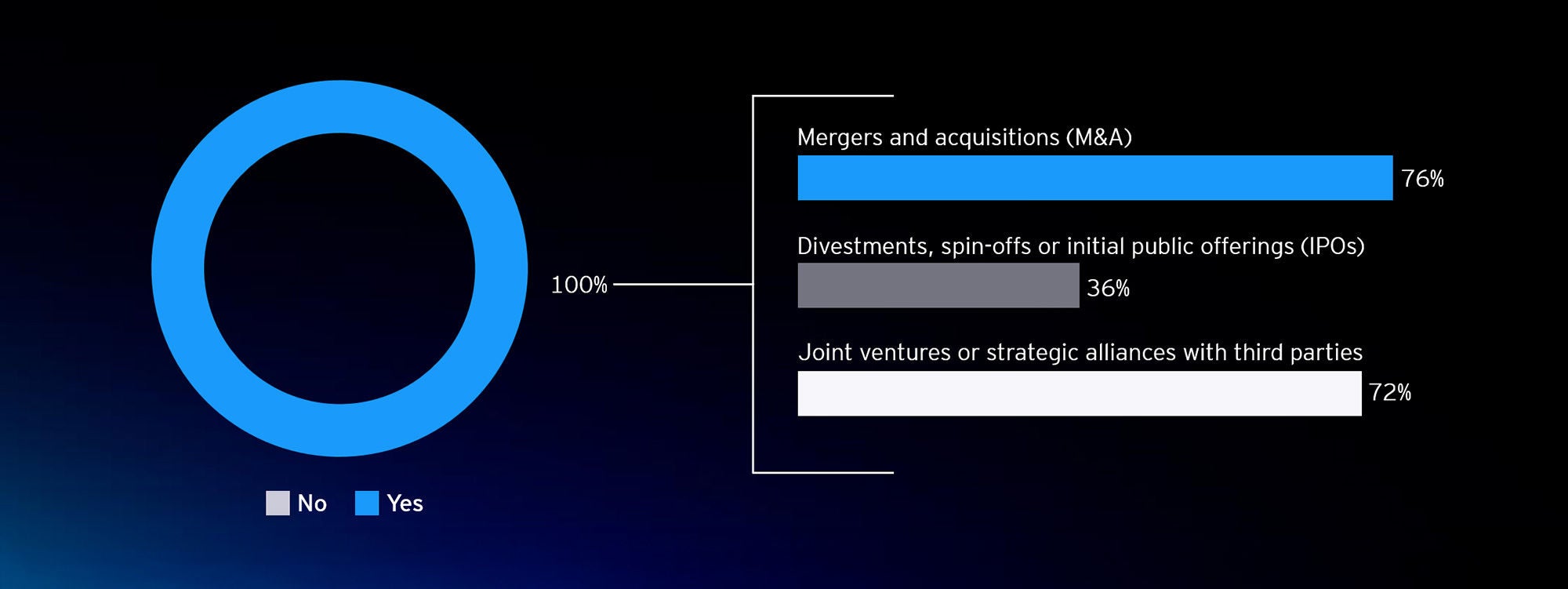
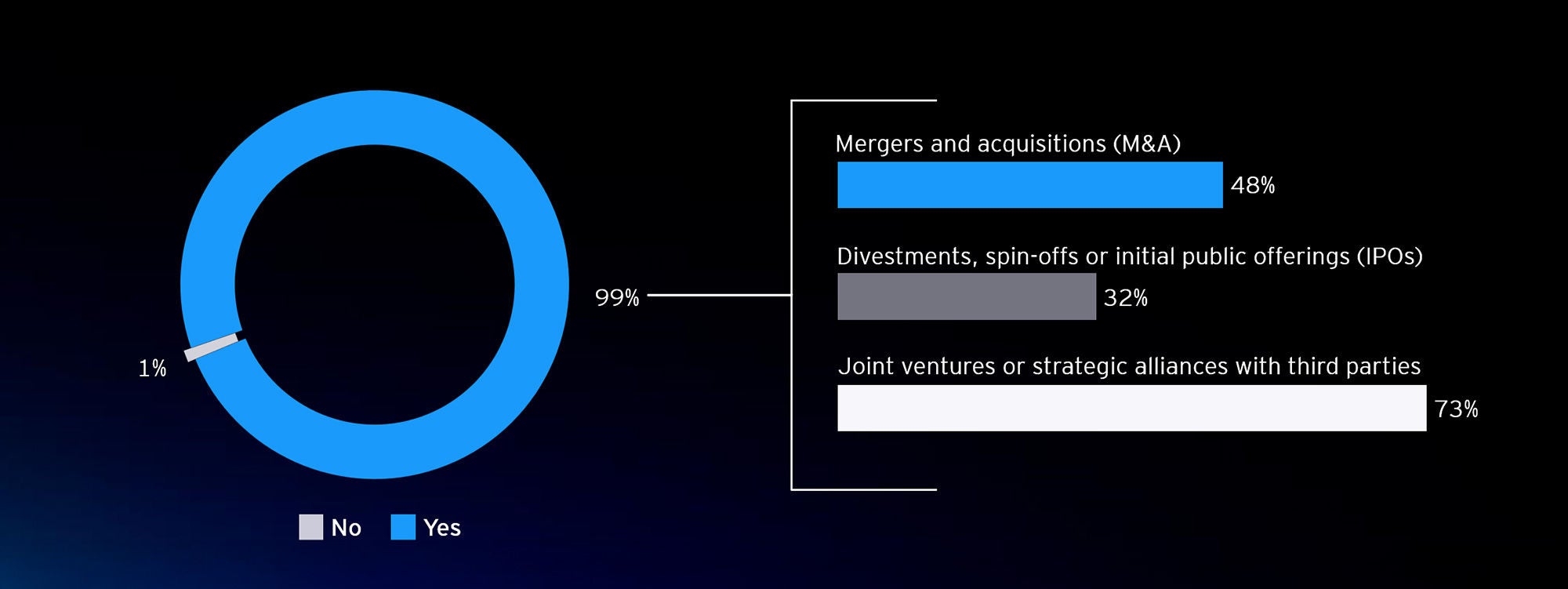
After a decline in transaction appetite earlier in the year, Canadian CEOs’ M&A intentions have rebounded. In August, 76% of Canadian CEOs reported plans to pursue M&A activity within the next 12 months, up significantly from 36% when surveyed in May. This marks a significant improvement in dealmaking sentiment for Canadian businesses, with short-term M&A intentions now exceeding the global average by a considerable margin; 48% Global CEOs are planning to pursue M&A activities within the next 12 months. This rebound in Canadian CEOs’ M&A appetite signals increased confidence in capital availability and the overarching health of Canada’s dealmaking environment compared to earlier in the year.

More than three quarter of Canadian CEOs plan to pursue M&A the next 12 months

Do you expect to actively pursue any of the following transaction initiatives over the next 12 months?

[The respondents were asked to select multiple responses]

Canada

Canadian CEOs preference transaction initiatives in the next 12 months


Global

Global CEOs preference transaction initiatives in the next 12 months

The strategic focus of Canadian M&A activity is now also consistent with global trends. Technology and intellectual property remain the top acquisition targets for both Canadian and global CEOs. In addition to technology- and IP-focused dealmaking, Canadian CEOs are considering large-scale acquisitions to expand and improve efficiencies. This reflects a shift toward strategic portfolio transformation, with dealmaking focused on long-term value creation, strengthening competitive positioning and supporting long-term transformation goals.

Key actions for leaders

As Canadian CEOs look ahead to 2026, they must balance renewed optimism with strategic discipline. Our Fall 2025 survey highlights a shift among Canadian businesses from simply reacting to uncertain geopolitical and trade-related pressures to proactively adopting resilience-focused measures.

To navigate ongoing global volatility and capitalize on emerging opportunities, we believe leaders should consider the following actions:

  1. Capitalize on this confidence to accelerate transformation and growth: With 98% of Canadian CEOs optimistic about the national economic outlook and 92% confident in company-level performance, it’s an opportune time to translate this positive sentiment into strategic transformation. With Canadian business sentiment outpacing global averages, now is the time to prioritize growth initiatives, talent development and innovation investments. This could include scaling digital capabilities, investing in emerging technologies and aligning capital deployment with long-term transformation goals.

  2. Embed localization and regionalization into long-term strategy: With the majority of Canadian CEOs actively implementing localization and regionalization activities, integrate these efforts into your broader transformation plans to further augment organizational resilience. These broader transformation initiatives may include investing in automation to offset cost pressures and forming regional partnerships to reduce exposure to trade-sensitive inputs.

  3. Continue to focus M&A strategy on capability-building and innovation: As transaction appetite rebounds, prioritize deals that enhance your organization’s core capabilities, drive innovation and support strategic growth. Technology and intellectual property remain top acquisition targets, signaling an enduring focus on innovation-led dealmaking. Aligned with this focus, you may wish to prioritize acquiring niche technology firms in the future, forming strategic alliances to access emerging platforms or targeting complementary businesses that enhance operational agility and market reach.

Summary

Canadian CEOs are shifting from reactive strategies to proactive resilience, balancing optimism with disciplined action. By leveraging confidence, embracing localization and regionalization, and focusing M&A on innovation, leaders are positioning their organisations for sustainable growth in a volatile global landscape.

Recommended actions:

  • Capitalize on this confidence to accelerate transformation and growth
  • Embed localization and regionalization into long-term strategy
  • Continue to focus M&A strategy on capability-building and innovation

About this article