Canadian CEO Outlook Survey – June 2025

Canadian CEO Outlook Survey – June 2025

Navigating uncertainty in a shifting global landscape: Canadian CEOs’ perspectives.


In brief

The latest survey reveals three defining shifts in sentiment and strategy across Canadian business leaders: 

  • Widespread adjustments to strategic investment plans in response to geopolitical and trade-related uncertainty
  • Heightened concern over the impact of tariffs on business performance
  • Decreased appetite for pursuing transaction activity

As we move through mid-2025, Canadian business leaders are navigating a business environment shaped by both caution and recalibration. The latest EY-Parthenon Canadian CEO Outlook Survey reveals that Canadian CEOs are adjusting their strategies in response to persistent geopolitical uncertainty and shifting global dynamics.


These shifts are driven by a combination of geopolitical and macroeconomic uncertainty and a reassessment of risk exposure. In this context, Canadian business leaders are demonstrating a pragmatic and cautious approach to growth and transformation. They’re refining their investment strategies, closely evaluating tariff impacts and associated mitigations and rethinking how to build resilience in a more complex world. As they seek to adapt to the rapidly evolving geopolitical landscape, they’re likely to prioritize maintaining a competitive edge through innovation resilience for the remainder of 2025.


1. Strategic investment pullback: a response to global volatility

Geopolitical, macroeconomic and trade uncertainty is top of mind for Canadian business leaders, with 38% of businesses surveyed citing it as the primary risk to achieving their growth targets over the next 12 months. While a further 30% cited longer-term structural issues in Canada’s economy related to talent access and labour market challenges as the main risk, recent global events have reshaped Canadian CEOs’ strategic investment plans in recent months. 


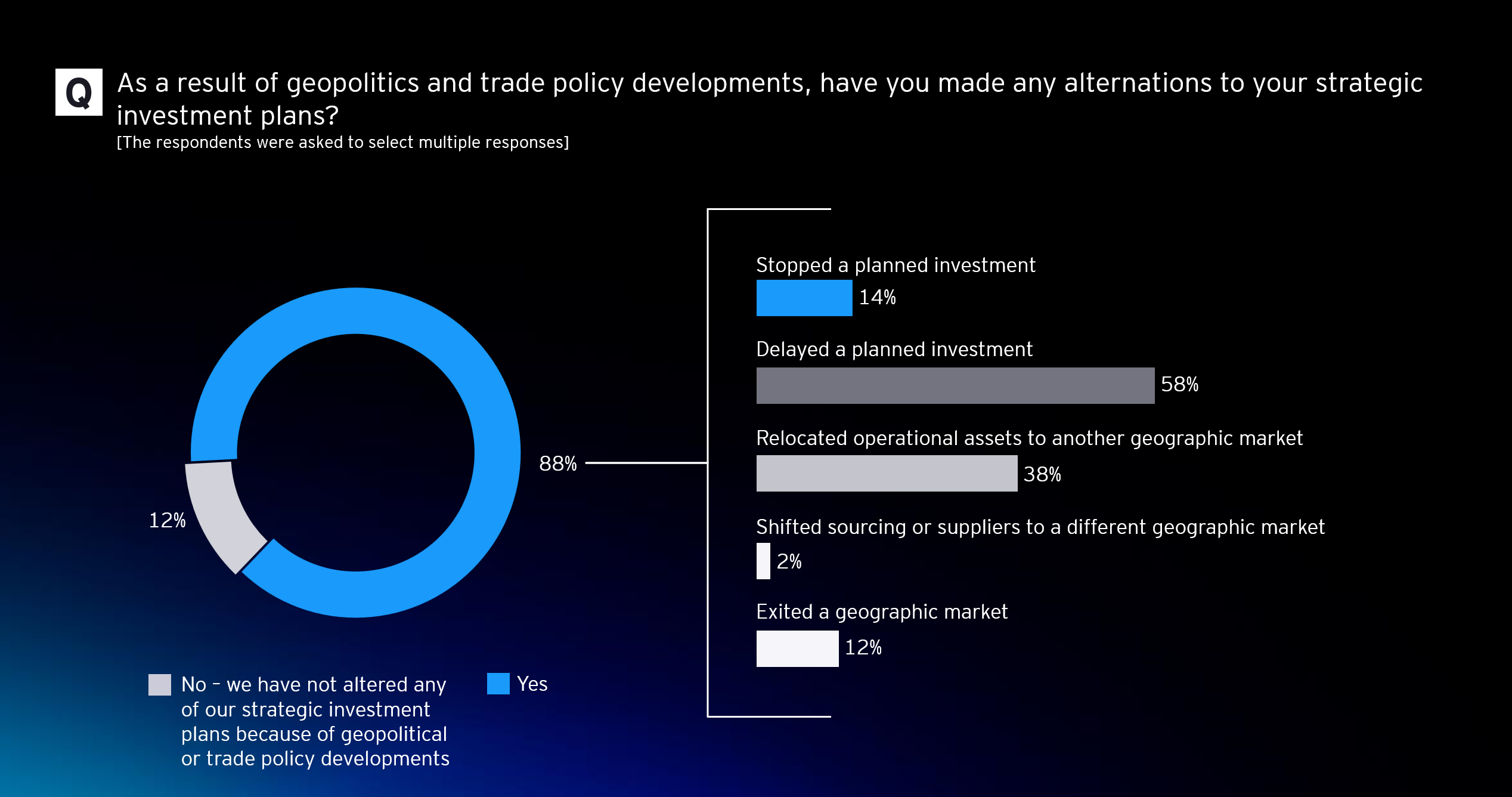
The large majority (88%) of Canadian CEOs reported altering their investment strategies due to geopolitical or trade policy developments. Among these, 58% have delayed planned investments, 38% have relocated operational assets to other geographic markets and 14% have stopped a planned investment. Only 12% reported no changes to strategic investment plans owing to global developments. 


Canadian CEOs’ approach to strategic investment planning in response to these developments are similar to their international counterparts, of whom 85% having changed their strategic investment plans. This could signal a shift from growth-focused capital deployment to defensive positioning, a trend that could slow innovation and capital investments should market dynamics remain.

CEO outlook G1

2. Tariff anxiety: trade tensions impacting business sentiment

The survey also underscored Canadian CEOs’ trepidation around the impact of tariffs on company performance, with 48% reporting being either extremely concerned or very concerned about the effects of increased tariffs on operations and sales over the next 12 months. 

While 73% of Canadian CEOs surveyed identified US-Canada trade tensions as the most impactful current or potential dispute for their business, a further 12% cited US-China disputes as having the largest impact on their business. Globally, 16% of CEOs ranked potential US-Canada trade/tariff disputes as having the greatest impact to their businesses, second only to US-China trade/tariff disputes, at 17%.

As trade policy becomes increasingly unpredictable, companies are now grappling with the possibility of rising costs, supply chain disruptions and reduced market competitiveness. This could force a reevaluation of pricing models, supplier relationships and market prioritization, especially for export-reliant sectors. As a result, businesses are weighing potential mitigating actions. 

Specifically, Canadian CEOs are concurrently exploring a range of risk mitigation strategies: 

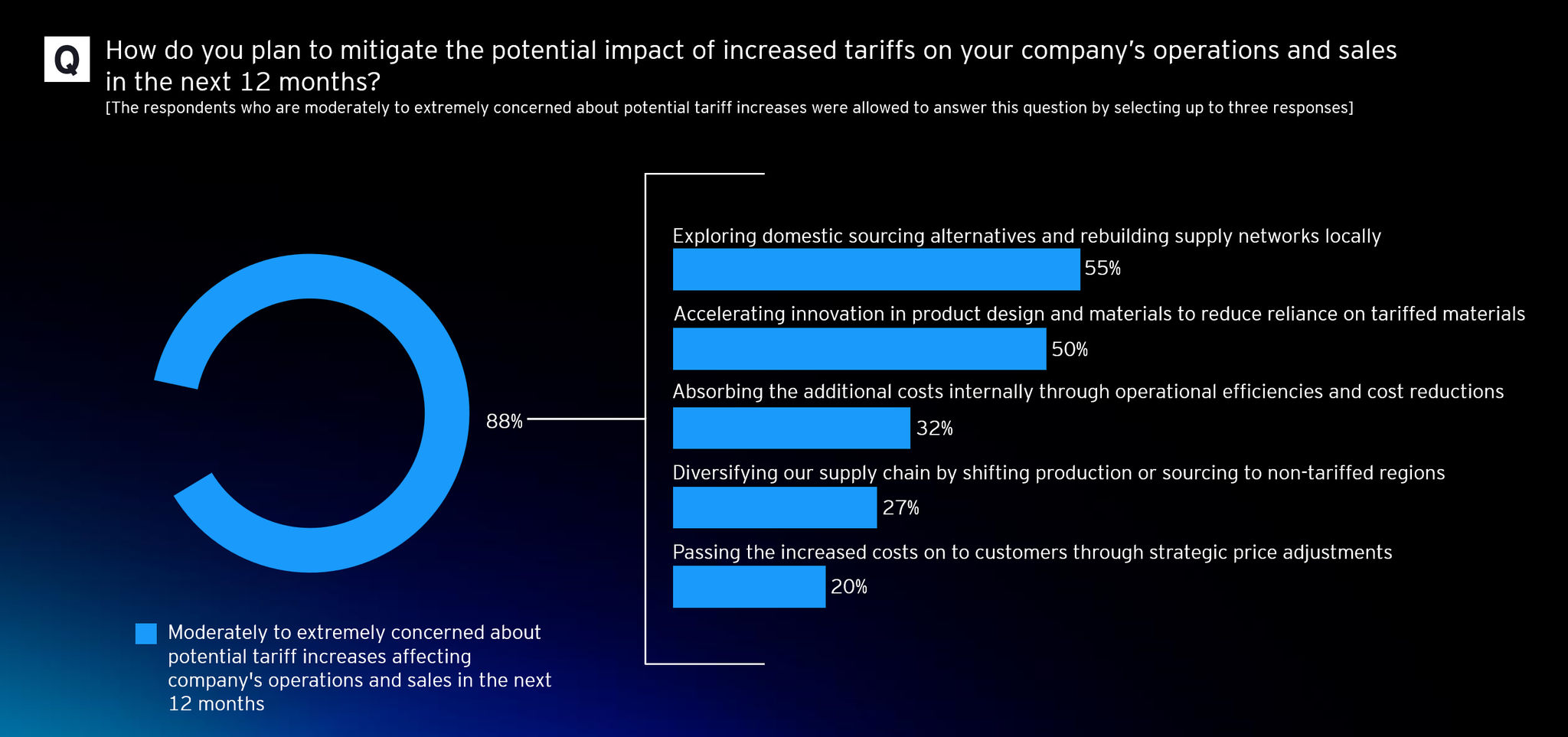
  • More than half (55%) are considering domestic sourcing alternatives and rebuilding supply networks locally
  • Half (50%) are accelerating innovation in product design and materials to reduce reliance on tariffed imports
  • More than a quarter (27%) are diversifying supply chains by shifting production or sourcing to non-tariffed regions. 

Other strategies include absorbing the additional costs internally through operational efficiencies and cost reductions (32%) or passing them on to customers via strategic price adjustments (20%) — a delicate balancing act in today’s price-sensitive environment.

CEO outlook G2

3. Transaction activity: declining appetite and shifting drivers

One of the most striking findings from the April survey is the decline in CEOs’ appetite for transactions. Compared to January 2025, intentions to pursue M&A dropped by 28%, while plans for divestments, spinoffs or IPOs fell by 68%.

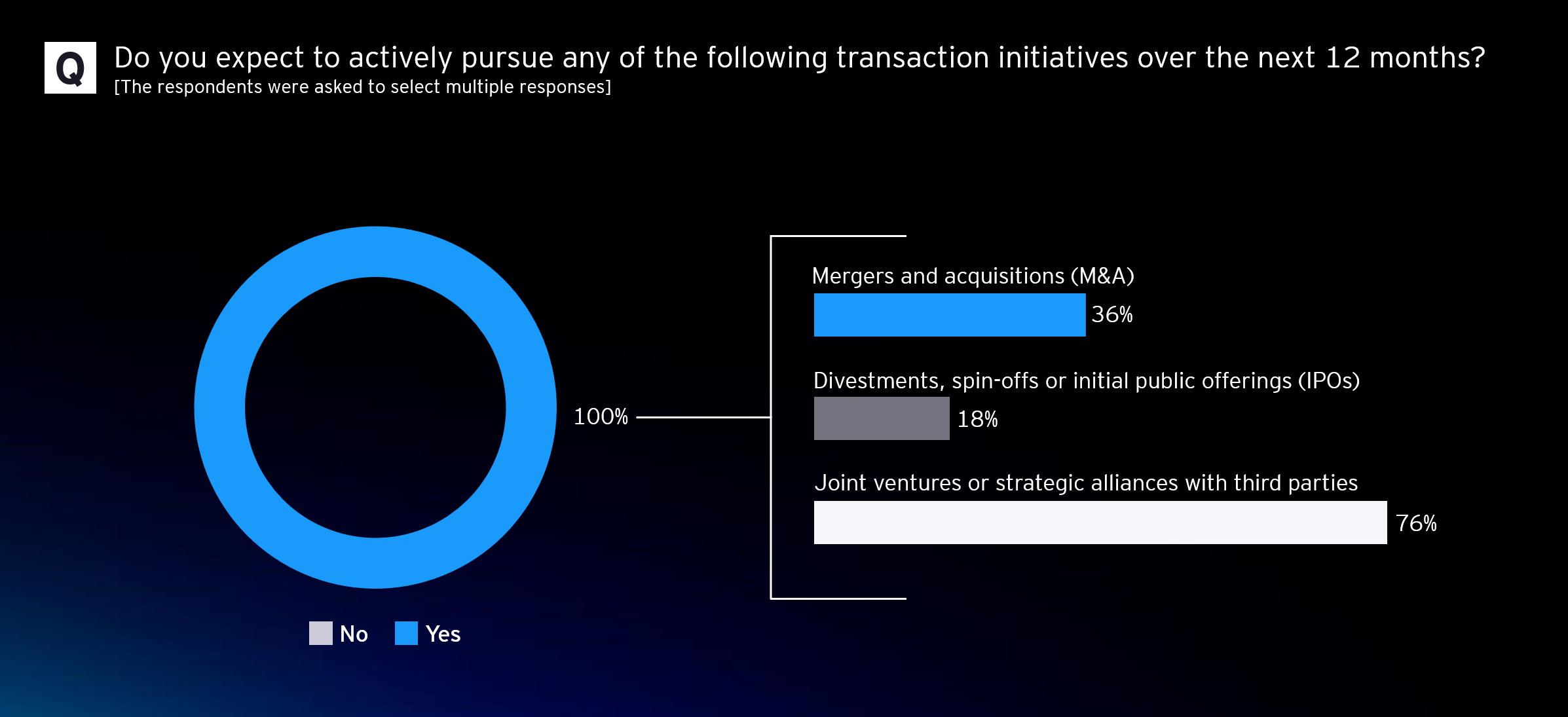
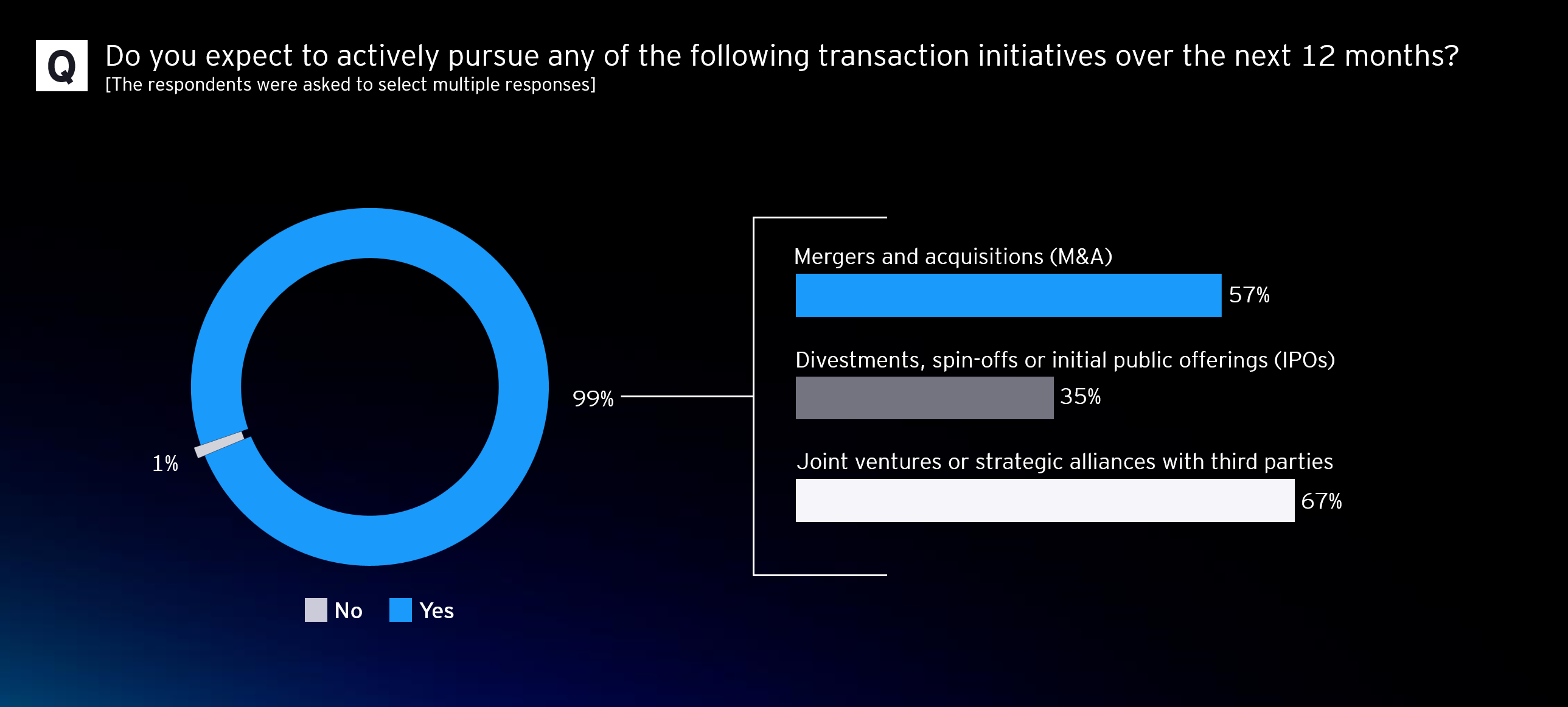
For instance, 36% of the Canadian CEOs surveyed expect to actively pursue M&A in the next 12 months compared to 57% globally, with the key focus on acquiring technology and intellectual property and similar businesses to expand core operations. Nearly a fifth (18%) of CEOs plan to pursue divestments, spinoffs or IPOs in the coming year, far lower than the global average of 35%. Among those who are planning to pursue divestments in Canada, the top three drivers are improving financial performance, complying with regulatory requirements and mitigating geopolitical risk. 

Globally, 28% of respondents planning divestments cited the primary reason as a strategic response to mitigate risks associated with geopolitical uncertainties, compared with 44% of Canadian CEOs. This suggests that divestment strategies for Canadian businesses are strongly driven by geopolitical risk management and streamlining core operations to better withstand geopolitical shocks and economic headwinds.

Canada

CEO outlook G3

Global

CEO outlook G4

Key actions for leaders

As Canadian leaders look ahead to the second half of 2025, they must continue to navigate a landscape marked by rapidly evolving global dynamics and complexity. The April survey highlights the importance of strategic clarity and operational agility in the face of evolving risks and opportunities. By focusing on innovation, resilience and strategic growth opportunities, CEOs can position their organizations for long-term success. 

Key actions for leaders to consider:

1. Reinforce investment discipline through geopolitical scenario planning:

With 88% of Canadian CEOs adjusting their strategic investment plans due to geopolitical and trade-related uncertainty, they should consider embedding scenario-based planning into their capital allocation processes. This could include stress-testing investment decisions against multiple geopolitical outcomes, identifying exposure to high-risk markets and building flexibility into investment timelines. 

2. Explore tariff-resilient operating models through innovation and localization:

With nearly half of Canadian CEOs expressing high concern over potential tariff impacts and more than half exploring domestic sourcing alternatives, now is the time to closely evaluate the viability of localizing supply chains and reduce dependence on tariff-sensitive inputs. This may include investing in R&D to redesign products with alternative materials, deploying automation to offset cost pressures and forming strategic partnerships to access untapped domestic capabilities. 

3. Reframe transaction strategy around capability-building and core focus:

With Canadian CEOs showing a marked decline in appetite for M&A and divestments, leaders should continue to refine their deal-making strategies to target precision-focused transactions that strengthen core capabilities. A disciplined, capability-led transaction strategy will help organizations stay agile and aligned with long-term strategic goals in a volatile geopolitical environment.


Canadian CEO Survey


Promise or peril? Confidence or consequence? Proliferation or protectionism? If today’s uncertainty has you questioning future horizons for your business, learn how Canada’s business leaders are anticipating the next wave of change and putting the pieces in place today to meet tomorrow. 

About this article