Adjusting to new economic realities amid trade tensions, emerging technology and policy shifts
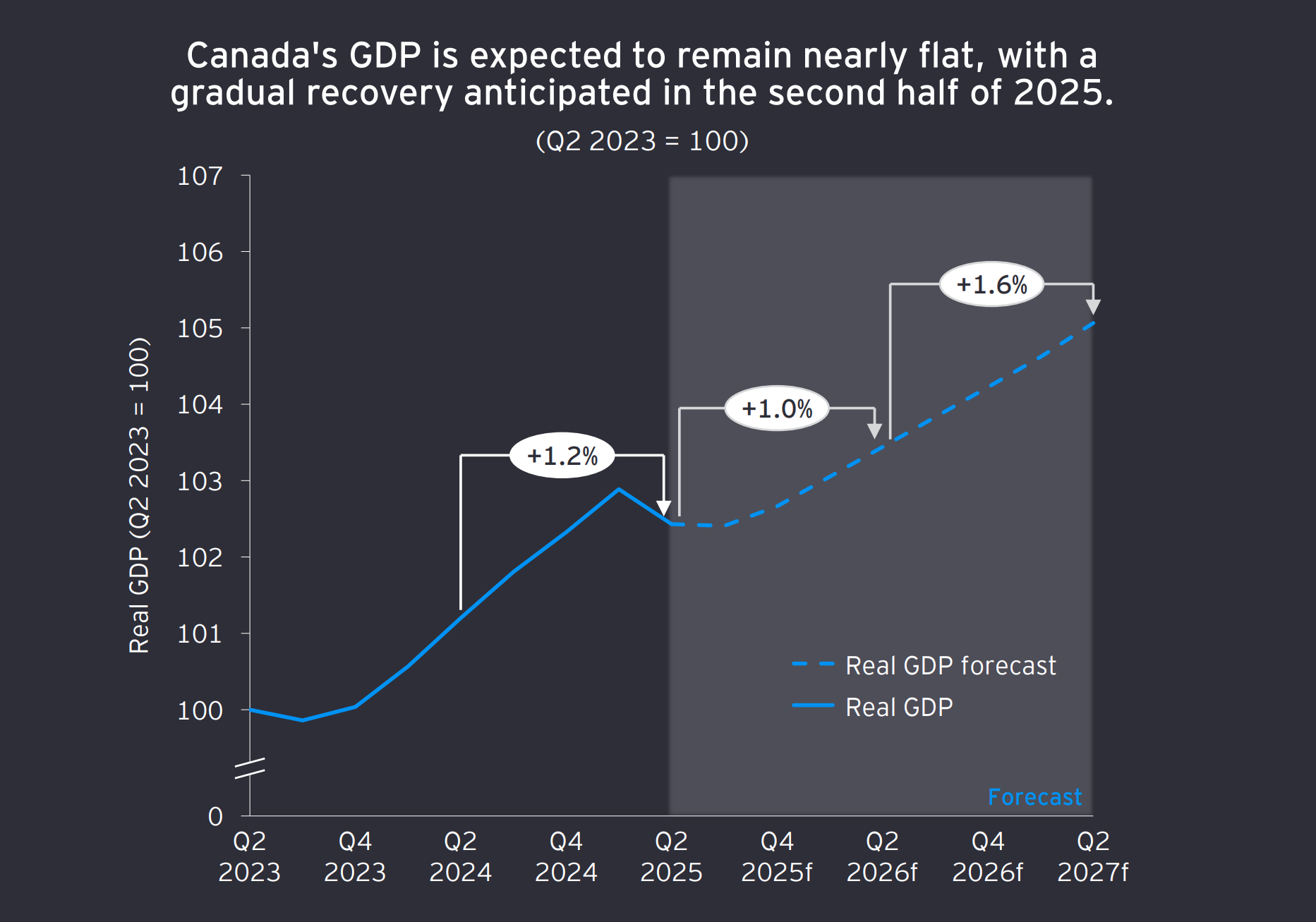
Following a surge in Q1 driven by stockpiling ahead of the announced US tariffs, the Canadian economy contracted in Q2 as trade measures became increasingly more pronounced. Real GDP fell by 0.4% reflecting weaker exports and business investment. In response, the federal government is prioritizing targeted investments to enhance long-term competitiveness and productivity, while maintaining fiscal discipline.
Looking ahead, Canada’s economic performance will depend on the resilience of Canadian businesses in navigating geopolitical and market uncertainty, the impact of policy measures to foster sustained economic momentum, and the pace of adoption of productivity-boosting technologies.
Navigating the slowdown towards gradual recovery
The Q2 slowdown was primarily driven by weaker exports and a decline in investment in machinery and equipment. However, July brought a modest rebound, with gains in both merchandise and services exports, helping to narrow the trade deficit. This modest rebound suggests that industrial sectors may be showing signs of resilience as supply chains are beginning to stabilize.
While real GDP is projected to remain nearly flat through 2025, a gradual recovery is anticipated in 2026, fuelled by evolving policy priorities, increased technology adoption and strategic public investments.