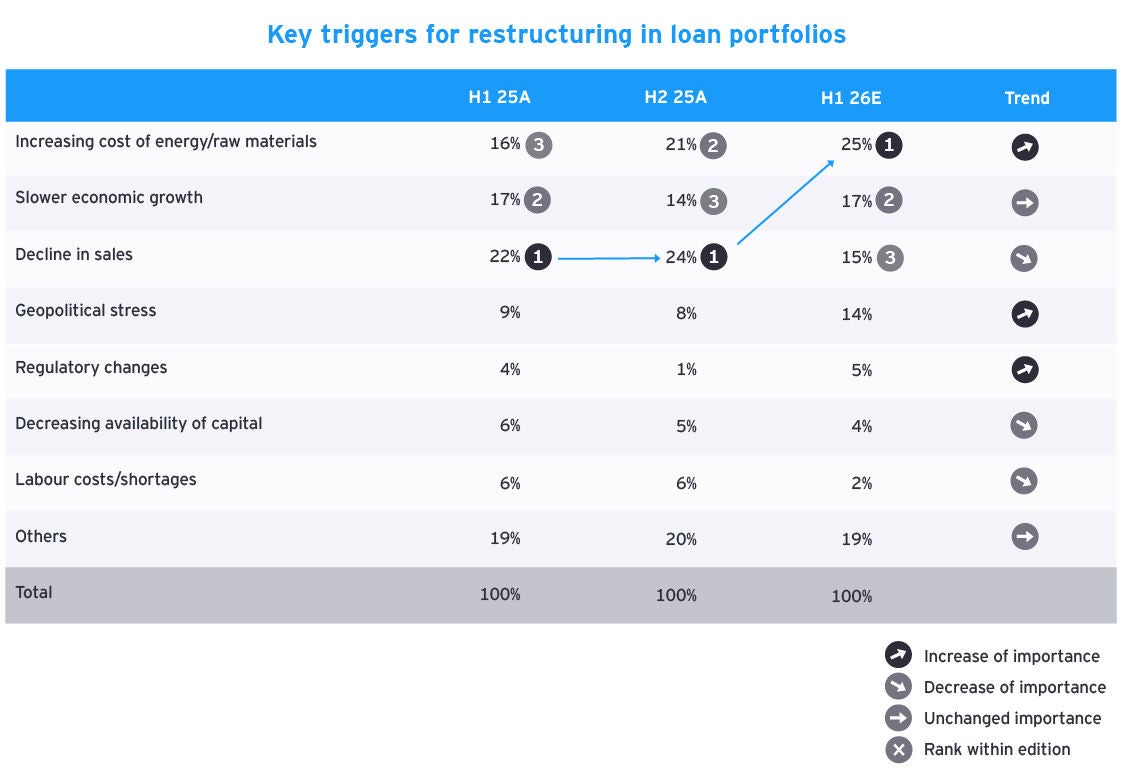
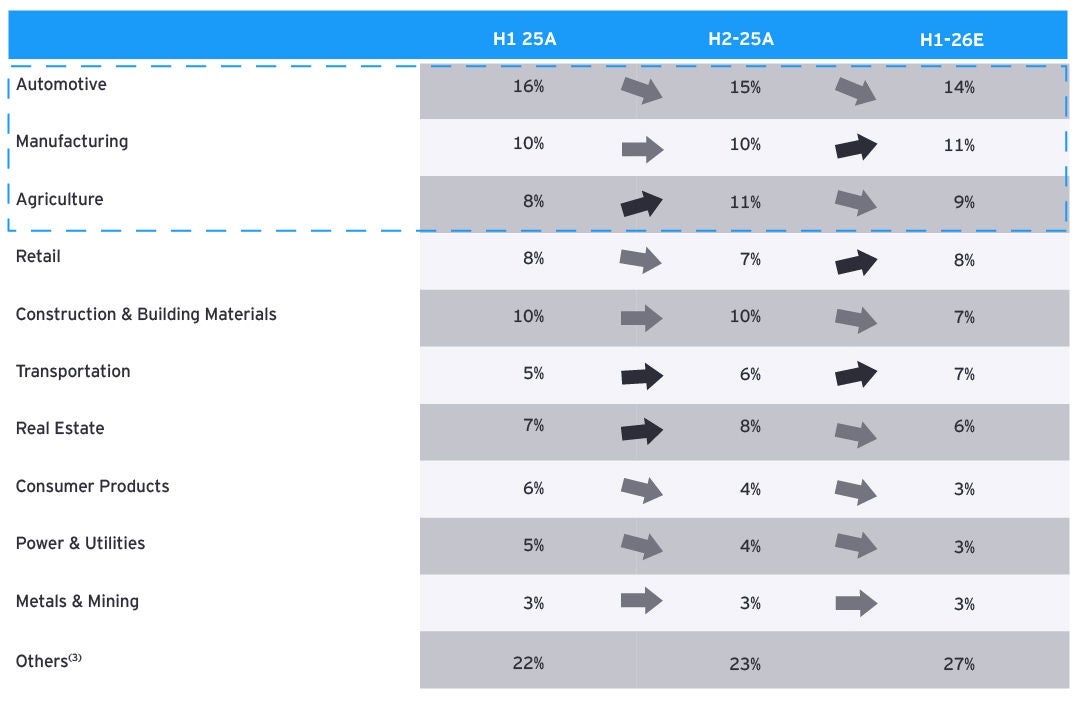
The survey also highlights a shift towards deeper operational and structural change. Expectations for accelerated M&A are increasing across Europe, with the UK expectations higher than average, reflecting comparatively deep private equity markets and service‑heavy sectors where consolidation can deliver rapid synergies. Liability management exercises (LMEs) are expected to play a greater role, according to just under 30% of respondents across Europe, rising to 50% in the UK, where they are expected to be most prevalent, up from 40% in the previous survey. This aligns with a broader shift towards more tailored and innovative restructuring solutions, particularly in markets like the UK, with more flexible legal frameworks.
Fundamentally, this is not a passive market. As restructuring pressure builds, lender support is becoming increasingly conditional. Workout bankers consistently rank existing shareholder support and a credible, executable business plan as the two most important criteria when determining borrower support. This raises the bar for companies seeking continued backing and reinforces the importance of early engagement, clear strategic direction and alignment across stakeholders to preserve value.
What should companies and their stakeholders do now?
1. Address issues early to avoid escalation
Escalating cost pressures, renewed energy shocks and persistent geopolitical uncertainty increase the risk of deeper stress, particularly for UK businesses exposed to higher borrowing costs and energy volatility. Early action preserves optionality and protects value.
This requires building near-term financial visibility through robust cash flow forecasting and downside scenario planning, with a clear view on interest rate and cost sensitivities. Early engagement is critical to maintain flexibility, whilst proactive liquidity management—through working capital and asset optimisation—can create time and strategic headroom.
2. Combine financial solutions with decisive business transformation
As pressure mounts, companies will increasingly need to go beyond balance sheet fixes to address underlying performance issues, particularly in sectors facing demand softness and cost inflation.
Financial restructuring needs to be paired with decisive operational action. This includes driving margin through cost discipline and efficiency measures, whilst reshaping the business, exiting underperforming areas and refocussing on profitable, resilient segments.
3. Tailor strategies to local markets, capital structures and creditor expectations
Fragmentation across regions and sectors demands locally grounded strategies, clear alignment across stakeholders and jurisdiction‑specific execution.
Effective strategies require a detailed understanding of local restructuring tools and processes, alongside the dynamics of different creditor groups such as banks, direct lenders and special situations funds. Aligning these stakeholders early, whilst reflecting sector-specific pressures and capital structure nuances, is key to executing transactions efficiently and preserving value.