EY helps clients create long-term value for all stakeholders. Enabled by data and technology, our services and solutions provide trust through assurance and help clients transform, grow and operate.
At EY, our purpose is building a better working world. The insights and services we provide help to create long-term value for clients, people and society, and to build trust in the capital markets.
In this episode of the EY India Insights podcast, Kapil Bansal, Partner, Energy Transition and Decarbonization at EY Parthenon India, discusses the importance of ferrous scrap as a strategic resource for Indian steelmakers. He explains that higher scrap adoption can reduce dependence on carbon intensive raw materials, lower emissions, help companies manage cost volatility and support India’s steel capacity expansion goals. The discussion also explores challenges within India’s fragmented scrap ecosystem, the role of technology and formalization, and the policy, partnership and procurement shifts needed to build a resilient, circular, and low carbon domestic steel industry.
Key takeaways
Ferrous scrap is becoming a strategic resource, helping Indian steelmakers manage costs, supply risks and decarbonization goals.
Greater scrap usage enables immediate reduction in emissions without major capital investment, especially through higher BF‑BOF scrap infusion.
India’s fragmented and informal scrap ecosystem limits quality, scale and traceability, impacting effective scrap utilization.
Technology and formalization can unlock value, improving sorting, grading, transparency and green steel credibility.
Long‑term scrap adoption needs procurement reform, partnerships and aligned policy to build a resilient, circular steel ecosystem.
Formal recognition of the steel scrap sector can unlock finance, skills and procurement support, enabling low‑carbon growth, higher steel output, job creation and reduced import dependence.
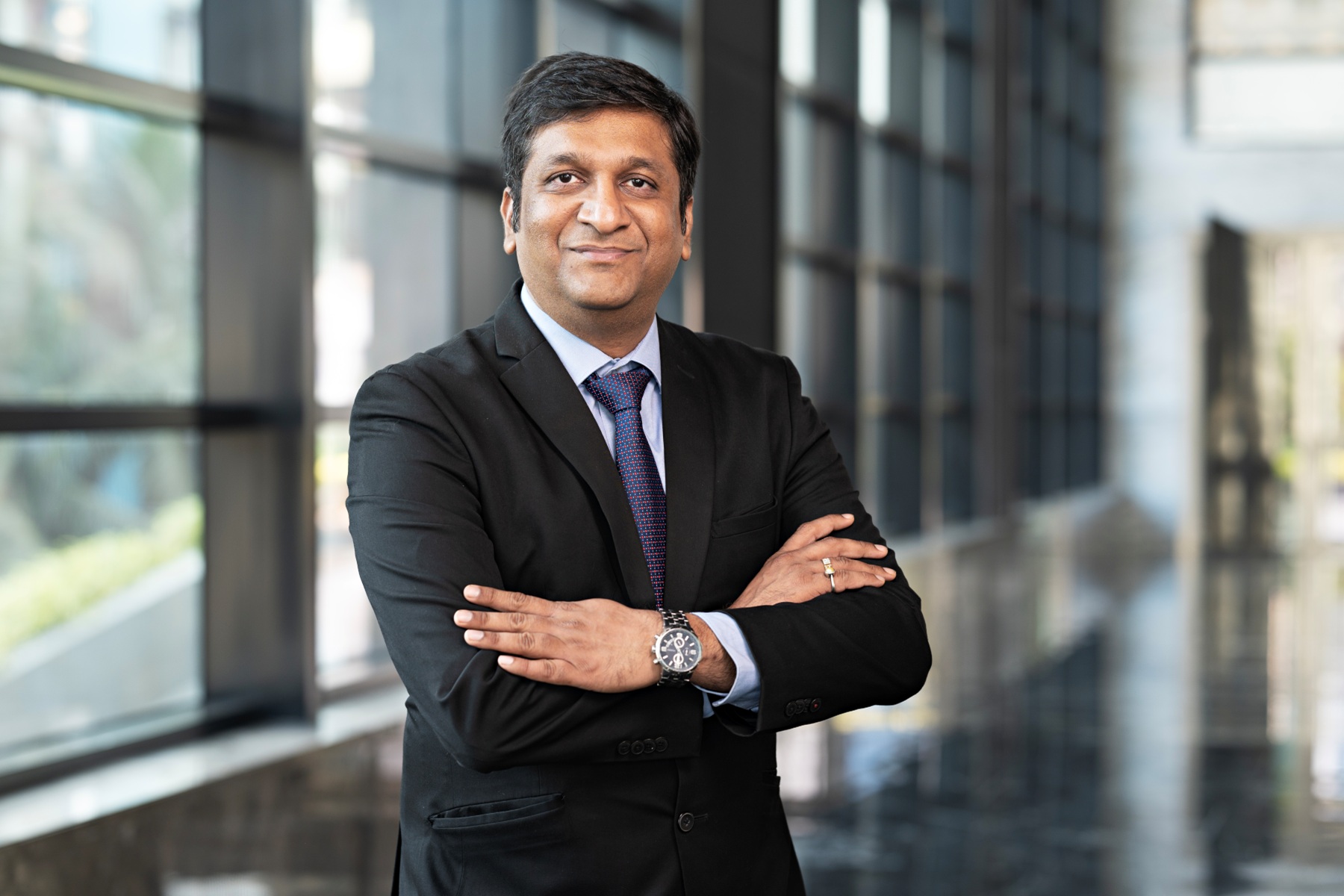
Kapil Bansal
Partner, Energy Transition and Decarbonization, EY-Parthenon India
For your convenience, a full text transcript of this podcast is available on the link below:
Welcome to EY India Insights podcast. Today's episode explores how Indian steelmakers can treat ferrous scrap as a strategic resource, balancing growth ambitions with decarbonization and sustainability priorities. We are pleased to have Kapil Bansal, Partner of Energy Transition and Decarbonization at EY Parthenon in India, who shares insights on scrap availability, circularity, and the role of policy and infrastructure in shaping a sustainable steel industry.
Hello, Kapil. A very warm welcome to you. We are delighted to have you join us today.
Kapil
Thank you, Pallavi.
Pallavi
Traditionally, ferrous scrap is seen as a secondary raw material. What has changed to make it a strategic resource for Indian steelmakers, especially in the context of cost pressures, energy efficiency and decarbonization?
Kapil
That is an important question in the current context. On one side, logistics are under pressure due to geopolitical issues. And at the same time, availability of raw material on time and at scale is also becoming a big challenge. That is why ferrous scrap is no longer just a balancing material in the metals shop; it has become a very strategic raw material from an Indian steel transition perspective. Why so? There are multiple reasons to it.
Scrap directly helps in reducing the dependance on most carbon and carbon - intensive steelmaking. That is why we see the current challenges in the energy sector, where getting the energy raw materials is becoming challenging; iron mimicking itself is a major source for which they use coal and other sources of fossil fuel. And that is why it is one of the solutions, in today's time, which can cut emissions on a commercial scale, without waiting for technological breakthroughs to mature.
The second point is from a cost standpoint: steelmaking, through scrap, reduces the exposure to iron ore, coking coal, other fossil fuel-based energy, logistics volatility, and supply chain issues. That is why in our recent (EY-Parthenon) report, we have made this point clearly that the Indian steel sector is under pressure to produce almost 300 million metric ton (MMT) by FY30. At the same time, we are looking at decarbonizing with the recent launch of centralized carbon market trading platform. So, scrap becomes an important resource towards overall resource security by reducing dependency on imported materials and raw materials like coking coal, energy, fossil fuel, and other materials that are needed for steelmaking.
In other words, to be competitive today, both environmental and energy security have to go hand in hand. And that is why when we look at the recent report (EY-P), India’s scrap consumption is at 41 MMT currently, of which about 85% is used in steelmaking. However, from an overall steel manufacturing perspective, scrap contributes only 23% in India, whereas the global average is 32%, and higher in other developed economies such as the EU, US and Turkey.
So, there is a strategic importance through which scrap can not only bridge the gap between the raw material, the requirement of its growth and consumption, but at the same time, reduce emission intensity, which is becoming a trade barrier.
Now, looking at the last two points: If one has to decarbonize and 45% of one’s steelmaking is through Blast Furnace-Basic Oxygen Furnace (BF-BOF) route, if you directly infuse scrap into the manufacturing process of BF-BOF route by roughly 15% to 25%, the emission intensity decreases by almost 11%. We have those technologies, and without any major capital investment, the process can be executed. So, it becomes a near-term decarbonization instrument.
And then finally, when we are look at the way the market is treating it as a strategic resource, considering the geopolitical issues, the cost, the sustainability implications, scrap itself has become a strategic mechanism through which Indian steelmaking can become an important differentiator in the global context.
In a nutshell, we can say that scrap has become a strategic raw material for steel manufacturing in India.
Pallavi
India's scrap ecosystem is quite complex, with fragmented collection systems and significant informal sector participation. What are the biggest structural and quality related changes across the value chain, and how can technology and formalization help unlock a greater value?
Kapil
When we look from an Indian scrap ecosystem perspective, there is a complete fragmentation in the overall value chain as scrap comes through after exchanging hands through multiple channels or intermediaries. Each one adds onto the cost and is also completely informal, through which there are difficulties and challenges on three fronts:
One is availability in a more consistent manner. The quality that we receive at the factory is inconsistent, and then there are challenges in its traceability. So, when we look at scrap in the overall system perspective, it is not collected very efficiently, it is not processed scientifically, nor is it delivered in the quality which is required in our modern steel plants.
So, if we look at each one of them, from a quality perspective, steelmakers need scrap that is properly segregated, clean, graded and processed. But much of the domestic scrap struggles with contamination, mixing of grades, poor sorting, and inconsistent chemistry. That is why in our report, when we have looked into this overall scrap value chain, we understood India is in under-developed collection, segregation and processing system, because of which utilization of this scrap is not providing that much in our Electric Arc Furnace (EAF) plants, whereas globally, plants are designed to run on a high scrap ratio, but in India, we first run it through the Direct Reduced Iron (DRI) process because of the availability and quality issues that we just talked about earlier.
Now, when we look from an informal sector perspective, the other important factor is that there is unsafe dismantling of scrap, environmental controls are not in place and most of the transaction happens in the cash mechanism with low focus on documentation, access to capital equipment and skills. Hence, one of the key elements that the Parliamentary Committee has captured is that there should be a proper, centralized database, formalization of scrap market and importance of organizing scrap dealers and collectors in a more structured manner.
Now, you asked how to solve this challenge. One of the things that we can do is to bring in technology. We have observed that digitalization makes it very transparent and clear. In the report, with AI coming in, we looked into various mechanisms through which technology can be transformational in the overall value chain. This includes AI driven sorting, digital scrap registers, blockchain-based traceability, which will help in improving the grading, reducing contamination and building trust in the chain.
These tools can help all the integrated steelmakers to verify the recycled content, understand the scrap provenance and link the material flow into a proper emission reporting, which will help them get classified as global green steelmakers.
We have also looked at one of the critical aspects, which is formalization of scrap collection in the domestic market. While India has already classified two important policies – Steel Scrap Recycling Policy, 2019 and Vehicle Scrappage Policy, 2021. The next step is to build large scale operations, for which we need certified collection centers, authorized dismantling facilities, and establish harmonized quality standards, digital payment trails, and better integration of how the vehicles, ships and industrial scraps are overall streamlined.
One of the recommendations is to create a web portal for all the scrap data, IT certification, the availability of skill, and the policies to help the organized economy to flourish. That is how we can unlock the overall value in scrap making, which will then become bankable, traceable, specification compliant and investible, and thus overcome these challenges.
Pallavi
If steel companies were to treat scrap as a long-term strategic lever rather than a tactical input, what shifts are needed in procurement models, partnerships and policy to support and strengthen the domestic scrap availability?
Kapil
We have looked at scrap as a strategic lever and there are challenges. Now, how do steel makers make it an important element depends upon critical shifts that we have looked into our white paper.
We have to change the mindset of looking at scrap as a spot commodity to a more long-term, data-driven, integrated with core raw material, like iron ore, or, coking coal or any other raw material that is being purchased. This means that steel companies need to improve their visibility, not only in terms of their price at a spot market, but from a long term perspective, look into to the source of where the scrap is coming, the quality, the volume, the reliability and also the emission attributes it carries.
Also in the white paper, we have said that backward integration of the scrap value chain is an important factor, because if we get into the overall participation of steel makers into the purchase of the scrap from collection to its processing, we have observed that 14% to 16% of value can be generated by the steel makers in this process itself. And thus, from a transactional activity of buying, it becomes an overall ecosystem ownership by backward integration.
The second important factor is partnership. Given that India is so diverse, the steel makers should build and establish relationship registered vehicle scrapping facilities with the combination of policies. India is the largest the ship recycler, it has the industrial scrap generators, the OEMs and the overall construction demolition ecosystem as well as with the organized scrap processes.
These partnerships will help them build a complete domestic loop of the overall recovery, reduce the dependency on import, have an established continuous structure on the pricing and reduce friction on the logistics or availability of such critical raw material.
The third important point we need is in terms of policy alignment. As I said earlier, there are two policies – Steel Scrap Recycling Policy, 2019 and Vehicle Scrappage Policy, 2021. But there should be a complete reform in the overall recycling and the scrap policy. Hence, we have recommended certain uniform national scrap quality standards in our white paper, incentive for certified recycling facilities, stronger digital traceability, better integration of vehicles, ships and industrial scrap. Also, it requires certain amount of public policy discussion, which have held in certain aspects, but there are additional reforms that can be brought in, such as GST rationalization (which is already done), support for shredding and the scrappage centers which can be brought in from viability gap funding, and more transparent domestic integrated scrap ecosystem on the lines of logistics parks.
Finally, there is a case for treating scrap value chain itself as an industrial sector. RBI has given names of certain priority sectors. If the steel scrap sector is recognized formally, it will help in improving finance access, building skills, certifications and improving public procurement preferences towards scrap steel, which will help in multiple ways.
It will help in achieving our goal of 300 MT of steel, reducing emissions in the steel sector, increasing employment, and reducing import dependency. We will be looking to buy scrap and work towards building a resilient, low carbon, domestic scrap ecosystem for the coming decade. With that, we could be a much stronger economy.
Pallavi
Looking ahead to 2030 and beyond, how do you see greater scrap adoption for reshaping the Indian steel ecosystem, from MSMEs and recyclers to the country's broader net zero journey?
Kapil
If we are talking beyond 2030, let us see certain targets that we have created. Under the National Steel Policy, we are looking at 300 MMT of steel capacity by 2030 and almost 500 MMT by 2047. To achieve these targets, we have to make India a circular steel economy, whereby end of life steel from vehicles, buildings, machines, ships, consumer goods is returned from fragmented channels to established channels.
The SMEs, MSMEs and secondary steelmakers have to increase their availability of scrap through structural changes, which includes moving from unorganized to organized scrap market with large scale aggregation hubs, better sorting systems standard grades, formal supply chain channels, improving their overall access to raw material, along with reducing their inventory risk. In our paper, we have talked about creating certain regional scrap hubs, which could help these MSMEs and steel makers create the future of secondary steel markets, which will then contribute to the overall capacities that we are looking at.
From recycling point of view, it would provide equal significant opportunities because with the formulation of this sector from a low productive dismantling to high value processing towards forward integration, shredding, billing, sorting, certified grading, and digital traceability – all these will put them in the mainstream, working hand-in-hand with the larger integrated steelmakers towards getting financing, better skilled labor, safer operations, better availability of capital, and then finally, become a part of the larger ecosystem, through the formalization of scrap dealers towards a more professional, recycle sector over the time. This is from viewpoint of sector players. When we look from viewpoint of decarbonization, scrap adoption is the only practical lever, which has the highest contribution towards the overall growth of steel manufacturing as well as reduction of emissions, and reducing the cost associated with it.
Our paper clearly states that scrap is essential in India's journey towards being competitive, from scale, cost, low carbon to resilient steel making. International Energy Agency (IEA) is also positioning recycling; material efficiency is an important part for sustainable steel manufacturing.
Finally, from what we have projected under optimistic scenario, while India might face 40-50 MMT of scrap deficit by 2050, but if we are aiming for 50% of steel making from scrap, by 2047, we need to increasingly adopt the scrap value chain, we have to build the domestic ecosystems towards adoption of scrap collection, sorting, grading, processing, and then its utilization. To sum up, greater scrap adoption can help India turn steel manufacturing from a linear, resource-intensive model into a circular, competitive, climate-aligned industrial structure if cycling, policy, technology and the overall procurement ecosystems evolve together.
Pallavi
Thank you, Kapil. Now that brings us to the end of this episode. Thank you so much for joining us and sharing all your perspectives on ferrous scrap as a strategic lever for Indian steel industry.
Kapil
Thank you. It was lovely talking to you. Those questions were quite enriching and helpful for me to answer them in the possible time we had.
Pallavi
Thank you. To all our listeners, thanks for tuning in to the EY India Insights podcast. We look forward to bringing you more conversations on energy transition and sustainability industry. Until next time, this is Pallavi signing off.