EY helps clients create long-term value for all stakeholders. Enabled by data and technology, our services and solutions provide trust through assurance and help clients transform, grow and operate.
At EY, our purpose is building a better working world. The insights and services we provide help to create long-term value for clients, people and society, and to build trust in the capital markets.
Listen to our latest podcast on India’s over the counter (OTC) pharmaceutical market as it evolves due to rising self care awareness, expanding digital commerce and gaps in healthcare accessibility.
This episode of EY India Insights podcast discusses the changes in India’s over the counter (OTC) pharmaceutical market as it evolves due to rising self care awareness, expanding digital commerce and gaps in healthcare accessibility. Sumeet Chandna, Partner, Life Sciences, EY-Parthenon India highlights how consumer behaviour has shifted, pushing pharma companies to rethink brand building, product formats, and go to market strategies. He also underlines the need for a clearer OTC regulatory framework to unlock investments, enable simpler consumer communication, and build long term trust in OTC products.
Key takeaways
India’s OTC market is growing as consumers adopt self care, e commerce, and faster solutions for minor ailments.
OTC success requires pharma brands to rethink trust building through packaging, formats, communication, and enabling repeat use.
A clear OTC regulatory framework is important to enable simple communication with the end consumer and encourage investments from companies.
When scientific terms are used without simplification, consumers may not fully understand the information, which can discourage investments. Effective communication requires a clear OTC framework that builds trust among end consumers.
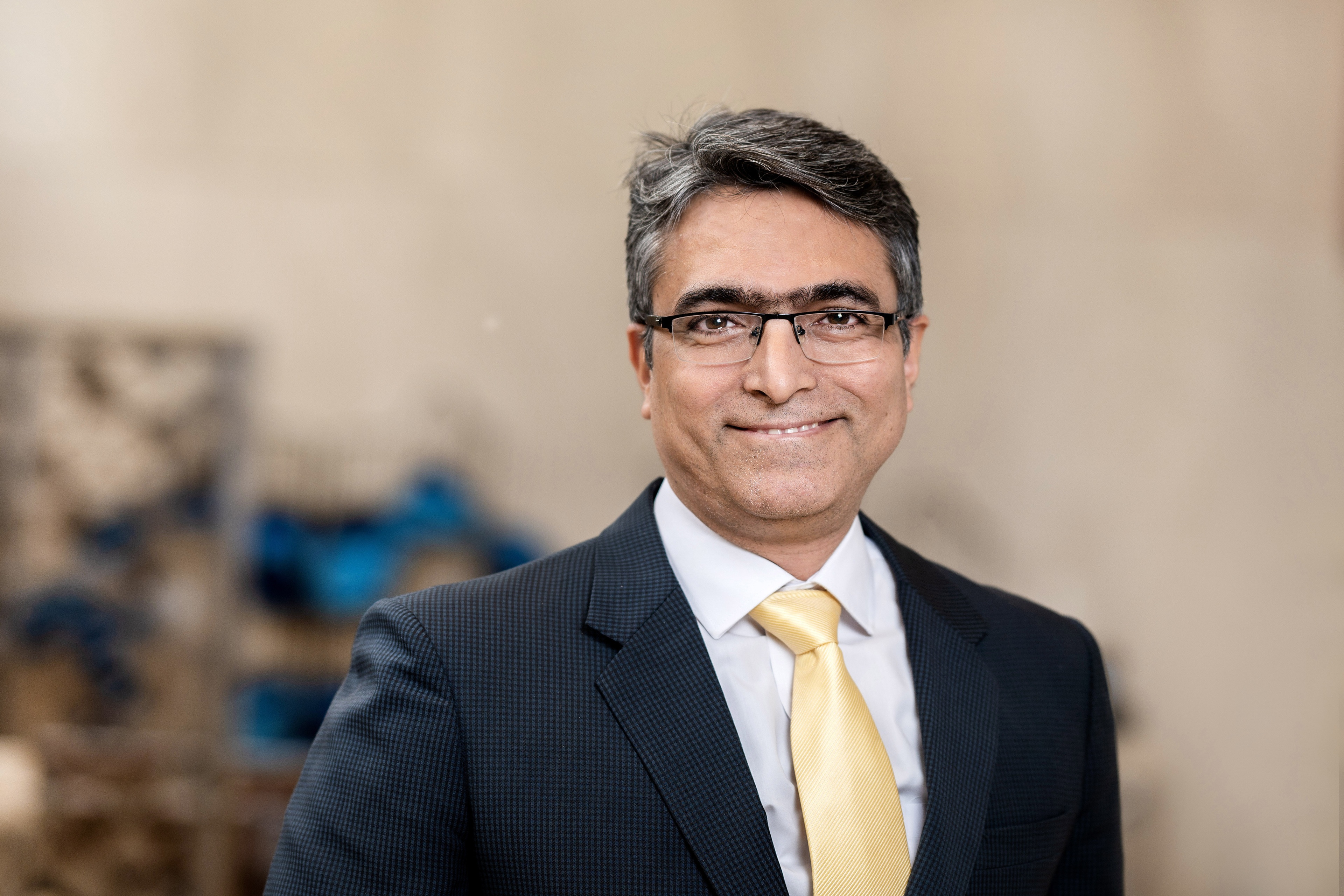
Sumeet Chandna
Partner, Life Sciences, EY-Parthenon India
For your convenience, a full text transcript of this podcast is available on the link below:
Welcome to EY India Insights podcast. In this episode, we discuss how the growing over-the-counter (OTC) segment is reshaping India’s pharmaceutical market, driven by evolving consumer behavior, digital channels and regulatory changes.
We are joined by Sumeet Chandna, Partner, Life Sciences, EY-Parthenon India, who brings over 19 years of experience advising leading Indian life sciences companies on growth strategy, digital transformation and commercial innovation.
Thank you, Sumeet, for joining us today.
Sumeet
Thank you, Pallavi.
Pallavi
The Indian OTC market is projected to grow driven by rising self-care adoption and consumer wellness trends. What are the key factors behind this rapid growth and how is the consumer behavior reshaping the pharma landscape?
Sumeet
Pandemic was an inflection point in India, when people realized that they have to take better care of themselves. As we all know, there was a healthcare infrastructure reset that India went through and at that time, a lot of people started trying different ways to take care of themselves. This is one of the primary reasons why we believe that a more self-aware consumer is now seen in India.
Secondly, e-commerce picked up during this period. Consumers got used to the convenience that e-commerce at-home delivery offered. Third, in the last few years, organized pharmacies have improved retail growth and retail experience of end consumers. Today, it is about 10%; 10 years back, it was around 2%-3%. This aspect also changed accessibility (to OTC products), both online and offline. The rising middle class is another factor contributing to these developments.
And finally, what we have to realize is that there is a pent-up need in the market. For people like you and me who go to a doctor for cough and cold (treatment), one has to wait in long queues, due to which we get a suboptimal experience because doctors do not have enough time for every patient. And for some very basic ailments like cold, cough or light fever, a lot of the doctor’s bandwidth is spent on re-prescribing the same medication. So, wherever the product is safe enough and wherever companies can talk to end consumers directly, those portfolios help doctors also to save time to provide consultation for more serious ailments at their clinics. There are many reasons, but the pivot happened because of pandemic.
Pallavi
Pharma companies are also increasingly pivoting towards prescription to OTC and OTx (prescribed non-prescription products) models. What strategic shifts in brand building, communication and product formats are essential for success in this transition?
Sumeet
All of us buy medicines and we know how unsavvy they look. By design, they are meant for doctors to prescribe; they are not meant for consumers to feel attracted towards the brands and buy them again. But in an OTx or OTC model, that is the time when the brands have to build trust with end consumers.
Trust can be built in different ways. For more serious categories (of ailments), where there is significant pain involved, trust is formed through immediate relief or there are certain clinical trials which support the behavior of the brand. In some other cases, which are not very serious, the perception that is created instantly in the mind of consumer is important. So, packaging plays a role – how to use it, how to reorder, and talking to consumers where they are also becomes very important.
So, changing the way the brand talks to end consumers is different than when it talks to a doctor; the language of communication, the place of communication – all these things make a difference.
Formats also matter. If companies want to encourage repeat use, then enabling consumers to refill or repurchase helps. Take powders, for instance. A lot of powders in the form of sports nutrition or diabetic food are being consumed. As a format, this segment has picked up momentum in the OTC space, whereas in the Rx space, it is mostly tablets and capsules. There are many ways for companies to ensure that consumer trust can be built; these are some of the existing examples that I am quoting.
Pallavi
A formal OTC regulatory framework is under development in India. Tell us how clearer classification, labeling and advertising norms are likely to impact industry growth and consumer trust in OTC products.
Sumeet
First of all, companies that are playing in this market are not investing adequately. That is because the framework is not very clear. What it means is that they can be pulled up by regulatory bodies for doing surrogate marketing to end consumers. So, there is risk associated with what is allowed, not allowed and for which categories of products. Without such framework, there will be companies who will take a chance and go ahead, but the industry at large will shy away from making certain bolder moves.
Also, the fundamental requirement in this industry is for consumers to recognize brands on their own and not necessarily when their doctors prescribe. So, again, for the brands to talk to consumers, they have to adopt simplified means of communication. But when you simplify language and communication, it also means that some of the footnotes move out. It is much like mutual fund advertising, which comes with a footnote that says - this is at risk of the investor. But that is not done in the OTC industry, because there are no regulations that allow you to put a footnote. You have to say it as it is in scientific terms, but then you lose the essence when you speak to the consumer. There is a shying away from investments. Communication also needs to be simplified, but that is not happening because the framework is not clear. As a result, end consumers are not developing trust.
Pallavi
Digital commerce and omnichannel go-to-market strategies are playing a growing role in OTC distribution. What are some best practices for companies to balance retail expansion, digital engagement and portfolio profitability in OTC space?
Sumeet
The industry is far from omnichannel. There are companies that are more prevalent in the physical retail space; there are companies more prevalent on the e-commerce side, and then there are a few companies which are still stuck to the doctor and sell at the chemist near the doctor’s clinic. Very few companies have been able to balance these three sides of go-to-market, and we are far from that.
It also depends on which category you are playing in, but if you ask me, some of the digital-native enterprises like, who started purely as digital or consumer-oriented brands, their journeys have been quite inspiring because despite not having large scale distribution networks, they have been able to grow from 0 to 1, basis their ability to have insight on the consumer need and a strong digital presence.
Of course, the journey from 1 to 10 will require physical infrastructure, but these are good examples from the startup world. I would not like to give more examples because they are all at an early stage and a lot is yet to happen.
Pallavi
Thank you, Sumeet. That brings us to the end of this episode. Thank you so much for joining us and sharing your insights on the evolving OTC landscape and what it means for the future of India's pharmaceutical and consumer health market.
Sumeet
Thank you, Pallavi. Thank you for having me.
Pallavi
To all our listeners, thanks for listening to this episode of EY India Insights. Stay tuned for more conversations on the trends shaping the industries and business transformation.
EY-Parthenon Health and Wellness Strategy Consulting teams help life sciences firms boost growth, resilience & agility through digital & value strategies.
Smart Healthcare Solutions from EY transform hospitals & health systems with data-driven care & connected ecosystems to enhance patient care & efficiency.