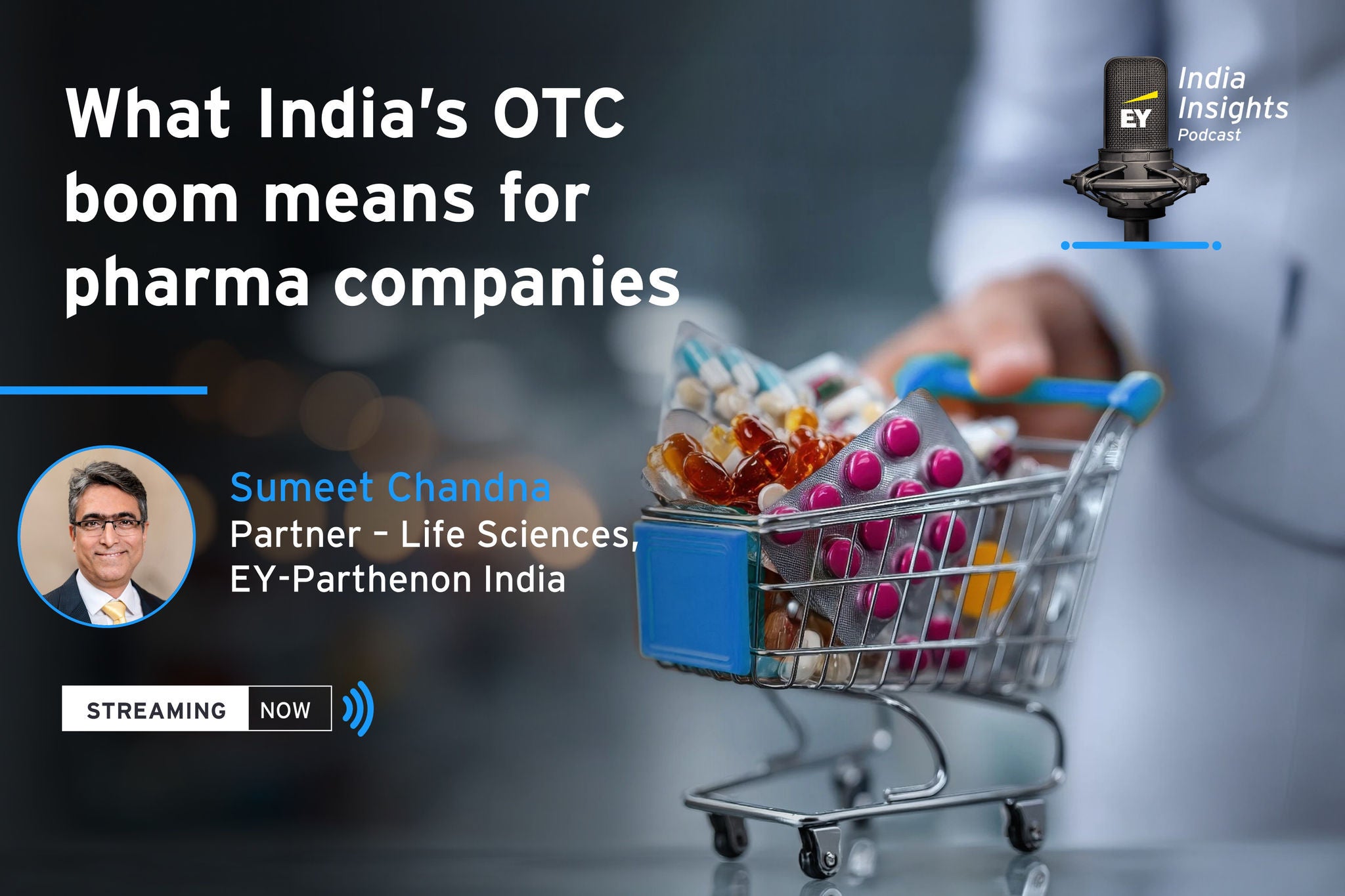
How OTC is reshaping India’s pharmaceutical market

How OTC is reshaping India’s pharmaceutical market

Related topics

As India’s OTC framework formalizes, top pharma players are redefining strategies to capture the next wave of consumer health growth. 


In brief

  • The OTC market in India is projected to grow at about 13% CAGR till 2030, driven by self-care adoption, category innovation and expanding health retail.
  • A formal OTC regulatory framework is under development, creating clearer regulatory pathways for OTC product approvals.
  • Pharma companies are pivoting from Rx to OTC through OTC brand building, OTC retail expansion and digital health commerce strategies.
  • Transitioning to OTx and OTC requires building a resilient OTC P&L by rebalancing spends from prescriber push to consumer pull while protecting Rx equity. 

The Indian OTC landscape is evolving rapidly, fueled by a combination of factors that mirror the nation’s changing consumer behavior and socio-economic factors. Valued at INR47,000 crore in 2024, the market is projected to almost double to INR98,000 crore by 2030, reflecting a strong growth trajectory supported by an estimated 13% CAGR. This momentum is propelled by increasing self-care adoption, category innovation and expanding health retail infrastructure. Strong tailwinds for the sector exist in the form of a consumer wellness boom, new delivery formats and a formal OTC framework.

Self-medication accounts for only 10% of out-of-pocket spends, signaling significant growth opportunities in India’s OTC market. Recognizing the potential, eight out of the top ten pharma companies have launched dedicated consumer healthcare product portfolios.

The proposed OTC compliance requirements under the Drugs & Cosmetics Act intend to define classification, labeling norms and advertising guidelines, creating a safer ecosystem for the OTC drug market in India.

There are 10 key categories in Indian OTC market, with vitamins, minerals and supplements; weight management and wellbeing; and analgesics as the top three. Emerging categories such as women’s health, men’s sexual wellness, sleep, geriatric care and oral health will drive the growth of the OTC category in India.

From Rx to OTC: The rise of consumerization

The journey from prescription dependence to consumer‑led decision‑making is a continuum: Rx → OTx → deemed OTC → frank OTC—requiring calibrated shifts in influence, messaging and channels.

Success stories like Volini, Pediasure and Candid show how strategies for building trust in OTC health products—through benefit-led messaging, innovative SKUs and dual-brand strategies—can unlock scale while protecting Rx equity.

What changes in the playbook?

  • Communication: Move from attribute‑heavy clinical jargons to benefit‑led, relatable narratives (e.g., symptom‑first claims and clear efficacy cues).
  • Formats and SKUs: Encourage trials (mini packs) and family use (value packs); offer consumer‑friendly dosage forms and modern formats (like roll-ons, gummies) to drive adherence and differentiation.
  • Packaging: Build trust at the shelf with clarity on ingredients, dosing and safety; use variant coding and dispensing aids for convenience.

Rx to OTC dilemma

OTC economics differ from Rx: expect higher upfront ATL/BTL and digital spends, offset by scale-driven profitability and annuity-like revenues. Pharma players should reallocate budgets toward consumer awareness, OTC brand building, digital health commerce and improving pharmacy distribution.

Given the P&L investments required and market challenges for OTC brands in India following an Rx to OTC switch, companies often face a strategic dilemma. Key questions center on selecting the right brand, establishing financial viability and determining effective strategies to mitigate the risks involved in the transition. Companies often struggle to make the shift from serving a patient to serving a wellness oriented consumer segment.

Best practices include intelligent brand selection, phasing the switch, maintaining compliant HCP engagement for OTx brands and prioritizing consumer pull through balanced investments across retail visibility, performance marketing and portfolio extensions.

Creating a resilient, future-ready OTC business

Establishing a sustainable OTC business in India requires a sharp focus on the evolving needs and behaviors of the consumer. At the heart of this approach lie four critical parameters, which keep the consumer at the center and power a resilient, future-ready OTC business. 

Strategic go-to-market levers

Winning in OTC requires omni-channel execution tailored to category roles:

  • Chemists: Drive advocacy through retail field force and merchandising.
  • Modern trade and grocers: Invest in visibility and education.
  • Digital pharmacy and e-commerce: Enhance content, platform fit, pricing, promotions and AI-driven performance marketing for consumer health products.

Distribution models evolve from pharma‑only to hybrid pharma + OTC and OTC‑focused networks as portfolios scale—facilitating Indian drug regulations compliance (Drugs Act for “drug” SKUs; FSSAI/AYUSH for nutraceuticals/AYUSH SKUs) and service levels (credit, secondary schemes, data etc.).

GTM decisions around doctor detailing, target reach, retail and field force footprint, and margin structures become key to improving reach and investments.

Digital commerce: From clicks to cures

Digital platforms play a critical role in expanding OTC access in India. Digital channels now account for a significant share in categories like nutrition, dermatology and consumer wellness.

Success demands a data-driven OTC pricing strategy, dynamic promotions, platform-category fit, the right operating model, content marketing and social media marketing.

Download the full pdf

Summary

How OTC is reshaping India’s pharmaceutical marketIndia’s OTC market is at an inflection point, driven by regulatory reforms, consumer wellness trends and digital commerce shaping new growth pathways. The report, ‘From prescription  to consumerization: Unlocking value of OTC brands in India,’ outlines strategic imperatives for pharma companies to pivot from Rx to OTC, including consumer-centric communication, innovative formats and omni-channel presence. The industry comprises pharmaceutical, fast-moving consumer healthcare (FMCH) and new-age D2C companies, who have realized value through their unique business models. To thrive in this competitive landscape, companies need to implement strategic portfolio management, multi-channel go-to-market execution and robust digital integration.

Related articles

Towards scalable, efficient and accountable healthcare in India

Discover insights from the FICCI-HEAL report on building scalable, efficient and accountable healthcare in India through quality, trust and innovation.

How innovation is shaping India’s key sectors

Explore how innovation in India leads growth across agriculture, energy, healthcare via agritech, clean energy, telemedicine, AI and sustainable tech.

How GCCs in India are shaping the future of the Life Sciences industry

Explore how India’s GCCs are transforming future of life sciences from handling core and enabling functions to driving innovation, outcome-oriented growth.

    About this article