








EY refers to the global organization, and may refer to one or more, of the member firms of Ernst & Young Global Limited, each of which is a separate legal entity. Ernst & Young Global Limited, a UK company limited by guarantee, does not provide services to clients.
Recent Searches
How HUL’s Suvidha Centres are transforming sustainable sanitation in Mumbai
With high-quality human-centric services, Hindustan Unilever Limited (HUL) has scaled up Suvidha’s sanitation solution for urban slums in Mumbai, reaching over 550,000 people.
Mumbai’s urban slums struggle with poor sanitation, leaving residents with limited access to clean toilets and basic hygiene. Community toilets are often the only option where household toilets are infeasible in the crowded city. However, these shared toilets have their own challenges—poor cleanliness, lack of ownership, and frequent vandalism—leading to low user satisfaction and service instability.
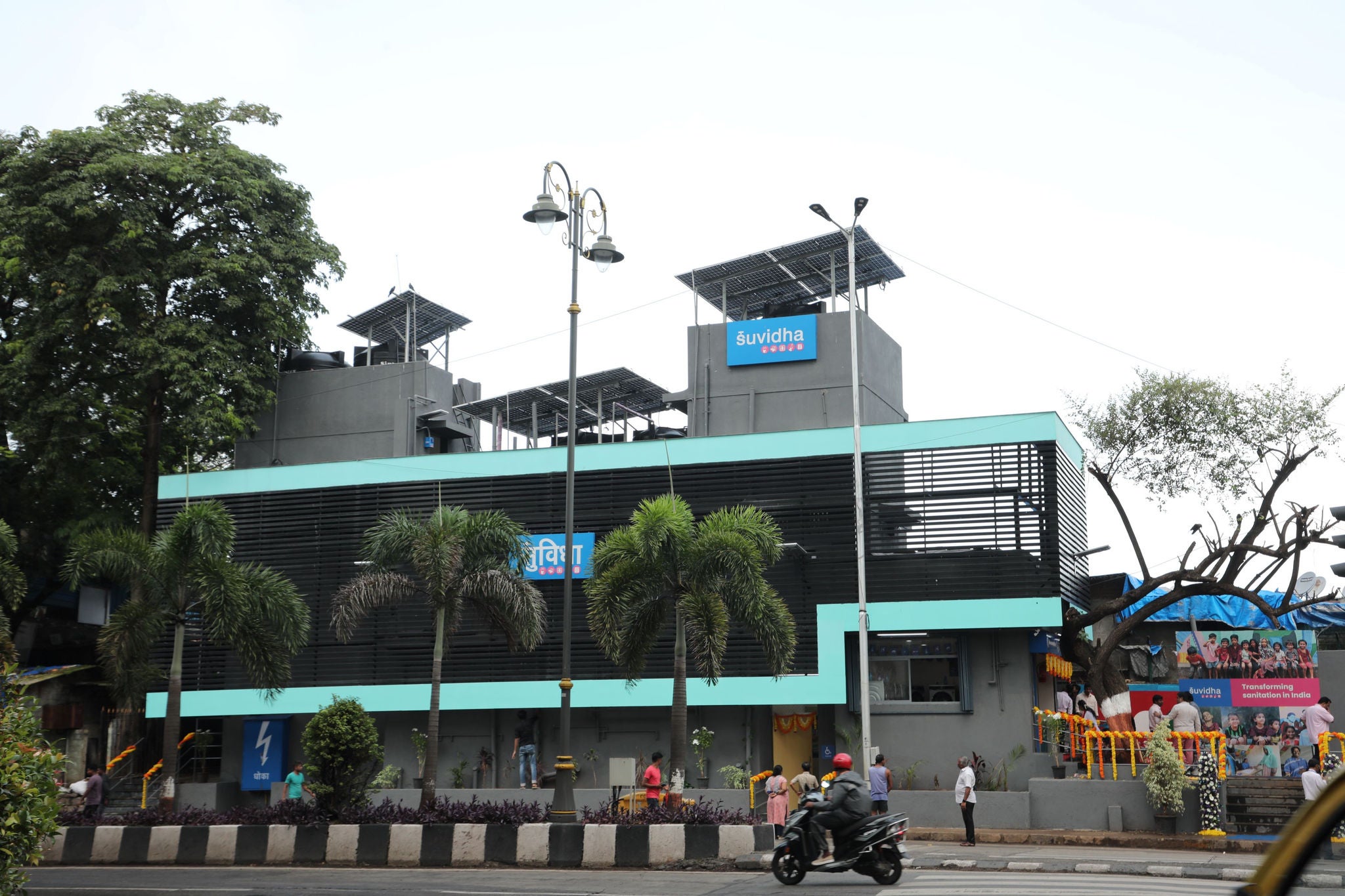
In 2016, Hindustan Unilever Limited (HUL), in partnership with Brihanmumbai Municipal Corporation (BMC), set out to address these gaps with innovative sanitation solutions for urban slums in Mumbai through Suvidha Centres—affordable and dignified hygiene hubs that offer clean toilets, showers, clean water facilities, water ATMs and laundry services under one roof. Built through a public-private-community partnership and aligned with the Swachh Bharat Mission, these community hygiene solutions make sanitation more accessible for low-income households, improving public health in Mumbai.
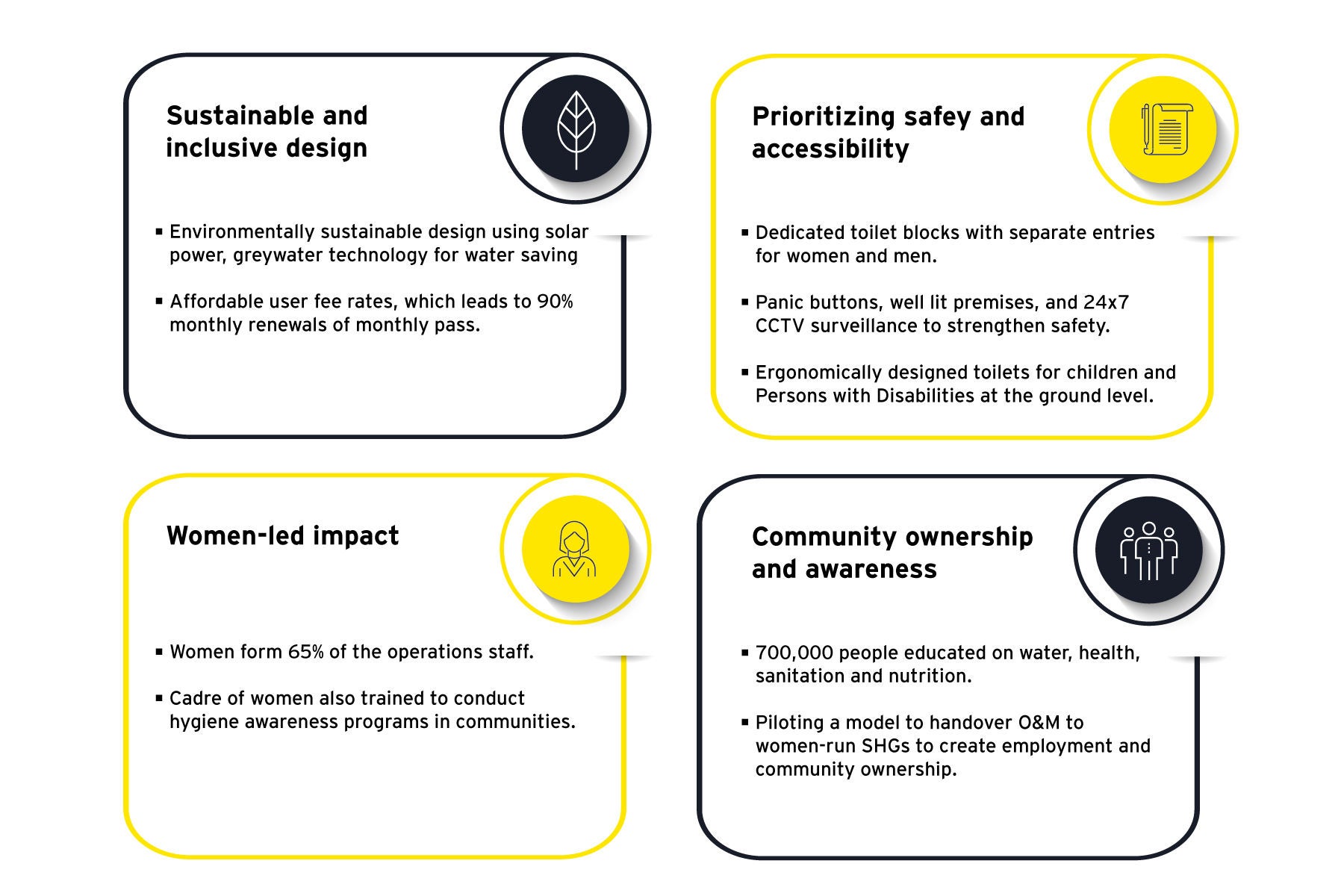
Each center is designed with environmental sustainability in sanitation as a guiding principle, incorporating rainwater harvesting, greywater treatment solutions and solar-powered systems, which makes Suvidha one of the most progressive sanitation centers in India.
Suvidha’s impact goes beyond hygiene as it enables women empowerment, builds climate resilience, and improves public health in Mumbai. However, as more centers were established, a critical challenge emerged: how to maintain consistent service quality at scale. To address this issue, HUL recognized the need for a strong governance and monitoring system that could bring in efficient operations and sustained impact across all locations.
EY played a crucial role in expanding the Suvidha initiative. As HUL’s governance partner, EY leveraged its systems strengthening and institutional capacity building capabilities to help scale the model from a successful city-level pilot of 23 centers to a replicable, nation-ready initiative of nearly double the size.
The collaboration focused on designing structured frameworks to enhance efficiency, accountability and scalability in the community hygiene solutions.
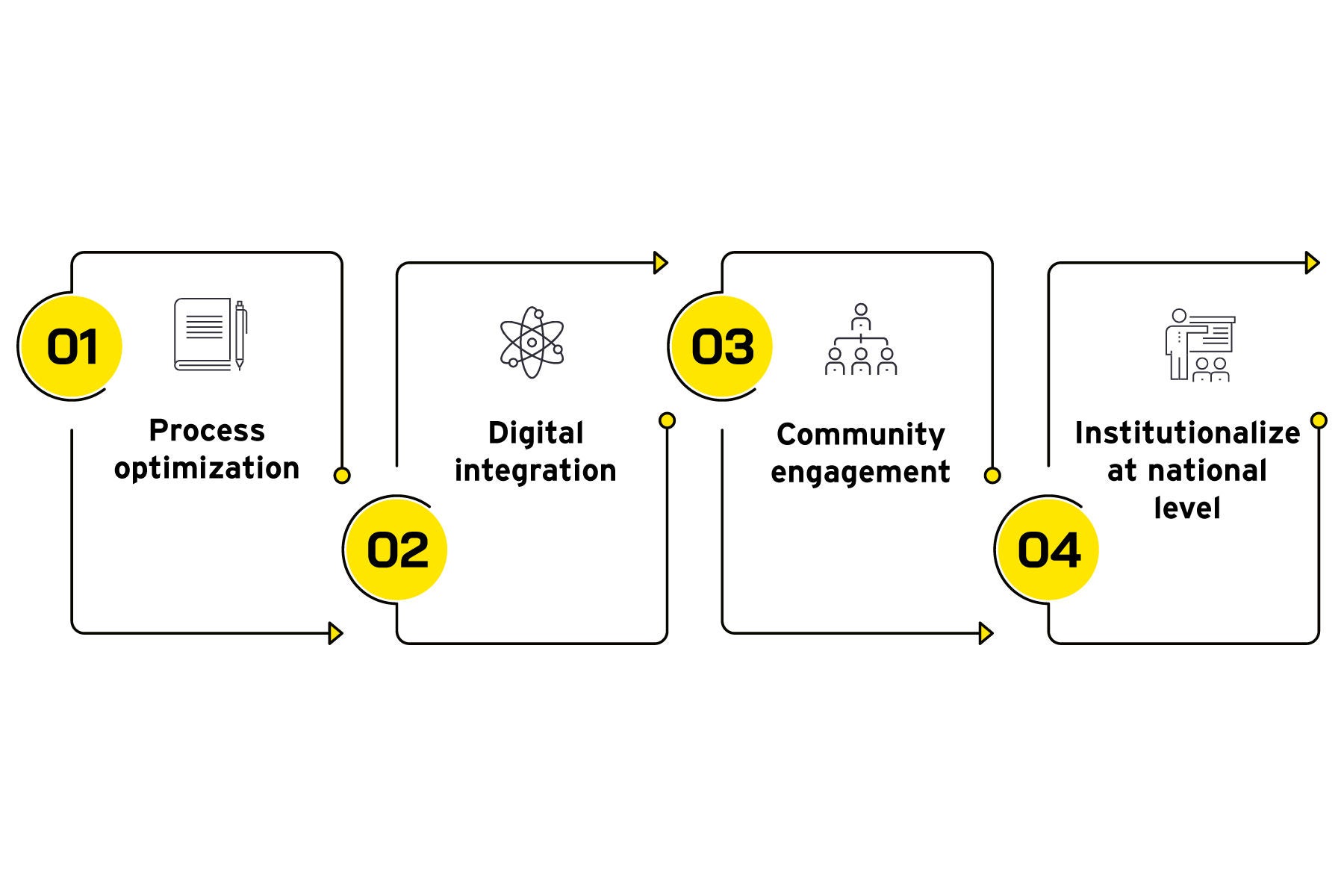
To track progress and enable accountability, EY developed a monitoring framework that defined critical reporting milestones and performance metrics. The team worked closely with Suvidha partners to refine Key Performance Indicator (KPI"s) strengthen data collection processes, and implement tracking mechanisms for construction timelines and vendor-related functions—supporting robust sanitation infrastructure for long-term impact. The team also conducted risk assessments to identify potential challenges across the project lifecycle and proposed mitigation strategies.
EY contributed to process optimization by conducting gap analyses and designing improved workflows. The team developed Standard Operating Procedures (SOPs) for vendor onboarding, billing and service delivery to create a consistent operational foundation while day-to-day execution remained with implementation partners.
Our strategic support in governance and systems strengthening supported HUL to expand the number of Suvidha Centres to 45 by 2027. In 2023, the model reached a national milestone when the ‘Suvidha Playbook’ was presented to the Ministry of Housing and Urban Affairs (MoHUA), leading to an agreement in 2024 to establish the Suvidha Centre for Sanitation and Hygiene as a national Technical Support Unit (TSU).
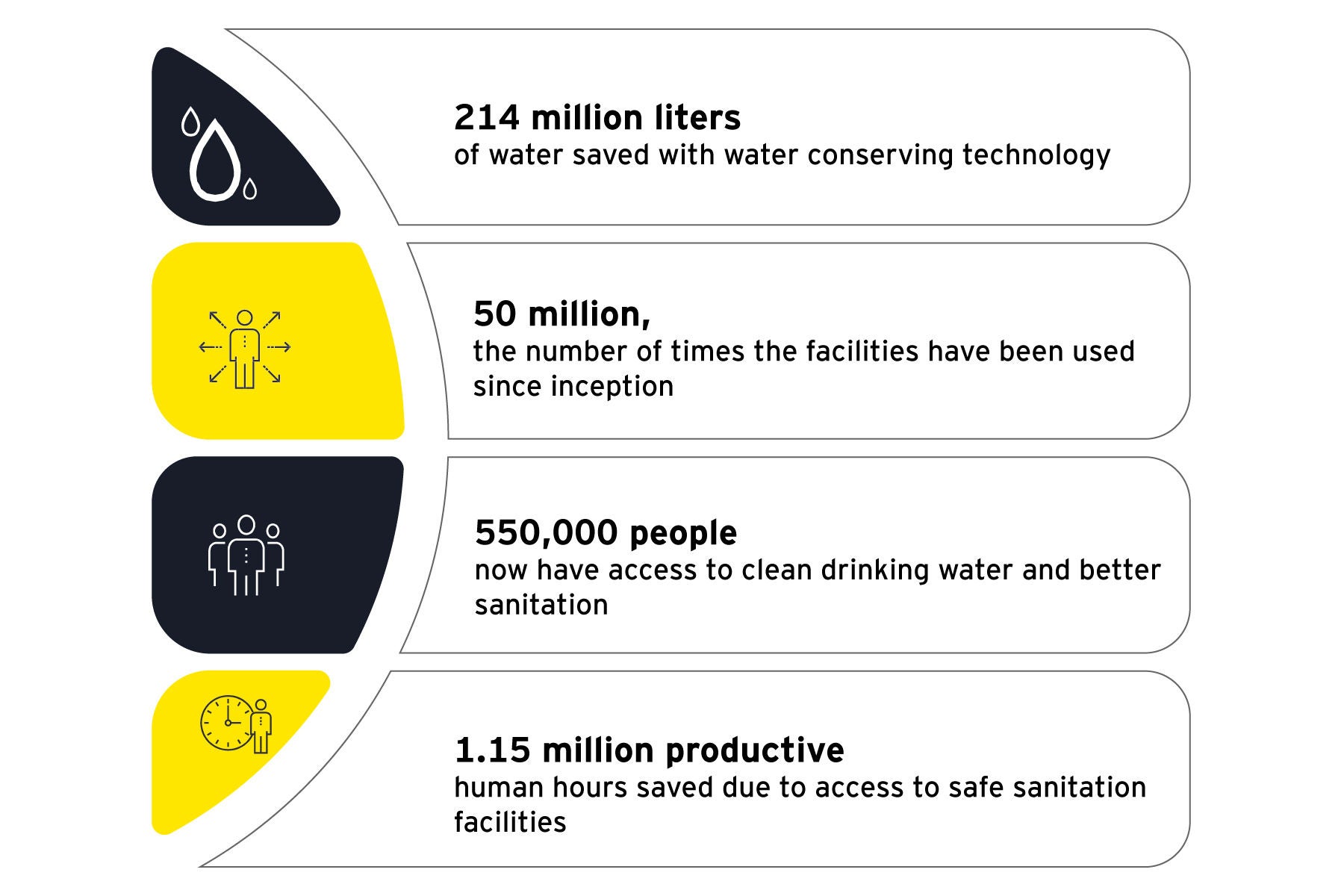
Set up under the ministry’s aegis, the Technical Support Unit (TSU) will replicate leading practices from Suvidha’s model across India by supporting Urban Local Bodies (ULBs) with technical designs, construction specialization, officer training and behavior change communication strategies. As governance partner, EY is leading this effort to institutionalize the project and guide its national scale-up.
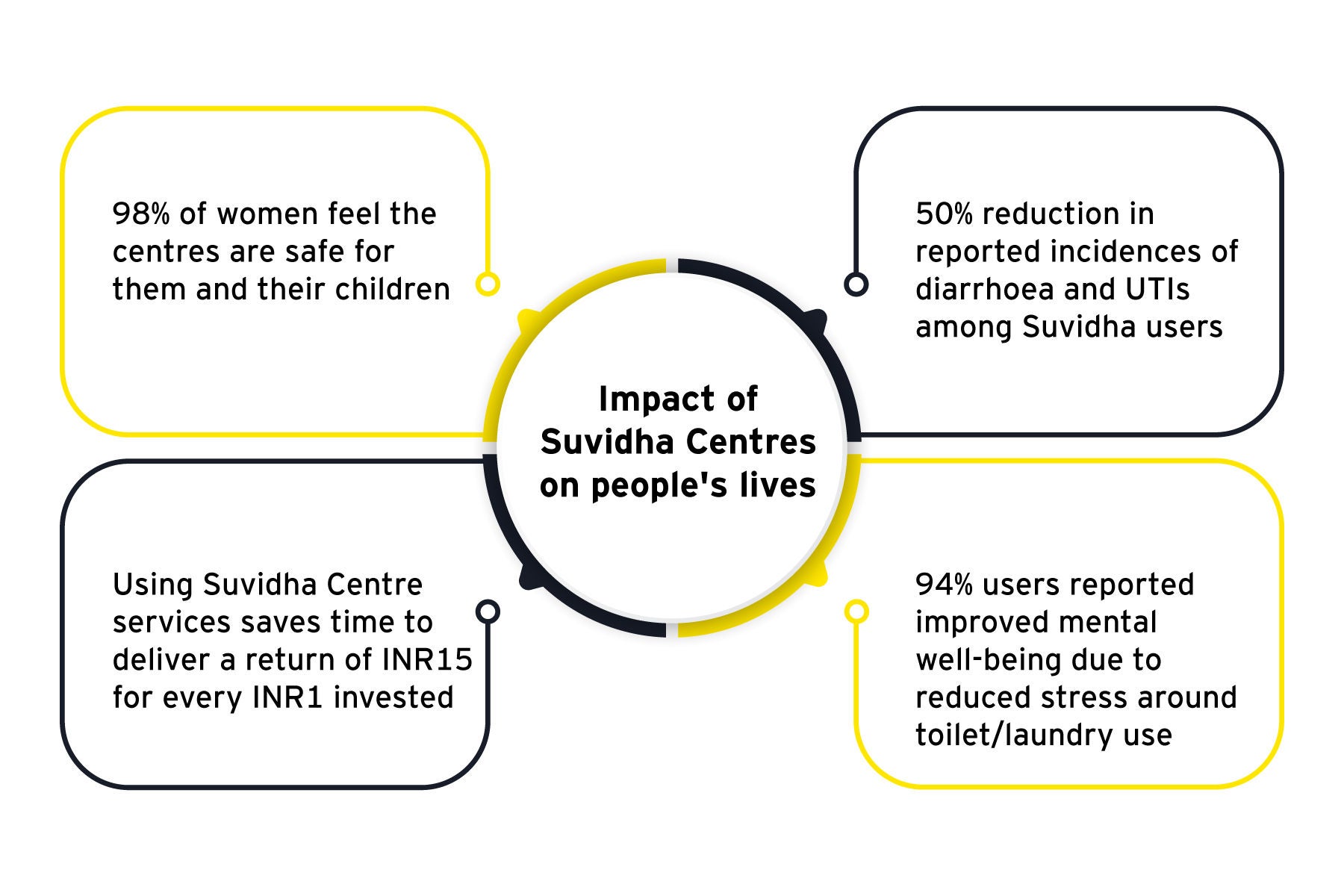
In parallel, EY, along with other project partners, is piloting a model in Mumbai that will help facilitate the transfer of operations and maintenance (O&M) responsibilities to women-run Self-help Groups (SHGs). This involves identifying capable SHGs, building their capacity to manage daily operations, and providing continued on-ground support. By promoting a community-led ownership model, EY will help to establish a sustainable and locally embedded O&M framework for the Suvidha Centres.
All centers provide separate facilities for women, children, and Persons with Disabilities, equipped with ramps, handrails, and child-friendly features. Well-lit premises, CCTV surveillance, security staff, and panic buttons make use of the centres safe. For families in Mumbai’s crowded urban slums, Suvidha Centres have restored something far more fundamental than clean facilities — dignity.
How EY can help
-
Sustainability services and solutions by EY India guide ESG strategy, climate action and reporting and decarbonization backed with data and technology.
Read more -
EY-Parthenon Government & Public Sector Strategy Consulting helps governments drive digital transformation, improve public services, economy & finance
Read more -
EY ESG and sustainability services help organizations address investor concerns, enhance ESG reporting and performance with long-term sustainable strategies.
Read more
Our Latest thinking
How ESG due diligence is influencing private equity deal-making
ESG due diligence in PE deals mitigates risks, ensures regulatory compliance, and drives long-term value through sustainable, responsible investing.
How the demand for green steel in India is shaping future trends
India's green steel demand is set to surge, driven by climate goals, rising consumption, and sustainable shifts in construction, infrastructure, and auto.
How India’s green investments are driving the energy transition in 2025
Read India’s US$62 bn energy transition (2017–2025) into renewables, e-mobility, storage and green hydrogen in tier-1 cities with policy and net-zero goals.