







How India GCCs are powering core industry processes in Retail and CPG sector

How India GCCs are powering core industry processes in Retail and CPG sector

Across merchandizing, sales, marketing, customer services and store operations, India GCCs are fast becoming the driving engine for the sector. 


In brief

  • Global Capability Centers (GCCs) have evolved from back-office support units into strategic hubs, owning innovation across core processes such as merchandizing, sales, marketing, customer services and store operations in the Retail and CPG sector.
  • By combining scale, speed and digital-first execution, they are enabling leadership to focus on strategy and growth while taking care of operational execution.

India is now a global hub for Retail and CPG GCCs, with over 70 companies employing more than 85,000 professionals. This number is expected to grow significantly, with over 25 new GCCs likely in the next two to three years. 

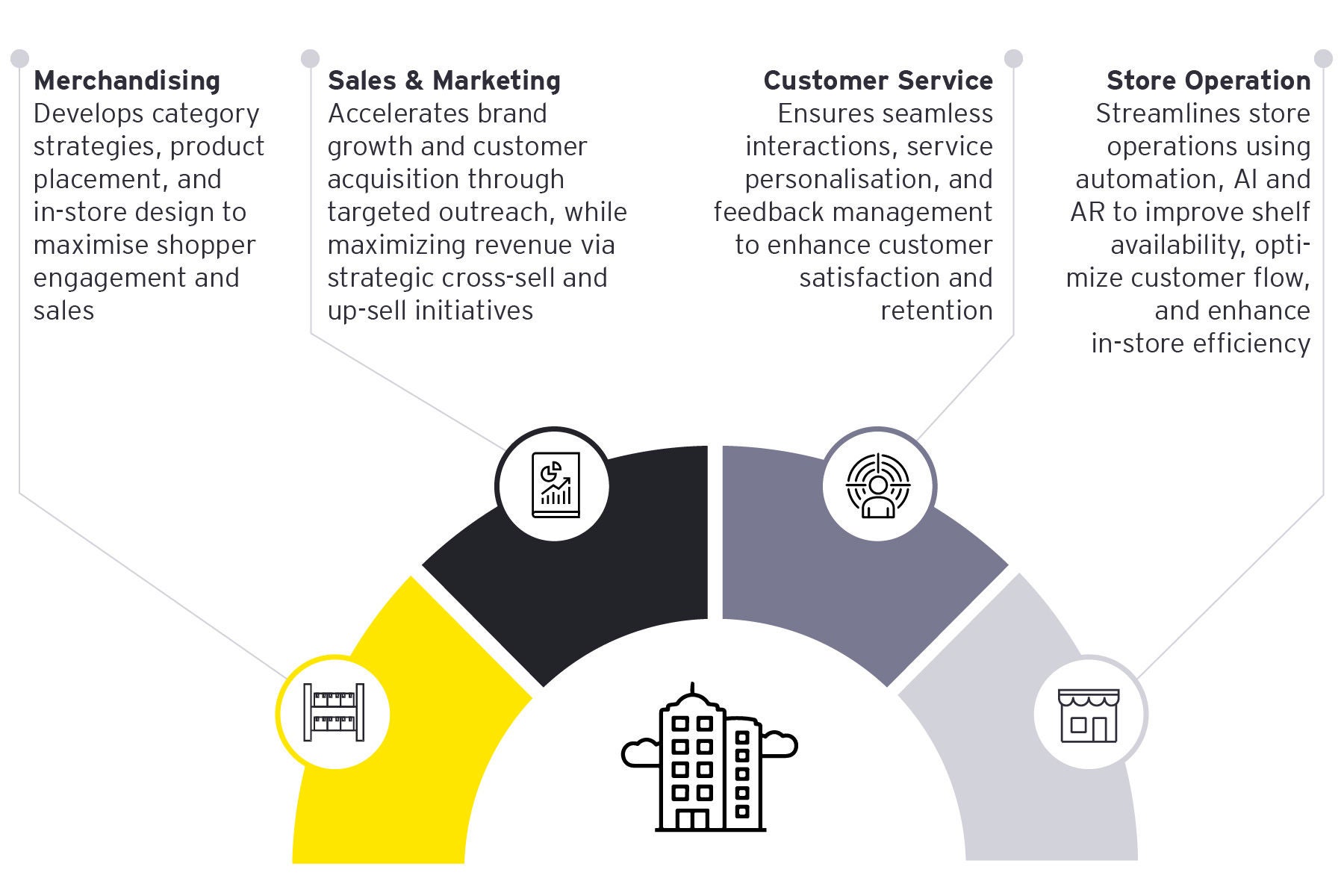
Emerging functions enabled by GCCs in Retail & Consumer Product Goods sector

Emerging function enabled by GCC in CPR sector

How GCCs are powering global Retail and CPG brands

A. Merchandizing

Merchandizing is a critical driver of growth for Retail and CPG brands, and GCCs are now central to this mission, acting as strategic engines that bring data, digital capabilities and operational scale to global merchandizing teams.

  • Assortment planning and forecasting is increasingly becoming analytics-driven, with GCCs using AI to analyze item-level sales, seasonal patterns and regional buying behavior. This enables highly localized product mixes and smarter inventory allocation, ensuring the right SKUs reach the right stores at the right time, directly impacting topline growth.
  • Pricing operations for private label and franchise brands are also supported by GCCs through data-driven insights, including benchmarking across promotional pricing, markdown strategies and regional price sensitivity analysis. This helps brands remain competitive while protecting margins and ensuring regulatory compliance.
  • Space planning and visual merchandizing are being centralized as well. GCCs design digital planograms, optimize store layouts, and use shopper movement and behavior analytics to improve foot traffic flow and boost visibility in high-impact zones such as windows and end caps.
  • Sales teams are being empowered by GCCs through AI-powered image recognition, enabling real-time tracking of on-shelf availability and product placement accuracy, leading to faster merchandizing decisions and more effective promotions.

B. Sales and marketing

India-based GCCs are becoming strategic partners for global retail and CPG brands, reshaping marketing with a blend of creativity, intelligence and agility.

  • Market research and analytics teams in GCCs are empowering global brands with deep market intelligence and actionable insights covering consumer behavior, competitive benchmarks, pricing strategies, demand forecasts, marketing ROI, cross-selling opportunities and sales performance.
  • Marketing communications and advertising are increasingly being managed end to end by these centers, covering promotional activities, campaign execution and content creation. India is emerging as a creative hub for global brands, handling 3D imaging, static creatives, email campaigns, social media and loyalty marketing. GenAI tools are reducing content creation time by up to 95 percent, significantly accelerating time to market.
  • Digital marketing operations are also being centralized, including SEO and SEM, paid campaigns, influencer engagement and online community management. Beyond execution, GCCs are enabling real-time monitoring of sales and customer data, allowing instant campaign adjustments and agile responses to shifting consumer behavior.
  • On the sales operations side, GCCs are streamlining activities such as quotation management, contract management, and CRM administration through digital platforms, automated workflows and process standardization. End-to-end order management, from order creation to fulfillment and returns, is also being delivered efficiently from India.

EY GCC Leadership Dialogues

Join Arindam Sen, EY India Partner & GCC Sector Lead, in a video series with top leaders on global capability centres highlighting growth & future trends.

Know more

C. Customer services

GCCs are not only transforming customer service functions but are also driving innovation by integrating AI, machine learning, and automation to deliver faster, more reliable and highly personalized support.

  • Product substitution is emerging as a key area of innovation, with GCCs building machine learning models to recommend the most relevant alternatives for out-of-stock items. This improves customer satisfaction while ensuring continuity in the shopping experience. In parallel, well-trained store associates are being enabled to proactively guide customers toward suggested alternatives, making the experience seamless and personalized.
  • Customer journeys are being enhanced through immersive experiences such as 3D shoppable rooms, allowing customers to virtually explore, visualize products and have a more interactive shopping experience. At the same time, search relevance is being improved to ensure better product discovery and higher satisfaction across the entire journey.
  • Machine learning-driven size and fit recommendations are also gaining traction in fashion retail. By analyzing customer data and purchase behavior, GCCs are helping reduce return rates and improve confidence in online purchases.
  • Acting as centralized hubs for customer queries and feedback, GCCs are resolving issues seamlessly or intelligently routing them to the appropriate teams. Through automated query handling and advanced feedback analytics, they are delivering rapid responses, ensuring precision and continuously elevating service quality.

D. Store operations

GCCs are redefining how stores are run by integrating advanced technologies to create smarter retail environments:

  • AR-based assistants developed by GCCs are enabling store staff to scan shelves and instantly identify products that need restocking and their correct placement. This is leading to faster replenishment cycles and improved shelf availability.
  • To optimize customer flow, GCCs are deploying edge devices that monitor foot traffic and queue lengths. These analytics tools are helping brands improve checkout efficiency during peak hours, ensuring smoother and more responsive in-store experiences.
  • Workforce planning analytics delivered by GCCs are helping retailers deploy the right number of associates during peak hours, reducing customer waiting times, improving service levels and optimizing costs.
  • GCCs are also addressing inventory shrinkage by combining advanced data analytics with AI-enabled cameras to monitor store activity and detect anomalies. These solutions help identify potential shoplifting risks in real time, reducing losses and strengthening store security.

Contributors:

Summary

India’s GCCs have evolved from cost-focused back-office units into strategic powerhouses driving innovation, efficiency and customer centricity for global retail and CPG brands. By leveraging advanced analytics, AI, machine learning, automation and digital technologies, these centers are transforming every stage of the buy-to-sell value chain. Their ability to deliver scale, speed and digital-first solutions positions India as a critical hub for global retail transformation.

With GCCs managing end-to-end processes and delivering real-time insights, leadership can focus on brand vision, market expansion and product strategy, while the centers function as execution and innovation engines that power a globally integrated and agile operating model.


Related articles

How Eastern India can lead the next GCC wave

Eastern India is emerging as a strategic GCC hub as enterprises shift to intelligence-led models powered by AI, data and automation, with Kolkata at the core.

How do global capability centers drive compliance and efficiency in intercompany processes?

Read how GCCs can manage intercompany processes, prevent piling up of intercompany balances and optimize processes from purchase order stage to month-end close.

How GCCs in India are shaping the future of the Life Sciences industry

Explore how India’s GCCs are transforming future of life sciences from handling core and enabling functions to driving innovation, outcome-oriented growth.


    About this article

    Authors