





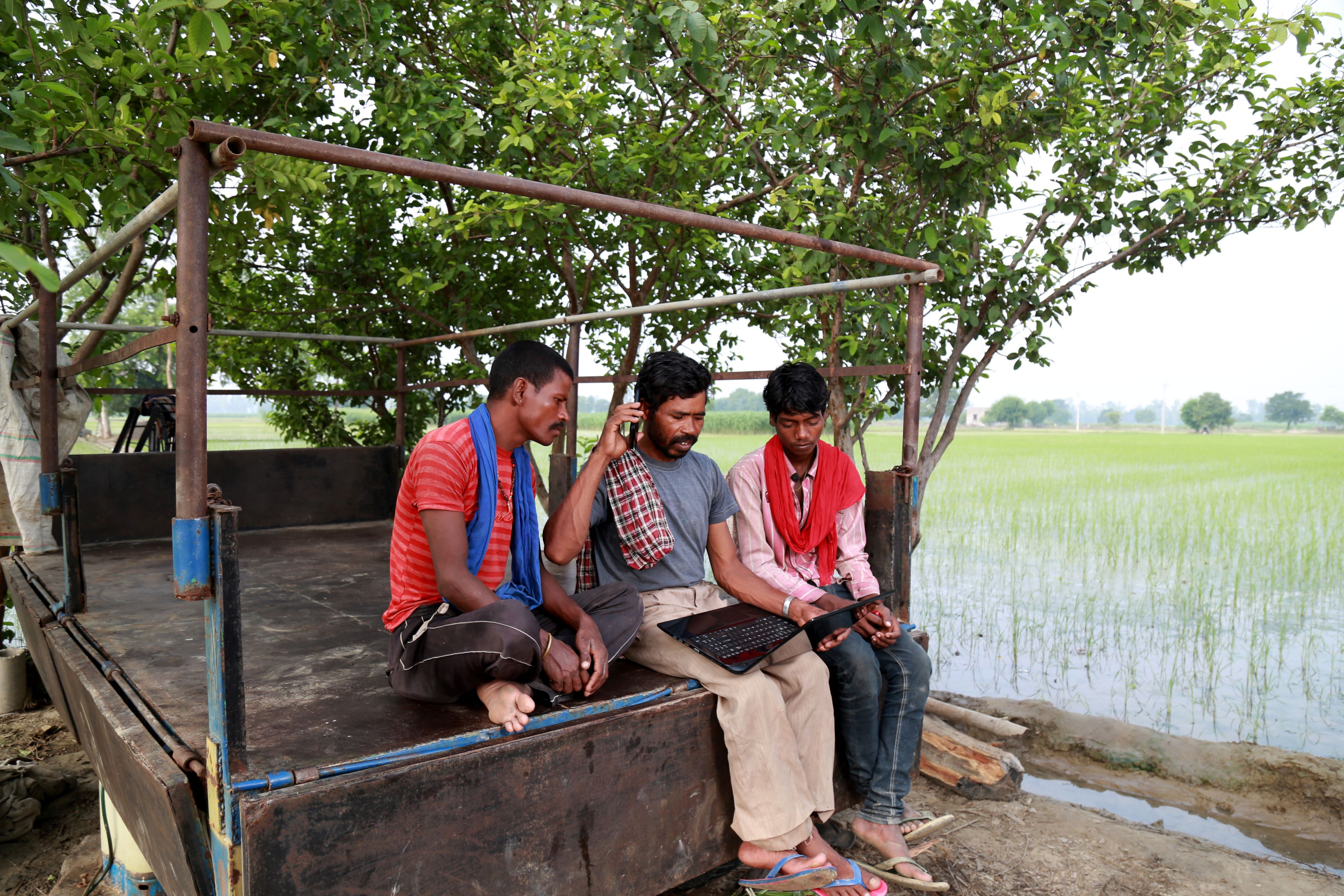

Expectations from Union Budget 2026: Agri sector’s access to finance

Expectations from Union Budget 2026: Agri sector’s access to finance

The Union Budget 2026 will likely include announcements improving farmers’ access to credit and finance.


In brief

  • We may expect announcements in Union Budget 2026 which improve farmers’ access to credit and finance, particularly small and marginal farmers and women.
  • With the growing participation of women in the farm sector, Union Budget 2026 will likely include a policy approach to improve women farmers’ credit.
  • Building on recent reforms, we may expect further strengthening of investment credit policies in the agriculture sector.

With the approach of Union Budget 2026, agricultural credit for farmers will be on the spotlight. The sector will watch closely for measures that can close long-standing gaps in access to finance. With agriculture supporting the livelihoods of about 46.1% of India’s workforce1 — a significant proportion of rural households combining agriculture with non-farm employment — the case for easier, more reliable and more climate-ready agricultural credit has strengthened. At the same time, the government must balance a farm finance policy with broader priorities around financial inclusion, digital adoption and targeted support for small and marginal farmers.

India Tax Platform

Transform your tax functions with EY’s India Tax Platform - an AI-powered, cloud-based digital tax solution offering automation, insights, and unified dashboards.

Know more

In recent years, the Budget has prioritized expanding rural credit access, strengthening interest subvention and positioning the Kisan Credit Card (KCC) as the backbone of farm financing. About 7.75 crore KCCs were operational as of March 2024, and nearly 5.9 crore farmers have been mapped under the Mission for Saturation of KCC (MISS KCC) scheme through the Kisan Rin Portal2. Microfinance offers flexibility for non-farm needs but at higher costs (12%–20%). In contrast, KCC provides subsidized crop loans at an effective 4% interest rate, making it a cornerstone of affordable farm credit3. The next phase in Kisan Credit Card expansion must move from scale to effectiveness by deepening coverage, simplifying access and aligning credit more closely with farm-level realities. 
 

Women farmers’ credit will likely to be a key focus area. Periodic Labour Force Survey (PLFS) data shows that the share of women workers in agriculture rose from 57% in 2017–18 to 64.4% in 2023–244. Nearly 77% of rural working women remain engaged in agriculture5. However, this rising participation has in most cases not translated into financial inclusion and proportional access to formal farm loans. Gaps persist in account ownership, access to collateral-free credit, and integration with cooperatives and self-help groups. These gaps are shaped by household-level asset ownership patterns, which can limit women’s control over financial decisions and increase exposure to debt without corresponding agency. Union Budget 2026 could create opportunities to begin narrowing this disconnect between participation and access.

Stay informed on Budget with EY India podcasts

Listen to India Union Budget 2026 pre-budget & budget insights, key tax reforms, sector priorities, policy impacts, and strategic insights for business and growth. 

Know more

A pivotal moment for agricultural credit

While the government has signaled intent to expand agricultural credit, Union Budget 2026 is expected to clarify how this will translate into outcomes while addressing KCC challenges like borrower segmentation, as KCC primarily serves cultivators/sharecroppers. The Reserve Bank of India has raised the collateral-free agricultural loan limit from INR1.6 lakh to INR2 lakh per borrower and aligned it with priority-sector lending norms6. Even so, credit growth has moderated, with bank lending to agriculture and allied activities growing 10.4% y-o-y as of March 2025, down from 20% a year earlier7
 

More critically, the composition of credit remains skewed. Long-term investment credit for irrigation, storage, climate-resilient infrastructure and mechanization continues to lag short-term crop loans. The Budget can build on recent reforms by improving credit appraisal, strengthening risk-mitigation frameworks and incentivizing diversification into allied activities such as dairy, fisheries and horticulture.

Simplify Global Trade with Advanced Automation Solutions

EY GTA is an intelligent technology platform supporting comprehensive global trade transactions and is a one stop solution for Customs and Foreign Trade Policy compliance. 

Know more

What Union Budget 2026 can focus on:

Union Budget 2026 must focus on three priorities—improving credit depth and quality, strengthening KCC and e-KCC adoption, and enhancing access to credit for women farmers. 

  • Set clearer targets for agricultural and allied credit, with a push toward low-credit-intensity regions and investment-led lending.
  • Link crop loans with medium- and long-term financing for irrigation, mechanization and climate-resilient assets.
  • Strengthen digital credit appraisal through the Kisan Rin Portal to reduce delays and improve underwriting quality.
  • Accelerate universal e-KCC adoption through Aadhaar-based verification and integration with land records and crop data.
  • Rationalize KCC sub-limits for allied activities to reflect evolving farm models and climate risks.
  • Set measurable targets and interest-subvention support for women-owned and jointly held KCC accounts.

With agriculture contributing about 18.2% of GDP (at constant prices)8 and employing nearly half the workforce, Union Budget 2026 can reinforce a more resilient and inclusive credit ecosystem by addressing structural gaps while aligning incentives with sustainability, diversification and long-term growth. These measures will not only help in improving rural credit access through policy reforms but also accelerate India’s transition toward climate-smart agriculture

Summary

Improving access to credit and finance continues to be an ongoing priority for India’s agriculture sector. Many developments have shaped the growing need for greater and easier access to credit, including climate change, increasing participation of women and the growing number of small, marginalized farmers. The sector would be looking forward to Union Budget 2026 for policy measures to address current challenges in credit in finance.


Related content

Expectations from Union Budget 2026: Climate-resilient agriculture

Union Budget 2026 is expected to boost climate-smart agriculture, improve small farmers’ income, expand credit access, and promote sustainable farming.

Expectations from Union Budget 2026: Advancing access to agri finance

Union Budget 2026 is expected to boost India’s food security via agri reforms, self-sufficiency in oilseeds & pulses, resilient supply chains, and nutrition.

Budget 2026 expectations: India’s energy future and clean energy transition

Explore how support for energy ecosystem, supply chain, modern grids and affordability is essential.

8m 8s

    About this article