









EY refers to the global organization, and may refer to one or more, of the member firms of Ernst & Young Global Limited, each of which is a separate legal entity. Ernst & Young Global Limited, a UK company limited by guarantee, does not provide services to clients.
Recent Searches
How Tata Steel became a leader in risk management in the steel sector
Proactive risk mitigation has helped the steel giant advance its ambition of becoming a globally respected organization built on transparency.
India ranks as the world’s second-largest crude steel producer, recording 151.14 MT of crude steel and 145.30 MT of finished steel in FY25(1). Among its major producers, Tata Steel stands as one of the premier steel manufacturers, with an extensive geographic footprint spanning Europe, Southeast Asia and numerous other strategic markets. As the company pursued accelerated growth, leadership recognized that scaling operations while maintaining operational integrity required a fundamental shift in how the company detected and prevented potential risks with real-time monitoring and enterprise analytics. The steel sector faces multiple risk management issues, which crop up from complex supply chains, high value inventory and market pressures. Some of the common issues include fake invoices, vendor collusions, financial statement misappropriations, cyber risks and counterfeiting. Moreover, the industry also faces pressures of market volatility, with a significant amount of fluctuation in global steel prices and raw material costs. In addition, third-party risks are common, exposing companies to violations.
The company’s business functions generated vast amounts of transactional data daily, which held critical but largely untapped insights into proactive risk management. Two critical gaps threatened to undermine the governance framework. The absence of real-time risk monitoring prevented analysis of high volumes of data flowing through systems, creating blind spots, where anomalies or policy violations could go undetected for extended periods. Also, a disconnected data architecture siloed information across core enterprise applications, preventing cross-functional visibility needed to detect risk patterns and compliance breaches. Without unified data correlation, suspicious transactions could slip through unnoticed.
To advance its growth strategy while reinforcing regulatory compliance and operational integrity, Tata Steel Limited (TSL) implemented SAP Business Integrity Screening (BIS) — an advanced enterprise analytics platform designed to detect fraud, anomalies and policy breaches in real time. By continuously monitoring high volumes of transactional data across procurement, finance and supply chain operations, TSL engaged EY as their implementation partner.
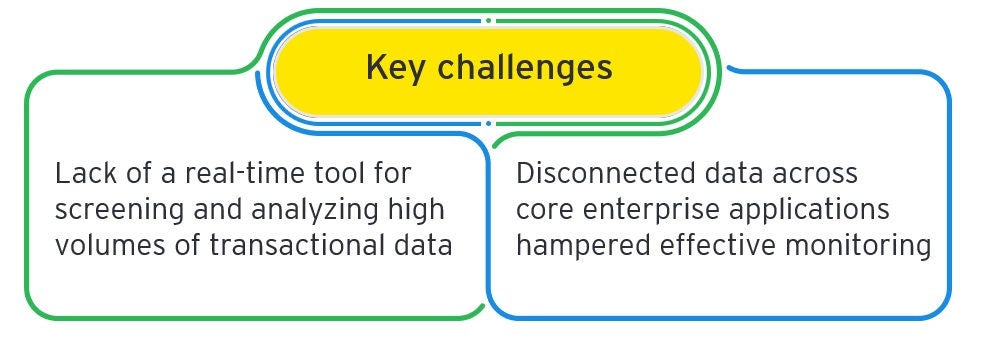
These challenges posed significant risks such as potential financial losses, regulatory non-compliance and reputational damage.
Tata Steel initiated a transformative collaboration with SAP and EY to enhance regulatory and supply chain compliance, as well as strengthen operational integrity for sustainable growth. This engagement positioned the company ahead of competitors as one of the first in the Indian steel industry to deploy SAP Business Integrity Screening (BIS) for anomaly detection in transactions. With the help of the system, key stakeholders can receive alerts about risks proactively and work towards their resolution. This system is based on a transformational exercise spread across its crucial supply chain components, involving technology, process participants and leadership. The transformation unfolded through several strategic phases:
Technical integration: Implementation of SAP BIS with real-time integration to SAP S/4HANA, enabled rapid, in-stream analytics. With user-friendly configuration requiring minimal technical knowledge, Tata Steel’s teams could adapt monitoring rules as their risk landscape evolved.
Custom rule development: Through collaborative workshops, the company identified key risk indicators across procurement, finance and supply chain operations. These insights informed the development of detection rules that could flag suspicious patterns, from unusual vendor relationships to anomalous payment patterns or inventory discrepancies.
Cross-system monitoring: The platform generated alerts for suspicious activity across both SAP and non-SAP systems, creating a unified monitoring layer that transcended the previous data silos.
Knowledge transfer: EY conducted comprehensive training programs for Tata Steel’s internal audit team, empowering them to detect risk indicators and data anomalies, interpret alerts and take appropriate action.
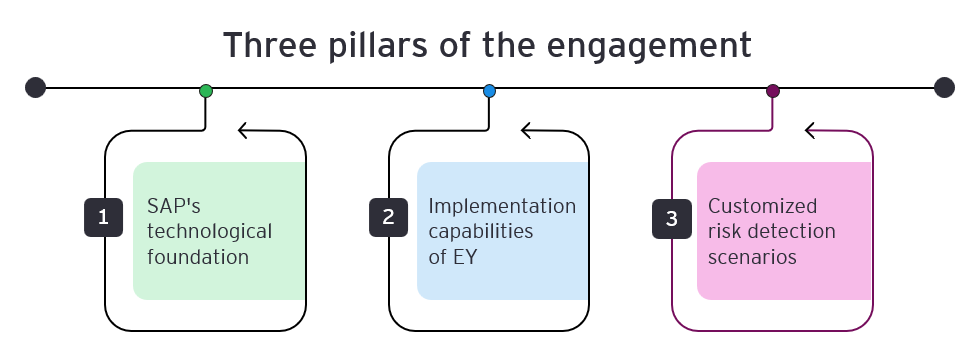
SAP’s advanced technology foundation, governance and compliance capabilities of EY, customized risk scenarios and Tata Steel’s operational leadership together created a resilient, data-driven monitoring environment. By aligning with global compliance benchmarks and embedding real-time integrity checks, the company strengthened its defenses against irregularities and risks, highlighting the role of analytics in improving enterprise data integrity. This comprehensive exercise enables the system to alert decision-makers against all aspects of risk across the supply chain, big or small, enabling them to take proactive actions to mitigate potential risks.
With SAP BIS, the steel giant is ready to enhance its overall governance by screening a large volume of data across SAP and non-SAP systems and providing near real-time alerts on exceptions. The success of this implementation demonstrates that real-time risk detection and compliance monitoring are essential for sustainable growth in an increasingly regulated and scrutinized business environment. In addition, the collaboration between Tata Steel, SAP and EY will strengthen the strategic alliance among these organizations.
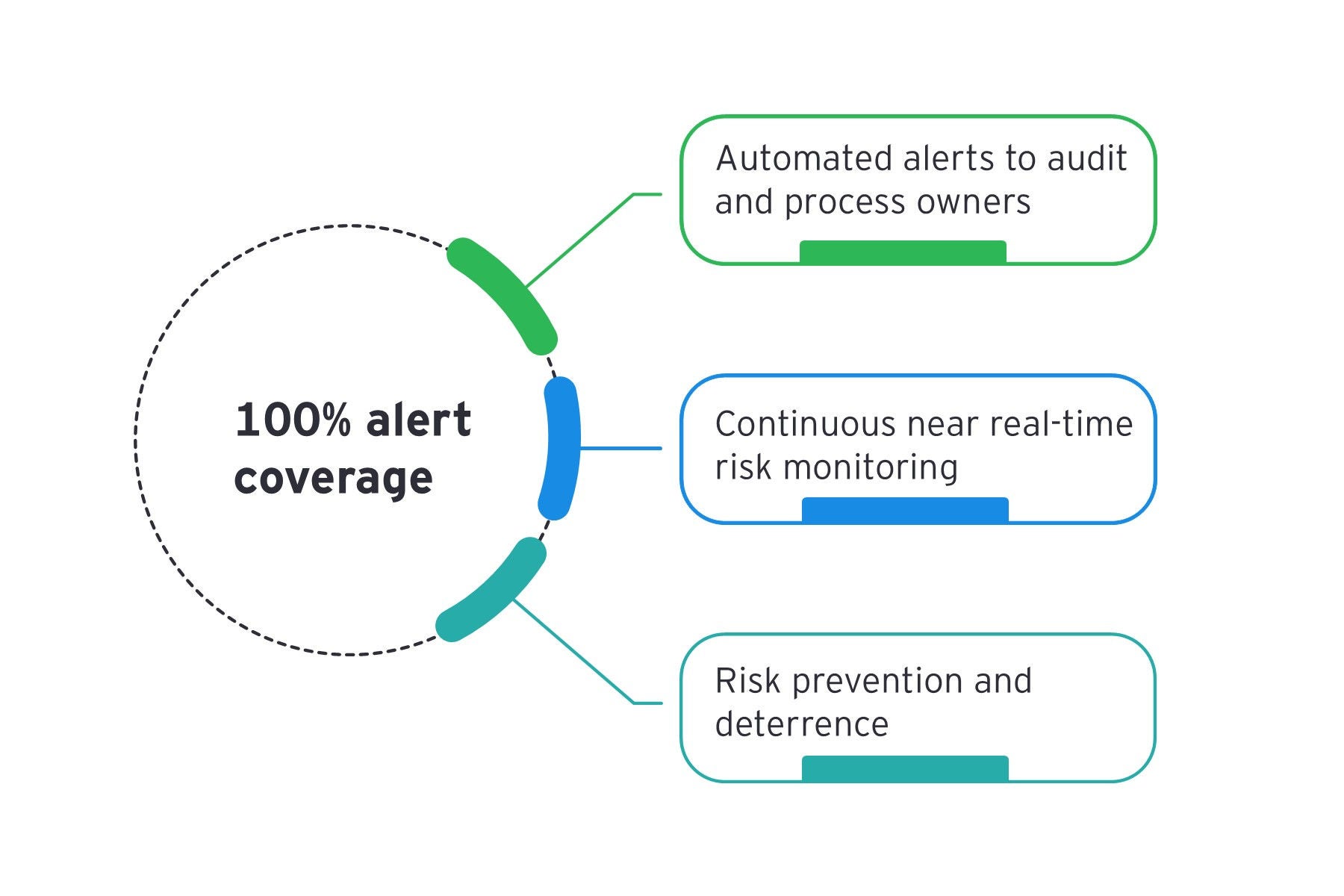
The implementation of SAP BIS transformed Tata Steel’s approach to operational integrity and risk management. The company achieved 100% proactive alert coverage for audit and process owners across critical business functions, creating a continuous risk detection and deterrence mechanism. With real-time monitoring, the platform enabled the identification of data anomalies and compliance risks using advanced enterprise analytics, leading to proactive risk prevention. Also, with continuous monitoring across all integrated systems, Tata Steel gained better visibility into its transactional landscape. The ability to trigger intelligent alerts and make swift, data-driven decisions meant that potential issues could be addressed immediately. The company’s ability to demonstrate robust fraud detection and prevention capabilities also strengthened stakeholder confidence— from investors and regulators to customers and associates.
How EY can help
-
Explore AI risk & governance services at EY with trusted frameworks, compliance, audit & controls for AI risk management and ethical, secure AI deployment.
Read more -
EY’s Cloud Governance Services enhance security, compliance, and resilience with expert guidance on risk management, regulatory alignment, and robust governance.
Read more -
Risk Consulting Services at EY helps identifying and managing risks across domains like Digital Risk, Enterprise Risk, Financial Services Risk, Actuarial and Risk Solutions to drive business success.
Read more
Related content
How HUL’s Suvidha Centres are transforming sustainable sanitation in Mumbai
HUL’s Suvidha Centres are boosting sustainable sanitation in Mumbai - clean toilets, solar-powered hygiene hubs, community governance and public health impact.
How a global MNC nearly halved its BGV time with Managed Services
A global MNC halved background verification time with managed services, boosting onboarding efficiency, cutting risks, and improving vendor performance.
How better SAM helped a telecom company save 20% of cloud spend
Discover how a global telecom company enhanced its Software Asset Management (SAM) maturity with EY SAM platform, achieving improved tech deployment, process efficiency, and cloud optimization.