










EY refers to the global organization, and may refer to one or more, of the member firms of Ernst & Young Global Limited, each of which is a separate legal entity. Ernst & Young Global Limited, a UK company limited by guarantee, does not provide services to clients.
Recent Searches

Union Budget 2026-27 highlights
Our team of senior tax and policy professionals decodes and analyzes various aspects of Budget 2026.
Join the conversation
#EYonBudget2026
EY Leaders on Budget 2026
- Agriculture
- Allied Health Professionals
- Artificial Intelligence
- Chemicals
- Consumer Products and Retail - 01
- Consumer Products and Retail - 02
- Consumer Products and Retail - 03
- Customs
The Budget reflects a strategic shift from allocation-driven spending to acceleration-oriented reforms, aimed at closing structural gaps while strengthening India’s export competitiveness in a challenging global environment. The emphasis on high-value crops such as coconut, cashew and walnuts signals a forward-looking diversification strategy with strong income potential, contingent on improvements in quality, post-harvest management and value chain integration.
The Mahavistar initiative stands out as a systemic intervention to bridge last-mile knowledge gaps by transferring validated research to farmers, leveraging Digital Public Infrastructure like AgriStack and AI-enabled advisories to enhance productivity, quality and competitiveness. Renewed focus on fisheries and animal husbandry addresses employment, productivity and institutional bottlenecks, while the stress on integrated value chains recognises the centrality of markets, processing and logistics to sustainable farm incomes. Finally, initiatives such as Lakhpati Didi and SheMart reinforce women-led, market-linked rural livelihoods and create synergies with tourism, temple-town rejuvenation and allied rural services, strengthening the overall rural economic ecosystem.
Amit Vatsyayan
Partner and Leader,Social & Skills Sector, EY India
Strengthening allied healthcare professionals can be a game-changer for India’s healthcare system. India currently has above 8.4 allied health professionals per 10,000 people, well below the desired level of 14-16 (as per WHO standards). By expanding training capacity, standardising certification, and improving deployment of allied professionals such as lab technicians, physiotherapists, radiographers and paramedics, the reform directly improves access, especially in rural and underserved areas where doctors are scarce. It enhances quality of care through better diagnostics, rehabilitation, preventive services and continuity of treatment. Most importantly, it improves affordability by enabling cost-effective task-sharing, reducing unnecessary dependence on specialists and tertiary hospitals. Overall, a stronger allied health workforce supports scalable, efficient and people-centric healthcare delivery aligned with India’s universal health coverage goals.
Satyam Shivam Sundaram
Partner, Government and Public Sector, EY India
The Budget’s emphasis on large-scale capacity-building AI missions marks a structural shift in how India is preparing for an AI-driven economy. By prioritising talent development, research, compute infrastructure, data readiness, and mission-mode innovation together, the government is building the foundational layers for sustainable AI adoption rather than fragmented pilots. This integrated approach can accelerate productivity across industries, strengthen indigenous innovation, and make public services more responsive and efficient. Equally important, it signals that AI is being treated as a general-purpose technology that must permeate every sector of the economy. Early applications in areas like agriculture illustrate how AI can improve decision-making at the grassroots while creating a scalable model for similar impact in healthcare, education, manufacturing, and skilling.
Mahesh Makhija
Leader, Technology Consulting, EY India
Budget 2026 boosts agriculture with a slew of reforms including the new multilingual tool "Bharat Vistar" for real time farmer advisory, schemes for coconut, cashew, cocoa and sandalwood, 500 reservoir development for fisheries and credit support for livestock value chains.
Aashish Kasad
National Leader - Chemicals and Agriculture sector, EY India
This budget was critical, as geopolitical events and their predictability have led to risks to an otherwise straight-line India growth story. The budget has a serious focus towards reducing dependence on global value chains and promoting India’s rise as a manufacturing and technology hub, driving GDP growth and employment. For the consumer products sector, the support to the textile sector would benefit in counterbalancing specific market risks. Acknowledgement of sports goods, an underinvested sunrise sector, marks a turning point for MSMEs and companies in the sector to find access to large global markets. Boost to agriculture segments such as dairy, poultry, fisheries and MSMEs have been well aimed to drive inclusive development. Overall, the budget demonstrates a strong resolve to invest today in long term capacity building towards the mission of Visit Bharat and Atmanirbhar Bharat.
Angshuman Bhattacharya
National Leader - Consumer Product and Retail Sector, EY India
The Union Budget 2026–27 offers a structural boost to the Consumer, Products & Retail (CPR) sector by prioritising textiles, MSMEs, tourism, sports and farmers. Textiles gain from schemes promoting self-reliance, modernisation, skilling and sustainability, while MSME measures improve access to capital and receivables. Infrastructure spending supports sports, and farm initiatives focus on diversification and high-value crops. Customs rationalisation and direct tax compliance simplification are positives. However, measures to boost disposable income and attract foreign investment remain notably absent.
Rahul Kakkad
Tax Partner, Consumer Products and Retail Sector, EY India
The Union Budget emphasizes growth and jobs through increased capital expenditure (₹12.2 lakh plus crore), supporting consumer income and retail spending. A strong growth outlook can increase disposable incomes over time amidst volatile global geopolitics.
The new Rs 10,000 crore MSME Growth Fund aimed at tariff-proofing and boosting small business competitiveness should benefit retail supply chains and micro enterprises. Continued push on export competitiveness and customs reforms may expand market access for consumer products, apparel, footwear, leather goods and handicrafts. Incentives for data centres and digital infrastructure indirectly strengthen online retail, logistics, cloud platforms, and e-commerce growth.
The Budget also introduces key components for the labour-intensive textile sector: National Fibre Scheme for self-reliance in natural (silk, wool, jute) and man-made fibres, textile expansion and employment scheme for cluster upgrades, capital support, and value-chain efficiency.
The National Handloom & Handicraft Programme (NHHP) should strengthen producers and weavers. Samarth 2.0 is targeted towards upgrading textile skilling and workforce competencies. Mega Textile Parks should boost integrated manufacturing, value addition and reduce logistics costs. The Mahatma Gandhi Gram Samaj initiative aims to promote khadi, handicrafts, hand-woven fabrics, and artisan livelihoods — supporting rural demand and textile-linked income streams.
Closely tied global developments (like the India-EU Free Trade Agreement) can significantly boost textile and apparel exports by reducing tariffs, enhancing competitiveness in comparison to other markets.
Paresh Parekh
Partner and Retail Tax Leader, EY India
The Budget simplifies the customs tariffs by rationalising exemptions and embedding effective rates, while extending targeted duty relief to strengthen domestic manufacturing and exports as well as allowing supplies from a SEZ to domestic tariff area at concessional rate. Crucially, customs is transitioning to a trust-based, fully digital framework along with AI-enabled scanning, faster clearances and predictable rulings marking a significant step forward in ease of doing business. It also gives a boost to cross-border e-commerce exports by removing procedural and value-related constraints, enabling wider global market access for Indian MSMEs and start-ups.
Bipin Sapra
Partner and National Indirect Tax Policy Leader, EY India
- Digital + AI–Focused
- Energy sector
- Family Offices 01
- Family Offices 02
- Foreign Cloud Service
- Foreign Investment Disclosure
- Foreign investments in India
- GIFT City IFSC
The Budget reinforces the government’s strong push towards technology‑led public services. System‑based issuance of LDCs, unified no‑TDS declarations, and expanded digitisation will significantly ease compliance for individuals and small taxpayers. The broader integration of AI across citizen services, agriculture, school education, etc marks a decisive step toward a more efficient, inclusive and future‑ready digital India.
Rahul Patni
Leader, Digital Tax, EY India
Energy transition as a question of Industrial resilience and system reliability, not just capacity expansion seems to be the key mantra of Budget 2026. The establishment of Rare Earth Corridors in Odisha, Andhra Pradesh, Kerala and Tamil Nadu, alongside customs-duty exemptions for capital goods used in critical-mineral processing, directly addresses input security for renewables, storage and electric mobility. The ₹20,000-crore CCUS programme provides a credible pathway to decarbonise power, steel and cement, while extending customs-duty exemptions for nuclear projects till 2035 strengthens long-term baseload stability. On the tax front, exemptions for battery energy storage systems, lithium-ion cells, solar-glass inputs and biogas-blended CNG materially improve project viability. Collectively, these measures are likely to compress project costs, unlock private capital, and accelerate deployment of storage-backed renewables, while the restructuring of PFC and REC could improve credit flow and execution discipline across the power sector.
Raju Kumar
Partner and Tax Leader – Energy sector, EY India
The reduction of TCS to 2% is a significant relief for family businesses and family offices, particularly where overseas remittances are part of education, medical expenses, and travel etc. While TCS was always adjustable against final tax liability, the lower rate improves cash flow efficiency and reduces the working capital impact that families were increasingly concerned about.
Surabhi Marwah
Partner, Family Office Advisory Services, EY India
By offering a disclosure scheme for foreign asset disclosures, the Finance Bill creates a constructive pathway for family offices to correct legacy compliance issues, if any. This balances enforcement with fairness, and should encourage voluntary disclosures while strengthening trust in the tax system.
Puneet Sachdev
Tax Partner, EY India
India’s proposed tax holiday for foreign cloud service providers is more than a fiscal incentive—it is a strategic declaration. By anchoring global cloud infrastructure within the country, India positions itself as a digital backbone for the world. This accelerates investment into data centres, strengthens sovereign digital capacity, and catalyses the domestic technology ecosystem—from startups and SaaS firms to AI and life sciences. What makes this significant is the shift it enables: moving India up the value chain from consuming global cloud services to exporting trusted digital infrastructure. The long-term impact is compounding—jobs, innovation, resilience, and global competitiveness—making this one of the most consequential technology policy signals in recent years.
Abhinav Johri
Partner, Technology Consulting, EY India
India’s proposed tax holiday for foreign cloud service providers is more than a fiscal incentive—it is a strategic declaration. By anchoring global cloud infrastructure within the country, India positions itself as a digital backbone for the world. This accelerates investment into data centres, strengthens sovereign digital capacity, and catalyses the domestic technology ecosystem—from startups and SaaS firms to AI and life sciences. What makes this significant is the shift it enables: moving India up the value chain from consuming global cloud services to exporting trusted digital infrastructure. The long-term impact is compounding—jobs, innovation, resilience, and global competitiveness—making this one of the most consequential technology policy signals in recent years.
Abhinav Johri
Partner, Technology Consulting, EY India
The proposal to review the FEMA Non-Debt Investment Rules announced by the FM represents a significant step forward, as the FEMA NDI Rules form the primary legal framework governing foreign investment in India. The current geopolitical situation, along with pressures on the Indian rupee, provides context for a re-look at the FDI framework. What the Government decides with regard to Press Note 3 (relating to investment from China) is likely to be closely watched. A calibrated approach could support India’s integration into global supply chains and potentially help boost exports during this period.
Tejas Desai
Partner and Financial Service Tax Leader, EY India
Budget 2026 introduces significant relaxations for units in India’s International Financial Services Centre (IFSC), extending the income-tax holiday period from 10 years to 20 years and setting a competitive tax rate of 15% post-deduction. These measures are set to significantly boost GIFT City IFSC’s attractiveness as a global financial hub. The measures also support deeper onshoring of offshore financial activities, reducing reliance on overseas IFSCs and retaining value within India.
Jaiman Patel
Tax Partner, EY India
- Healthcare and pharma
- Infra
- Infrastructure
- Infrastructure Risk Fund
- Major Benefits & Changes for MSMEs
- Manufacturing
- Marine Coastal Infrastructure
- Rare earth minerals
Overall, a positive budget for the healthcare industry, focusing on the fundamentals of the bio-pharma sector, with a big boost through an outlay of ₹10,000 crore to support manufacturing for global purposes. There is also a focus on trial areas by aiming to improve timelines and processes, and by strengthening protocols to meet global drug standards and approval timelines. The promotion of medical tourism, along with building capabilities for medical and paramedical professionals, will continue to support the hospital and healthcare sector. Furthering the Ayush scheme is also welcome. The exemption of basic customs duty on 17 drugs and medicines will improve affordability for patients in need. Overall, this is very positive for the industry. The only further ask would be direct tax incentives for research and development in the pharmaceutical sector.
Hitesh Sharma
Partner and National Health Science Tax Leader – EY India
An infrastructure risk fund offering partial credit guarantees can materially derisk construction and early operation phase, crowding in banks, insurers and bond investors. This will ease the availability of long term capital for infrastructure sector. and also encourage private sector to look at the national infrastructure pipeline favourably for investment.
Satyam Shivam Sundaram
Partner, Government and Public Sector, EY India
Budget 2026-2027 reinforces infrastructure‑led growth with an enhanced ₹12.2 lakh crore public capex outlay. New dedicated freight corridors, the operationalisation of 20 national waterways, inland waterway ship‑repair hubs, incentives for seaplane manufacturing, and the Coastal Cargo Promotion Scheme will enable a greener modal shift from road and rail while improving last‑mile connectivity. ₹10,000 crore container manufacturing scheme, high‑speed rail corridors, and support for construction and infrastructure equipment manufacturing will strengthen execution capacity and self‑reliance. The proposed Infrastructure Risk Guarantee Fund will boost private investor confidence, while a tax holiday till 2047 for data‑centre‑led cloud services attracts digital infrastructure investment. Exemption of BCD on component and parts will incentivize domestic manufacturing of aircraft parts for the MRO sector. Focus on skilling, regional training centres, and Tier‑2 and Tier‑3 cities reflects a Yuva Shakti–driven approach that balances ambition with inclusion by creating more job opportunities for the young India.
Neetu Vinayek
Partner and Infrastructure Tax leader, EY India
In the last two years, private sector investments were largely focused in sectors with PLI support. PPPs An Infrastructure Risk Fund offering partial credit guarantees can materially de-risk construction and early-operations phases, crowding in banks, insurers and bond investors. This intervention has the potential to materially speed up project implementation on PPP mode.
Satyam Shivam Sundaram
Partner, Government and Public Sector, EY India
The seven-sector focus in Budget 2026 will boost exports and MSME growth by promoting high-value manufacturing, deeper domestic value addition and stronger integration into global value chains. Cluster-based development and targeted financing will enable MSMEs to scale up, adopt technology and meet global standards, reducing import dependence and improving export competitiveness. Overall, it shifts MSMEs from low-margin activity to sustainable, export-led growth.
Equity & Growth Capital Support:
- ₹10,000 crore SME Growth Fund
- Designed to nurture high-potential MSMEs into “Champion SMEs”
- Focus on scaling, technology adoption, and competitiveness
- ₹2,000 crore top-up to Self-Reliant India Fund
- Continued risk capital support for micro enterprises and startups
Stronger Liquidity & Faster Payments:
Major reforms around TReDS (Trade Receivables Discounting System):
- Enhanced access to credit for MSMEs to improve liquidity, growth, and working capital availability.
- Mandatory settlement of MSME trade receivables through TReDS for Central Public Sector Enterprises (CPSEs), ensuring faster and more reliable payments.
- Integration of TReDS with the GeM portal to strengthen the MSME marketplace by enabling seamless financing of government procurement transactions.
- Credit guarantee support through CGTMSE for invoice discounting on TReDS, reducing lender risk and improving credit affordability for MSMEs.
- Securitisation of TReDS receivables, including credit rating and access to secondary markets, to enhance liquidity, faster liquidation, and broader investor participation.
Overall Impact for MSMEs
- Easier access to capital (equity + debt)
- Faster payments & improved cash flow
- Lower compliance burden
- Support to scale from micro → small → medium → champion enterprises
- Strong push for Tier II & Tier III MSMEs
Toral Doshi
Partner – Financial Services Consulting, EY India
Budget 2026 shifts India’s focus toward becoming a global manufacturing powerhouse. Schemes like ISM 2.0, addition of budget in ECMS, bio-pharma, heavy construction machinery and VGF for domestically manufactured sea-planes create vital demand. Meanwhile, rejuvenating 200 industrial clusters solves critical bottlenecks for MSMEs. By securing upstream supply chains in chemicals and rare earths and developing clusters/ corridors for these sectors , the government is looking to build 'strategic indispensability.' This gives investors the policy certainty needed to scale high-precision manufacturing. It is a bold move to ensure long-term global competitiveness and resilient growth.
Saurabh Agarwal
Tax Partner, EY India
The loss due to poor infrastructure in fresh /frozen marine fishes and crustaceans are more than USD 3 billion and USD 1 billion respectively based on comparing export prices with neighbouring country like Sri Lanka. Boost in the coastal value chain for fishing would help fisherfolks enhance their income substantially and add to the GDP by reducing the above loss.
Satyam Shivam Sundaram
Partner, Government and Public Sector, EY India
India has significant resources of rare earths and this will bring them to production in a shorter time frame. A coordinated national framework can crowd in private investment, enable faster clearances and link mining with downstream applications such as EVs, electronics and defence. Such corridors can also reduce India’s import dependence over time and position the country as a trusted alternative supplier in global critical mineral value chains. Customs duty concessions on processing equipment will support scale, efficiency and competitiveness in the rare earth value chain.
Rajinsh Gupta
Partner, Tax and Economic Policy Group, EY India
- Safe Harbour
- Securities Transaction Tax
- Services Sector Committee
- Skill and Employment Development
- Sustainability & Energy
- Tax holiday for data centres, safe harbor
- Tax Policy
- Telecom
Several initiatives announced in the Budget 2026 are expected to play a pivotal role in shaping the technology sector’s growth and evolution. By consolidating multiple IT and IT-enabled service categories into a single definition, applying a uniform safe harbour margin of 15.5% across IT services, enhancing the Safe harbour eligibility threshold limit upto INR 2000 cr and extending this scheme for 5 years provides much needed long-term certainty and eases compliance obligations. Additionally, the endeavour to fast track and conclude the Unilateral APA within a period of 2 years is also a welcome move.
The proposed tax holiday until 2047 for foreign cloud service providers operating through Indian data centers underscores a strong policy push toward data localization and domestic infrastructure creation. Lastly, expansion of initiatives in relation to Indian semiconductor industry and increased budgetary allocation for the electronic component manufacturing scheme shall strengthen India’s overall technology ecosystem. With these pivotal amendments, the sector and its players have the opportunity to reassess their business strategy and exploit India’s competitiveness as a global delivery hub.
Nitin Bhatt
Technology Sector Leader, EY India
While markets were expecting rationalisation/ reduction in STT, the Budget has left STT on regular equity transactions unchanged. Instead, a calibrated increase has been applied to derivatives: STT on futures is being raised from 0.02% to 0.05%, and on options from 0.1% to 0.15% of the premium, with exercised options rising from 0.125% to 0.15% of intrinsic value. This shift is aimed at tempering speculation in the rapidly expanding F&O segment.
Sameer Gupta
Tax Leader, EY India
The proposed high-powered committee on the services sector is a bold and timely step toward Viksit Bharat@2047. By aligning education, employment, and enterprise while embracing new-age technologies like AI, this initiative will unlock growth, create future-ready jobs, and position India as a global services powerhouse with a 10% global share by 2047.
Rohan Sachdev
Partner and Consulting Leader, EY India
Budget 2026 marks an important shift in how India views skills—not as a standalone programme, but as a core enabler of growth across sectors. The emphasis on tourism, care services, bio-pharma, textiles, emerging technologies, shipbuilding and new institutions reflects a clear recognition that India’s growth ambitions can only be realised through a skilled, adaptable workforce. Importantly, the Budget recognises the need to widen participation by embedding skilling and employment pathways for diverse target groups, including women, persons with disabilities, youth and the rural workforce. The strong focus on demand-linked training, sector-specific skilling and alignment with national qualification frameworks will be critical in ensuring quality, mobility and employability at scale. This integrated approach provides a strong foundation to support inclusive growth, enterprise expansion and India’s long-term competitiveness.
Veenu Jaichand
Partner Skill and Employability, Government and Public Sector, EY India
Energy transition continues to be a major theme for India’s sustainable development. The current budget allocation of 20000 Crores to strengthen CCUS is a welcome move and will go a long way in supporting the large industries in their decarbonisation targets, also supporting their export products be competitive in global markets. The proposal to restructure PFC and REC to scale and improve efficiency will only strengthen the country’s financing towards energy transition.
Heena Khushalani
Partner, Climate Change and Sustainability Services, EY India
The tax holiday for data centres up to 2047 announced in Budget 2026 is a landmark policy signal. It provides long-term fiscal certainty for a highly capital‑intensive sector, significantly improving investment viability and accelerating capacity creation. By linking the incentive to services for Indian customers, the measure ensures that domestic enterprises benefit from affordable, reliable digital infrastructure, while strengthening India’s position as a globally competitive and sustainable data centre destination.
Ritika Loganey Gupta
Partner and GCC Tax Leader, EY India
The Union Budget 2026 is anchored around three kartavyas - accelerating economic growth, fulfilling people’s aspirations, and ensuring access to resources for every family under Viksit Bharat. To achieve these objectives, the Hon’ble Finance Minister has emphasised structural reforms, fiscal consolidation and ease of doing business, alongside reinforced public investment and financial sector resilience. The Budget reiterates a capex‑led strategy while pursuing deficit reduction. The policy thrust spans manufacturing competitiveness, MSME scaling and infrastructure risk‑sharing.
Jayesh Sanghvi
Tax Partner, EY India
The Union Budget 2026 is forward looking. It clearly prioritizes growth areas while at the same focuses on socio-economic upliftment and skilling. For example, women entrepreneurship has clearly got a boost by helping them become enterprise owners through self-help entrepreneur marts and increased participation of women-led groups in the fisheries value chain. Setting up girls’ hostel in Higher Education STEM institutions in every district is likely to enhance women enrolment. The other noteworthy aspect of the Budget is the focus on building infrastructure in tier-2/3 cities. These are the future growth centres of the country, boosting MSME ecosystem and creating employment opportunities.
For the telecoms sector, an INR40,000 Cr allocation to semiconductor and electronic component and equipment manufacturing is the key highlight. This is expected to give a fillip to 5G equipment and component development. Telcos are likely to get access to high-end technologically advanced domestic manufactured products for providing telecom services. Additionally, providing a tax holiday to MNCs offering cloud services using Indian data centres is expected to boost data centre investment in India, where telcos are playing a key role.
Prashant Singhal
Clients & Industries Leader, EY Africa-India Region; Telecommunications Leader - EY India
- Textile focused: Consumer Products and Retail
- Waterways and Industrial Parks
The Union Budget 2026–27 firmly positions textiles as a growth and employment engine for India. Through initiatives such as the National Fibre Scheme, cluster modernisation, Samarth 2.0 skilling, and sustainability-led TEX-ECO, the Budget addresses the sector holistically—from raw materials and technology to skills and green manufacturing. Support for khadi and handlooms further strengthens inclusive growth. Collectively, these measures are expected to enhance global competitiveness, boost exports, and generate large-scale employment across the textile value chain.
Rahul Kakkad
Tax Partner, Consumer Products and Retail Sector, EY India
The economic survey notes that the logistics costs remain high at ~13-14% of the GDP, constraining competitiveness. Waterways offer a lower cost & fuel efficient alternative for bulk cargo, easing pressure on rail and road. When paired with plug-and-play industrial parks and multimodal connectivity under PM Gati Shakti, they enable scale manufacturing, faster project execution and stronger supply-chain resilience. Together, these investments can crowd in private capital, support MSME growth, boost exports and drive more balanced regional development, while reinforcing infrastructure as a productivity-enhancing economic asset rather than mere public spending.
Satyam Shivam Sundaram
Partner, Government and Public Sector, EY India
EY India Webcast | Decoding the Union Budget 2026-27
Our webcast decodes the key highlights of the Union Budget 2026–27 and its implications across policy and sectors.
Our latest thinking
Preserving India’s long-term growth amid evolving economic clouds
OECD 2025 projects India to become the leading economy in a selected feasible scenario, surpassing the US by 2045 and China by 2063 in PPP terms.
Why recent macro fiscal shifts call for a reassessment of FC16 projections
New GDP data, GST changes and global uncertainty call for a reassessment of FC16 projections and fiscal sustainability in India.
GoI-state fiscal transfers: The next five years
The 16th Finance Commission report analyzes tax devolution, grant discontinuation and fiscal transfer shifts impacting the finances of states and Center.
FY27 Budget: Downward expenditure adjustments and slowing fiscal consolidation
FY26 tax reforms reduce revenues by INR1.925 lakh crore; FY27 sees slower fiscal consolidation, lower state transfers and subdued nominal GDP growth.
FY27 Budget outlook: Sustaining growth while negotiating global headwinds
Read about FY27 Budget Outlook for India, highlighting growth prospects with FY26 real and nominal GDP projected at 7.4% and 8.0%, fiscal consolidation targets, potential deficit reduction and expenditure priorities.
Budget 2026 expectations: Boosting EV auto sector
Listen to pre-Budget 2026 podcast on EV and auto sector priorities, incentives, tax expectations and green mobility support for India’s future mobility ecosystem.
13m 16s
Budget 2026 expectations: Navigating India’s fiscal future
Listen to pre-budget 2026 podcast for latest insights on India’s fiscal outlook, macroeconomic priorities and fiscal consolidation trends ahead of FY27.
16m 27s
Budget 2026 expectations: Focus on customs facilitation
Listen to our podcast to explore the areas that Budget 2026 could focus on in indirect taxes, customs and trade policy to improve industry’s competitiveness and exports.
17m 21s
Expectations from Union Budget 2026: Agri sector’s access to finance
Union Budget 2026 is expected to expand affordable, climate-ready agricultural credit, strengthen Kisan Credit Cards, and improve access for women farmers.
Expectations from Union Budget 2026: Climate-resilient agriculture
The Union Budget 2026 is expected to boost climate-smart agriculture, improve small farmers’ incomes, expand credit access and promote sustainable farming.
Budget 2026 expectations: Boost for manufacturing
Tun in for our podcast to explore the areas where Budget 2026 could give manufacturing a push in space tech, semiconductors, battery storage and more.
8m 50s
Expectations from Union Budget 2026: Ensuring food security
Union Budget 2026 is expected to boost India’s 1.4 billion population's food security via agri reforms, self-sufficiency in oilseeds & pulses, resilient supply chains, and nutrition.
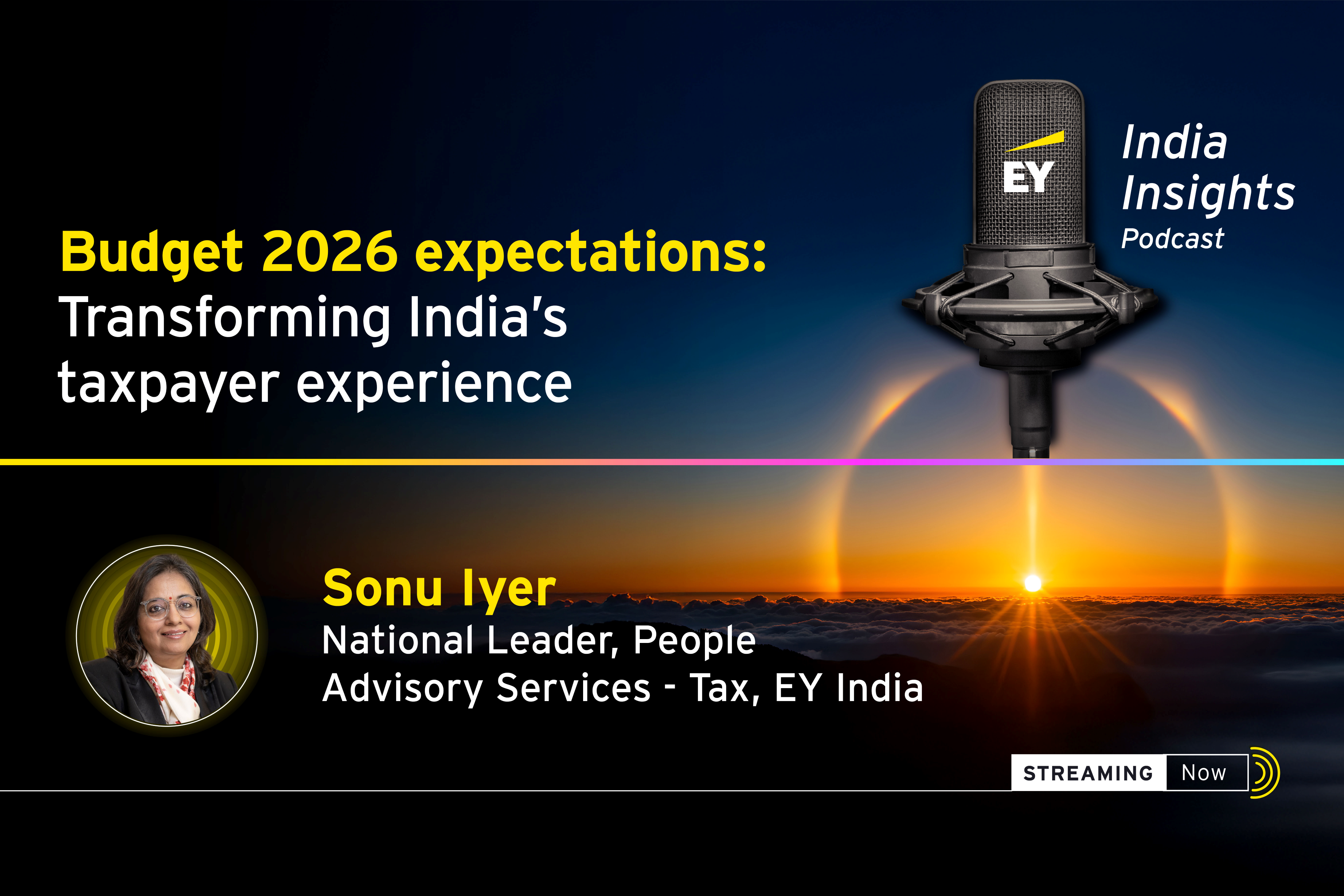
Budget 2026 expectations: Transforming India’s taxpayer experience
A look at how Budget 2026 may provide tax rebates and measures that ease tax compliance, improve data analysis, and more.
16m 51s
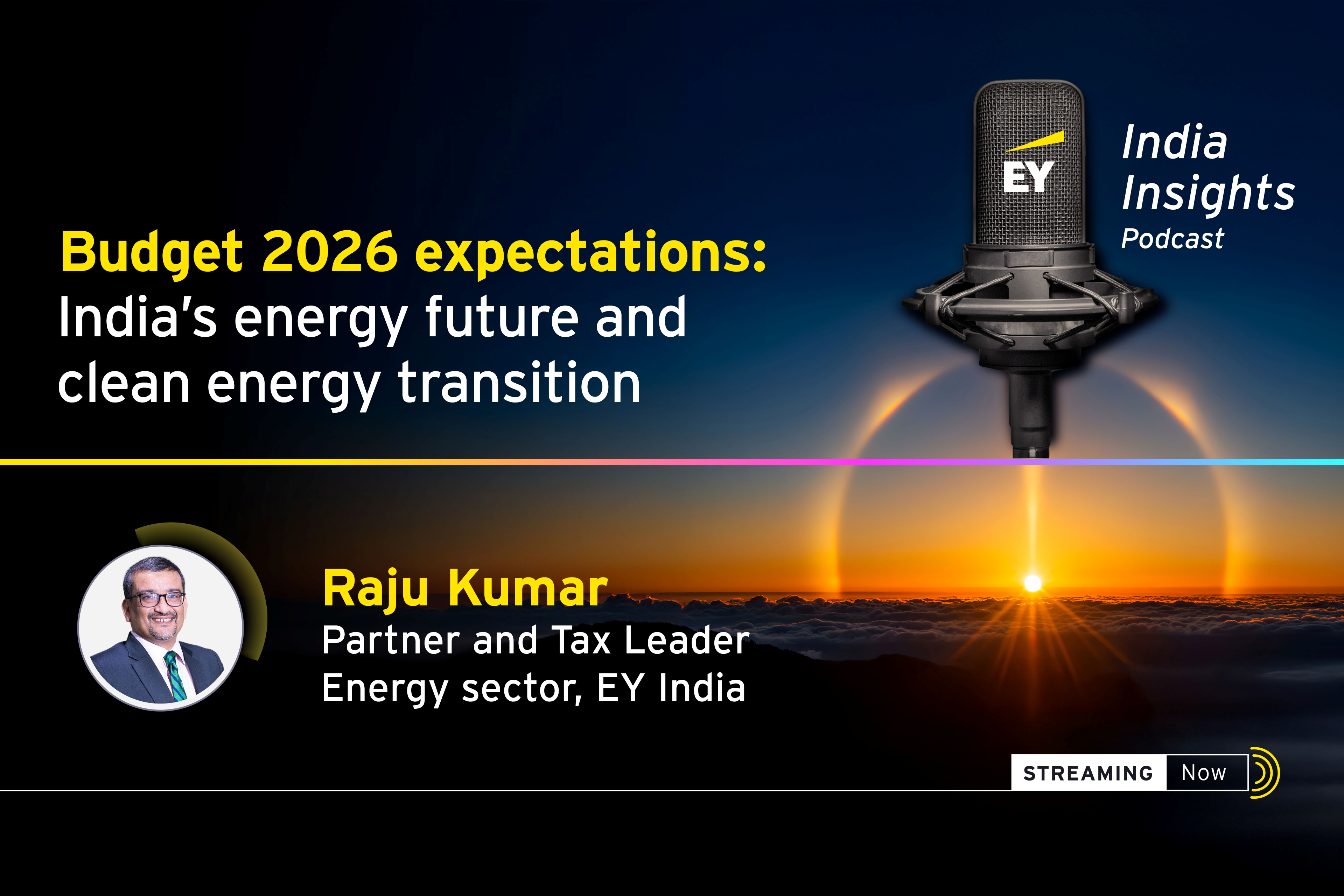
Budget 2026 expectations: India’s energy future and clean energy transition
Explore how support for energy ecosystem, supply chain, modern grids and affordability is essential.
8m 8s
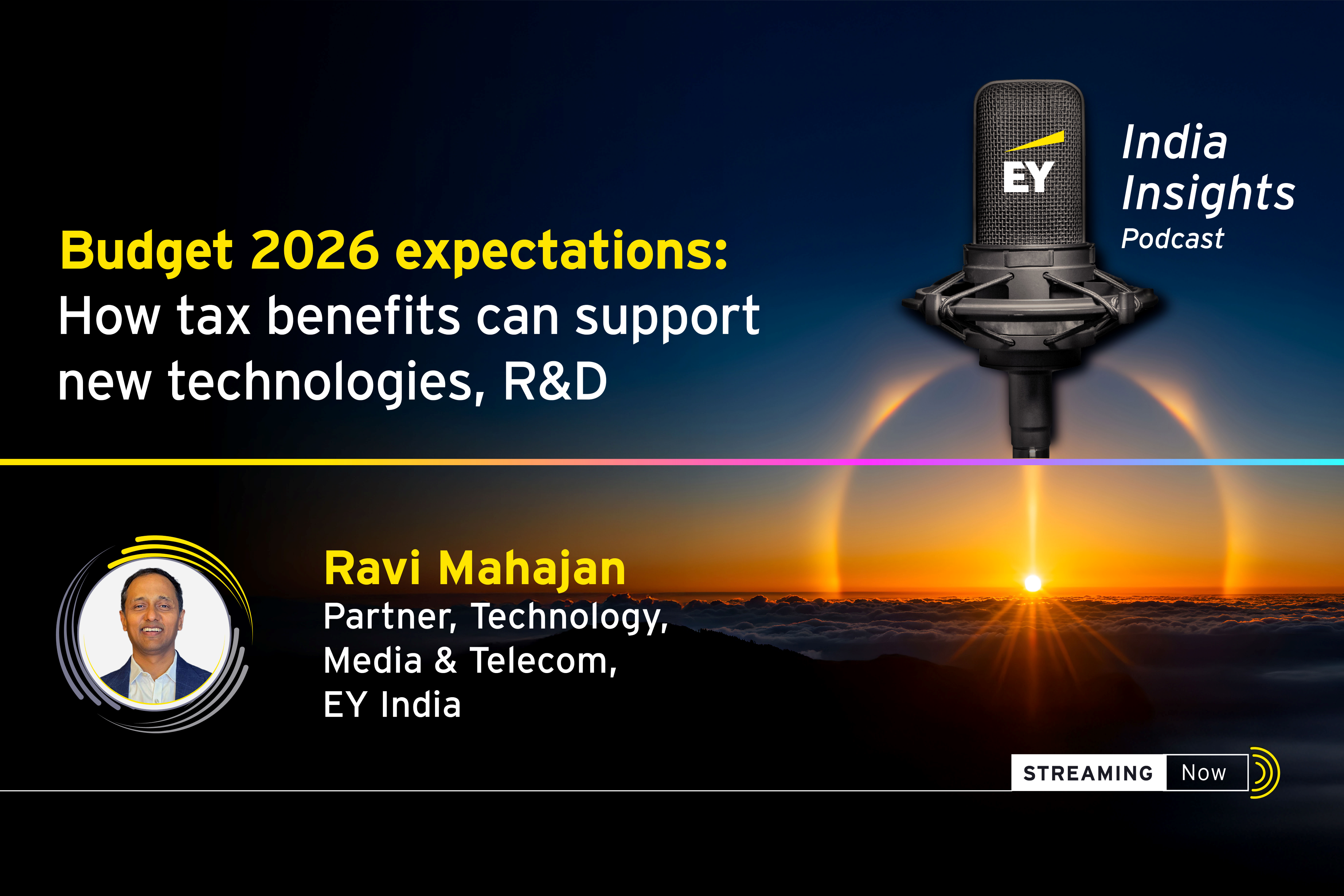
Budget 2026 expectations: How tax benefits can support new technologies, R&D
This episode of Budget Insights focuses on expectations from Budget 2026 in AI and digital infrastructure, tax certainty and compliance simplification for the technology sector.
6m 25s
With robust economic growth, what are the Union Budget 2026 prospects?
India’s FY26 outlook shows strong 8% growth, low inflation and fiscal pressures, with GST revenues, capex momentum and consolidation shaping the economic path.