EY helps clients create long-term value for all stakeholders. Enabled by data and technology, our services and solutions provide trust through assurance and help clients transform, grow and operate.
At EY, our purpose is building a better working world. The insights and services we provide help to create long-term value for clients, people and society, and to build trust in the capital markets.
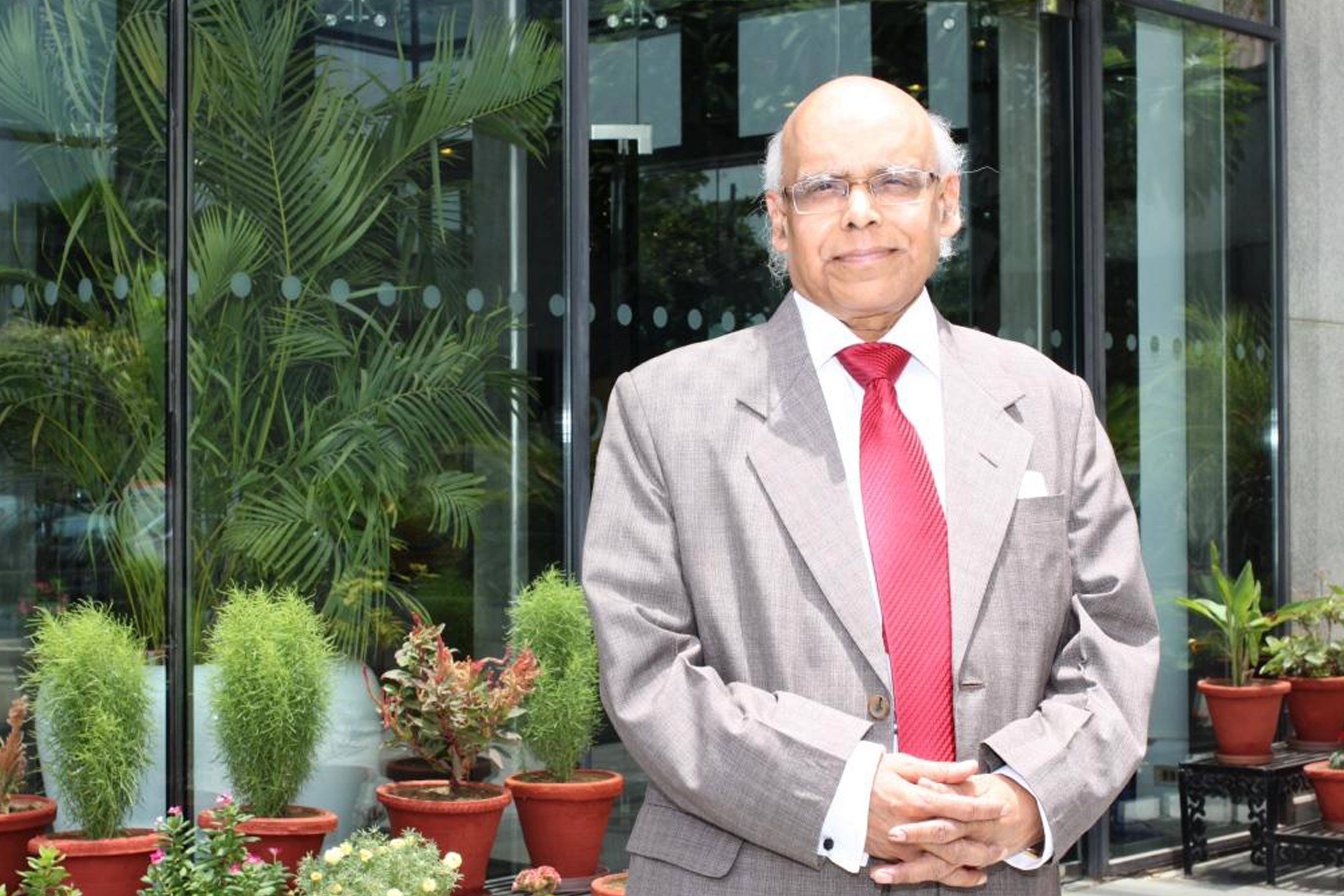
In this episode of Budget Insights, a podcast series from EY India Insights, Dr. D.K. Srivastava, Chief Policy Advisor at EY India, highlights areas that Budget 2026 could focus on terms of fiscal consolidation, growth in times of geopolitical uncertainty and government expenditure. A distinguished economist and member of the Advisory Council to the 16th Finance Commission, Dr. Srivastava discusses key macroeconomic aspects, including tax revenue, expenditure, and revised estimates.
Key takeaways
To maintain fiscal deficit to GDP ratio of 4.4% in FY26, adjustments, especially in revenue expenditure, may be needed to balance the overall shortfall in revenue receipts.
In broad terms, nominal growth assumption for FY27 could be 9.5%, backed by a real GDP growth of 6.5%.
As major personal income tax and GST reforms have taken place, Budget 2026 is unlikely to announce major tax changes.
There has been a significant improvement in quality of fiscal consolidation with revenue deficit to fiscal deficit ratio coming down.
Revenue expenditure should continue to be rationalized, largely led by further reduction in subsidies.
Against a backdrop of global uncertainty, the forthcoming Budget FY27 should be framed with a focus on sustaining India’s resilient growth momentum, while emphasizing fiscal consolidation with a FY27 budget target of 4.0%.
D. K. Srivastava
EY India Chief Policy Advisor
For your convenience, a full text transcript of this podcast is available on the link below:
Ragini Trehan
Welcome to EY India Insights podcast. I'm your host, Ragini, and in today's episode of our Budget Insights series, we examine the macroeconomic developments and prevailing conditions under which the Union Budget for FY27 will be prepared. Expectations around fiscal arithmetic and the path of fiscal consolidation, along with policies that are expected to drive India's medium-term growth amid a global slowdown and heightened uncertainty.
To facilitate this discussion, we are joined by Dr D.K. Srivastava, a distinguished economist, honorary professor at the Madras School of Economics. Member, Advisory Council to the 16th Finance Commission and Chief Policy Advisor, EY India. A very warm welcome to you, sir.
D.K. Srivastava
Hello, Ragini.
Ragini Trehan
To begin with, could you briefly set the context by outlining the current macroeconomic developments and constraints, both domestic and global constraints, within which the Union Budget for FY27 is being formulated?
D.K. Srivastava
As far as the growth performance of the Indian economy is concerned, India has done remarkably well in the post-Covid years. In fact, in FY26, as per the first advanced estimates, the real GDP growth is 7.4%. And if we look at the performance from 2022-23 onwards, then it is 7.6%, 9.2%, 6.5% and 7.4%. So that's a very impressive growth performance and definitely leading growth among major global economies.
So, India is doing well in terms of real growth. This real growth is actually predicated upon excellent performance as far as private final consumption expenditure is concerned, which grew at 7%. As far as investment is concerned, it is even stronger, showing a growth of 7.8% if you look at investment in terms of the ratio of gross fixed capital and capital formation relative to GDP. That ratio has been stable at about 34% for some time. The only concern that we have is in terms of the uncertainties that are emanating from the global economy, particularly in terms of global supply uncertainties.
The atmosphere, the environment is such that supply side uncertainties have become stronger and unpredictable. It is as a result of that the contribution of net exports to overall GDP growth is actually showing a negative contribution of -1.9 percentage points in FY26, as opposed to what was its contribution in FY25 at 2.3% points.
The other concern, particularly for the making of the Budget in FY27, which is predicated on the revised estimates of FY26, is the relatively low difference between real GDP growth and nominal GDP growth. The nominal GDP growth has clocked in at just 8%, only 0.6 percentage points higher than the real GDP growth. At 8% nominal growth there are some significant implications for the Budget aggregates, which are actually always specified in nominal terms.
Ragini Trehan
Very useful and informative insights. And they set a strong context for our upcoming discussion. I move to the second question. So, what signal should the markets look for in the upcoming Budget around public capital expenditure and its role in supporting India's growth?
D.K. Srivastava
What the markets actually look from the Budget what would be the fiscal support to growth and what would be the government intake from the net investible surplus? That is to say, what would be left out for the private investment from out of the investable surplus of the economy. Now, both actually have important inputs coming from the Budget.
As we said, the Budget is going to be formulated based on base numbers that will be the revised estimates for FY26. Now, those revised estimates would be such that actually there is an expectation of shortfall in the gross tax revenue (GTR) of the central government as compared to what was estimated in the Budget 2025. The reason for that is that there were major reforms for personal income tax and GST that were undertaken during the course of the fiscal year. In fact, the PIT reforms were introduced in the Budget and then in the middle of the fiscal year, major GST reforms were also undertaken. As a result of that, we expect that the buoyancy would go down to something like 0.8 and there would be a certain shortfall as compared to the estimated GTR magnitude. As a result, net tax revenue, which is what becomes available to the central government, would also experience this shortfall.
So, we expect that, in terms of the overall shortfall in revenue receipts, there would be instead of 9.6% that was assumed in the Budget relative to GDP, what we would achieve is only 9.3%. And if we want to maintain this fiscal deficit to GDP ratio at 4.4%, which was the announced target, then I think we have to make certain adjustments.
The categories where such expenditures are feasible in the revised estimates mainly relate to revenue expenditures, because capital expenditures have so far played a significant role in sustaining overall growth in the economy. That is, GoI (Government of India) capital expenditures have played a significant role. So, we do not advocate any reduction in the growth of capital expenditure as far as revised estimates are concerned.
If anything, this may be increased marginally from the Budget estimates. But there would be scope for reducing revenue expenditures relative to GDP as far as the FY26 Budget is concerned. Now, that is RE. From there, when we move to FY27 Budget estimates, we can now normalize it a little bit and go up from 8% nominal GDP growth to 9.5%, which is still lower than what was assumed in fiscal consolidation paths and so on at 10%.
9.5% appears to be feasible for the next year, 2026-27, and given 9.5%, we can also consider that the revenue reducing impact of PIT and GST would largely be absorbed and therefore normalization should return as far as growth is concerned, because the base numbers would have been lowered for FY26 RE. Therefore, we assume a buoyancy of one and a nominal GDP growth of 9.5.
That will take us to an overall GTR growth outgrowth of 9.5%. And alongside, we also think that it would be feasible and desirable for the central government to maintain the capital expenditure to GDP ratio, by maintaining its growth at the same rate as the growth rate of nominal GDP, that is to say, 9.5%. There would be some marginal downward adjustment in revenue expenditure, but that seems feasible because, so far, the trend has been that a long-term reform has led to reduction in budgetary subsidies and revenue expenditure relative to GDP has been going down over time.
Ragini Trehan
Very important perspective. So, turning to the issue of fiscal consolidation with nominal GDP growth expected to be lower than what was assumed in the Budget for 2025-26, as you said, what would this mean for government's fiscal consolidation path going forward?
D.K. Srivastava
Well, our assessment is that, in fact, in spite of the gross tax revenues underperforming as compared to the Budget estimates, the government should be able to meet the fiscal deficit target at 4.4% for FY26 by suitable downward adjustment in revenue expenditures. However, last year, the Finance Minister had announced that the fiscal consolidation targeting would be changed from fiscal deficit targeting to an annual reduction in government debt GDP ratio.
Now, because of the surprise that is coming in terms of an excessively low nominal GDP growth, there is a possibility that in the revised estimates we may miss the revised statement of the fiscal consolidation path in terms of annual reduction in the Debt-GDP ratio. In fact, in this very first year, even if we maintain a fiscal deficit level of 4.4%, there would be an increase in the central government debt to GDP ratio.
If we want to avoid that and meet this new reduction target, then the fiscal deficit would have to be reduced to 4.2%. I think that does not seem to be on cards. In all likelihood, 4.4% would be maintained. But going forward, in FY27, we should continue with fiscal consolidation and reduce the fiscal deficit to GDP ratio by another 40 basis points, so that for FY27, the fiscal deficit to GDP ratio would be 4%.
One more point to add is that there has been, over time, a significant improvement in the quality of fiscal deficit, which is also an important dimension of fiscal consolidation. The ratio of that part of government borrowing that has been allocated to revenue expenditure has been coming down. As a result, the revenue deficit to fiscal deficit ratio has been coming down, which is a very significant qualitative improvement in the quality of fiscal consolidation.
Ragini Trehan
Although you have already briefly discussed but I would still like to ask you as to what the main highlights for the upcoming Budget would be and what would be its implication for medium term fiscal prospects?
D.K. Srivastava
In very broad terms, we think that the nominal growth assumption for FY27 would be 9.5%, which will be backed by a real GDP growth of 6.5%. The GTR buoyancy overall may be kept at one. Now that PIT and GST reforms are taking place, I do not think there would be major tax reforms that would be introduced and capital expenditure growth should at least continue at 9.5%, similar to nominal GDP growth so that the capital expenditure to GDP ratio would be 3.1% in the FY27 Budget.
We also think that there would be some change in the structure of GoI capital expenditure. It is desirable that we move in favor of defense capital expenditure because physical capital expenditure in terms of physical infrastructure expansion has not been able to absorb that much of additional capital expenditure. It is important, therefore, to change the quality of capital expenditure from physical to digital infrastructure that caters to emerging technologies like AI, GenAI and other advanced sectors like space, robotics and so on.
As far as the revenue expenditure is concerned, it should continue to be rationalized and reduced, based largely on further reduction in subsidies.
Ragini Trehan
Thank you for your elaborate response. This brings me to my last question, which is, about the core objectives of the medium-term fiscal policy, to support growth and to realize the vision of Viksit Bharat.
D.K. Srivastava
India has been preparing itself to cater to the medium-term fiscal policy and growth requirements for the economy to realize the vision of Viksit Bharat. That is why it has undergone major structural changes in the last decade or so and is now poised to show a steady and sustained growth of 6.5%-plus in the medium term.
Although there would be some uncertainties emanating from the continuing global economic uncertainties, the FY27 Budget would lay the background for this, and we expect that fiscal consolidation would continue in the medium term and eventually before we reach the Viksit status, the fiscal deficit to GDP ratio should stabilize at 3%. And as a base for the medium term, we have already undertaken major tax reforms.
And I think over time, there would be a buoyancy-based increase in the overall tax to GDP ratio for the consolidated or the general government related to GDP. The tax-GDP ratio should increase from the present level of about 18% slowly to closer towards 25%. This, in my view, should be based on a buoyancy of higher than one rather than any major reforms within individual tax regimes.
Ragini Trehan
Thank you so much for those insightful responses. They have provided a very clear and comprehensive perspective on the upcoming Budget and its medium-term implications.
D.K. Srivastava
Thank you, Ragini.
Ragini Trehan
Thank you to all our listeners. Stay tuned for more captivating discussions on EY India Insights. Don't forget to subscribe for the latest updates! Until next time, this is Ragini signing off.
Transform tax operations with EY AI Tax Hub featuring AI-powered GST compliance, tax notice management and intelligent GST reconciliation for enterprises.
Transform export-import operations with EY Global Trade Automation software, AI powered automation for customs and foreign trade policy compliances, duty savings, incentive optimization, logistics visibility and faster global trade decisions.
Simplify GST compliance with an AI-powered EY India Tax Platform offering GST reconciliation, return filing, e-invoicing and automation for large enterprises.