India’s healthcare system is undergoing digital healthcare transformation to create integrated, patient-centric solutions using advanced technologies. India currently has approximately 1.4 beds per 1,000 people, while WHO recommendation is 2-3 beds per 1,000. Further, approximately 60% of this bed capacity is in the private sector, concentrated in metropolitan and tier-1 cities, leaving smaller cities and towns with significant shortfalls.
With the aim to improve care delivery and operational efficiency along with financial sustainability, healthcare service providers are increasingly moving away from manual processes and legacy systems toward interconnected digital platforms. Along with rising demand for higher quantity and quality healthcare across the country, demographic shifts, and increased private investment, patients also expect faster, more personalized and transparent care.
The report, Unleashing digital momentum to shape the future of healthcare – Enabling automation to enforcing transformation, highlights that among the most crucial changes taking place in healthcare in India is that private healthcare providers are actively investing in healthcare technology solutions, cloud solutions, and cybersecurity.
Insights from EY-Parthenon- CII HealthTech Survey 2025
New-age hospital information systems, patient portals, and data-driven platforms are gaining traction.
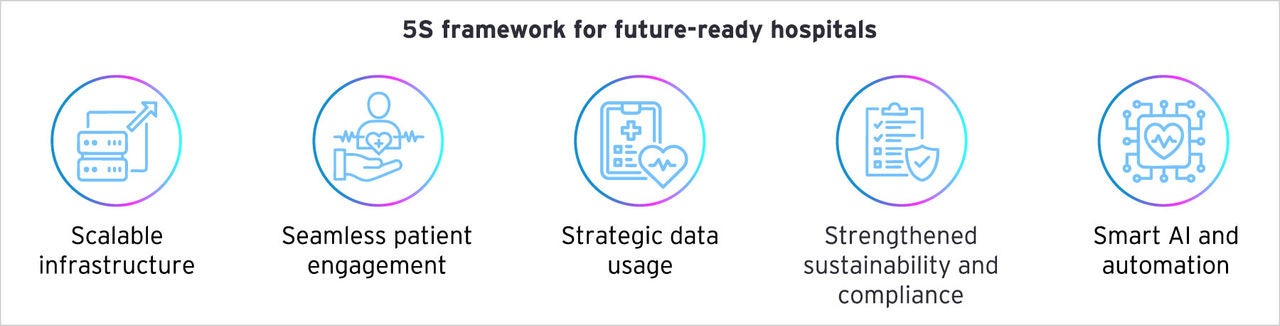
Modernizing systems and patient journeys: Healthcare service providers are focusing on integrated ecosystems that include Electronic Medical Records (EMRs), upgraded Hospital Information Systems (HIS), and business applications like Enterprise Resource Planning (ERP) and Customer Relationship Management (CRM). To maximize the utility of data, data lakes and BI dashboards aggregate clinical, operational, and financial information from various systems to support real-time decision-making across the healthcare chain, from physicians, nurses, and diagnostic labs to pharmacy, insurance, and patient engagement.
At the same time, patient journeys are improving through smart OPDs that cut waiting times with digital registration and triage. In some cases, AI assistants help doctors with history and risk insights, while mobile apps support follow-up care, reminders, and wearable-based monitoring, strengthening data driven healthcare.