EY helps clients create long-term value for all stakeholders. Enabled by data and technology, our services and solutions provide trust through assurance and help clients transform, grow and operate.
At EY, our purpose is building a better working world. The insights and services we provide help to create long-term value for clients, people and society, and to build trust in the capital markets.
As India accelerates its energy transition, bioenergy is emerging as a powerful enabler of energy security, rural development and sustainable growth. In this episode of Energy Transition Dialogues, Kapil Bansal, Partner, Energy Transition and Decarbonization, EY-Parthenon India discusses the role of biofuels, biomass and sustainable aviation fuel (SAF) in creating new opportunities across the energy value chain. From strengthening feedstock ecosystems and scaling production capacity to unlocking investment and innovation, the podcast explores the steps that India can take to build a globally competitive bioeconomy, including the policy, infrastructure and collaboration needed to transform ambition into long-term value.
Key takeaways
India's bioenergy opportunity extends beyond fuels, creating pathways for energy security, rural prosperity and industrial decarbonization.
Sustained growth in bioenergy will depend on resilient feedstock supply chains, technology innovation and coordinated ecosystem development.
The next phase of India's energy transition requires scaling sustainable aviation fuel, biomass solutions and advanced biofuels.
Policy support alone is insufficient; investment, infrastructure and industry collaboration are essential to unlock bioenergy's full potential.
A thriving bioeconomy can simultaneously advance climate goals, strengthen energy independence and generate new economic opportunities.
A bankable ecosystem, strong feedstock supply and long-term offtake agreements can position India as a global SAF leader.
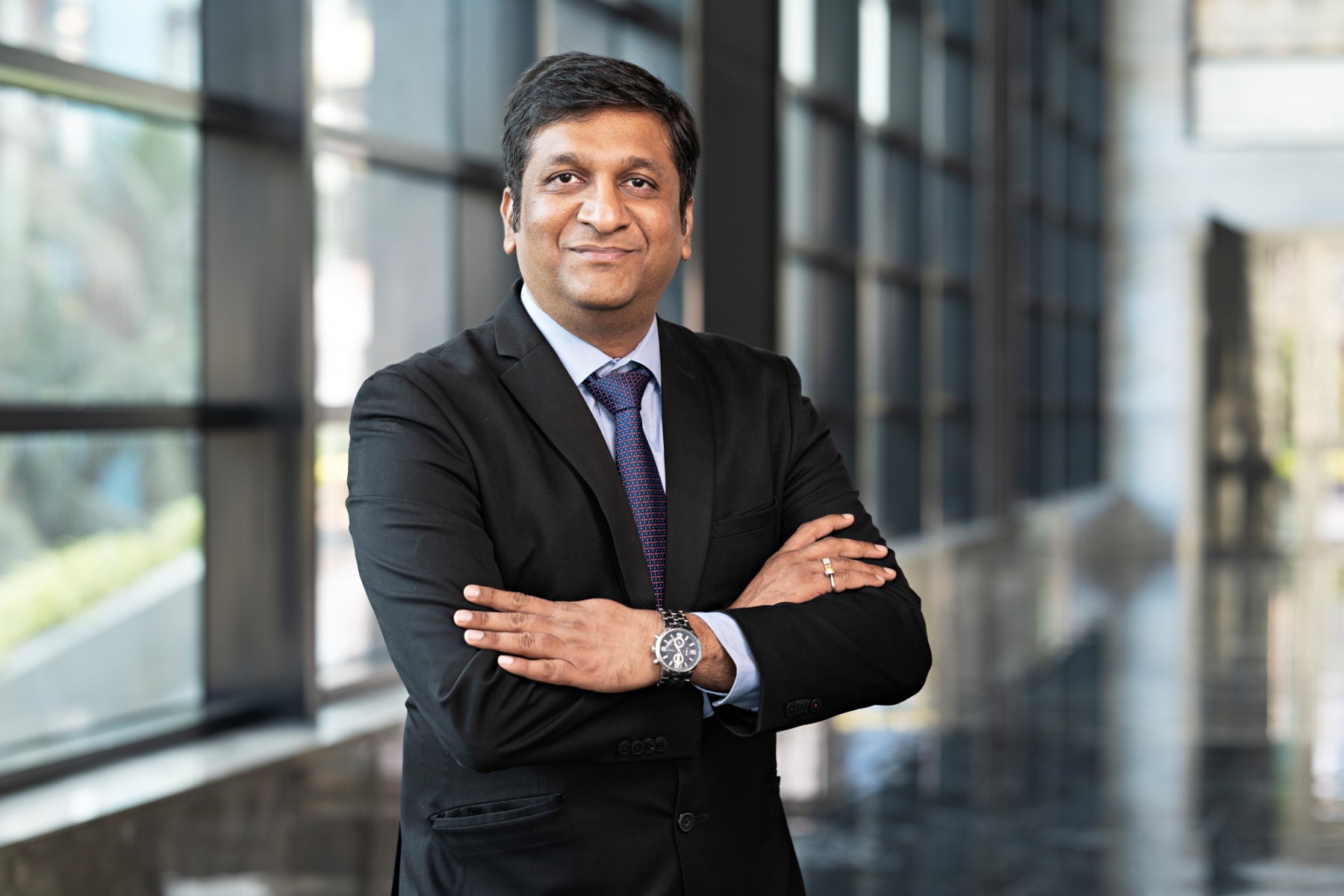
Kapil Bansal
Partner, Energy Transition and Decarbonization, EY-Parthenon India
For your convenience, a full text transcript of this podcast is available on the link below:
Hello and welcome to Energy Transition Dialogues – an EY India Insights podcast series. I am Pallavi, your host for today. In this episode, we are joined by Kapil Bansal, Partner, Energy Transition and Decarbonization, EY-Parthenon India. We are here to discuss how bioenergy is shaping India's next phase of growth through ethanol, sustainable aviation fuel (SAF) and biomass.
Hi Kapil, thank you for joining us today and welcome to the podcast.
Kapil
Thank you, Pallavi. It is my pleasure to be part of this podcast to talk about the comprehensive report on ethanol and SAF, which was published by EY-Parthenon.
Pallavi
India has achieved significant progress in ethanol blending. What have been the key drivers behind this success and what comes next for the sector?
Kapil
First of all, the report that we have launched on bioenergy addresses four priorities for India, which are energy security, decarbonization, rural prosperity and productivity management of agricultural residues and organic waste that is generated. In terms of all these critical priorities, India has achieved a lot of headway in the area of bioenergy, especially in ethanol, wherein India's success story is among the strongest examples of policy-led energy transition, globally. In the last decade, from almost 1.5% ethanol blending in 2014 to 20% in 2025, we have achieved our E20 target ahead of schedule.
Now, what are the success factors behind this transition? First, the strong, consistent, government policies promoting the ethanol blending program with administered pricing, assured procurement by oil companies and interest subvention schemes for capacity creation – that is the first key point.
Second is the feedstock diversification. India has moved from pure molasses-based bioethanol to include sugarcane juices, maize, surplus rice and other feedstock, which improve the supply security.
Third, ethanol delivered benefit beyond decarbonization. It helped improve farmers’ income, reduce coal imports and strengthen the country’s energy security. If we look at the report, which was launched jointly with Indian Federation of Green Energy (IFGE), the ethanol blending program has helped save more than INR1.9 lakh crore in foreign exchange, reduce over 310 metric tons of crude oil imports and generate nearly INR1.6 lakh crore of additional farmer income.
This is where we have seen the success but looking ahead, the sector's next phase will be less focused on blending and more on new value creation avenues. And this is what we have looked into our report. An example of that is SAF through ethanol-to-jet pathways, flexi-fuel vehicles, green chemicals and other bio-based industries. And that is where the next challenge is – to ensure sustainable demand growth and feedstock security on a continuous basis.
Pallavi
Pivoting towards SAF, it has emerged as one of the major opportunities. How can India leverage its strengths to become a leading SAF production hub?
Kapil
That is a very interesting question. SAF represents the next frontier of India's bioenergy journey. Aviation is one of the most difficult sectors to decarbonize and SAF is expected to contribute 67% of aviation fuel emission reduction in the near future, whereby it will help us to decarbonize the global aviation sector and become net zero.
To start with, India has some structural advantages. One, we are a growing economy and because of that we have a growing demand for aviation. We have a mature refining ecosystem, which is growing and we are one of the world's largest ethanol industries through which SAF can be built with the industry doing further investment downstream and established biofuel policies.
In our report on ethanol and SAF, we have clearly highlighted that India could emerge as a globally competitive SAF producer – something that we currently see in green ammonia. In SAF, there are multiple pathways – Hydroprocessed Esters and Fatty Acids (HEFA), Fischer-Tropsch and Energy Sustainability Forums (ESF) – but for India, strategically, alcohol-to-jet is what we can leverage as India's most positive mechanism through which the SAF production can be done using the existing ethanol ecosystem and the production infrastructure that is available.
The second point is that the government has also signaled its intent towards having an SAF blending target within the domestic aviation market through 1% by 2027, 2% by 2028 and 5% percent by 2030 for all the international flights that will fly from India.
Obviously, this will require a bankable ecosystem through feedstock aggregation, long-term contracts, offtake contracts, sustainable certification understanding and fiscal support. And if it is executed well, just as India has been the petrochemical refinery hub, it will also become a SAF hub, serving the globe from India.
Pallavi
Beyond transportation, how can biomass-based solutions help decarbonize power generation and industrial operations in India?
Kapil
It is already in existence. If you look beyond transportation, in most of the thermal power plants, 10% blending of biomass pellets exists. Also, the Ministry of New and Renewable Energy (MNRE) has provided the biomass briquette and pellet manufacturing support through central financial assistance schemes, which has created a decent nationwide biomass processing ecosystem.
Today, there are almost 1,100 biomass pellet plants that exist. But beyond thermal, the same biomass pellets and briquettes can replace coal in industries such as cement, steel, paper, textiles and food processing. Some of these industries are already part of the upcoming Carbon Credit Trading Scheme (CCTS) regulation, thereby providing a practical decarbonization pathway of using existing boiler with minimum modification to use these biomass and bio-briquettes.
Going forward, a modest substitution of 5% to 10% in bio-industrial boilers can reduce the consumption of imported coal, emissions and also help enhance the rural income along with creating jobs through this biomass procurement.
Pallavi
What are the key challenges around feedstock availability, infrastructure and investment that we need to address to unlock the full potential of bioenergy sector?
Kapil
Investment comes naturally if there is a business rationale and business rationale comes if there is proper utilization of assets. What we have seen is that India has abundant biomass resources, but the real challenge is the distributed structure – how biomass can be aggregated and how the sustainable, secured biomass can be provided to these industries on a continuous basis.
What we discussed till now on ethanol, SAF, briquettes – every biomass needs a reliable and economically viable feedstock supply chain. And since biomass comes from millions of fragmented farms, its collection, storage, transportation and overall quality management becomes complex and costly. So, obviously from an investor point of view, they want any investment that goes into such kind of downstream manufacturing plants. More than anything else, the important thing is the overall biomass aggregation and security – whether it is technological risk, financing or providing the necessary market accessibility.
You also mentioned the infrastructure gaps. Almost 12% of Inda’s GDP goes into logistics and transportation. From a biomass aggregation point of view, we need proper biomass aggregating centers, storage facilities, billing infrastructure, logistics network and the complete traceability of this supply chain, which can support both Indian and global policies towards certifications, as well as help realize benefits that can accrue through various government schemes that are available.
So, for the next phase of India's growth story, we should depend on building an industrial-scale biomass supply chain ecosystem and addressing some of these bottlenecks through unlocking significant investment on the downstream side of biomass application, which could be in the Compressed Biogas (CBG), SAF and hard-to-abate sectors.
Pallavi
Now, looking ahead, what should policymakers, industry leaders, and investors prioritize to build a sustainable and globally competitive bioenergy ecosystem in India?
Kapil
India now needs to move away from individual biofuel programs to an integrated bioeconomy strategy. From a policy standpoint, the priority should be given to long-term feedstock security, supporting advanced biofuels R&D innovation and enabling a stable policy from central to state level.
Ministry of Petroleum and Natural Gas recently launched the GOBARdhan framework on 1 October 2026, which is a step in the right direction to bring more focus on organic waste management, CBG, circular economy and creating what was envisaged as a goal of 5,000 such CBG plants. This for from a policy standpoint to ground level execution.
From an industry standpoint, there needs to be ecosystem collaboration across the value chain, which is critical. Bringing everyone together, the feedstock supplier, technology provider, fuel producers, airlines, refiners, industrial consumers – all together to create a scalable market.
From an investor point of view, they would look for a complete, transparent, well-governed, risk-free and attractive investment theme.
So ultimately, India's bioenergy storage is no longer just a decarbonization story. It is about energy security, creating rural prosperity, circular economy development and at the same time, helping our industrial competitiveness. And if the right ecosystem is created, India has the potential to become one of the world's largest and leading bioenergy nations over the next decade.
Pallavi
Thank you, Kapil. That brings us to the end of this episode. Thank you once again for joining us and sharing all your perspectives. To all our listeners, thanks for listening to Energy Transition Dialogues. We hope you enjoyed this conversation and gained valuable insights into the opportunities shaping India's bioenergy future. Stay tuned for more conversations on the trends driving the energy transition.