



EY refers to the global organization, and may refer to one or more, of the member firms of Ernst & Young Global Limited, each of which is a separate legal entity. Ernst & Young Global Limited, a UK company limited by guarantee, does not provide services to clients.
Recent Searches
How a steel unit transformed safety from compliance to culture
A multi-year journey reshaped organizational safety culture, leadership behaviors and risk management to deliver leading safety performance.
India is home to some of the world’s most complex steelmaking environments, where large-scale plants operate under constant pressure to boost productivity. One such unit operates an integrated steel facility across 15 manufacturing zones, each with distinct risks, interdependencies and high-energy processes. With a workforce of over 20,000 people, including 7,300 contractors, daily operations involve hazardous tasks—from raw material handling and hot metal movement to confined space work and heavy rail and road operations. Transforming safety at this scale required a structured, multi-year approach focused on governance, risk management and lasting cultural change.
As the organization prepared for future growth and capacity modernization, leadership recognized that sustaining high performance required a fundamental shift in how the people detected, analyzed and acted on safety risks. Historically, several practices were manual, outsourced, paper driven and heavily dependent on frontline risk perception. Critical insights — near miss signals, deviations in work permits, gaps in barrier health and patterns in contractor violations — were not always visible in time to prevent safety incidents. The limitations of localized reporting and fragmented governance meant that leaders often received information only after events occurred, creating blind spots across a vast operational footprint.
The steel sector’s risk environment is unforgiving. High hazard processes, rapidly changing conditions and a large contractor ecosystem increase exposure to incidents if early warning signals are missed. For this operations unit, it was especially significant: prior to the transformation, the plant’s lost time injury frequency rate stood at 0.49, revealing the need for stronger systemic controls before scaling further.
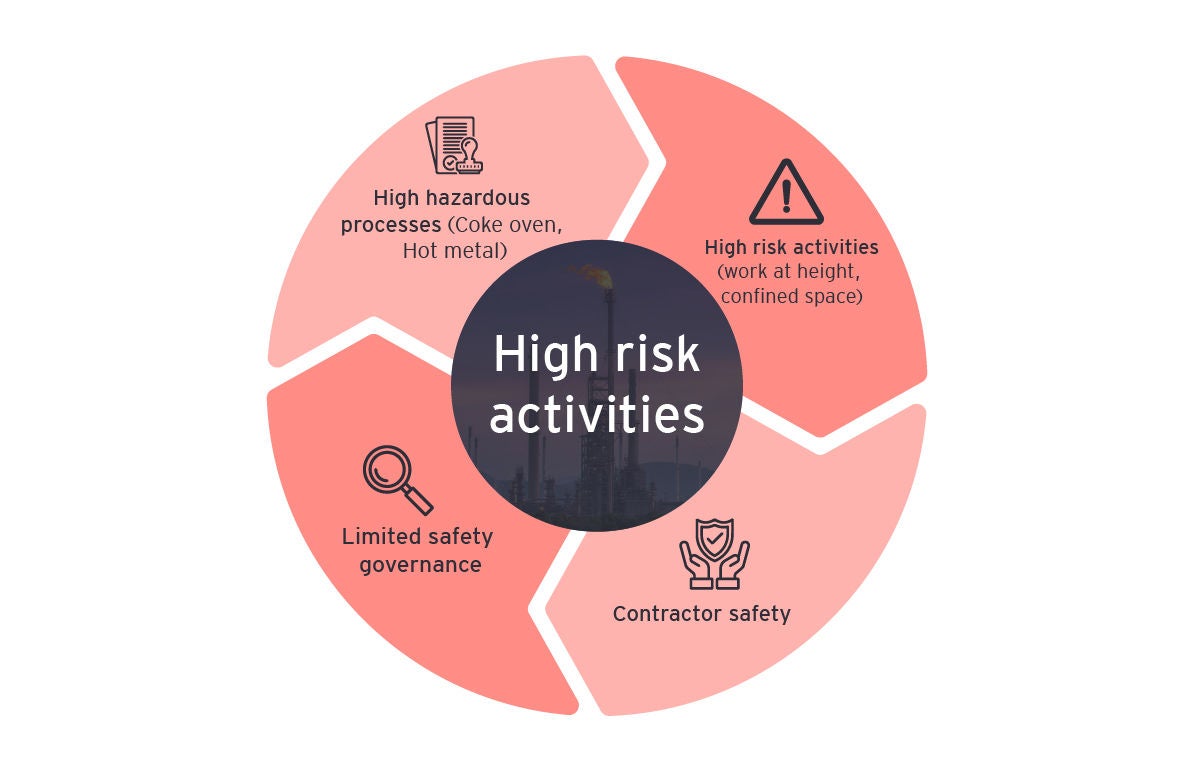
At the same time, cultural ownership was inconsistent. Four high risk factors threatened to constrain the plant’s future ambitions. High hazardous processes, including Coke Oven and Hot Metal operations, operated in an environment where the lack of real time, plant wide risk visibility meant early warning signs such as barrier integrity weaknesses or permit deviations could go undetected. High risk activities like work at height and confined space entries further amplified exposure, particularly when unsafe behaviors or lapses in controls were not identified promptly. The extensive reliance on contractor workforce introduced additional variability in safety practices, compliance and supervision across zones. Finally, limited and fragmented safety governance, along with inconsistent processes and accountability structures reduced leadership’s ability to correlate risks across these areas, intervene early and enforce consistent standards at scale. Without an integrated approach, safety performance remained uneven, robust in some pockets, yet vulnerable to others.
Figure 1: Threats to the future ambitions of one of India’s major steel giants
To support its long term growth strategy and reinforce operational integrity, the organization needed a step change in how it proactively detected risk, reinforced clear ownership and equipped leaders with timely, data driven insights for decision making. This meant transforming safety from a set of procedures into a business critical capability — one built on real time insights, integrated governance and a consistent, high maturity safety culture that could scale with the plant’s ambitions.
As part of the safety transformation journey initiated in 2022, EY conducted a safety maturity survey covering 9,142 employees. The findings revealed uneven risk perception, inconsistent safety behaviors and variable adherence to governance across operational zones. These insights underscored the need for a structured, enterprise-wide approach to strengthening safety performance.
Against this backdrop, the organization embarked on a comprehensive transformation, working with EY to strengthen safety governance, reshape mindsets, embed safer behaviors, and build a unified, high maturity safety culture across the enterprise.
This engagement positioned the plant among the more forward leaning steel operations in India to integrate leadership driven governance, engineering controls based risk containment and real time digital visibility at scale. The program unfolded through a series of structured, interdependent streams that aligned people, processes and technology across the plant’s vast footprint.
Strengthening governance and leadership ownership
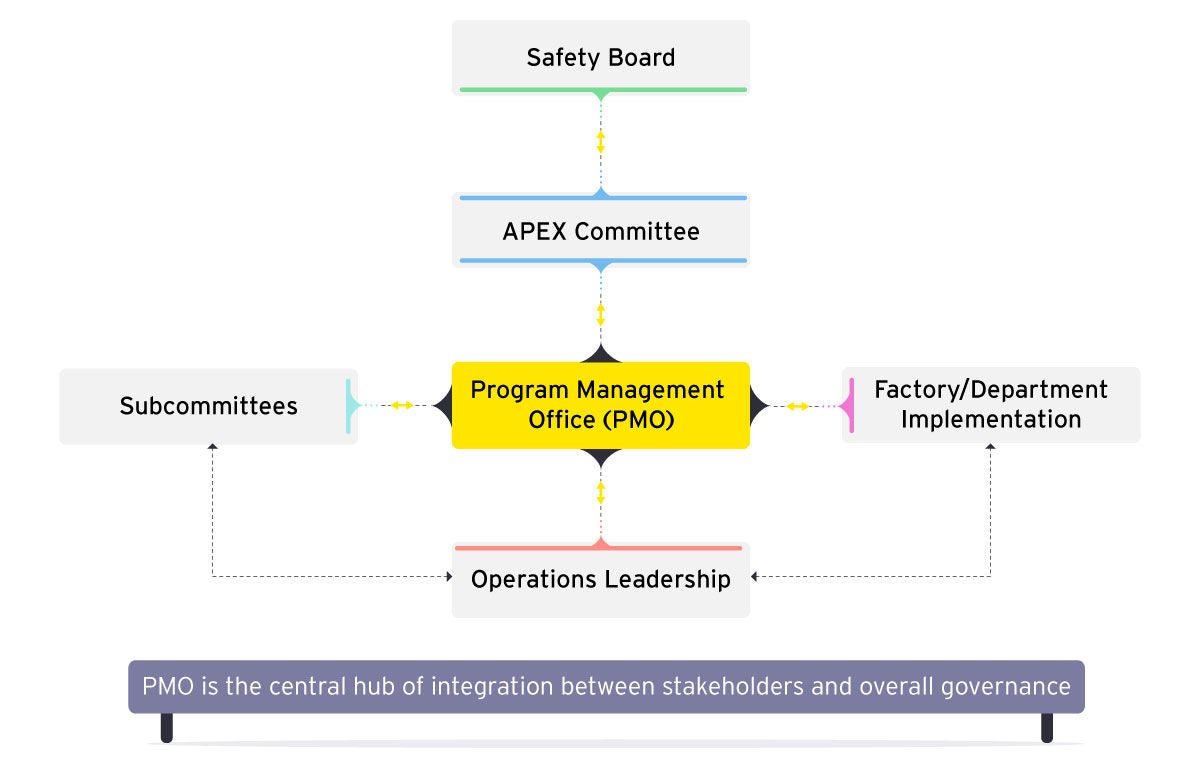
The transformation was anchored in a redesigned governance architecture, strengthening workplace safety governance in India and positioning safety as a line driven management system. A multi tier governance structure was established, including a Safety Board chaired by the Director in Charge, an Apex Safety Committee at the executive level, eight subcommittees and more than thirty department level implementation committees. Over the course of the program, these bodies met more than 700 times and engaged more than 650 leaders, turning safety into a management discipline rather than a functional responsibility.
Figure 2: PMO Governance Framework
Building culture and capability at scale
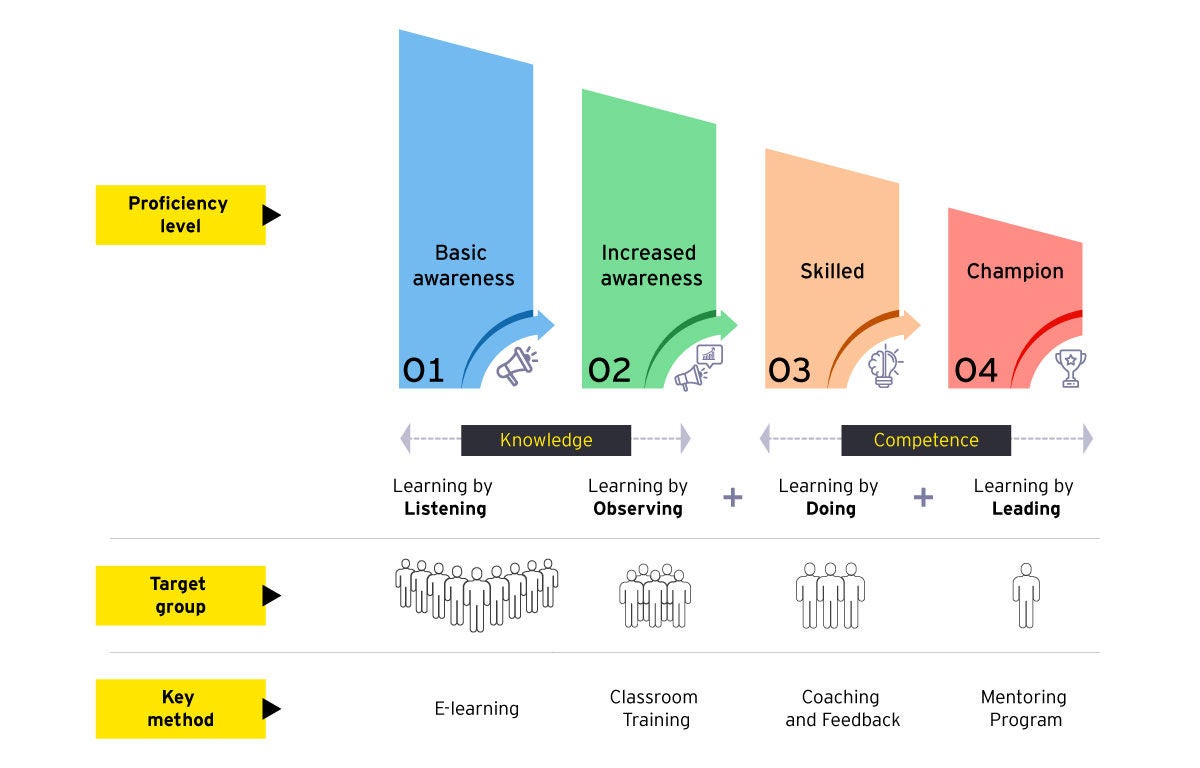
Parallel to governance reform, the plant invested deeply in building capability and strengthening cultural ownership. Senior leaders participated in inspirational safety leadership programs, while middle managers advanced their competencies in safety management. A cascading approach enabled the development of more than 1,200 trained internal facilitators who could drive learning across teams. More than 8,000 non executives and contractors took part in hands on, scenario based orientations that built risk awareness and safe work habits. As leadership presence increased on the shopfloor, a digital behavioral intervention platform helped them observe, coach and reinforce safe practices. Within a year, behavioral interventions increased by more than 80%, with adherence to scheduled interventions approaching 85%. By 2024, participation in the safety maturity survey increased to 12,112 employees, reflecting deeper workforce engagement driven by the safety culture transformation delivered with EY.
Figure 3: Capability building journey
Embedding engineering control-based mitigation of high hazard risk containment
The organization also advanced technical and process safety maturity by strengthening controls in high hazard areas. A total of 30 critical processes were analyzed through risk containment and bow tie methodologies that illuminated risk pathways and barrier dependencies at the point of work. This exercise resulted in the identification of more than 150 new engineering barriers and introduced a semi quantitative scoring system for assessing control effectiveness. Contractor site audits surfaced 7,500 violations, including 218 severe findings, all of which were jointly resolved with contractors, strengthening alignment within the broader ecosystem.
Creating a digitally connected safety ecosystem
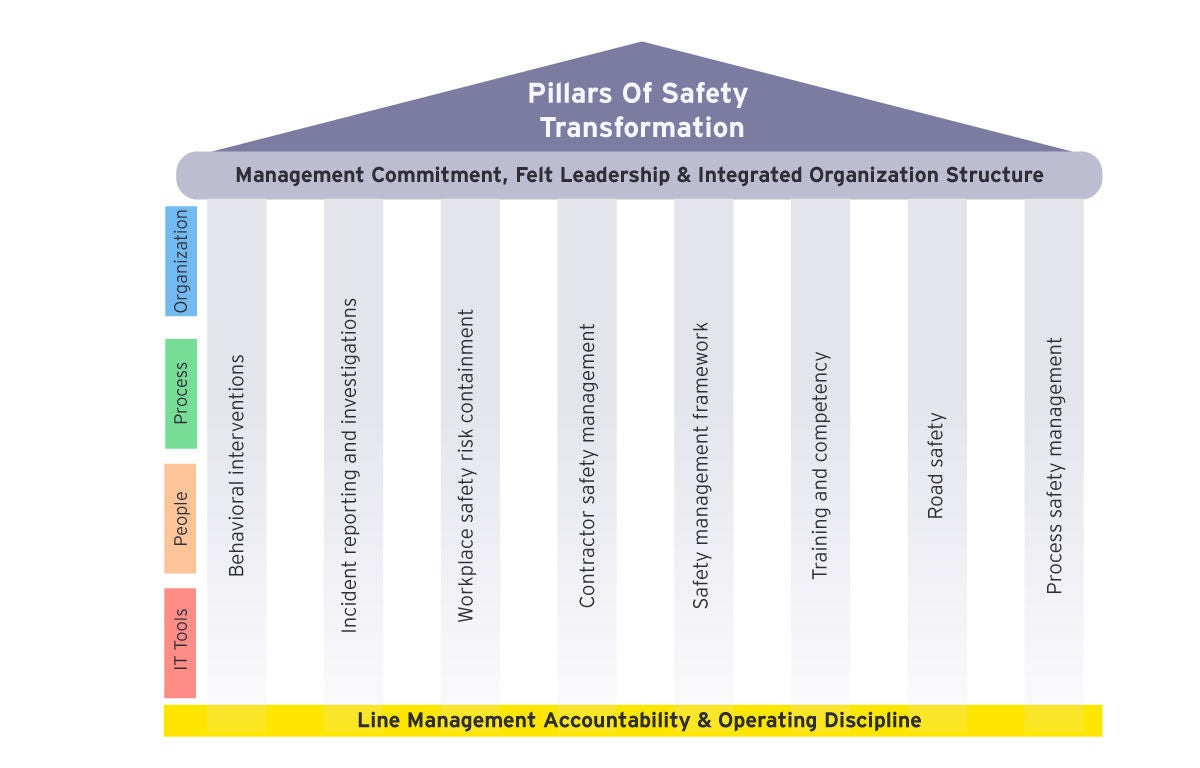
Digital enablement served as the unifying layer across the transformation. The plant deployed nine digital tools covering incident reporting, audit and inspection workflows, governance dashboards, behavioral intervention records and an integrated digital risk containment platform providing real-time visibility and enabling line management for risk-based decisions. Immersive VR modules — including confined space simulation and EOT crane operations — enabled teams to practice high risk scenarios safely. At this scale, the digitization of integrated risk containment was considered a first of its kind implementation in the industry. This initiative demonstrates how integrating technology and process excellence can enable predictive analytics for safety risk mitigation in complex manufacturing environments.
A unified, sustainable safety operating model
Through this collaboration, governance discipline, engineering rigor, behavioral reinforcement, and digital intelligence came together to form a cohesive, plant wide safety operating model. The organization emerged with a system that not only addressed present day challenges but was designed to scale with future growth — enabling leaders to anticipate risks, intervene proactively and sustain high reliability across operations.
Across the transformation journey, the plant achieved one of the most consequential improvements in its safety to date. The lost time injury frequency rate fell from 0.49 before the program to 0.05 in FY24-25, marking a significant reduction in incidents overall.
Figure 5: LTIFR(Lost time injury frequency rate)
By December 2023, the site achieved 400 injury-free man-days, demonstrating how disciplined behaviors, engineered controls, and visible leadership can significantly improve safety outcomes. At the same time, near miss reporting reached approximately 1,600 cases in FY23-24, demonstrating stronger early warning mechanisms and a sharper organizational ability to learn before incidents occur.
Beyond incident reduction, the transformation reshaped how the business operated. Leadership gained real time visibility into risks and performance trends, supported by digital workflows that replaced manual, paper heavy processes and standardized safety practices across zones. The contractor ecosystem — earlier a point of vulnerability — became significantly more aligned through structured audits, targeted training and shared accountability. As safety behaviors matured, people became more confident in raising concerns, intervening in unsafe situations and engaging in governance forums.
Together, these shifts created a continuous, enterprise wide safety ecosystem. By combining leadership commitment, engineering rigor, behavior based reinforcement and digital intelligence, the plant advanced toward a benchmark model of integrated safety excellence within India’s steel sector, strengthening operational continuity, stakeholder trust and the long term competitiveness of the business.
Acknowledgements:
We would like to acknowledge the contributions of:
- Raja Debnath, Partner/Principal, CCaSS, EY India
- Maruthi H, Director, CCaSS, EY India
- Harsha K Deerghasi, Senior Manager, CCaSS, EY India
- Pritam Das, Senior Consultant, CCaSS, EY India
- Mohammed Shuaib Ahmed, Manager, CCaSS, EY India
FAQs
How EY can help
-
EY India Climate and Decarbonization Services help organizations address physical and transition risks while adapting to market and regulatory shifts.
Read more -
Discover EY energy transition insights, people and services, and how they can help your business unlock the opportunities of an uncertain future.
Read more -
Sustainability services and solutions by EY India guide ESG strategy, climate action and reporting and decarbonization backed with data and technology.
Read more
Related content
How Maruti Suzuki scaled AI-powered talent assessment
Maruti Suzuki collaborated with EY to transform talent assessment using AI, enabling faster, scalable and objective workforce insights across 4,000 employees.
How Ford is advancing accounts receivable operations through AI
How Ford transformed accounts receivable using AI-led automation, real-time dashboards and calibrated customer engagement to improve efficiency and cash flow.
How Pernod Ricard India’s Finance CoE became future-ready for growth
Pernod Ricard India centralized finance operations across 40+ locations, creating a COE with EY and achieving INR 400 million in cost savings.